7 Best Heavy Duty Pallet Racks for Global Buyers

Time:2026-10-15 Author:Amelia
0%

Choosing the right Heavy Duty Pallet Rack is a practical decision, not a simple product comparison. Global buyers must examine load capacity, beam span, frame depth, warehouse height, floor conditions, and local installation requirements. A rack holding 2,000 kilograms needs more than a strong-looking frame. It needs verified engineering data.

John N. Van Wyck, a rack-safety specialist associated with the Rack Manufacturers Institute, has stated, “A pallet rack is a structural system, not simply a storage shelf.” That principle guides this review. The seven systems selected for this article are compared through real warehouse concerns, including forklift access, adjustable levels, corrosion resistance, seismic performance, and replacement-part availability. Some designs suit fast-moving pallets. Others work better in cold storage, manufacturing plants, or high-density distribution centers. The best choice depends on the building and daily handling habits.

Details matter.

A small beam dent can change a safety decision. Uneven concrete can affect frame alignment. Imported components may also require careful verification of dimensions, steel grades, and installation instructions. This guide does not treat the lowest price as the highest value. That would be too simple, and sometimes wrong. Long-term reliability, inspection access, delivery support, and trained assembly can outweigh an attractive quotation. Buyers should still confirm every load rating with the manufacturer or a qualified engineer. No ranking is perfect. Warehouse conditions differ, and even experienced buyers can overlook one constraint.
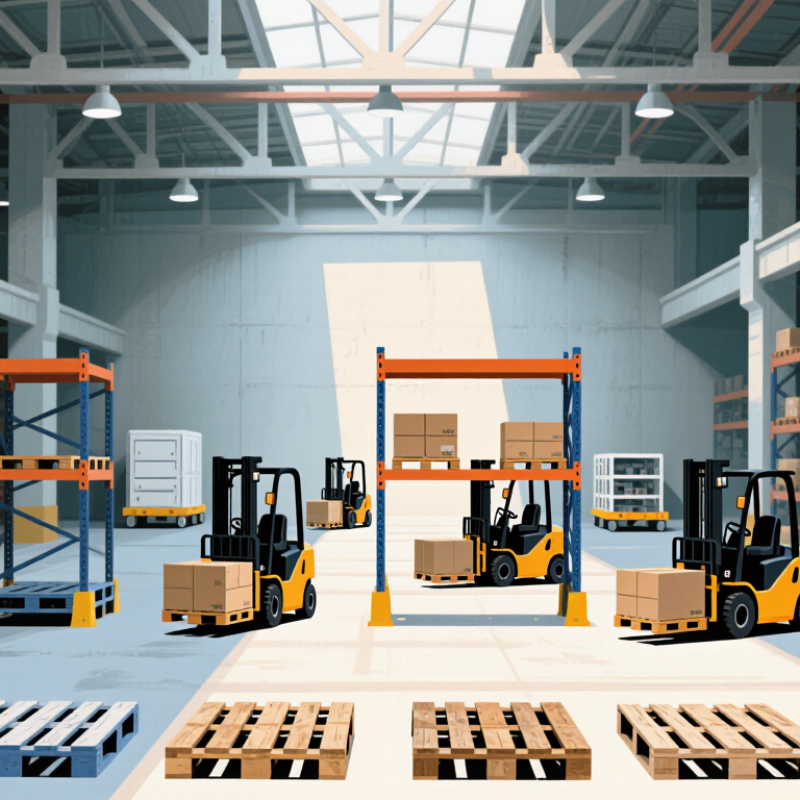
7 Best Heavy Duty Pallet Racks for Global Buyers

Understanding Heavy-Duty Pallet Rack Systems and Their Main Uses

Heavy-duty pallet rack systems are steel storage frameworks designed to hold palletized goods at multiple vertical levels. Their main value is controlled storage density without blocking every load position. For global buyers, the right system depends on product weight, pallet dimensions, handling equipment, and turnover speed. Selective pallet racking suits mixed inventory because forklifts can reach each pallet directly. Double-deep, drive-in, and push-back layouts increase density, but they reduce access flexibility. That trade-off matters.

A reliable specification begins with verified load calculations. Buyers should request beam ratings, upright capacity, connection details, and installation guidance. Rack components must match the intended load, not just the warehouse footprint. Floor flatness, aisle width, ceiling height, forklift turning space, and local safety requirements also affect performance. Anchoring and impact protection deserve attention near loading lanes. A rack can look strong while carrying an unsuitable load. Clear capacity labels help warehouse teams avoid guesswork during busy shifts.

These systems support distribution centers, manufacturing plants, cold storage rooms, automotive warehouses, and bulk goods operations. In high-volume facilities, drive-in racks can store similar products in deep lanes. Selective racks work better when orders change frequently. Experienced planners also review inspection routines and replacement access before approving a layout. I have seen density targets dominate early discussions, while maintenance space receives little thought. That assumption needs reconsidering. A practical design leaves room for safe handling, regular checks, and future inventory changes.

Key Factors for Comparing Pallet Racks for Global Warehouse Needs

7 Best Heavy Duty Pallet Racks for Global Buyers

Comparing pallet racks requires more than checking maximum load. The seven practical options are selective, drive-in, double-deep, push-back, pallet flow, cantilever, and mobile racks. Each solves a different warehouse problem. Selective racks suit mixed stock and frequent picking. Drive-in systems increase density but reduce access. Pallet flow supports first-in, first-out rotation. Cantilever racks handle long goods, while mobile racks can improve floor utilization.

The key measure is usable capacity, not advertised capacity. Grand View Research’s 2024 pallet racking report identifies steady market growth, driven by e-commerce and warehouse expansion. Yet higher density can create slower picking and more complicated maintenance. Compare beam capacity, upright spacing, pallet dimensions, forklift clearance, and floor loading. A 2,000-kilogram pallet may need stronger beams than expected after dynamic handling forces are considered. Small errors matter.

Global buyers should also check seismic design, corrosion protection, fire-clearance requirements, and local engineering approval. ANSI MH16.1 and EN 15629 offer useful technical reference points, but regional rules still differ. The 2024 MHI Annual Industry Report highlights continuing investment in automation and warehouse technology. That makes rack compatibility with scanners, conveyors, and automated vehicles increasingly important. Ask for material certificates, load plaques, installation instructions, and inspection procedures. A low quotation may exclude anchoring or international freight. I have seen “complete” systems arrive without practical installation details. That comparison deserves more attention.

7 Best Heavy Duty Pallet Racks for Global Buyers – Key Factors for Comparing Pallet Racks for Global Warehouse Needs
Rank Rack Configuration Best Warehouse Application Typical Selectivity Typical Storage Density Typical Load per Beam Level Typical Clear Height Range Forklift Aisle Guidance Stock Rotation Key Buying Consideration
1 Adjustable Selective Pallet Rack General warehouses with many stock-keeping units and frequent pallet access Excellent Low to medium Approximately 1,000–5,000 kg About 3–12 m, subject to building and equipment limits Approximately 3.0–3.7 m for conventional reach-truck layouts FIFO or LIFO Best all-purpose option; prioritize adjustable beam levels, frame strength, seismic design, corrosion protection, and local compliance.
2 Double-Deep Pallet Rack Warehouses storing multiple pallets of the same product with moderate product variety Good Medium to high Approximately 1,000–4,500 kg About 4–12 m Approximately 3.3–3.8 m, depending on reach-truck design Primarily LIFO; FIFO is limited Improves cube utilization compared with selective rack, but requires specialized double-reach equipment and careful load sequencing.
3 Drive-In Pallet Rack High-volume, low-SKU storage for uniform products such as beverages, raw materials, and seasonal goods Limited High to very high Approximately 500–2,000 kg per pallet position, depending on tunnel depth and design About 4–10 m Usually wider operating clearances are required because forklifts enter the rack structure Mostly LIFO Offers strong space efficiency but has lower selectivity and greater risk of rack impact; use guided operating procedures and robust entry protection.
4 Push-Back Pallet Rack Medium-volume storage where several pallets of each product are held in compact lanes Good High Approximately 500–1,500 kg per pallet position, depending on trolley and lane design About 4–10 m Approximately 3.2–3.8 m Typically LIFO Reduces aisle count and supports fast loading and unloading; check trolley capacity, lane depth, pallet quality, and slope requirements.
5 Pallet Flow Rack Perishable goods, food distribution, and operations requiring controlled pallet rotation Very good Medium to high Approximately 500–1,500 kg per pallet position, depending on roller and brake design About 4–10 m Approximately 3.0–3.7 m FIFO Supports reliable stock rotation and high throughput; specify pallet dimensions, roller load rating, brake rollers, lane length, and fire protection clearances.
6 Mobile Pallet Rack Cold stores, archives, and facilities where floor area is expensive or limited Good Very high Approximately 1,000–4,000 kg per beam level About 3–10 m One working aisle can serve multiple rack rows; aisle width depends on the selected forklift FIFO or LIFO Can substantially reduce fixed aisle space, but requires reinforced flooring, safety sensors, emergency access, electrical planning, and reliable maintenance support.
7 Automated Storage and Retrieval Pallet Rack High-throughput distribution centers with consistent pallet loads and strong inventory-control requirements Very good Very high Approximately 500–1,500 kg per pallet position, depending on crane and rack design About 8–30 m or more in purpose-built facilities Dedicated crane aisles; conventional forklift aisles are not used inside the automated aisle FIFO or LIFO, controlled by software Provides high vertical utilization and traceability, but requires major capital investment, stable power, software integration, preventive maintenance, and specialist commissioning.
Capacity figures are typical planning ranges rather than guaranteed ratings. Final rack selection must be engineered for pallet dimensions, unit loads, beam spans, rack height, floor capacity, forklift type, seismic conditions, sprinkler requirements, and the applicable local or international safety standards.

Seven Heavy-Duty Pallet Rack Types and Their Best Applications

Selective pallet racks suit warehouses with many product lines and frequent access. Their adjustable beams support mixed pallet heights, while standard forklifts reach each position directly. This layout is simple to inspect, but it uses more floor space than dense storage.

Drive-in racks work well for large quantities of similar goods, such as seasonal cartons or packaged materials. Forklifts enter guided lanes, reducing aisles and increasing storage density. Drive-through racks allow loading from both ends, which helps when stock must move in a controlled sequence. Both systems need disciplined forklift operation. Small alignment errors can damage rails.

Push-back racks fit medium-turnover inventory stored by product type. Pallets sit on nested carts and move forward as operators unload them. Pallet flow racks use rollers and gravity, making them useful for first-in, first-out distribution. However, roller maintenance matters more than many buyers expect. Double-deep racks place one pallet behind another, improving density but requiring reach trucks and careful stock planning.

Cantilever racks are better for long, heavy loads, including pipes, timber, and metal sections. They provide open front access and adjustable arms, though uneven loading can create stability concerns. In global purchasing, buyers should verify beam capacity, upright protection, floor conditions, and seismic requirements with a qualified engineer. Labels must show safe working loads clearly. I would not choose a dense system only because it stores more pallets. A site trial, forklift check, and inspection routine can reveal practical problems before installation.

Safety, Load Capacity, Installation, and Maintenance Considerations

Heavy-duty pallet racks demand more than impressive steel thickness. Load capacity depends on beam span, upright design, pallet condition, and stored-load distribution. The 2023 U.S. Bureau of Labor Statistics Census recorded 1,068 fatal injuries in transportation and material-moving occupations. That figure is not rack-specific, but it shows why warehouse controls matter. Select systems engineered to recognized standards, such as ANSI/RMI MH16.1, and verify seismic requirements for the installation country.

Capacity labels must remain visible at operator eye level. Never estimate capacity from beam appearance. A competent engineer should review pallet weights, forklift loads, clearance, and floor strength. Installation teams should check upright plumb, anchor torque, frame spacing, and damaged components. Small errors become costly under repeated impact. Test every bay before full loading. Then document the result.

Maintenance needs a simple rhythm. Inspect racks after forklift contact, unusual movement, or load changes. Schedule formal inspections by a trained person, following local rules and the manufacturer’s engineering guidance. The MHI 2024 Annual Industry Report, based on over 1,000 supply-chain professionals, identifies labor pressure and operational resilience as major investment concerns. That makes clear labeling and practical training essential. I have seen warehouses maintain excellent records but miss bent lower uprights. Records are not protection. Physical checks matter more. Repairs should use approved replacement parts, not improvised welding or borrowed components. Confidence is useful, but verified measurements are better.

How to Select the Right Pallet Rack for Different Storage Operations

Selecting a heavy-duty pallet rack starts with the operation, not the catalog photo. In warehouse audits, I check pallet weight, dimensions, turnover rate, aisle width, and handling equipment. Selective racks suit varied SKUs and direct access. Drive-in systems increase density, but reduce access and require disciplined loading. Push-back racks support multiple pallets per lane, while pallet-flow racks help fast-moving goods rotate smoothly. Seven options can look similar online. They do not perform similarly.

For long steel, timber, or irregular loads, cantilever racks are more practical than pallet beams. Double-deep storage improves density, yet it needs compatible forklifts and tighter inventory control. Automated storage systems can reduce travel, but they demand reliable software, power, and maintenance support.

Load capacity must include beam levels, pallet positions, and impact risks. Never size from average loads. Use the heaviest realistic case.

A dependable selection also considers seismic exposure, floor strength, corrosion, fire protection, and local inspection rules. Ask for stamped load tables, installation drawings, material certificates, and a clear damage policy.

Leave room for future pallet changes. This is where many projects fail. I once saw an efficient layout become costly after pallet heights increased by a few centimeters.

Recheck clearances with the actual forklift, not a brochure specification. A small pilot bay can reveal picking delays, beam deflection, and operator blind spots before full installation.

Reconsider the cheapest quote when replacement parts or trained service are uncertain.

FAQS

What should buyers compare when selecting pallet racks?

Compare usable capacity, not only the advertised maximum load. Check beam strength, upright spacing, pallet size, forklift clearance, and floor loading.

Which pallet rack suits mixed products and frequent picking?

Selective racks provide direct access to every pallet. Adjustable beams handle different pallet heights. They need more floor space.

When are drive-in or drive-through racks practical?

They suit large quantities of similar goods, such as seasonal cartons. Forklifts enter guided lanes. Drive-through designs allow loading from both ends.

What are the main limits of high-density rack systems?

Higher density can slow picking and complicate maintenance. Small forklift alignment errors may damage rails. More storage is not always better.

When should a warehouse use pallet flow or push-back racks?

Pallet flow supports first-in, first-out movement through rollers and gravity. Push-back racks suit medium-turnover goods stored by product type.

Which rack type works best for long materials?

Cantilever racks handle pipes, timber, and metal sections. Their open fronts improve access. Uneven loading can reduce stability.

What safety details should global buyers verify?

Check seismic design, corrosion protection, fire-clearance space, and local engineering approval. Confirm safe working loads on visible labels.

What documents should be requested before purchasing?

Request material certificates, load plaques, installation instructions, and inspection procedures. A low quotation may exclude anchoring or international freight.

How can buyers test a rack system before installation?

Run a site trial with the intended forklift. Check turning space, pallet fit, floor condition, and access speed. I might overlook maintenance needs.

How should racks connect with warehouse technology?

Confirm compatibility with scanners, conveyors, and automated vehicles. Clearances and operating paths must match the equipment. This detail is easy to miss.

Conclusion

Choosing the right Heavy Duty Pallet Rack is essential for improving warehouse capacity, workflow, and long-term operational efficiency. This guide explains the structure and common uses of heavy-duty pallet rack systems, from standard selective storage to drive-in, double-deep, cantilever, push-back, carton flow, and pallet flow configurations. Each type offers different advantages depending on inventory turnover, product dimensions, available floor space, and accessibility requirements.

For global warehouse operations, careful comparison should include load capacity, rack dimensions, material quality, installation conditions, and compatibility with handling equipment. Safety is equally important, requiring proper anchoring, balanced loading, regular inspections, and timely maintenance. By evaluating storage volume, product movement, picking frequency, and future expansion needs, warehouse managers can select a practical rack solution that supports safe, organized, and cost-effective storage across a wide range of industries.


Amelia

Amelia

Amelia is a seasoned marketing professional with a wealth of expertise in our company’s core offerings. With an unwavering passion for driving growth and innovation, she plays a pivotal role in shaping our marketing strategies and enhancing brand visibility. A key aspect of her responsibilities......