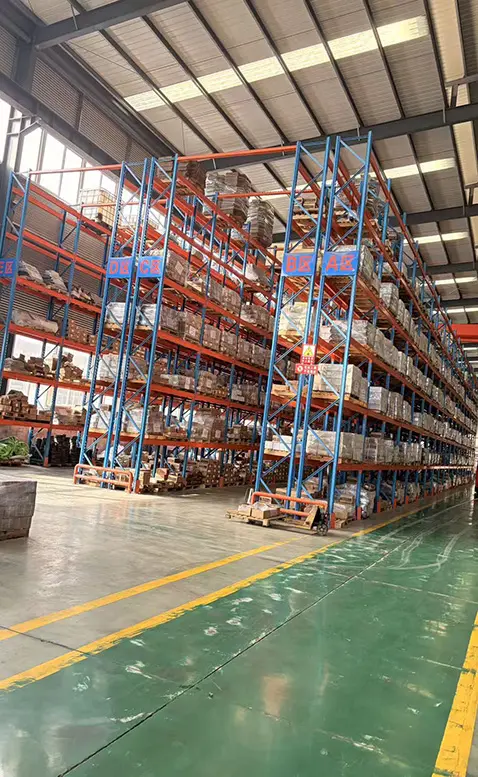
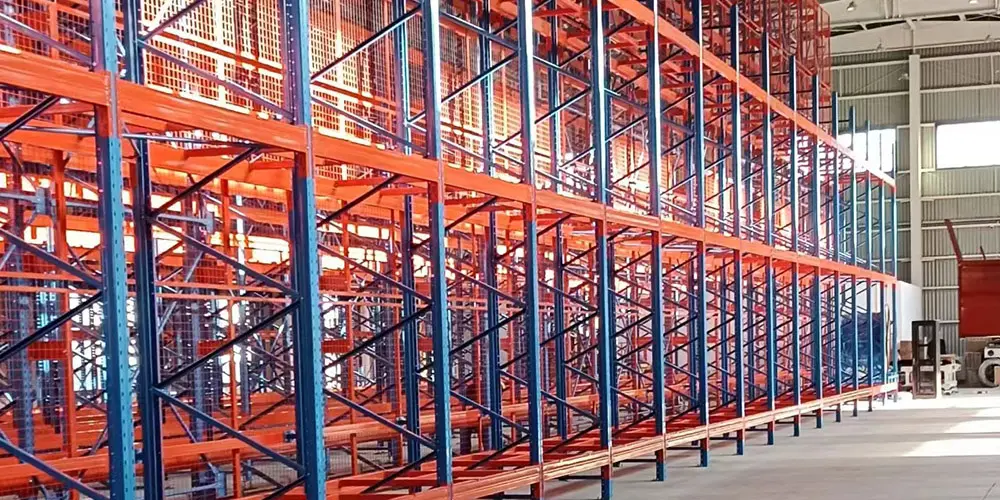
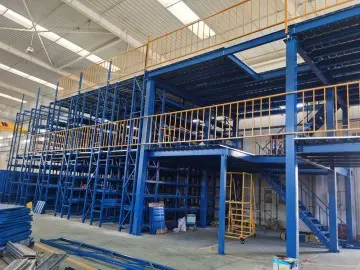
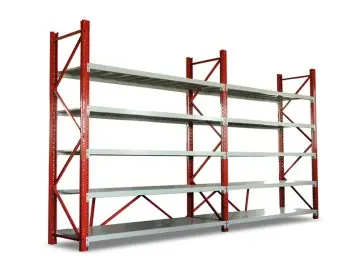
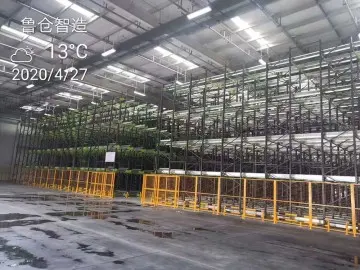
In modern logistics engineering, balancing volumetric density with pallet accessibility remains a critical design challenge. Push Back Racking represents one of the most mechanically efficient high-density pallet storage solutions available to warehouse operations today.
Push Back systems utilize nested carts on inclined structural steel rails, allowing storage from 2 to 6 pallets deep per lane. This increases storage density by 45% to 75% compared to standard selective pallet racking by consolidating aisle space.
Operating on a Last-In, First-Out (LIFO) inventory flow, forklifts place pallets on nested carts from a single picking aisle. As a new unit load is pushed inward, preceding pallets step back down the track. Upon picking, gravity feeds remaining pallets forward.
Unlike Drive-In racking where forklifts must physically drive inside the upright rack structure, Push Back operators remain strictly within the aisle. This design mitigates structural collision damage and extends rack service life.
To design a Push Back Racking system that maintains smooth movement under severe dynamic loads, engineers evaluate structural steel yield strength, gravity slope angles, and wheel bearing friction coefficients.
Guake Push Back Systems utilize a multi-tier telescoping nested cart architecture. Carts flow above one another on inclined structural steel channels. The top cart (Level 1) receives the first pallet. When the second pallet is loaded, it pushes the top cart back, revealing Cart Level 2.
Compared to full roller bed push back systems, nested cart designs eliminate maintenance overhead associated with hundreds of individual roller bearings. Structural steel cart frames withstand accidental heavy drops and point loads far better than standard cylindrical rollers.
The slope gradient of the support rail track is engineered precisely between 3.0° and 4.5° (approx. 3.5% to 5% pitch angle) depending on pallet weight distribution and bottom deck configuration (GMA, Euro, or perimeter base pallets).
The gravitational force vector parallel to the inclined rail must overcome static friction ($\mu_s$) without creating uncontrolled kinetic acceleration during unloading:
F_slope = m · g · sin(θ) > F_friction
During unloading, as the forklift pulls back the front pallet, the remaining nested carts glide forward automatically to the picking aisle face, managed by controlled rolling resistance.
Shandong Province, China, represents an elite global hub for logistics equipment manufacturing, structural steel fabrication, and engineering innovation. Sourcing Push Back Racking directly from a qualified OEM/ODM factory like Guake Logistics Technology yields measurable capital and operational advantages.
Direct integration with premier Chinese steel mills guarantees high-tensile cold-rolled steel coils with verified mill test reports (MTRs). Structural components utilize certified Q355B steel, offering yield strength up to 355 MPa for superior load performance under extreme vertical loads.
Guake operates continuous 20-station automated upright cold-roll lines, multi-spindle CNC punch presses, and robotic MIG welding stations. This guarantees dimensional tolerances within ±0.5mm, ensuring seamless cart track alignment and frictionless wheel motion.
By cutting out intermediate regional distributors, direct-from-factory procurement lowers equipment capital expenditure by 30% to 50%. Optimized knocked-down (KD) packaging design allows high-density container loading to minimize international ocean freight costs per pallet space.
Different industry sectors present unique storage environment challenges. Push Back Racking systems engineered by Guake adapt across diverse operational parameters.
Refrigerated warehouse space is expensive to build and maintain. Push Back Racking maximizes storage density while utilizing specialized low-temperature synthetic lubricants, cold-grade steel formulations, and anti-corrosive powder coatings resistant to thermal cycling moisture condensation.
F&B distributors handling medium SKU counts with multiple pallets per batch benefit from Push Back's aisle-level selectivity. Each lane can store a distinct SKU, giving operators fast pick-face access without moving unrelated inventory batches.
Third-party logistics operators face seasonal inventory swings. Push Back Racking allows 3PL managers to reconfigure storage layout density rapidly without purchasing proprietary, specialized material handling vehicles or automated guided vehicles (AGVs).
A technical comparison across primary warehouse racking topologies assists facility planners in making data-driven capital expenditure decisions.
| Performance / Feature Spec | Push Back Racking | Drive-In Racking | Radio Shuttle Racking | Selective Pallet Rack |
|---|---|---|---|---|
| Volumetric Storage Density | High (70%-75%) | Very High (75%-85%) | Ultra High (85%+) | Standard (40%-50%) |
| SKU Selectivity Rate | Good (Lane Level) | Poor (Block Level) | Good (Lane Level) | 100% Direct Access |
| Inventory Flow Rule | LIFO (Last-In, First-Out) | LIFO (Strict) | FIFO or LIFO | FIFO or LIFO |
| Forklift Damage Risk | Very Low (Aisle Only) | High (In-Rack Drive) | Zero (Aisle Only) | Low |
| Handling Speed (Pallets/Hr) | High (Fast Push/Glide) | Slow (Cautious Entry) | Very High (Automated) | High |
| Special Equipment Requirement | Standard Forklifts | Standard Forklifts | Radio Shuttle Robot | Standard Forklifts |
| Capital Cost / Pallet Position | Moderate / Balanced | Low Initial Cost | Higher Capital Cost | Lowest Base Cost |
Industrial racking systems represent major structural assets carrying heavy dynamic loads. Guake Logistics Technology enforces rigorous design, manufacturing, and inspection protocols.
All structural calculations follow North American RMI (Rack Manufacturers Institute) and European FEM 10.2.02 / EN 15512 specifications. Finite Element Analysis (FEA) modeling verifies frame deflection under maximum rated load combinations.
Custom baseplate footprint sizing, heavy-duty floor anchor bolts, and frame diagonal bracing profiles are calculated specifically to meet local building codes and regional seismic acceleration zones (Zone 1 through Zone 4).
Cart assemblies include built-in flange hooks that lock into side guide rails, rendering cart pop-out or misalignment impossible even under aggressive forklift push force or uneven load placements.
Guake manages turnkey international procurement, providing complete project accountability from preliminary layout drawings to overseas installation guidance.
Our engineers review your warehouse DWG floorplan, clear height limits, floor slab PSI specs, and forklift mast parameters to deliver an optimized racking layout drawing within 48 hours.
Components undergo automated roll-forming, laser shearing, robotic welding, shot blasting, and thermosetting electrostatic powder coating under ISO 9001 certified quality control.
Every shipment includes detailed component packing lists, color-coded installation manuals, 3D assembly diagrams, and optional direct engineer dispatch or remote commissioning support.
Comprehensive technical answers regarding Push Back Racking manufacturing, structural specifications, and global purchasing.
Push Back Racking utilizes a series of nested carts riding on inclined structural rails. The first pallet is placed by a forklift onto the top cart. When the second pallet is inserted, the forklift operator uses the second pallet to push the first pallet back, exposing the next nested cart underneath. This process repeats for up to 6 pallets deep. During unloading, the forklift removes the front pallet, and gravity allows the remaining pallets to glide smoothly forward to the aisle face for easy picking.
Guake manufactures engineered Push Back systems supporting 2-deep, 3-deep, 4-deep, 5-deep, and 6-deep configurations. The 2 to 4-deep designs are most popular for standard forklift capacities, while 5 and 6-deep lanes are tailored for specialized operations with heavy-duty forklift pushing power and custom rail inclines.
Drive-In racking requires forklifts to drive inside the steel rack structure, creating high exposure to post and beam impact damage. Push Back Racking eliminates this risk because forklift trucks operate exclusively within the main aisle. Operators never drive inside the rack matrix, drastically reducing maintenance repair costs and extending facility service life.
Yes. Guake designs cold-room specific Push Back Racking systems capable of performing in ambient temperatures as low as -30°C (-22°F). We utilize high-yield structural steel formulations that remain ductile under freezing conditions, stainless steel cart axles, sealed low-temp bearings, and anti-corrosive powder coatings resistant to condensation freeze-thaw cycles.
Push Back systems are compatible with virtually all standard forklift types, including counterbalance trucks, reach trucks, and deep-reach trucks. No specialized attachment or proprietary vehicle is required. The operator only needs sufficient pushing force (tractive power) to push preceding pallets back up the gentle 3.5° incline.
Guake nested carts feature integrated safety alignment guides and anti-pop-out tabs that capture the cart wheel within the side flange of the structural rail track. Additionally, precision manufacturing tolerances (±0.5mm) and robust cross-bracing maintain lane squareness, preventing structural twist and cart jamming.
Our structural design calculations conform strictly to global racking standards, including RMI (Rack Manufacturers Institute - USA), FEM 10.2.02 (European Federation of Materials Handling), and EN 15512 standards. We perform seismic dynamic analysis, frame buckling checks, and beam deflection limit testing (L/240 maximum deflection under full rated capacity).
While push back lanes perform best with consistent pallet dimensions per lane, Guake can engineer custom wide-deck carts or full-mesh cart platforms capable of carrying non-standard, variable, or damaged wooden pallets safely without causing deck overhang catching issues.
Standard manufacturing lead time is 20 to 30 days depending on total tonnage. Uprights and beams are bundled with steel strapping and protective plastic wrapping, while cart assemblies, rails, and hardware are crated in export-standard wooden or steel pallet boxes optimized for 40ft HQ container loading.
You can request a free engineering layout by providing your building CAD drawing or dimensioned PDF, clear ceiling height, pallet dimensions (W x D x H), maximum unit load weight, and required throughput volume. Our structural engineers will return a complete CAD proposal and technical quotation within 24 to 48 hours.