Directly manufactured solutions designed for global industrial logistics, order fulfillment hubs, and heavy manufacturing facilities.
Unlocking unused overhead cubic space to double or triple usable floor surface without costly facility expansion or physical relocation.
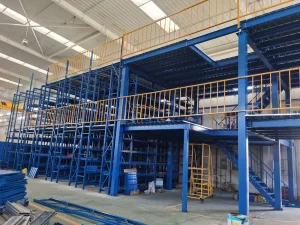
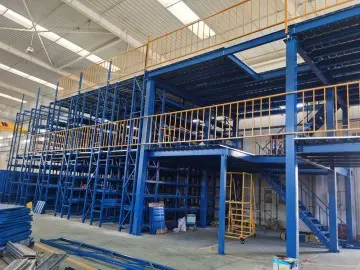
Free-standing steel platforms are autonomous, structural-steel framed elevated floors supported by heavy-duty I-beam or square hollow section (SHS) structural columns. Unlike rack-supported variants, free-standing platforms utilize wide-span hot-rolled structural steel profiles (such as Q355B or S355JR structural steel) to create expansive clear spans underneath, eliminating restrictive column grids.
These engineered platforms are mathematically calculated to support extreme point loads and uniform live loads ranging from 300 kg/m² (approx. 60 lbs/sq.ft) up to heavy-duty industrial thresholds exceeding 1,500 kg/m² (approx. 300 lbs/sq.ft). They serve as robust foundations for heavy CNC machinery, assembly lines, automated sorting loops, or modular executive office pods within high-ceiling logistics parks.
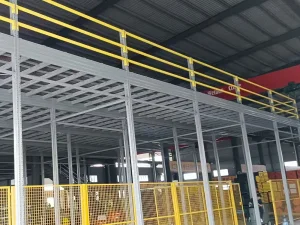
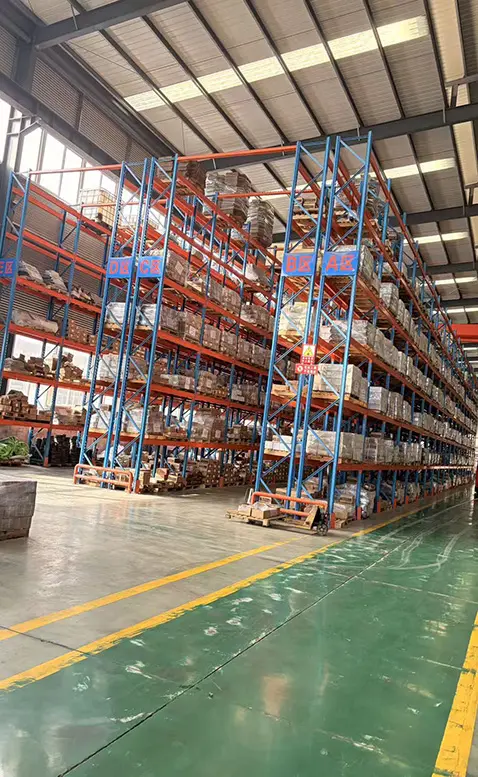
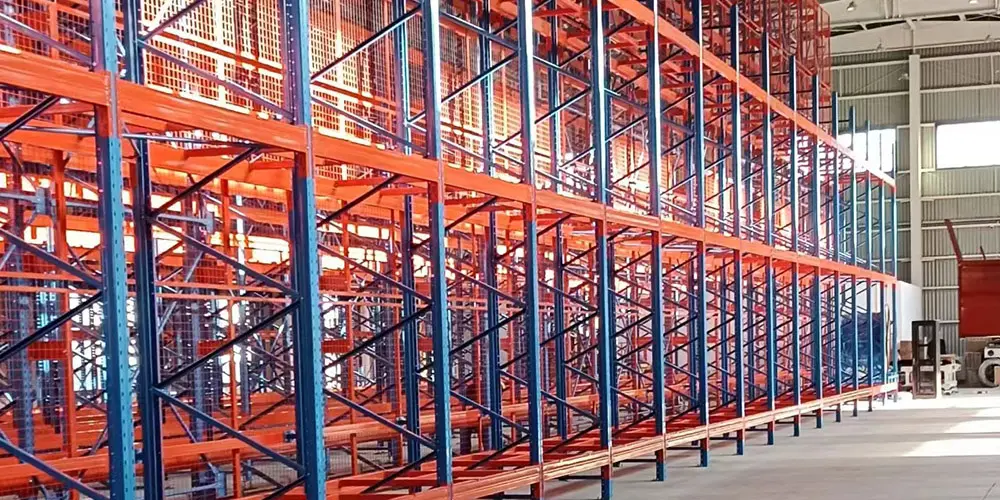
Rack-supported mezzanine systems utilize standard high-density selective pallet racking or heavy-duty shelving uprights as the primary load-bearing structural support columns. By mounting intermediate walkway floor decks directly onto racking beams and cold-formed C/Z joists, these multi-tier structures optimize vertical storage density for small-to-medium parts hand-picking operations.
Multi-tier mezzanine shelving effectively multiplies operational floor surface area by up to 300% without installing dedicated structural steel pillars. Designed primarily for e-commerce fulfillment centers, automotive spare parts hubs, and pharmaceutical distribution centers, these systems incorporate integrated staircases, cat-walks, goods lifts, and safety pallet drop gates to facilitate efficient manual picking workflows.
"Structural deflection compliance is the ultimate benchmark of mezzanine engineering safety. Standard design criteria limit live load deflection to L/300 (where L is span length between columns) under maximum rated load, ensuring zero dynamic sway during heavy forklift loading or intense pedestrian traffic."
Strategic macroeconomic drivers fueling global enterprise adoption of modular steel mezzanine systems across key industrial regions.
As commercial warehouse real estate lease rates rise globally and prime industrial land availability decreases in key logistics corridors across North America, Western Europe, and Asia-Pacific, enterprise warehouse directors are prioritizing cubic space utilization over horizontal footprint expansion. Structural steel mezzanine platforms offer a capital-efficient alternative, enabling operations to expand capacity within existing building envelopes at 20-30% of the cost per square meter compared to greenfield site construction or new real estate acquisition.
Procurement teams in North America strictly demand compliance with the International Building Code (IBC 2021) and ANSI/RMA MH28.3 standards. Structural solutions must integrate seamlessly with OSHA fall protection regulations, featuring 42-inch safety guardrails, 4-inch kickplates, and certified seismic zone anchorage capable of handling Zone 3/4 lateral forces.
EU industrial buyers prioritize Eurocode 3 (EN 1993) structural steel verification, CE marking certification, and EN ISO 1461 hot-dip galvanizing for corrosion longevity. Environmental considerations prioritize non-polluting powder coating finishes and modular steel designs that can be disassembled and 100% recycled upon lease termination.
Rapidly scaling e-commerce mega-hubs in Southeast Asia and the Middle East demand rapid-deployment, high-capacity mezzanine floors capable of supporting automated conveyor lines, cross-docking sorting systems, and high-density goods-to-person mobile robot (AMR) fleets.
Tailoring mezzanine floor sub-structures, joist spacing, and decking materials to specialized operational environments.
Multi-level rack-supported mezzanines engineered with high-density particle board over corrugated B-decking or smooth steel plate. Engineered for high foot traffic, light trolley wheel rolling loads, and integration with vertical reciprocating conveyors (VRCs) and automated spiral chutes.
Heavy structural steel platforms featuring hot-rolled H-beam main girders and high-load structural steel bar grating. Designed for open air circulation, liquid drainage, and extreme point loading imposed by industrial tooling, stamping machines, and die storage.
Galvanized or epoxy-coated mezzanine structures fitted with open mesh steel grating or diamond checkered plate flooring. Allows uninhibited cold air circulation, complies with strict food-grade hygiene washdown routines, and prevents moisture accumulation.
The selection of mezzanine floor decking dictates point-load capacity, noise suppression, light penetration, fire safety compliance, and rolling wheel resistance:
| Decking Material Type | Point Load Capacity | Wheel Rolling Resistance | Fire & Sprinkler Penetration | Best Industry Application |
|---|---|---|---|---|
| Steel Bar Grating | Very High (up to 1,500 kg/m²) | Rough / High Vibration | 100% Water/Air Permeable | Heavy Industry, Outdoor, Chemical & Cold Storage |
| Checkered Steel Plate (Tear Drop) | High (800 – 1,200 kg/m²) | Smooth / Anti-Slip Surface | Impermeable (Solid Floor) | Tooling Storage, Automotive, Heavy Machinery Pods |
| Particle Board over Steel B-Deck | Medium (300 – 600 kg/m²) | Excellent Smooth Rolling | Impermeable (Solid Floor) | E-Commerce Picking, Apparel, Office Space Mezzanines |
| Perforated Steel Decking | High (500 – 1,000 kg/m²) | Moderate / Low Noise | 50% Sprinkler Permeable | Multi-Tier Warehouses needing In-Rack Fire Code Compliance |
Evaluating structural mezzanine platforms against alternative high-density warehouse storage architectures.
| System Type | Vertical Space Gain | Floor Load Range | Access Selectivity | System Flexibility & Relocation |
|---|---|---|---|---|
| Free-Standing Steel Platform | Adds 100% - 200% Usable Floor Area | 500 - 1,500 kg/m² | 100% Direct Open Access | Fully Demountable & Relocatable |
| Rack-Supported Mezzanine | Adds 100% - 300% Hand-Pick Surface | 300 - 800 kg/m² | High (Manual Parts Pick) | Modular / Expandable Grid |
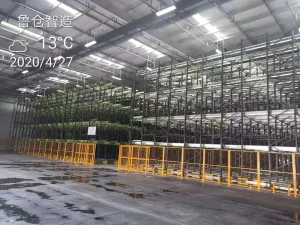
| Radio Shuttle Racking System | High Cubic Pallet Density | 1,000 - 1,500 kg/pallet | LIFO / FIFO Deep Lane | Fixed Bay Structure |
| Mobile Racking System | Maximum Footprint Saving (Single Aisle) | Up to 24,000 kg/bay | 100% Direct Selective Access | Sub-floor Rail Installation Required |
Ensuring structural integrity, fire prevention integration, and worker safety under global municipal regulations.
Professional mezzanine structural manufacturing relies on precise Finite Element Analysis (FEA) engineering modeling to simulate real-world static loads, dynamic seismic shocks, and dead-weight strain. Designs comply strictly with:
Personnel protection and municipal fire department compliance are paramount for facility sign-off and insurance approval:
Integrating digital automation, advanced metallurgy, and smart IoT sensors into structural steel manufacturing.
Transitioning from manual fabrication to high-precision robotic laser cutting and continuous automated roll-forming lines. Ensures structural beam profile dimensional tolerances within ±0.5mm, delivering perfect bolt-hole alignment and rapid zero-defect on-site assembly.
Next-gen mezzanine decks feature super-flat, high-durability epoxy and composite resin coatings engineered to provide optimal wheel traction and precise optical navigation surfaces for Autonomous Mobile Robots (AMRs) and Automated Guided Vehicles (AGVs).
Integration of wireless strain gauge sensors and micro-deflection IoT nodes directly onto primary mezzanine main girders. Real-time digital telemetry alerts facility managers instantly via WMS dashboard if live loads approach or exceed engineered limits.
Your trusted direct manufacturer for high-precision warehouse racking systems, structural steel platforms, and intelligent logistics equipment.
Founded in 2010 in Linyi City, Shandong Province, China, Guake Logistics Technology (Shandong) Co., Ltd. operates a modern 20,000+ m² manufacturing facility equipped with automated cold-roll forming mills, heavy structural steel cutting lines, automatic continuous electrostatic powder coating chambers, and robotic welding stations. Supported by a workforce of over 100 experienced structural engineers, technicians, and international project logistics managers, Guake delivers fully custom-engineered warehouse storage solutions worldwide.
From initial DWG/CAD floor plan review, 3D BIM structural layout design, and FEA load calculation through to factory fabrication, overseas container packing, export documentation, and remote or on-site installation guidance, Guake provides a single point of technical accountability.
Production runs adhere strictly to ISO9001 quality assurance standard protocols. Raw materials are sourced exclusively from tier-one steel mills (such as Shougang and Baosteel) with certified structural test reports (MTC) matching Q235B and Q355B structural steel grade specifications.
Detailed technical answers for procurement directors, structural engineers, and logistics facility managers.
A free-standing steel platform is constructed using heavy-duty structural steel columns (such as square hollow sections or wide-flange I-beams) and hot-rolled structural main girders. This creates wide clear spans underneath without intrusive upright columns, ideal for ground-floor manufacturing, assembly lines, or open forklift movement.
A rack-supported mezzanine uses standard pallet racking or medium/heavy-duty shelving upright frames as the structural pillars supporting the upper floor deck. This maximizes hand-picking storage density both above and below the mezzanine floor, making it an extremely economical solution for e-commerce picking and small-parts warehousing.
Standard industrial mezzanines typically require a reinforced concrete slab with a minimum thickness of 150mm to 200mm (6 to 8 inches) and a concrete compressive strength rating of C25/C30 (approx. 3,000 to 4,000 PSI). For heavy-duty steel structural platforms with high point loads (exceeding 1,000 kg/m²), structural footings or enlarged baseplates with heavy-duty chemical anchor bolts are calculated by our engineering team to distribute point loads safely without exceeding concrete slab punching shear limits.
Fire code compliance (such as NFPA 13 standards) generally requires fire sprinkler water penetration to lower levels. When using solid flooring (such as particle board or solid steel plate), secondary fire sprinkler pipe networks must be installed directly beneath the mezzanine deck. Alternatively, specifying open steel bar grating with a minimum 50% open area allows overhead ceiling fire sprinklers to penetrate down through the platform, eliminating the cost of sub-deck piping.
Yes. Our in-house structural design team routinely works with client CAD (.DWG/.DXF) and Revit BIM files. We customize column grid spacing, deck clear height, staircase placement, pallet drop gate positions, floor load ratings, and color schemes (powder coating finishes) to integrate seamlessly around your building's structural columns, overhead building clear height, HVAC ductwork, and lighting fixtures.
Standard factory manufacturing lead time is typically 15 to 25 calendar days after final structural shop drawing sign-off. Shipping times vary depending on the destination port: approximately 14-20 days for Southeast Asia/Middle East, and 25-35 days for European and North American ports. All components are export-packed in steel-framed bundles with protective edge guards to prevent transit damage during ocean freight.
100% yes. Guake structural platforms utilize 100% bolted structural connections (high-strength grade 8.8 or 10.9 structural bolts) with zero field welding required. This modular bolt-together design allows the entire platform structure to be unbolted, packaged, relocated, and re-erected in a new facility or expanded with additional structural bays in the future.
Direct factory supply of certified heavy-duty storage racks, mezzanine platforms, and automated logistics systems.