Racking Storage is the framework behind many efficient warehouses, distribution centers, and production facilities. It transforms vertical space into organized inventory capacity. Yet choosing a system involves more than counting pallet positions. A busy warehouse may need wide forklift aisles, while a cold-storage facility may prioritize compact density. The right decision depends on products, handling equipment, building height, access requirements, and future growth.
From practical warehouse assessments, selective pallet racking remains a dependable option for mixed stock and frequent item access. Drive-in racking can increase density, but it usually offers less direct access to individual pallets. Push-back systems support multiple pallets per lane, while pallet-flow racking can help manage first-in, first-out inventory. Cantilever racking suits long materials such as timber, pipes, and metal profiles. Each design solves a different operational problem.
Small details matter. A forklift turning radius may reduce usable capacity. Uneven floors can affect installation and safety. Load labels must match real pallet weights, not optimistic estimates. Local building codes, fire protection requirements, inspection practices, and engineering guidance should also shape the final plan. Qualified suppliers and structural professionals can verify these factors before installation.
There is no universal winner.
This guide explains how Racking Storage works, compares common system types, and identifies the conditions each one suits. It also considers cost, accessibility, durability, and expansion. Some recommendations may change after a site survey. That is normal. A careful decision leaves room for operational reality, because a layout that looks efficient on paper may slow workers down in practice.
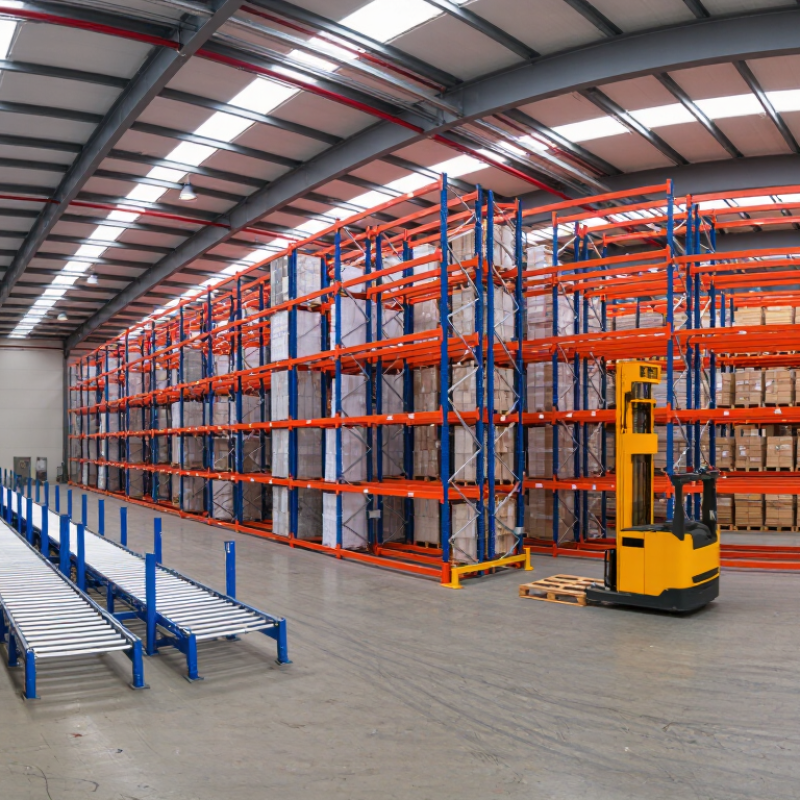
Racking storage uses vertical frames, horizontal beams, and decking to hold pallets above the floor. Uprights carry the weight, while beams support each pallet position. Forklifts place loads into these locations and retrieve them when orders arrive. Think of it as a three-dimensional address system. Aisle, bay, and level identify each pallet. According to MHI’s 2024 Annual Industry Report, 55% of surveyed supply-chain organizations increased technology investment in 2023. That investment makes rack location data more valuable, not less.
The right rack depends on product size, turnover, and access needs.
Selective pallet racking gives every pallet a direct aisle position, so it suits varied products. Drive-in racking stores pallets deeply and improves density, but access is limited. Pallet-flow systems use rollers and gravity, supporting first-in, first-out movement. Cantilever racks handle long items, such as pipes or timber.
Heavy loads need verified beam ratings, floor capacity, and impact protection.
Small details matter.
WERC’s 2024 DC Measures Report tracks inventory accuracy near the 99.5% benchmark for surveyed distribution operations. Poor rack labeling can quickly damage that result. In practice, warehouses are rarely perfect. A fast-moving SKU may need more locations than planned. A narrow aisle may slow every retrieval. I would review actual travel paths for two weeks before choosing a system. Design drawings alone can miss the daily friction.
Racking storage is not one universal system. Its main types match different products, access needs, and warehouse heights. Selective pallet racking is the most flexible option. It gives forklifts direct access to every pallet and suits mixed inventory. However, it uses more floor space than dense systems.
Drive-in racking stores pallets several positions deep. It works well for large quantities of similar goods with limited product variety. Drive-through designs allow loading from both ends, improving stock rotation. Pallet flow racking uses rails and gravity rollers. It supports first-in, first-out handling, which helps with dated products. Carton flow racking serves smaller cartons and manual picking. Cantilever racking is better for long materials, such as pipes, timber, or metal profiles. It needs careful load balancing. Mobile racking can increase storage density by reducing fixed aisles, but movement speed and maintenance deserve attention.
The 2024 MHI Annual Industry Report surveyed more than 1,300 supply-chain professionals and reported that 55% planned to increase technology investment. That finding supports smarter racking decisions, not automatic automation. Start with measurable facts: pallet dimensions, daily movements, ceiling height, floor capacity, and required access. The U.S. Occupational Safety and Health Administration stresses rated capacities, stable installation, and regular inspection. A common mistake is choosing maximum density first. It can slow picking and create unsafe traffic around aisles. Test one zone before expanding. Real operations often differ from drawings. References: MHI Annual Industry Report 2024; OSHA, Materials Handling and Storage guidance.
| Racking Type | How It Works | Loading and Retrieval Method | Storage Density | Access Selectivity | Inventory Rotation Suitability | Best-Suited Applications | Main Advantages | Key Limitations |
|---|---|---|---|---|---|---|---|---|
| Selective Pallet Racking | Individual pallets are stored in separate rack locations arranged in single-deep rows. | Forklifts load and retrieve pallets directly from the aisle. | ★★★☆☆ Moderate |
Very high; every pallet position is directly accessible. | Suitable for FIFO, LIFO, and mixed-SKU inventories. | Warehouses with many SKUs, varied pallet quantities, and frequent picking activity. | Flexible layout, simple stock control, and easy access to every pallet. | Requires more aisle space than high-density systems and may provide lower storage density. |
| Drive-In Racking | Forklifts enter rack lanes supported by rails, allowing pallets to be stored several positions deep. | Forklifts typically load and retrieve pallets from the same open end. | ★★★★★ Very high |
Low; access is generally limited to the front pallet of each lane. | Best for LIFO inventory rotation. | Large quantities of the same product, cold storage, and slow-moving inventory. | Uses warehouse floor space efficiently and minimizes the number of operating aisles. | Limited selectivity, slower stock rotation, and greater risk of rack damage from forklift traffic. |
| Drive-Through Racking | Similar to drive-in racking, but rack lanes are open at both ends. | Forklifts can load from one side and retrieve from the opposite side. | ★★★★★ Very high |
Low to moderate; access is improved compared with drive-in systems. | Well suited to FIFO rotation when loading and unloading are controlled from opposite sides. | High-volume products requiring organized inbound and outbound flows. | Supports two-sided operation and can improve stock rotation and material flow. | Needs access aisles on both sides and requires disciplined inventory management. |
| Push-Back Racking | Pallets are placed on inclined carts or nested rails and are pushed backward as deeper positions are filled. | Forklifts load and retrieve pallets from the same aisle; pallets move forward by gravity after removal. | ★★★★☆ High |
Moderate; each lane usually holds a limited number of pallet positions. | Generally suited to LIFO rotation. | Products stored in medium-sized batches with multiple pallets per SKU. | High density with fewer aisles than selective racking and faster operation than drive-in systems. | Not ideal for strict FIFO, and pallets must be compatible with the system and load requirements. |
| Pallet Flow Racking | Pallets move along gravity rollers from the loading side toward the picking side. | Loading occurs from one side and retrieval from the opposite side. | ★★★★☆ High |
Moderate; access is lane-based rather than individual-position based. | Excellent for FIFO inventory rotation and dated products. | Perishable goods, food distribution, and products requiring continuous stock rotation. | Supports FIFO, separates loading and picking traffic, and reduces product handling. | Higher initial cost, requires level installation, and may need pallet standardization. |
| Double-Deep Racking | Two rows of pallets are stored one behind the other, normally using a reach truck with extended reach. | Forklifts access the front pallet first and reach through it to place or retrieve the rear pallet. | ★★★★☆ High |
Moderate to low; rear pallets are not directly accessible. | Suitable for LIFO or controlled batch storage. | Warehouses with sufficient quantities of each SKU and a need for higher density than selective racking. | Increases pallet positions while retaining more selectivity than drive-in racking. | Requires specialized handling equipment and may increase pallet searching and handling time. |
| Cantilever Racking | Horizontal arms extend from vertical columns, leaving the front of the rack open. | Materials are loaded by forklift, crane, or manual handling depending on size and weight. | ★★★☆☆ Moderate |
High for long and irregular loads. | Suitable for varied stock rotation requirements. | Steel bars, pipes, timber, panels, furniture, and other long or oversized products. | Provides unobstructed access and adjustable arm levels for non-palletized materials. | Not designed for standard pallet storage and may require careful load balancing. |
| Mobile Racking | Rack rows are installed on powered or manually operated mobile bases that move along floor rails. | Rows move to create a single operating aisle when access is required. | ★★★★★ Very high |
High when the required aisle is opened, but only limited aisles are available at one time. | Suitable for FIFO, LIFO, and mixed inventory depending on the rack configuration. | Facilities with expensive floor space, controlled environments, or moderate access frequency. | Maximizes floor utilization while retaining direct access to stored locations. | Higher installation and maintenance cost, slower simultaneous access, and dependence on power or control systems. |
Racking storage uses upright frames and horizontal beams to hold goods above the floor. The best system depends on product size, turnover, access needs, and available space. A warehouse should measure these conditions before choosing equipment. Small errors can create costly aisle problems later.
Selective pallet racking offers direct access to every pallet. It suits warehouses with many product types and frequent picking. However, it uses more floor space for aisles. Drive-in racking stores pallets deeply, which improves density. It works better for fewer product lines with larger quantities. Access is less flexible, though.
Push-back racking provides several pallets per lane and supports faster loading. It can reduce travel time, but operators must control pallet placement carefully. Cantilever racking fits long goods, such as pipes, timber, or metal profiles. Its open design makes loading easier. Mobile racking can save floor space by reducing fixed aisles, yet movement requires careful planning and reliable controls.
In practice, no system wins in every warehouse. I have seen dense layouts fail because workers could not reach popular stock quickly. That detail is easy to miss. Rack height, floor condition, load ratings, and fire protection also require professional review. A sound comparison considers safety, maintenance, future growth, and daily workflow, not storage capacity alone.
Choosing the right racking storage type starts with your inventory behavior, not the rack’s appearance. Selective pallet racking suits warehouses needing direct access to every pallet. It works well for many SKUs with moderate quantities. However, it uses more floor space than dense systems. MHI’s 2024 Annual Industry Report found that 55% of surveyed supply-chain professionals used cloud computing. Better data visibility can therefore improve slotting decisions and reduce unnecessary travel.
High-volume, low-variety inventory may fit drive-in or double-deep racking. These systems increase storage density but limit immediate access. Push-back racking offers better selectivity and supports several pallet positions per lane. For cartons picked by hand, carton-flow racking can reduce walking and improve replenishment. The 2024 MHI report also stated that 83% of supply-chain leaders planned to increase technology investment. That investment should support rack decisions, not replace physical measurements.
Measure load weight, pallet dimensions, aisle width, ceiling height, and forklift turning space before purchasing. Fast-moving products belong near dispatch points. Slow movers can use denser storage areas. Cantilever racking is more suitable for long materials, but poor load distribution can create serious stability risks. No system is perfect. In practice, teams often overestimate future growth and undercount damaged pallets. A qualified storage engineer should verify capacities, clearances, floor conditions, and inspection procedures against applicable safety standards.
Racking choice should begin with your operation, not the rack catalogue. Measure pallet weight, load dimensions, SKU variety, and daily movements. A narrow-aisle system may increase storage density, but it demands suitable trucks and accurate driving. Selective racking offers fast access to many SKUs. Drive-in racking uses space efficiently, yet it limits direct pallet access. FIFO needs different planning from LIFO.
Warehouse height also matters. Higher beams can create capacity, but only when floors, sprinklers, forklifts, and safety clearances support them. The 2024 MHI Annual Industry Report found that 43% of supply chain professionals currently use artificial intelligence, while 82% expect adoption within five years. This suggests a practical question: can your racking support future tracking, sensors, or automated vehicles? A system that works today may become restrictive later.
Tips: Record three months of inventory movement before choosing. Keep slow-moving pallets away from prime picking positions. Ask an engineer to verify floor loading, anchoring, and local safety requirements. Include installation, inspection, maintenance, and relocation costs. My experience is that density often looks attractive on paper. In practice, blocked access can quietly increase labor time. That mistake is easy to miss. Review the layout with forklift operators before approval. Their feedback may expose turning conflicts, poor visibility, or unsafe walking routes.
Racking storage uses upright frames and horizontal beams to hold goods above the floor. It creates organized pallet positions. Product size, turnover, and access needs guide the choice.
Selective pallet racking gives forklifts direct access to every pallet. It suits many product types and frequent picking. The trade-off is greater aisle space.
Drive-in racking stores pallets several positions deep. It suits large quantities of similar goods. Direct access is limited, so it may frustrate varied inventory.
Pallet flow racking uses rails and gravity rollers. It supports first-in, first-out movement for dated products. Carton flow racking suits smaller cartons and manual picking.
Cantilever racking suits pipes, timber, and metal profiles. Its open design simplifies loading. Loads must stay balanced across the arms.
Mobile racking reduces fixed aisles and can increase storage density. Movement speed and maintenance require attention. A small delay can affect picking work.
Measure pallet dimensions, weight, daily movements, SKU variety, ceiling height, and floor capacity. Check forklift turning space and required access. Record several months of inventory activity.
No. A dense layout can look excellent on paper. Then a popular pallet sits behind three others. Picking slows, traffic becomes crowded, and labor costs quietly rise. I would test one zone first.
Confirm rated capacities, stable installation, anchoring, floor strength, and clearances. Inspect racks regularly for damage. Ask a qualified engineer to review the layout and local requirements.
Consider tracking devices, sensors, or automated vehicles before final approval. Higher racks may need suitable floors, equipment, sprinklers, and clearances. Future planning helps, but predictions can still be wrong.
Racking Storage is a structured system for organizing goods on vertical frames, beams, shelves, or supports, allowing warehouses to use floor space more efficiently while keeping inventory accessible. Depending on the operation, common options include selective pallet racking for direct access to individual loads, drive-in systems for high-density storage, push-back designs for multiple pallets per lane, and cantilever racking for long or irregular items. Each system offers a different balance of capacity, accessibility, selectivity, and handling efficiency.
Choosing the right racking storage type depends on several practical factors, including the size and weight of products, inventory turnover, pallet quantity, available ceiling height, equipment requirements, and desired access speed. Businesses should also consider warehouse layout, future expansion, workplace safety, installation needs, and budget. The best solution is not always the one with the highest density; it is the system that supports reliable operations, efficient space use, and easy inventory control.