Why Choose Double Deep Racking for Your Warehouse?
Double Deep Racking can increase pallet density without expanding the warehouse footprint. It places two pallets behind each other in the same storage lane. This arrangement can reduce aisle space and improve floor utilization. However, higher density does not automatically mean better performance.
As intralogistics expert Dr. Michael ten Hompel states, “A storage solution creates value only when it supports the entire material flow.” This principle matters when selecting Double Deep Racking. A warehouse may gain extra pallet positions, yet lose efficiency if forklifts need excessive travel time. Reach trucks also require suitable lifting capacity, accurate positioning, and trained operators. Small alignment errors can damage pallets, beams, or stored goods.
The best decision begins with real warehouse evidence. Measure pallet dimensions, daily movements, SKU turnover, aisle widths, and available ceiling height. Check whether inventory follows a last-in, first-out pattern. Double Deep Racking often suits stable products with several pallets per SKU. It may be less suitable for warehouses requiring rapid access to every pallet.
Look closely at the working aisle.
A practical assessment should compare storage gains against handling time. It should also consider rack protection, load limits, inspection routines, and future growth. These details are easy to overlook. I have seen layouts that looked efficient on paper but created awkward forklift movements in daily operations. That possibility deserves honest attention. This guide explains where Double Deep Racking performs strongly, where it demands compromise, and how warehouse teams can evaluate it with reliable operational data.
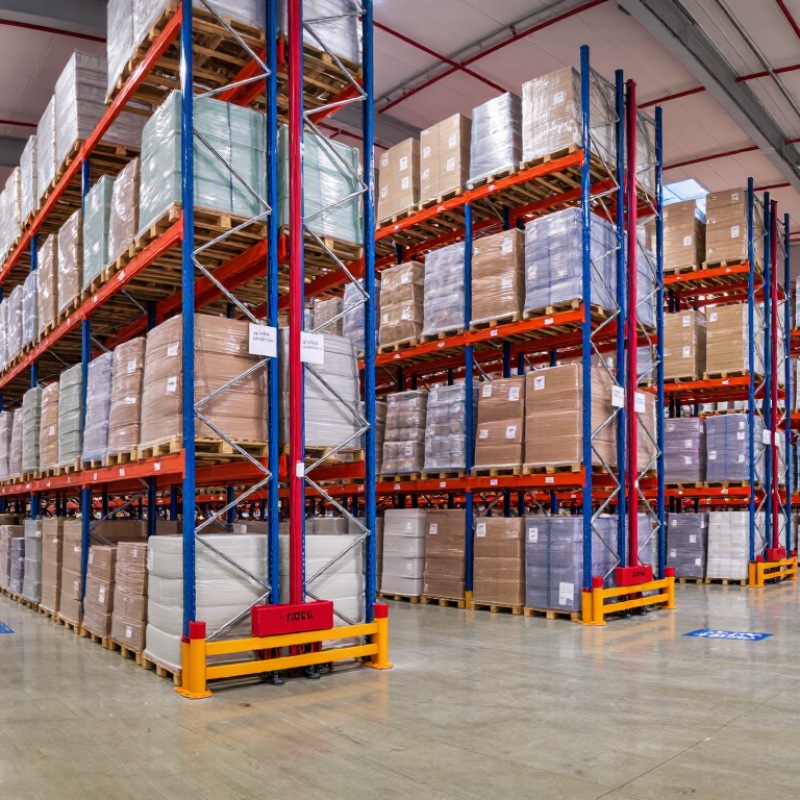
Double deep racking is a pallet-storage system with two pallet positions behind one another. A double-reach forklift places the rear pallet first, then the front pallet. Access is limited to the aisle-facing position. This layout usually follows last-in, first-out logic, unless operators manage replenishment carefully. The rear pallet is not immediately visible. That detail matters.
The 2024 Annual Industry Report from the Material Handling Industry association found that 55% of surveyed supply-chain professionals expected to increase technology investment within two years. This pressure makes floor utilization important. Double deep racking can reduce aisles and increase pallet density, depending on building geometry. Actual gains vary. Column spacing, pallet dimensions, sprinkler clearance, and truck turning space can weaken optimistic calculations. A 2024 logistics property outlook also identified warehouse space efficiency as a continuing operational concern.
For example, a 12-metre bay may hold a second pallet behind a slow-moving reserve pallet. Fast-moving stock remains in easier positions. This separation reduces travel but can complicate picking when demand changes suddenly. Operations with many stock-keeping units or strict first-in, first-out requirements may lose flexibility. Safety guidance emphasizes stable loads, rack protection, trained operators, and documented inspections. Not optional. Design should test beam deflection, floor loading, visibility, and emergency access before installation. A higher rack can look efficient while creating congestion below. Double deep racking works best when inventory rotation is predictable. Sometimes, it is not.
Why Choose Double Deep Racking for Your Warehouse?
Double deep racking stores pallets two positions deep, increasing storage density without expanding the building. Designers usually place two back-to-back rack rows together, then check beam levels, pallet dimensions, floor strength, and reach-truck clearance. The deeper layout can reduce aisle space, but it requires suitable handling equipment with extended reach. Every pallet position should remain stable, visible, and within its rated load capacity.
During operation, the operator loads the rear pallet before placing the front pallet. During retrieval, the front pallet must move first. This creates a last-in, first-out flow and may not suit date-sensitive goods. Clear location labels help prevent mistakes, especially when several pallets look identical. Regular inspections should check damaged uprights, loose beams, uneven floors, and contact marks from trucks. Small damage can become a serious risk.
Tips: Keep similar products together, but separate batches when rotation matters. Set a simple loading rule and train every shift. Leave enough clearance for safe truck movement. Double deep is efficient, not magical. I would review product turnover before choosing it, because higher density can reduce direct access and create hidden handling delays. Track retrieval time for several weeks; real warehouse data may challenge the original layout plan.
Double deep storage is gaining attention because warehouses need more capacity without expanding their footprint. In this system, forklifts place one pallet behind another. That arrangement can increase pallet positions by roughly 30% to 60%, depending on aisle width, rack layout, and pallet dimensions. The real benefit is density. More inventory fits beneath the same roof.
The MHI 2024 Annual Industry Report states that 55% of supply chain professionals expect to adopt robotics and automation within the next one to two years. Dense storage supports that direction by reducing travel distances between receiving, storage, and dispatch areas. It can also lower building costs when land is limited. However, warehouses choose double deep storage carefully. Access is usually last-in, first-out. Product rotation becomes harder.
That matters for food, pharmaceuticals, and other date-sensitive goods. It matters less for stable, high-volume inventory. The Council of Supply Chain Management Professionals reported continued pressure on logistics efficiency in its 2024 State of Logistics Report, including rising operating costs and tighter capacity decisions. Double deep racking answers part of that pressure, not all of it. It requires compatible forklifts, accurate location records, and disciplined slotting. Small errors become buried errors. A blocked rear pallet can delay an entire picking task. The system is powerful, but imperfect. Clearance, fire protection, load limits, and worker training must be reviewed before installation.
Double-deep storage is commonly selected when warehouses need higher pallet density while accepting reduced direct access to individual pallets. The index uses single-deep racking as the baseline of 100.
In a typical planning model, double-deep racking can provide approximately 30% more pallet capacity and improve floor utilization by about 20%, while selectivity may decrease because some pallets are positioned behind others. Actual results depend on pallet dimensions, aisle width, SKU turnover, and forklift equipment.
Double deep racking suits warehouses that store large quantities of similar pallets. It places one pallet behind another, using floor space more efficiently than single-deep layouts. This design works well when inventory moves in batches rather than as individual units. Fast-moving products can occupy front positions, while reserve stock stays behind them.
The warehouse should have consistent pallet sizes and stable loads. Uneven pallets may make rear storage difficult and increase handling risks. A suitable reach truck or specialized forklift is also essential. Operators need enough aisle clearance to place pallets accurately. Measure rack height, ceiling clearance, sprinkler locations, and floor capacity before installation. Small errors here can become expensive later.
Double deep racking is less suitable for warehouses requiring constant access to every pallet. It can reduce selectivity because the front pallet must often move first. That trade-off deserves careful review. Product demand, expiration dates, and loading patterns should guide the decision. In practice, some facilities benefit from combining double deep positions with single-deep lanes. This approach is not perfect, but it may balance density and access better. Safety inspections, operator training, and local storage requirements should remain part of the daily operating plan.
| Warehouse Condition | Typical Requirement or Range | Suitability for Double Deep Racking | Why It Fits | Important Considerations |
|---|---|---|---|---|
| Storage density | High pallet volume with limited floor area | Highly suitable | Stores pallets two positions deep, reducing the number of access aisles compared with conventional single-deep selective racks. | The additional storage depth reduces direct access to rear pallets. |
| Available floor space | A warehouse where cube utilization is more important than maximum selectivity | Suitable | The layout uses fewer aisles and can increase pallet positions within the same building footprint. | Actual space savings depend on pallet dimensions, rack height, aisle width, columns, fire protection, and local regulations. |
| SKU variety | A relatively small or moderate number of SKUs stored in multiple pallets per SKU | Highly suitable | Multiple pallets of the same SKU can be placed in a two-deep lane, making better use of the storage volume. | It is less efficient when each SKU has only one pallet or very low stock quantities. |
| Inventory turnover | Medium to lower turnover, or replenishment-oriented storage | Suitable | Fewer pallet movements are required than in high-throughput operations with frequent individual pallet access. | High-turnover goods may experience additional handling because front pallets can obstruct rear pallets. |
| Product selectivity | Direct access to every pallet is not required | Suitable | The system prioritizes storage density while still providing access from the aisle to each lane. | Selective pallet racking is generally better when every pallet must be immediately accessible. |
| Inventory rotation | LIFO-compatible products or goods without strict FIFO requirements | Highly suitable | The two-deep arrangement naturally supports last-in, first-out access by allowing the front pallet to be handled first. | For strict FIFO control, alternative systems or carefully managed operating procedures may be more appropriate. |
| Pallet consistency | Standardized pallet sizes, loads, and conditions | Highly suitable | Uniform pallet dimensions and stable loads make it easier to maintain safe clearances and predictable lane utilization. | Mixed pallet sizes may require different beam levels, lane layouts, or operating rules. |
| Material-handling equipment | A reach truck or another truck approved for double-deep operation | Suitable when equipment is available | Specialized reach mechanisms can place and retrieve pallets in the rear position without manually unloading the front position. | The truck must have adequate lift height, reach, residual capacity, visibility, and aisle maneuverability. |
| Building clear height | Sufficient height for the planned number of pallet levels and required clearances | Suitable if verified | Double-deep layouts benefit from vertical storage, particularly in buildings with usable clear height. | Sprinklers, lighting, roof structure, beams, ducts, and local fire codes can limit rack height. |
| Floor and site conditions | Level, sound concrete slab with adequate load-bearing capacity | Suitable after engineering review | Stable floors support rack anchoring, vertical alignment, and safe forklift travel. | A qualified engineer should verify slab capacity, rack loads, seismic requirements, and anchoring details. |
| Operating throughput | Moderate pallet flow rather than continuous rapid picking | Suitable | The design provides a balance between density and accessibility for replenishment and reserve storage. | Analyze travel distance, expected pallet movements, congestion, and front-to-rear handling before selecting the system. |
| Best application | Reserve storage, seasonal inventory, cold storage, and high-volume homogeneous goods | Often highly suitable | These operations commonly need more pallet positions and can accept less immediate access to each individual pallet. | The final decision should compare storage density, labor cost, handling time, safety, and future inventory changes. |
Note: Suitability depends on the actual pallet dimensions and weights, SKU profile, turnover rate, forklift specifications, building geometry, floor capacity, fire-protection requirements, and applicable safety standards. Final rack dimensions and load ratings should be confirmed by a qualified storage-system engineer.
Double deep racking can increase pallet storage without expanding the building footprint. However, capacity should never be the only planning target. Start with accurate data on pallet dimensions, weights, turnover rates, and handling equipment. A rack that fits the drawing may fail during real operations.
Forklift selection is critical. Reach trucks need enough aisle clearance and lifting height for safe access to rear pallets. Check mast movement, turning radius, floor flatness, and visibility at every rack position. Allow space for damaged pallets and unexpected load variation. Small mistakes become expensive quickly.
Load beams, uprights, guides, and floor anchors must match the intended loads. Use manufacturer-approved calculations and have qualified professionals review the layout. Keep sprinkler coverage, emergency routes, lighting, and pedestrian separation in the plan. Mark maximum load limits clearly. Inspect frames, beams, protectors, and pallets regularly.
Double deep storage usually reduces immediate pallet selectivity. It suits stable products with predictable demand, but it may complicate first-in, first-out rotation. That trade-off deserves honest review. A fast-moving warehouse might gain space yet lose picking efficiency. Pilot one section before changing the entire facility. Training should cover reversing, rear-pallet access, load placement, and reporting damage. Even a careful plan needs adjustment after workers test it on the floor.
It stores two pallets in one rack lane. The rear pallet sits behind the front pallet.
A double-reach forklift places the rear pallet first. It then positions the front pallet.
Yes. It may increase pallet positions by about 30% to 60%. Results depend on layout and pallet size.
Stable, high-volume products with predictable demand usually fit well. Slow-moving reserve stock can work too.
Usually not easily. Access commonly follows last-in, first-out logic.
The rear pallet is hidden behind the front pallet. A sudden demand change may create delays.
It requires compatible reach trucks with suitable lifting height and aisle clearance. Turning space matters.
Check load limits, beam strength, floor anchors, sprinkler clearance, lighting, and emergency access.
Use accurate location records and clear load markings. Train workers to place, reverse, inspect, and report damage.
Not necessarily. Test one section first. Real workers may reveal congestion that drawings miss.
Double Deep Racking is a high-density pallet storage system that places two rows of racks back to back, allowing pallets to be stored deeper within the same warehouse footprint. It typically uses specialized reach equipment designed to access the rear pallet after the front pallet has been removed. This arrangement increases storage capacity while maintaining organized pallet locations and a practical balance between space utilization and accessibility.
Warehouses often choose Double Deep Racking when they handle larger quantities of similar products and do not require immediate access to every individual pallet. It is particularly suitable for facilities with stable inventory, sufficient ceiling height, and relatively consistent pallet sizes. Before installation, planners should evaluate aisle width, equipment reach, floor conditions, load capacity, and emergency access. Clear operating procedures, proper pallet placement, rack inspections, and employee training are also essential to ensure safe and efficient daily operations.