1. Global Commercial & Industrial Status of Pallet Racking Architecture
The global industrial logistics landscape is undergoing a structural paradigm shift. As urban land costs rise and regional supply chain velocity demands escalate, traditional static storage frameworks are being replaced by high-density, automated pallet racking architectures. Modern industrial logistics infrastructure no longer measures efficiency purely by horizontal floor area, but by volumetric utilization efficiency (cubic meter yield).
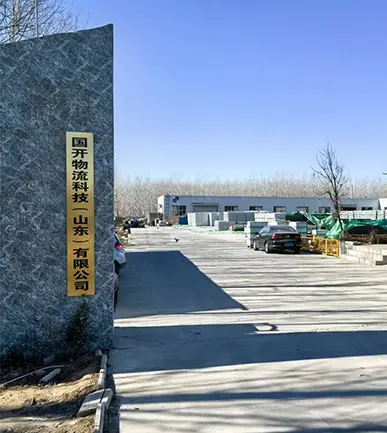
Within this global context, Chinese manufacturing hubs—particularly specialized producers in Shandong such as Guake Logistics Technology (Shandong) Co., Ltd.—have emerged as crucial anchors for global supply chains. Utilizing advanced cold-roll steel forming technology, automated robotic welding cells, and stringent quality control protocols, Chinese manufacturers supply over 45% of the worldwide demand for industrial heavy-duty rack structures, shuttle systems, and steel platforms.
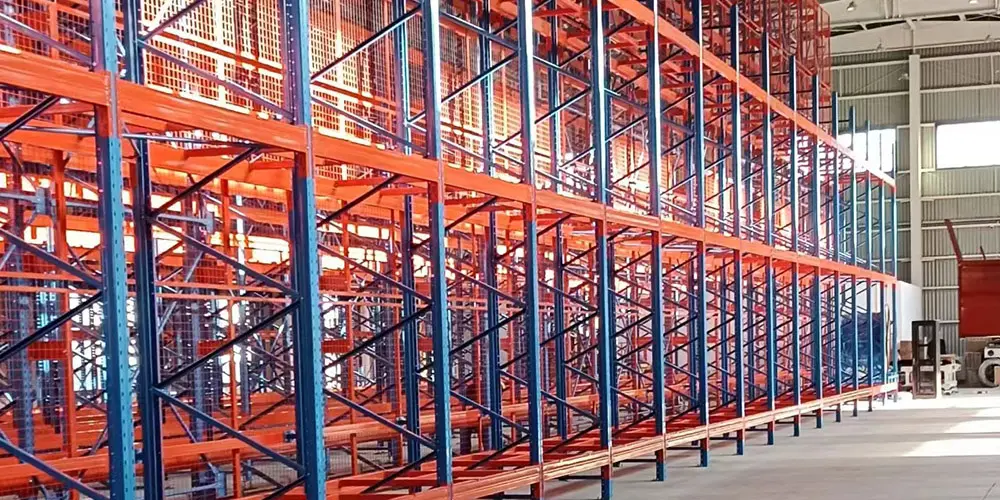
Technical Information Gain Insight: The evolution from static selective beam racking to semi-automated "Ar Pallet Racking" (Automated & Radio Shuttle Pallet Systems) allows industrial operators to boost warehouse storage density by 60% to 200% without expanding the physical footprint of the building envelope.
Driven by strict safety standards such as European FEM 10.2.02, EN 15512, and American RMI specifications, top-tier Chinese racking suppliers deliver fully verified load-bearing structures capable of withstanding dynamic seismic forces, deep-freeze thermal shock, and continuous high-frequency operations.
2. Structural Engineering Deep-Dive: Core System Architectures
To select the optimum warehousing system, enterprise procurement managers must evaluate the trade-offs between pallet access speed (selectivity), volume efficiency, structural rigidity, and capital expenditure (CapEx). Below is an analytical breakdown of the major industrial pallet racking architectures engineered by Guake Logistics Technology:
| Racking Architecture | Volumetric Storage Yield | Direct Pallet Access | Operative Logistics Flow | Ideal Industrial Application |
|---|---|---|---|---|
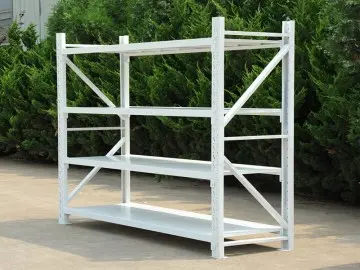
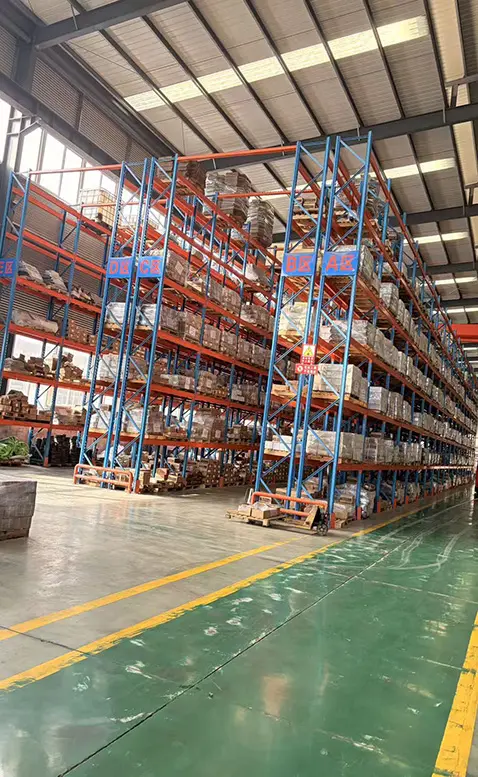
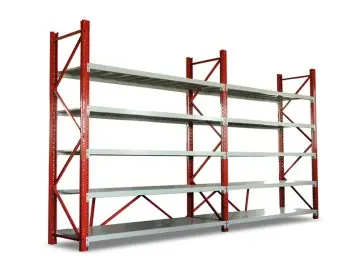
| Selective Pallet Racking | Standard (~40-50%) | 100% Immediate Access | FIFO (First-In, First-Out) | High-SKU hubs, FMCG distribution, 3PL multi-client centers |
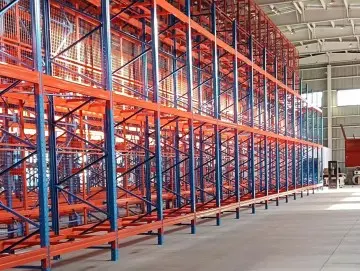
| Drive-In / Drive-Thru | Very High (~75-85%) | Lane Level Only | LIFO or FIFO Flow | Homogeneous high-volume batch items, seasonal bulk commodities |
| Push-Back Racking | High (~65-75%) | Face Level (2-6 Deep) | LIFO (Last-In, First-Out) | Medium SKU variety with 2 to 6 pallets per SKU batch |
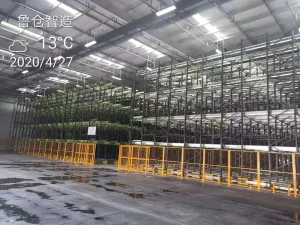
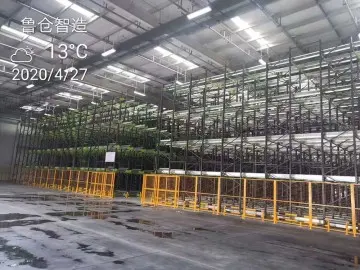
| Radio Shuttle Racking | Ultra-High (~85-92%) | Automated Lane Access | Configurable FIFO / LIFO | Cold-chain storage, food & beverage, automated high-throughput warehouses |
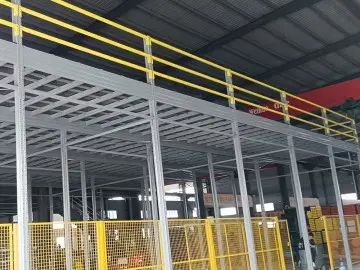
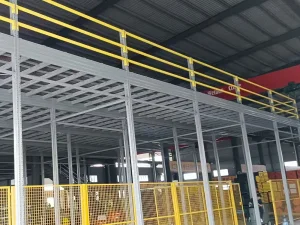
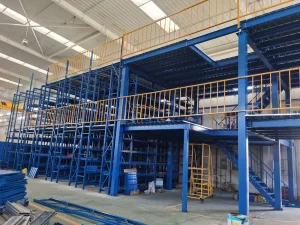
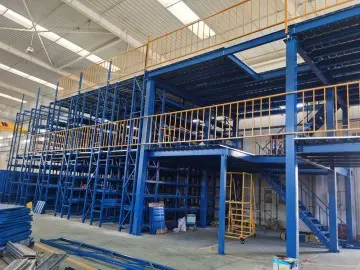
| Steel Platform & Mezzanine | Doubles Floor Surface | Full Deck Access | Zoned Multi-Tier Access | E-commerce order picking, spare parts assembly, vertical office integration |
| AS/RS High-Bay Racking | Maximum Vertical Yield | 100% Robot Automated | Digital WMS Controlled | Dark warehouses, 24/7 automated manufacturing, high-density distribution |
3. Technical Industry Development Trends & Innovation Roadmap (2026-2035)
The global industrial racking industry is transitioning from passive load-bearing steel components toward intelligent, sensor-monitored, and automated material handling platforms. Over the next decade, three major trends will redefine industrial warehouse storage:
A. Hybrid Automation (Shuttle + AMR / AGV Convergence): Traditional static racking is giving way to automated radio shuttle channels serviced by Autonomous Mobile Robots (AMRs) and Automated Guided Vehicles (AGVs). This reduces forklift operation inside channels, virtually eliminates structural frame collision damage, and accelerates inventory turnover cycles.
B. AI-Enabled WMS & Structural Health Monitoring: Next-generation heavy-duty rack structures are increasingly retrofitted with IoT load sensors and strain gauges. Integrated into warehouse enterprise management software (WMS), these systems provide real-time alerts regarding structural overloading, upright impacts, and frame deflection anomalies before mechanical failure occurs.
C. Cold-Chain Resiliency & Sustainable Steel Treatment: Energy consumption in cold-storage warehouses (-25°C to -30°C) is a massive operational expenditure. High-density radio shuttle racking and motorized mobile racking minimize air space requiring cooling. Furthermore, high-performance powder coatings with anti-microbial and anti-corrosive chemical additives extend rack life cycles in harsh condensation environments.
Engineering Assurance by Guake: Every rack column produced at our Shandong facility undergoes strict metallurgical testing using certified Q235B and Q355B structural grade steel, ensuring cold-formed profiles remain crack-resistant under extreme bending moments and seismic sway parameters.