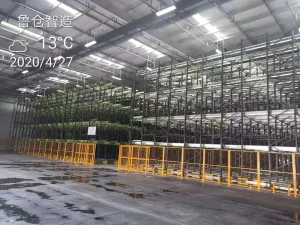
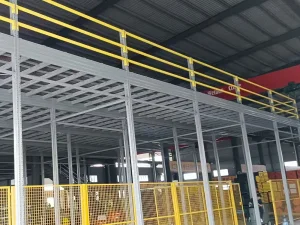
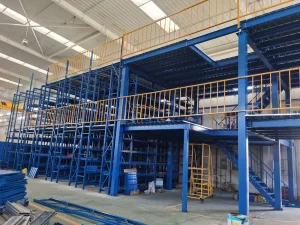
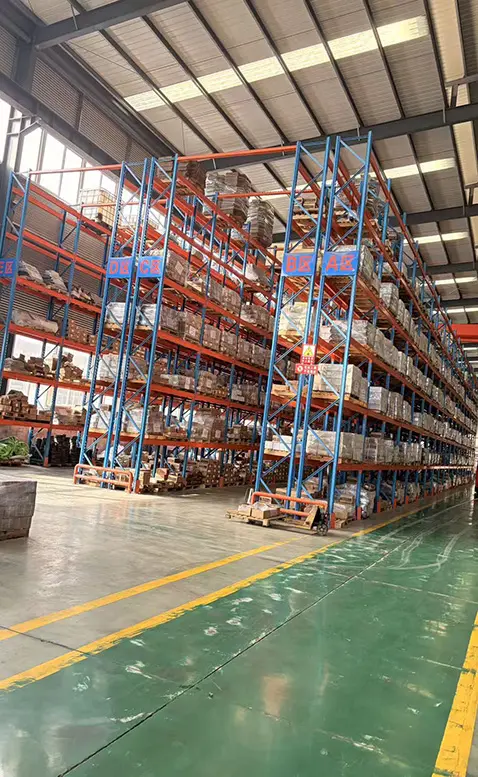
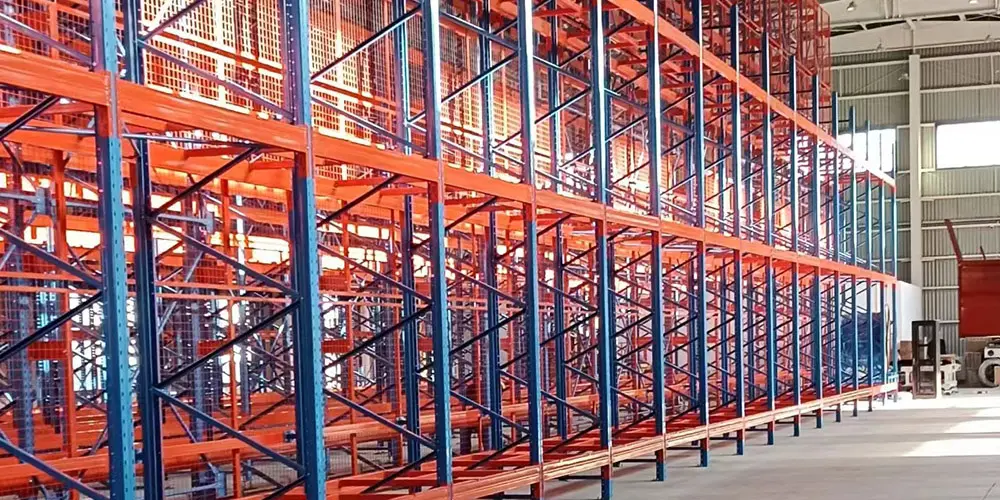
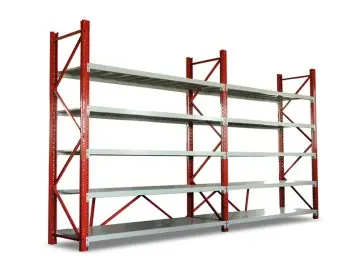
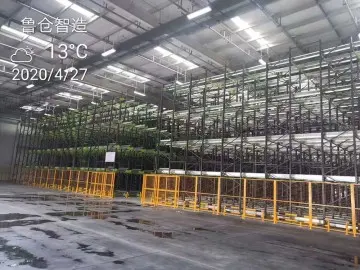
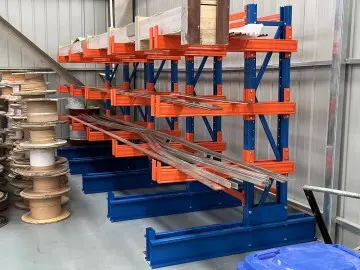
Direct factory engineered solutions optimized for extreme point loads, die storage, mold handling, and high-density warehouse automation.
In modern manufacturing ecosystems—ranging from automotive metal stamping and plastics injection molding to aerospace casting—injection molds, stamping dies, and extrusion tooling represent high-value capital assets. A single multi-cavity automotive body panel stamping die or precision medical device injection mold can cost between $20,000 and $500,000 USD.
Storing these ultra-heavy tooling units on standard pallet racks introduces severe structural hazards, deflection risks, and operational bottlenecks. specialized China Die Rack Shelving Systems (also known as Mold Racks or Drawer Racking) are custom-engineered structures designed to safely bear extreme concentrated point loads while granting immediate overhead crane accessibility.
China has established itself as the global hub for industrial heavy-duty racking manufacturing. Facilities located in Shandong and Jiangsu provinces leverage integrated steel supply chains, cold-roll forming automation, precision laser cutting, and robot-welded assemblies.
Chinese manufacturers supply over 65% of global mold storage systems, offering unmatched cost efficiency, adherence to international structural standards (such as FEM 10.2.02 and RMI specifications), and custom structural tailoring for tier-1 automotive and industrial manufacturing plants worldwide.
Unplanned downtime during mold changeovers directly reduces Overall Equipment Effectiveness (OEE). Traditional floor storage of dies wastes footprint and creates massive safety risks for crane operators.
Advanced die rack shelving utilizes 100% full-extension rollout drawers with dual self-locking safety latches, ensuring that only one drawer opens at a time to maintain structural center-of-gravity stability during hoist operations.
Die racks differ fundamentally from standard warehouse racking in steel chemistry, moment of inertia calculations, guide rail bearing physics, and mechanical interlocks.
The heart of a mold rack is its drawer slide mechanism. Heavy-duty die shelving utilizes precision-ground, high-carbon steel ball bearings combined with structural channel guide tracks. For loads under 1,000 kg per shelf, 60% to 70% partial-extension drawers are utilized. For dies exceeding 2,000 kg to 5,000 kg per drawer, 100% full-extension slide-out shelves backed by heavy gear-assisted crank drives are required to ensure single-operator control.
Chinese die rack suppliers manufacture upright frames from high-grade Q355B structural steel (yielding minimum tensile strength of 355 MPa). Structural beam deflection under maximum static payload is restricted to less than L/250 to L/300 (where L is beam length), far exceeding standard warehouse pallet rack deflection allowances (L/200). This eliminates binding within the drawer slide tracks.
To prevent catastrophic rack tipping caused by multiple heavy drawers extended simultaneously, tier-1 Chinese factories integrate mechanical interlocking safety bars. Opening one drawer automatically locks all remaining levels in the vertical bay. Additionally, top-mounted hoist monorails or bridge crane integration channels are built directly into the frame top.
| Rack Configuration | Load Capacity per Shelf | Drawer Extension Type | Recommended Steel Grade | Handling Interface | Safety Factor |
|---|---|---|---|---|---|
| Light-Duty Mold Rack | 500 kg – 1,000 kg | 60% Partial Extension | Q235B Cold Rolled | Manual / Light Hoist | 1.5 : 1 Minimum |
| Medium-Duty Die Rack | 1,000 kg – 2,000 kg | 80% – 100% Manual Extension | Q355B Structural Steel | Overhead Crane / Stacker | 1.65 : 1 Standard |
| Heavy-Duty Die Storage | 2,000 kg – 5,000 kg | 100% Mechanical Crank / Gear Extension | Q355B Hot Rolled Profiles | Heavy Bridge Crane / AGV | 2.0 : 1 Heavy Industrial |
| Fixed Beam Heavy Die Shelving | 5,000 kg – 15,000+ kg | Fixed Decking (Non-Drawer) | Welded I-Beam Heavy Steel | Forklift Crane Attachment | 2.2 : 1 Structural |
Customized die rack designs adapted to rigorous operational environments across America, Europe, Asia-Pacific, and Middle Eastern markets.
Automotive Tier-1 suppliers operate under strict SMED (Single-Minute Exchange of Die) paradigms. Multi-ton stamping dies for hoods, doors, and chassis require heavy-duty die racks situated directly adjacent to press lines. China-supplied die racks incorporate shock-absorbing rubber pads and guide pins for instant alignment during high-speed overhead crane retrieves.
Injection molding machines for consumer electronics, medical diagnostics, and automotive interiors demand dust-free, non-contaminating storage. Powder-coated epoxy/polyester die racks with galvanized steel shelf plates prevent rust flakes from falling into precision mold cavities, ensuring high yields and zero product defects.
Aluminum extrusion dies and heavy steel forging tools operate in high-temperature environments. Die storage racks designed for these sectors feature heat-treated structural frames, open mesh drawer bottoms for rapid thermal cooling, and oil-collection sumps beneath each vertical rack column.
Partnering with China die rack factories guarantees full structural compliance with European, American, and international structural engineering standards.
Top Chinese rack manufacturers design all structural members according to FEM 10.2.02 (European Federation of Materials Handling), ANSI MH16.1 (Specification for the Design, Testing and Utilization of Industrial Steel Storage Racks), and EN 15512 standards. Every structural calculation sheet is validated through Finite Element Analysis (FEA) software before production.
For installations in seismic regions (e.g., California USA, Japan, Chile, Italy), Chinese engineers incorporate heavy-duty base plates, chemical anchor bolts (M16 to M24), and cross-bracing structures. Seismic calculations account for dynamic acceleration forces ($S_D1$ and $S_DS$) to eliminate lateral frame collapse during earthquake events.
Components undergo a 7-stage chemical pre-treatment (degreasing, phosphating, passivation) before automatic electrostatic powder coating. The resulting coating thickness of 80 to 110 microns withstands salt spray tests exceeding 500 hours (ISO 9227), rendering the equipment immune to humid factory atmospheres and industrial lubricants.
Evaluating total cost of ownership (TCO), operational footprint, safety indexes, and ROI across alternative tooling storage methodologies.
| Storage Methodology | Footprint Efficiency | Retrieval Speed | Safety Index | CapEx Cost per Die | 5-Year TCO Rating |
|---|---|---|---|---|---|
| Floor Wooden Pallet Stacking | Very Low (15%) | Slow (15-30 mins) | Hazardous (High Risk) | Minimal ($) | Unfavorable (High Damage Risk) |
| Standard Heavy Pallet Rack | Moderate (45%) | Moderate (10-15 mins) | Moderate (Forklift Dependency) | Low ($$) | Moderate (Deflection Risks) |
| China Roll-Out Die Rack Shelving | High (80%) | Fast (2-5 mins) | Maximum (Locking Drawers) | Optimal ($$$) | Superior (High OEE Return) |
| Fully Automated ASRS Mold Vault | Maximum (95%) | Instant (Automated) | Maximum (Zero Human Risk) | High ($$$$$) | Capital Intensive (Long Payback) |
How Industry 4.0 digitization, smart sensor networks, and robotic integration are revolutionizing heavy mold storage infrastructure.
Die racks embedded with RFID readers and weight sensors. Automatically registers mold check-in/out, logs total shot counts, and alerts maintenance teams when preventative tooling service is due.
Integration of Autonomous Guided Vehicles (AGVs) equipped with heavy hydraulic pushers. AGVs dock directly with motorized rollout die drawers, completely removing forklifts from the press shop aisle.
Transition toward green, hydrogen-smelted ultra-high-strength steel alloys. Yield strengths exceeding 550 MPa allow 25% lighter structural rack mass while supporting 200% higher point load capacities.
Factory-wide Digital Twins predict mold demand based on production scheduling. Smart rack locations auto-reposition dies dynamically so that upcoming job molds sit in prime ergonomic picking zones.
Comprehensive technical answers provided by Senior Structural Racking Engineers and International Trade Logistics Specialists.
Standard drawer-type die racks manufactured in China accommodate payloads ranging from 500 kg (1,100 lbs) up to 5,000 kg (11,000 lbs) per drawer level. For non-drawer, fixed-beam structural die shelving, weight capacities can exceed 15,000 kg (33,000 lbs) per beam level based on custom structural I-beam engineering and reinforced column sections.
Mechanical anti-tipping safety interlocks utilize a vertical linkage bar system connected across all drawer levels in a bay. When a operator pulls out a single drawer, the linkage engages a mechanical latch on all remaining drawers, locking them securely in place. This guarantees that only one drawer can be extended at any given time, preventing the rack's center of gravity from shifting forward and causing tipping risks.
Yes. Chinese manufacturers routinely customize upright heights, drawer opening distances, and top-beam clearances to match your factory's bridge crane hook height, hoist capacity, and sling angles. Custom top-mounted monorail cranes (up to 2,000 kg hoist capacity) can also be directly built onto the die rack frame structure as an self-contained unit.
Full export compliance packages include: 3D CAD/BIM assembly drawings, Finite Element Analysis (FEA) structural calculation reports, Mill Test Certificates (MTC) verifying raw steel chemistry (Q235B/Q355B), ISO 9001 quality certificates, CE conformity certificates, and powder coating thickness/corrosion test verification reports.
Heavy die racks require a non-cracked, reinforced concrete slab with a minimum compressive strength of 25 to 30 MPa (3,500 to 4,000 PSI) and a minimum slab thickness of 150 mm to 200 mm. For point loads exceeding 3,000 kg per post, heavy-duty footplates are engineered to distribute shear and bending forces across concrete floor expansion anchors.
Structural upright frames, drawer assemblies, and beams are wrapped in heavy-duty bubble wrap, corrugated corner protectors, and steel-banded onto solid timber or steel skids. Small hardware and bearings are packed in sea-worthy plywood cases. Desiccant packs and VCI anti-rust film are included inside container shipments to prevent humidity corrosion during ocean transit.
Engineering design and drawing confirmation typically takes 3 to 5 business days. Raw material cold-rolling, robotic welding, and powder coating take 15 to 25 calendar days depending on order volume. Ocean freight transit varies by destination: 14–20 days to US West Coast/Europe, and 7–12 days within Southeast Asia.
Yes. Factory suppliers provide detailed 3D step-by-step video installation manuals and CAD exploded views. For large-scale factory setups, bilingual installation supervision engineers can be dispatched to your site, or remote Augmented Reality (AR) live video assistance can be arranged to guide local assembly teams.
Direct factory engineered products backed by full structural calculation sheets and global after-sales warranty.
Submit your mold dimensions, weight specifications, and factory floor plan. Receive structural FEA calculations and direct factory pricing within 24 hours.