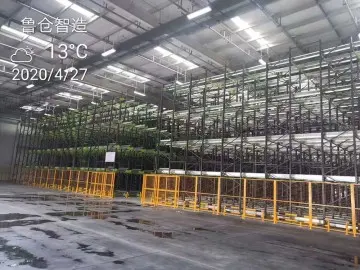
Explore our precision-engineered warehouse storage product line direct from our Shandong manufacturing facilities. Certified to international structural loading standards.
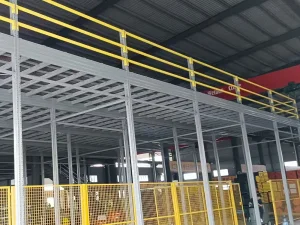
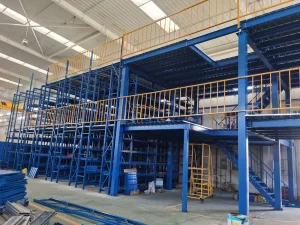
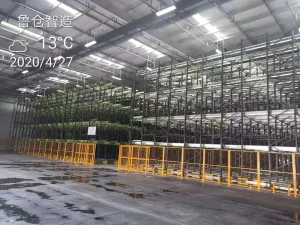
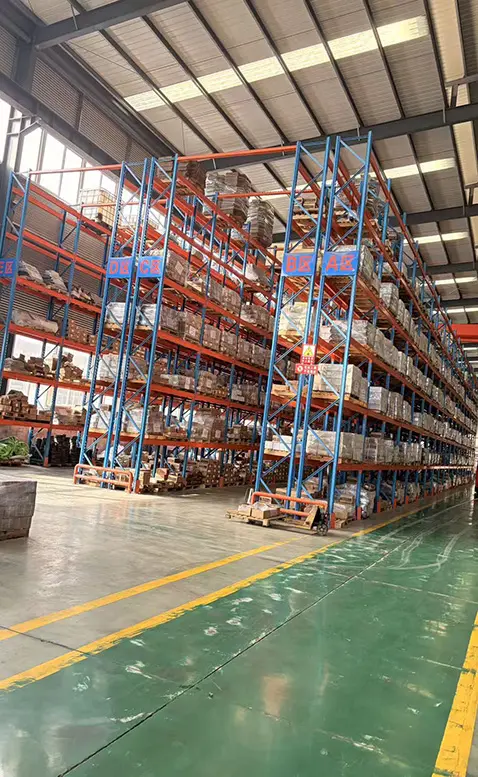
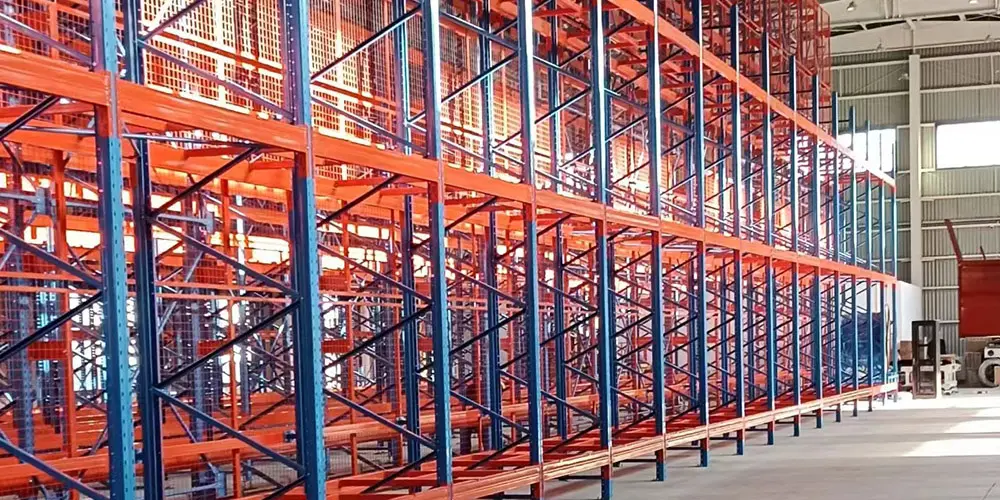
In modern supply chain management, operational margin optimization relies on density, throughput velocity, and strict batch management. First-In, First-Out (FIFO) Racking Systems—also known as Live Pallet Flow Racking or Gravity Roller Racking—represent the gold standard for high-density, automatic inventory rotation.
By enforcing a strict physical flow where pallets are loaded at the rear (charging side) and retrieved from the front (discharging side), FIFO racking eliminates SKU obsolescence. This architecture is vital for FMCG, pharmaceuticals, and cold storage operations where expiration dates govern profitability.
Traditional selective racking wastes up to 60% of warehouse floor area on aisle space. FIFO Live Flow systems consolidate travel aisles into dense blocks, achieving up to 85% volumetric footprint utilization while maintaining dedicated loading and picking lanes.
Forklift traffic is strictly restricted to the perimeter of the racking structure. Forklifts never enter the interior lanes, drastically reducing structural impact damage, reducing cycle times by up to 40%, and minimizing carbon emissions in warehouse operations.
A reliable FIFO Live Flow system demands precise mechanical calculation. As a premier China manufacturer, Guake Logistics Technology engineers custom roller pitch, velocity controllers, and dynamic load separators engineered to your exact pallet specs.
When pallets move down an inclined track under the influence of gravity, acceleration must be counteracted by controlled rolling resistance to prevent runaway kinetic build-up. The inclination angle typically ranges between 3.5% and 4.5% (approx. 2.0° to 2.6°), calculated based on pallet bottom quality (GMA, Euro, or custom runner setups) and total unit weight (ranging from 300kg to 1500kg per pallet position).
Installed at calculated intervals (typically every 1 to 1.5 meters along the lane). These indirect eddy-current magnetic brake rollers automatically adjust resistance proportionally to pallet speed, keeping velocity under a safe 0.3 m/s threshold without wear-prone friction pads.
Located at the discharge picking face. The separator isolates the front pallet from the hydraulic pressure of the queue behind it. Once the lead pallet is lifted away by a forklift, the mechanism automatically unlocks to let the next pallet advance smoothly.
Heavy-gauge flared entry funnels guide off-center pallets accurately onto the roller track. At the exit end, reinforced structural steel end-stops absorb residual impact energy to ensure absolute operator safety.
Compare mechanical characteristics, space efficiency metrics, and operational profiles to determine the optimum racking system for your facility.
| Racking Architecture | Inventory Flow | Floor Space Utilization | Pallet Selectivity | Forklift Entry | Cold Storage Suitability |
|---|---|---|---|---|---|
| FIFO Live Flow Racking | FIFO (First-In, First-Out) | 80% – 88% | High (Per Lane Face) | No (Exterior Loading/Exit Only) | Excellent (Optimal ROI) |
| Radio Shuttle Racking | FIFO or LIFO | 85% – 90% | Medium-High | No (Shuttle Automation) | Excellent |
| Drive-In Racking | LIFO (Last-In, First-Out) | 65% – 75% | Low (Per Channel) | Yes (Forklift enters lane) | Good |
| Push Back Racking | LIFO (Last-In, First-Out) | 70% – 75% | Medium (2-6 Deep) | No (Aisle Face Access) | Moderate |
| Selective Pallet Racking | FIFO / LIFO Flexible | 35% – 45% | 100% Direct Access | No (Aisle Operation) | Low (High Utility Cost per m³) |
How leading enterprises deploy Guake FIFO racking solutions across diverse sectors worldwide to solve complex supply chain bottlenecks.
Operating costs in sub-zero environments (-25°C to -30°C) are up to 5 times higher than ambient storage. Guake FIFO flow racking utilizes specialized steel alloys and low-temperature synthetic lubricants inside sealed rollers, maximizing thermal footprint efficiency and preventing ice bridging.
Perishable goods subject to strict expiration thresholds require seamless batch handling. FIFO flow tracks serve as dynamic buffer channels between production lines and shipping docks, enabling immediate automatic inventory movement according to FEFO/FIFO compliance standards.
Meeting global GMP and FDA 21 CFR regulations requires total lot isolation. Guake FIFO installations feature clear visual lane designations, load-presence sensors, and physical lane isolation that guarantees zero mixing of production batches during high-throughput order fulfillment.
The convergence of gravity-fed mechanical engineering with IoT automation defines the next evolution of intelligent material handling.
Integrating optical and piezoelectric sensors directly within roller channels to monitor real-time pallet movement, detect slowdowns caused by damaged pallet bottoms, and transmit occupancy status directly to Warehouse Management Systems (WMS).
Custom-engineered exit separator assemblies designed for precision robotic interaction. Automated Guided Vehicles (AGVs) can retrieve pallets from discharge points with millimeter precision without human operator intervention.
Advanced polyurethane coatings and self-lubricating ceramic bearing cartridges that minimize rolling friction variance across extreme temperature gradients (-30°C to +50°C), extending system service life beyond 15 years.
Guake Logistics Technology (Shandong) Co., Ltd. operates under strict quality management frameworks to ensure global structural safety and seamless local building permit approvals.
All load-bearing upright frames, structural beams, and gravity beds are designed and calculated in accordance with international standard guidelines, including FEM 10.2.02 (European Racking Federation), EN 15512, ANSI MH16.1, and Australia’s AS4084-2012 code.
Every batch of raw steel originates from top-tier Chinese mills (such as Shougang and Baosteel) with complete Mill Test Certificates (MTC). Automated cold roll-forming lines and robotic welding stations deliver dimensional tolerances down to ±0.5mm.
From initial 3D CAD/BIM spatial planning and structural load simulations to containerized export shipping, on-site installation supervision, and long-term after-sales maintenance packages, Guake provides a single point of accountability.
Detailed technical answers to common queries faced by procurement directors, supply chain consultants, and facility engineers.
The core difference lies in inventory management protocol and lane architecture:
FIFO flow racking performs best with hard-bottom pallets featuring continuous bottom runners (such as standard GMA 48x40-inch, Euro pallets 1200x800mm, or industrial 1200x1000mm wooden/plastic pallets). Nine-leg pallets or damaged wooden bottoms can create uneven friction. Guake engineers customize roller width, roller spacing, and optional full-width metal skate wheels based on sample pallet testing.
Guake integrates magnetic brake rollers (speed controllers) along the track length. These non-contact magnetic devices exert retarding force proportional to the pallet's rolling speed, preventing runaway acceleration regardless of load weight (e.g., from 300kg to 1200kg). Additionally, the mechanical safety separator at the discharge end physically locks behind the front pallet, shielding it from the cumulative line pressure of the remaining pallets in the lane.
The standard track declination angle ranges from 3.5% to 4.5% (approx. 2.0 to 2.5 degrees). Heavier loads or steel pallets require slightly lower angles, whereas plastic or lighter wooden pallets require a steeper grade. During the technical proposal stage, Guake conducts material angle tests to guarantee dynamic rollability without manual intervention.
Yes. Guake designs specialized cold-chain FIFO racking systems rated for temperatures down to -30°C. We utilize low-temperature structural steel grade Q355D/E, low-viscosity synthetic bearing grease, galvanized or stainless-steel roller shafts, and specialized powder coatings to prevent corrosion and thermal fatigue.
Standard manufacturing lead time at our Shandong facility is typically 20 to 30 days following engineering CAD approval. Ocean shipping times vary by destination port (typically 12–18 days for North America / Europe, 7–10 days for Southeast Asia). We provide complete container loading manifests and expedited customs documentation.
Yes. Every project is shipped with detailed 3D installation blueprints, component identification labels, and step-by-step assembly guides. For large-scale industrial projects, Guake can dispatch experienced installation supervisory engineers to oversee local labor, perform track leveling, and conduct final load safety commissioning.
Guake provides a standard 5-year structural warranty on all cold-rolled steel uprights and beams, along with a 2-year operational warranty on mechanical dynamic components (rollers, speed controllers, separators). All designs include comprehensive FEA stress calculations and compliance certificates matching ISO9001, CE, and FEM 10.2.02 standards.
Select from our comprehensive line of industrial storage equipment engineered for heavy-duty commercial operations.