Explore our core engineering capabilities designed for high-density warehouse throughput and automated material flow.
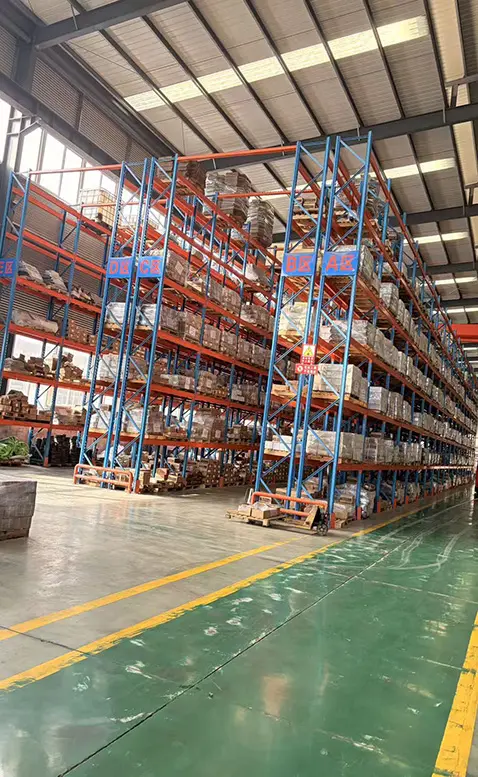
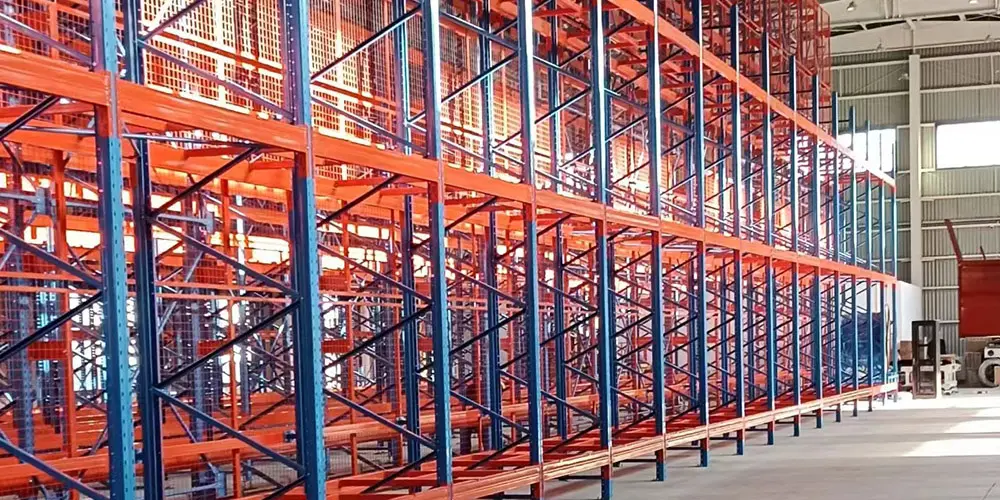
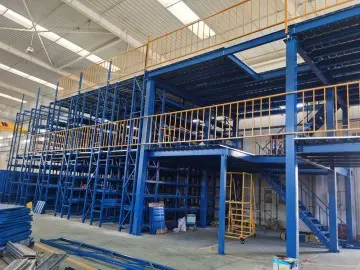
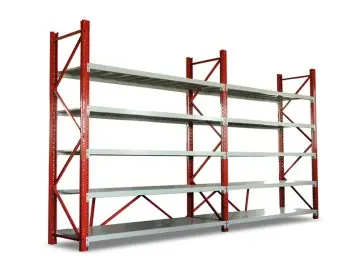
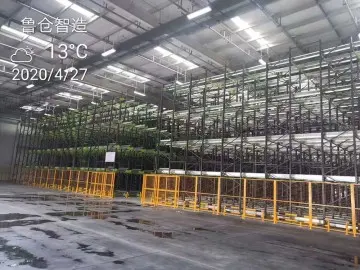
Understanding how dynamic gravity-driven racking systems are revolutionizing modern warehouse throughput and supply chain logistics globally.
In the contemporary global logistics landscape, warehouse real estate costs have escalated by over 45% across major industrial hubs in North America, Europe, and the Asia-Pacific region. Consequently, enterprise procurement directors and logistics architects are rapidly shifting away from static selective racking toward dynamic, high-density storage platforms. Among these, Flow Racks Systems—encompassing both Pallet Flow Racking and Carton Flow Racks—have emerged as the definitive structural solution for operational environments requiring strict First-In, First-Out (FIFO) inventory management.
Flow racking technology relies on inclined roller tracks or wheel beds mounted on structural racking frames. Utilizing natural gravity acceleration, unit loads (pallets or cartons) travel seamlessly from the loading (rear) side to the picking (front) face. This separation of loading and replenishment aisles completely eliminates forklift traffic jams, minimizes travel distance, and boosts order fulfillment efficiency by up to 60% compared to traditional single-deep selective layouts.
Flow racks enable continuous line-side replenishment without interrupting order pickers, directly supporting Just-In-Time (JIT) manufacturing and e-commerce picking speed.
By compressing working aisles into dedicated entry and exit channels, gravity flow rack systems increase volumetric warehouse utilization up to 85%.
Unlike automated ASRS or motorized shuttle systems, gravity flow racks operate with zero electrical power consumption, delivering long-term ESG sustainability benefits.
Precision engineering in flow rack manufacturing requires exact mathematical calculation of lane slope (typically 3.5% to 4.5% grade), kinetic friction coefficients, and brake roller resistance. A failure in brake roller positioning can lead to speed runaway, damaging goods or creating severe safety hazards at the discharge face. China's top flow rack manufacturers, such as Guake Logistics Technology, utilize advanced dynamic testing rigs to certify pallet coasting velocity under full thermal ranges (from -30°C cold rooms to +45°C dry ambient units).
How Shandong's heavy industrial base and integrated steel supply chain deliver unmatched value and engineering quality to international buyers.
When global buyers evaluate China Flow Racks Manufacturers & Suppliers, the primary decision drivers extend far beyond unit cost. China’s competitive dominance in structural storage systems is built upon an integrated ecosystem of metallurgy, automated roll-forming technology, and large-scale manufacturing infrastructure.
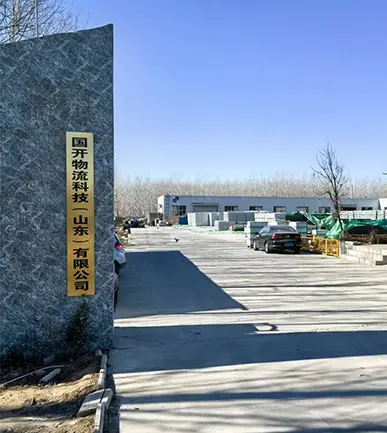
Located in Linyi, Shandong, factories like Guake Logistics Technology (Shandong) Co., Ltd. benefit from direct proximity to China's premier structural steel mills. High-strength cold-rolled steel grades such as Q235B and Q355B are sourced with certified mill Test Certificates (MTC). This direct mill connection ensures consistent yield strength, rigid deflection tolerances, and protection against steel price volatility for international turn-key projects.
Modern flow rack production requires extreme structural consistency. Upright profiles, track beams, and continuous roller beds must fit with sub-millimeter accuracy to avoid rack twisting or track binding. China's top-tier manufacturers utilize:
European and North American racking fabricators frequently require 14 to 20 weeks of lead time for customized flow rack systems. In contrast, leading Chinese suppliers maintain standardized component stock and operate high-capacity production lines that compress delivery cycles to 4 to 6 weeks, even for multi-tier heavy-duty installations exceeding 10,000 pallet positions.
A comprehensive structural comparative breakdown for warehouse layout engineers and procurement officers.
| Technical Parameter | Pallet Flow Racks (Heavy-Duty) | Carton Flow Racks (Light/Medium-Duty) |
|---|---|---|
| Primary Unit Load | Palletized goods (500 kg to 1,500 kg / pallet) | Cartons, plastic totes, bins (5 kg to 50 kg / tote) |
| Track Mechanism | Full-width steel rollers or heavy-duty dual-wheel tracks | Aluminum rollers or plastic/polypropylene roller tracks |
| Braking Controls | Indirect magnetic / centrifugal speed retarders required | Manual friction stops & gravity slope control |
| Separator Mechanisms | Automatic Pallet Separator at picking discharge face | Drop-in lane dividers & front tilt trays |
| Lane Depth Capability | Up to 20+ pallets deep (Deep-lane buffer) | Up to 3 to 5 meters lane length |
| Typical Applications | Cold storage, beverage distribution, raw material buffer | E-commerce piece picking, line-side manufacturing feed |
To ensure high operational reliability and safety, high-performance flow racking incorporates several specialized structural components:
How diverse global industries customize flow rack architectures to solve specific operational bottlenecks.
Cold storage facilities operate under extremely high energy costs per cubic meter. Pallet flow racks maximize storage density while ensuring strict FIFO rotation for perishable foods, dairy, and frozen products. Special freeze-resistant roller bearings and low-temperature synthetic lubricants ensure smooth rotation down to -30°C.
Automotive manufacturing plants rely heavily on carton flow racks mounted directly adjacent to assembly lines. Component parts are loaded from the rear supply aisle and flow straight to technicians. Integrated Pick-to-Light LED modules guide workers to the precise bin location, preventing assembly errors.
In pharmaceutical distribution, lot number tracking and expiration date control are legally enforced. Flow racks prevent batch mixing by enforcing a single-way flow system where oldest produced batches are automatically picked first, mitigating compliance liabilities.
During peak shopping events, e-commerce warehouses face severe order picking bottlenecks. Multi-tier carton flow rack modules integrated with belt conveyors allow simultaneous high-speed picking across hundreds of SKUs without aisle congestion.
What international buyers must audit when selecting China flow rack manufacturers.
Procuring industrial racking across international borders requires rigorous compliance verification. Leading Chinese suppliers adhere to international design codes to ensure structural integrity under dynamic loading and seismic conditions.
Export packaging is a critical engineering aspect of flow rack procurement. Uprights and beams are bundled in custom wooden cradles with plastic wrap shielding to prevent transit scratching. Roller tracks are shipped pre-assembled in standard length modules designed to maximize cubic fill in 40ft High Cube (40HC) shipping containers, drastically reducing overseas freight expense per storage position.
How IoT sensors, robotics, and hybrid automation are shaping the next decade of material handling.
Integration of wireless weight sensors and photo-eye telemetry along flow tracks allows Warehouse Management Systems (WMS) to track real-time inventory counts automatically as cartons move down the lane.
Modern flow racks are increasingly redesigned with specialized loading entry funnels engineered for Autonomous Mobile Robots (AMRs) and Automated Guided Vehicles (AGVs) rather than human forklift drivers.
Shift toward high-durability recycled polymer rollers and self-lubricating ceramic bearings that reduce rolling friction by 25% while lowering overall dynamic sound levels in pick modules.
Your trusted turnkey manufacturing partner for advanced warehouse storage systems since 2010.
Founded in 2010 in Linyi City, Shandong Province, Guake Logistics Technology has grown into a premier manufacturer of intelligent warehousing equipment and heavy-duty structural racking. Our modern manufacturing facility spans over 20,000 square meters, housing advanced automated cold-roll forming lines, laser tube cutters, and robotic welding stations.
We provide comprehensive end-to-end service: from initial CAD layout design and structural engineering calculation to precision fabrication, export packing, international shipping, installation guidance, and lifetime spare parts support. Whether you require standard selective pallet racking or complex custom flow rack systems, our engineering team ensures uncompromised safety and operational efficiency.
Expert engineering answers to common procurement, design, and structural queries.
The standard slope angle for pallet flow racking ranges between 3.5% and 4.5% grade (approximately 7/16 inch per foot). The precise pitch is calculated based on pallet bottom runner construction (wooden GMA, plastic full-perimeter, or steel skid), pallet total weight range (e.g., 500kg vs 1200kg), and ambient operating temperature. Guake performs physical test runs on sample pallets to verify coasting speeds prior to full system fabrication.
Pallet flow racks operate on a true First-In, First-Out (FIFO) principle with separate loading and picking aisles where pallets travel down inclined roller tracks. Push back racking operates on a Last-In, First-Out (LIFO) principle using nested carts riding on inclined rails; forklifts load and unload from a single aisle by pushing existing pallets back into the lane.
Without speed controllers (brake rollers), heavy pallets traveling down long lanes would continuously accelerate due to gravity, accumulating excessive kinetic energy. This runaway speed can smash front pallets, cause derailment, or create safety hazards for forklift drivers at the picking face. Brake rollers use internal centrifugal mechanisms to maintain a safe, steady speed (under 0.3 m/s).
Pallets should have unbroken bottom boards running parallel to the direction of flow. Broken slats, protruding nails, or sagging plastic bottoms can catch between rollers and cause lane jams. For damaged or irregular pallets, full-width steel rollers or specialized slave boards are recommended to ensure reliable movement.
Yes. Flow racks are ideal for cold storage because they maximize cubic space density. However, components must be engineered for freezer duty: rollers use specialized synthetic low-temp greases, structural steel receives corrosion-resistant powder coating or hot-dip galvanizing, and plastic wheels are formulated to resist cold temperature embrittlement down to -30°C.
Yes. Guake works extensively with global logistics integrators, material handling distributors, and general contractors. We offer full OEM/ODM fabrication, custom color powder coating matching corporate RAL codes, custom profile punching, and white-label export packaging with client branding.
Dynamic flow racks require minimal maintenance compared to motorized conveyor systems. Regular inspection schedules should include: checking roller spin freedom, removing dust or debris from tracks, inspecting brake rollers for drag resistance, verifying pallet separator mechanical latch action, and checking upright column footings for vehicle impact damage.
Every exported racking order includes comprehensive 3D CAD assembly drawings, structural node detail diagrams, and step-by-step installation manuals. For large enterprise projects, Guake can dispatch experienced installation supervisory engineers to direct local labor and conduct final safety commissioning on-site.
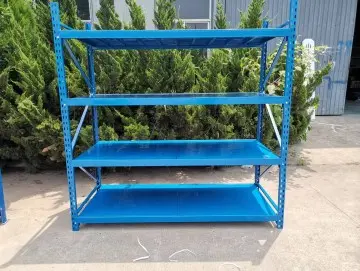
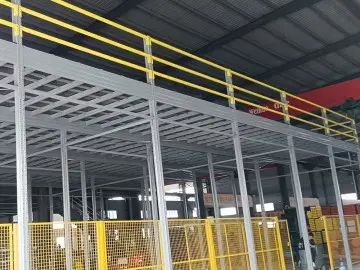
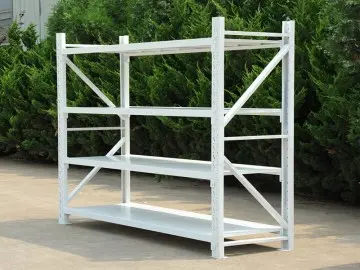
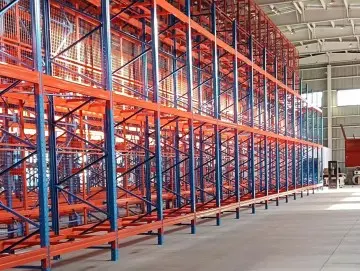
Discover our extended range of heavy-duty, medium-duty, and specialized industrial racking systems.
Contact Guake Logistics Technology today to request CAD layout proposals, dynamic friction analysis, or factory-direct pricing for your international project.