


Direct factory-manufactured dynamic flow racks, heavy-duty structures, and intelligent storage solutions designed to structural standards.
An authoritative structural analysis of carton flow, pallet flow, and dynamic roller track physics driving high-density intralogistics.
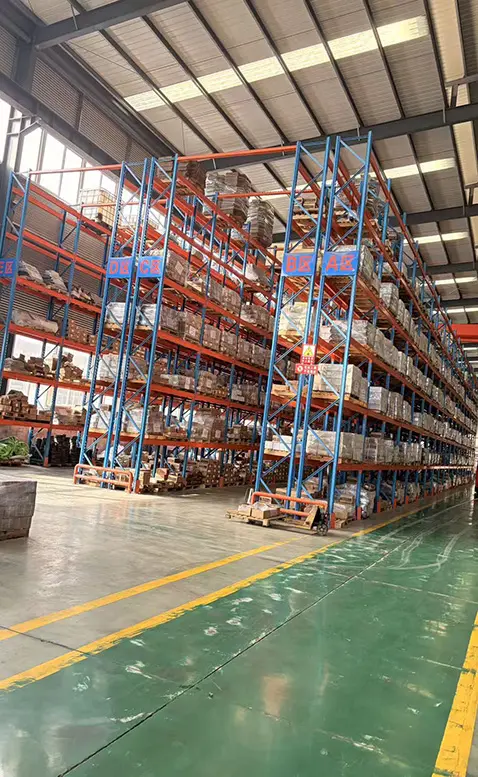
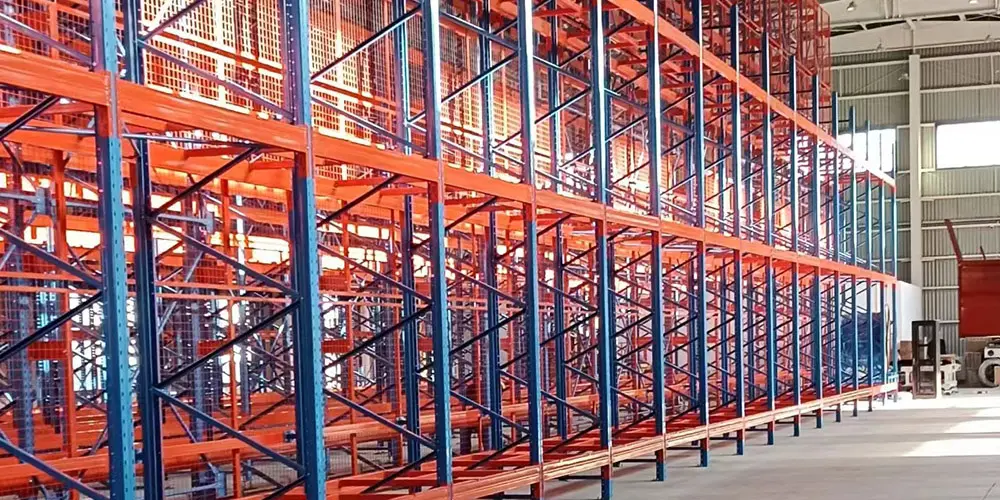
Material Flow Racks (also widely classified as gravity flow racks, carton flow shelving, or dynamic pallet flow systems) operate on the fundamental physical principle of controlled gravity inclination. By mounting inclined roller tracks or wheel beds within structured steel frames, unit loads automatically glide from the loading face (rear) to the picking face (front).
The engineering of high-performance Material Flow Racks requires precise mechanical calculations. The incline pitch angle typically ranges between 2.5° to 4.5° (4% to 7% gradient), mathematically calibrated based on container/pallet contact material, dynamic friction coefficients, ambient temperature, and total unit mass. Standard carton flow applications utilize full-width aluminum or heavy-duty steel skate wheels, whereas heavy pallet flow systems incorporate continuous steel rollers with integrated centrifugal brake drums.
The structural longevity of China material flow racks depends on raw material selection and cold roll-forming precision. Leading Chinese manufacturing hubs, such as Guake Logistics Technology in Shandong, employ structural cold-rolled steel coils conforming to high-tensile grade Q235B and Q355B (SS400 / S355 equivalent).
Upright columns feature multi-point Omega profile geometry with 12 to 16 cold-formed bend folds, providing exceptionally high moment of inertia and buckling resistance under heavy seismic or eccentric dead loads. Key component surfaces undergo multi-stage chemical pre-treatment—degreasing, zinc phosphating, and electrostatic epoxy-polyester powder coating (baked at 200°C to achieve 60–90 µm thickness)—ensuring compliance with ISO 9227 salt spray corrosion standards.
Strategic supply chain benefits, high-volume automated manufacturing, and competitive Total Cost of Ownership (TCO).
China’s mature upstream steel manufacturing ecosystem provides unprecedented economies of scale. Direct access to raw steel mills combined with automated high-speed roll-forming lines allows Chinese factories to deliver premium-grade flow racking systems at significantly lower capital expenditure compared to North American or European OEMs.
Modern Chinese racking facilities leverage robotic welding cells, continuous CNC punching machines, and automated laser tube cutting systems. This guarantees dimensional tolerances within ±0.5mm across production runs of tens of thousands of components, ensuring flawless assembly on international project sites.
Leading manufacturers like Guake Logistics Technology offer end-to-end engineering support. International clients receive 3D BIM/CAD layout modeling, finite element analysis (FEA) structural verification reports, and customized roller lane testing prior to ocean shipment.
How Industry 4.0, Pick-to-Light automation, and green warehousing are reshaping dynamic storage environments.
Modern carton material flow racks are no longer standalone static steel structures. The industry is rapidly adopting integrated sensor channels and LED Pick-to-Light (PTL) modules along the picking face. Optical infrared sensors placed on carton flow tracks send real-time signals to Warehouse Management Systems (WMS) as soon as a box slides forward or a lane becomes depleted. This enables zero-error picking accuracy, automated replenishment alerts, and order picking throughput increases exceeding 300%.
Autonomous Mobile Robots (AMRs) and Automated Guided Vehicles (AGVs) are revolutionizing warehouse material handling. Forward-thinking China material flow racks factories are designing dynamic interface ports at the rear loading face of flow lanes. AGVs equipped with powered roller decks dock directly with gravity flow tracks, automatically transferring heavy pallets into the flow bay without human operator intervention—creating seamless, fully automated buffer zones.
ESG compliance and carbon footprint reduction are top priorities for global enterprise supply chains. Unlike continuous powered motor conveyors, Material Flow Racks utilize zero electricity during live operation, harnessing pure potential gravitational energy to transport materials over multi-deep storage lanes. Replacing mechanical powered conveyors with gravity carton flow in picking modules cuts operational electricity usage by up to 75% in fulfillment centers.
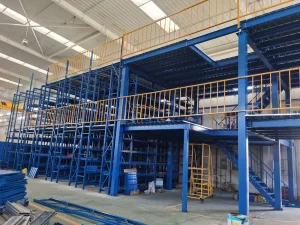
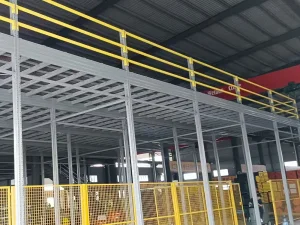
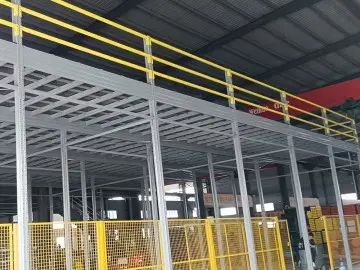
With real estate costs soaring globally, enterprise logistics hubs are scaling vertically. Modern factories design multi-tier carton flow mezzanine structures soaring up to 12-15 meters in height. Integrated with spiral gravity chutes, vertical reciprocating conveyors (VRCs), and structural steel deck platforms, these dynamic picking towers maximize cubic storage utilization by over 200%.
Tailor-made dynamic flow rack implementations for high-velocity industrial sectors.
Essential for lean automotive manufacturing and sub-assembly line feed stations. Small parts boxes flow continuously on inclined roller beds directly to line-side technicians, supporting strict KanBan inventory pull controls and zero line downtime.
Maximizes density in high-cost refrigerated and sub-zero freeze vaults (-30°C). Pallet flow lanes allow rapid FIFO stock rotation of perishable dairy, meats, and frozen produce while minimizing energy loss by compressing storage footprints.
Integrates multi-tier carton flow beds within high-density fulfillment modules. Enables split-case picking, rapid order batching, and ergonomic separation of loading replenishment aisles from active picking aisles.
Critical for pharmaceutical logistics requiring First-Expired, First-Out (FEFO) strict inventory handling. Dynamic flow lanes prevent stock stagnation, ensuring medication and medical supplies move in strict chronological sequence.
Crucial quality criteria, structural compliance standards, and ocean freight shipping optimization strategies.
When sourcing material flow racks from China factories, engineering buyers must verify compliance with regional structural design codes:
Logistics cost mitigation is paramount for global B2B procurement. Professional China material flow racks manufacturers employ dedicated export packaging methods:
CAD floor plans, SKU dimensions, weight profiles, and hourly throughput requirements.
Calculating track pitch, roller capacities, frame moments, and dynamic braking points.
Automated punching, roll-forming, robotic welding, and powder coat finishing.
Testing gravity glide speeds and pallet speed controllers with actual customer samples.
Export packaging, container loading, installation CAD drawings, and overseas engineering support.
Evaluate Material Flow Racks against alternative high-density warehouse storage architectures.
| Storage Architecture | Storage Density | Pallet Selectivity | Inventory Flow | Handling Equipment | Relative CAPEX | Ideal Application |
|---|---|---|---|---|---|---|
| Material Flow Racks (Pallet Flow) | Very High (85%+) | 100% per Lane Face | Strict FIFO | Standard Counterbalance / Reach Truck | Medium-High | High-throughput FMCG, Cold Chain, Date-sensitive goods |
| Carton Flow Racks | High (Multi-Tier) | 100% SKU Access | Strict FIFO | Manual / Pick-to-Light / AMRs | Medium | Each-picking, E-commerce fulfillment, Kitting bays |
| Selective Pallet Racks | Standard (40-50%) | 100% Instant Access | FIFO / LIFO | Any Standard Forklift | Low | High SKU variety, low-density distribution hubs |
| Drive-In Racks | Very High (75%+) | Low (Per Bay) | Strict LIFO | Drive-In Counterbalance Truck | Low-Medium | Bulk homogeneous SKUs, low turnover seasonal stock |
| Push Back Racks | High (60-70%) | 100% per Lane Face | Strict LIFO | Standard Reach Truck | Medium | 2 to 5 deep pallet storage with aisle face selectivity |
| Radio Shuttle Racks | Maximum (85-90%) | Systematic per Lane | Flexible FIFO / LIFO | Forklift + Automated Radio Shuttle | High | Deep-lane high-throughput, cold storage vaults |
Detailed technical answers from senior warehouse rack structural engineers.
To accurately engineer a heavy-duty pallet material flow rack system, our structural team requires five key data points:
In deep pallet flow lanes, line pressure accumulated by rear pallets can exceed several tons. To eliminate crushing hazards and allow safe forklift extraction, Chinese manufacturing experts install mechanical Pallet Flow Separators.
As the lead pallet reaches the front stop, it triggers a spring-loaded mechanical latch that locks the second pallet approximately 60mm to 100mm behind it. This isolates the lead pallet from all line pressure, allowing the forklift operator to lift and extract the front pallet cleanly without drag friction. Once extracted, the separator automatically disengages, allowing the next pallet to advance safely.
Yes. One of the greatest operational advantages of custom Material Flow Racks is modular versatility. Universal drop-in hanger brackets allow carton flow beds (aluminum or steel wheel tracks) to clip directly onto standard step beams or teardrop upright frames from major global manufacturers. This enables facility managers to transform lower levels of standard selective pallet racks into high-speed carton pick bays while retaining pallet storage above.
Guake Logistics Technology utilizes premium certified cold-rolled steel conforming to Chinese National Standard GB/T 700 grade Q235B and GB/T 1591 grade Q355B (structural steel with yield strengths ranging from 235 MPa to 355 MPa). Production operates strictly under ISO 9001:2015 quality management protocols. Structural loading capacities are calculated in accordance with European FEM 10.2.02 / EN 15512 and US RMI ANSI MH16.1 design standards. Mill test reports (MTRs) and third-party SGS/TÜV load test certificates are provided with all international project deliveries.
Under normal operating conditions and rated load limits, heavy-duty steel rollers and internal centrifugal brake retarders have a design lifespan of 8 to 12+ years. Bearings are permanently sealed and self-lubricating. Factory maintenance schedules simply require semi-annual visual inspections for debris buildup along tracks, verifying brake roller engagement, and checking floor anchor bolt torque levels.
Explore our full line of industrial shelving, heavy-duty racks, and mezzanine structures.
Submit your warehouse floor plan (CAD or PDF), pallet load dimensions, and throughput goals. Our senior structural engineering team will deliver a comprehensive 3D layout plan and factory-direct pricing quote within 24 hours.