Explore our precision-engineered structural platforms and high-density racking configurations designed for maximum cubic space optimization.
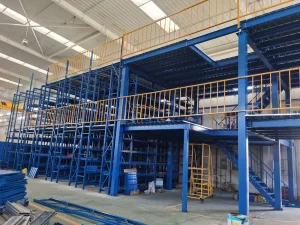
Multi-level integrated shelving platforms designed for hand-load order fulfillment, bin storage, and e-commerce picking expansion.
View Product Details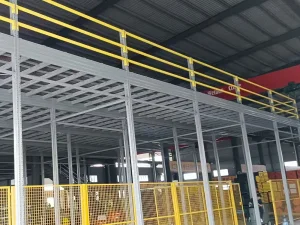
Structural steel columns and heavy main beams providing wide column grids and massive clear-span floor areas for industrial machinery.
View Product Details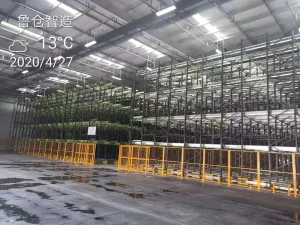
High-density semi-automated pallet storage with motorized radio shuttles working inside deep channels for high turnover.
View Product Details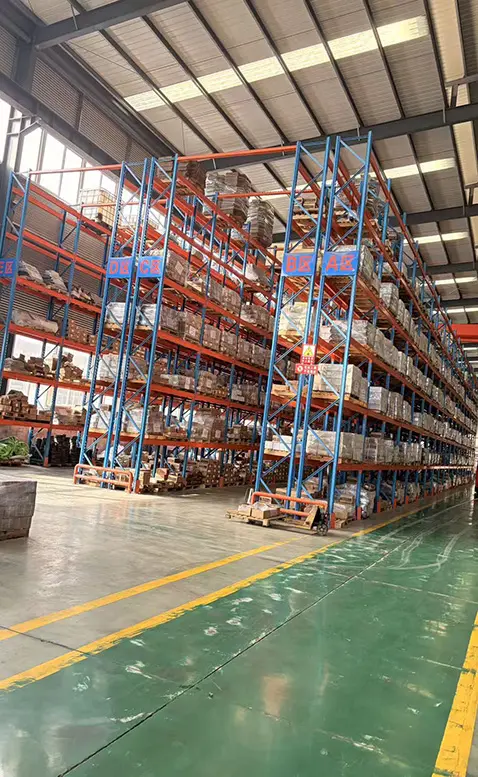
Continuous lane storage reducing aisle space by up to 85%, ideal for high-volume single SKU cold storage and distribution.
View Product Details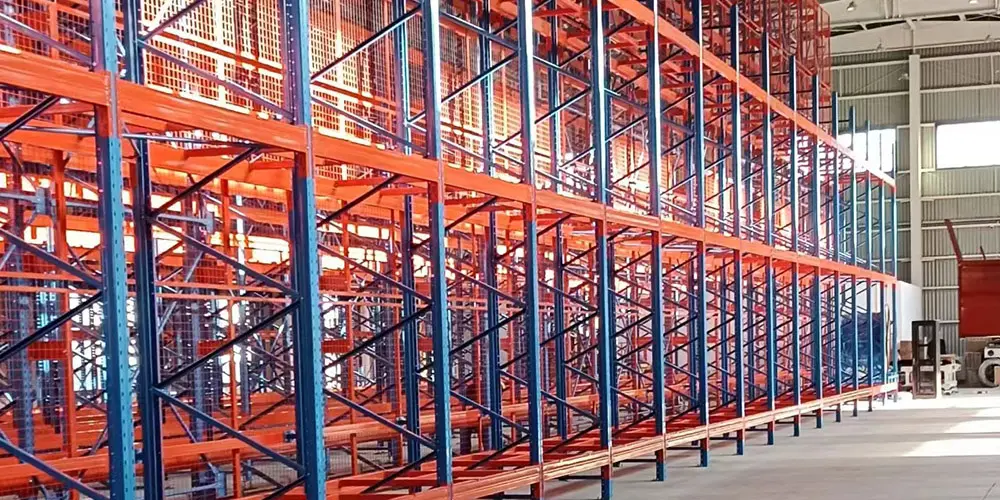
Dynamic 2-to-5 deep cart system operating on inclined rails for high selectivity combined with dense LIFO inventory storage.
View Product Details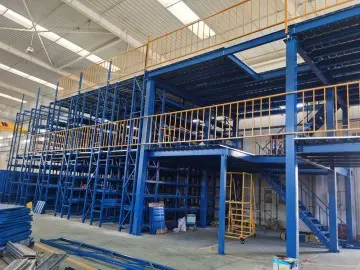
Engineered secondary floor structures adding 100% to 200% floor area without brick-and-mortar building modifications.
View Product Details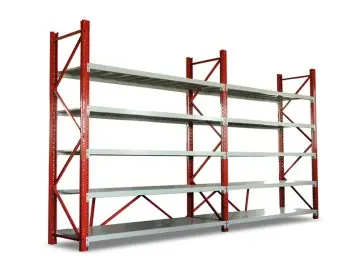
High-density heavy pallet racks mounted on guided motorized bases, eliminating static aisles for 100% selective access.
View Product Details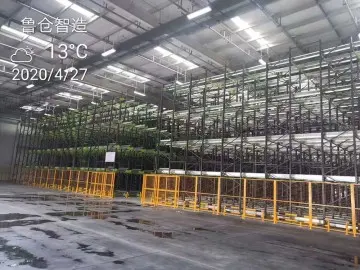
Automated pallet transport system with lithium-powered shuttles controlled via Wi-Fi for FIFO/LIFO warehouse management.
View Product DetailsIn an era defined by rapidly surging industrial real estate costs, tight urban land availability, and accelerating e-commerce fulfillment speeds, global supply chain directors no longer look outward for warehouse expansion—they look upward. The multi-tier mezzanine structure represents the pinnacle of vertical volumetric space efficiency, effectively doubling or tripling usable floor space within the exact same structural footprint.
As logistics operations transition toward multi-channel order processing, traditional single-level warehouses suffer from acute spatial bottlenecks. Industrial real estate lease rates across major logistics hubs—such as North America, Western Europe, Southeast Asia, and the Middle East—have seen compounding annual growth rates exceeding 7% to 12%. Constructing new physical facilities or relocating operations involves exorbitant capital expenditure, lengthy zoning permissions, and severe operational disruption. A rack-supported multi-tier mezzanine floor system manufactured by leading Chinese factories offers a capital-efficient alternative, transforming overhead air space into high-density operational zones for order picking, light manufacturing, staging, and administrative space.
Traditional floor-bound warehouse storage utilizes on average only 35% to 45% of the total internal building volume (clear height). By integrating a customized multi-tier structural mezzanine, clear vertical space up to 12 meters or higher can be divided into multi-level operational decks, escalating cubic space utilization to over 85%. This dramatic increase directly correlates with reduced storage costs per unit, optimized SKU layout, and significantly shortened picker travel times.
From an industrial engineering standpoint, multi-tier mezzanines are categorized into two core structural designs: Rack-Supported Multi-Tier Mezzanines and Structural Steel Heavy-Duty Platforms. Choosing the precise architecture depends on floor load parameters, handling equipment, SKU dimensions, and workflow dynamics.
Rack-supported platforms utilize heavy-duty upright frames (medium or heavy pallet racking frames) as the primary load-bearing structural columns. Walkway joists and steel floor panels are anchored directly to the upright columns, creating an integrated multi-level matrix. The space beneath and above the floor levels is fully equipped with shelving channels or beam levels, creating thousands of dedicated pick locations for small-to-medium bin storage.
Unlike rack-supported systems, structural steel platforms utilize heavy hot-rolled H-beams (Universal Beams) and square tube columns to create open, wide-span clear floor bays without obstructing vertical upright racks beneath. This structural independence allows forklifts, Autonomous Mobile Robots (AMRs), packaging machinery, or office modules to operate freely on the ground deck.
| Engineering Attribute | Rack-Supported Multi-Tier Mezzanine | Structural Steel Platform |
|---|---|---|
| Primary Support System | Roll-Formed Racking Uprights & Beams | Hot-Rolled H-Beams & Heavy Steel Columns |
| Typical Load Capacity | 300 kg/m² to 800 kg/m² | 500 kg/m² to 1,500+ kg/m² |
| Column Grid Span | 1.5m to 3.0m (Standard Rack Widths) | 4.0m to 9.0m (Wide Clear-Span Grid) |
| Primary Application | High SKU Count, Piece Picking, Apparel, Spare Parts | Heavy Machinery, AMR Sorting, Bulk Staging, Office |
| Cost per Square Meter | Highly Economical (Integrated Storage + Deck) | Moderate to High (Heavy Steel Tonnage) |
| Flexibility & Expansion | Modular, Easily Extended or Reconfigured | Rigid Frame, Relocatable via Bolted Connections |
Procuring multi-tier mezzanine systems from established Chinese manufacturers like Guake Logistics Technology (Shandong) Co., Ltd. offers distinct technical, economic, and operational advantages to international engineering contractors and enterprise buyers.
Shandong Province serves as a global powerhouse for steel manufacturing. Direct industrial integration with Tier-1 steel mills ensures access to prime-grade cold-rolled coils with guaranteed yield strengths, tight chemical composition tolerances, and full mill test certification (MTC).
Modern Chinese factories operate high-speed automated roll-forming lines capable of punching, forming, and cutting complex upright profiles with sub-millimeter precision. Robotic welding cells execute flawless full-penetration welds on beam connectors and baseplates.
Automated multi-stage pre-treatment wash tunnels (iron phosphate degreasing) followed by thermosetting epoxy powder coating lines deliver exceptional corrosion resistance, impact resistance, and vibrant aesthetic finishes tailored to corporate branding.
Leading Chinese manufacturers design and test structural racking components strictly in accordance with recognized international design codes:
The versatility of multi-tier mezzanines enables seamless customization for distinct industry verticals. Below are real-world application blueprints implemented across global fulfillment facilities:
E-commerce operations rely on high SKU density and rapid piece-picking operations. Multi-tier mezzanine shelving units integrate gravity-flow carton tracks, spiral conveyors, and vertical reciprocating conveyors (VRC goods lifts). Ground tiers house fast-moving items (A-items), while upper levels organize medium-to-slow movers (B/C-items), eliminating vertical dead space and maximizing hourly picking throughput.
Automotive parts distribution centers require specialized storage for highly diverse item dimensions—from tiny gaskets to heavy engines and bulky exhaust pipes. Multi-tier platforms combine small bin shelving decks on upper levels with dedicated cantilever arms or heavy-duty shelf spans on lower decks, creating a unified parts hub under one roof.
Refrigerated and deep-freeze facilities (+4°C to -28°C) bear astronomical energy costs per cubic meter of cooled air. Installing a multi-tier mezzanine or combining it with semi-automated Radio Shuttle Racking Systems ensures every cubic millimeter of refrigerated space is monetized, slashing energy overhead per pallet stored.
The modern warehouse is rapidly evolving into a high-tech ecosystem where structural engineering intersects with robotics and IoT intelligence. Key trends shaping the future of multi-tier mezzanines include:
Mezzanine floor panels are now engineered with specialized ultra-flat steel decking and electrostatic discharge (ESD) coatings to support Autonomous Mobile Robots (AMRs) operating on upper decks for automated sorting.
Modern platforms feature 100% bolt-together structural framing, eliminating on-site welding entirely. This accelerates overseas installation speeds by up to 50% while allowing non-destructive dismantling and relocation.
Using 3D Building Information Modeling (BIM) software, Chinese engineering teams perform finite element analysis (FEA) to simulate point loads, seismic accelerations, and deflection behavior before manufacturing begins.
To ensure a flawless project lifecycle—from preliminary layout design to international shipping and final safety sign-off—procurement managers should adhere to the following technical evaluation process:
Expert technical answers addressing real-world buyer inquiries regarding structural engineering, customization, installation, and overseas compliance.
Load capacities are engineered to customer specifications. Standard rack-supported multi-tier platforms handle uniformly distributed loads (UDL) ranging from 300 kg/m² to 800 kg/m² per floor level. Heavy-duty structural steel platforms can be engineered to withstand 1,000 kg/m² to 1,500+ kg/m², suitable for heavy machinery and concentrated point loads.
Reputable manufacturers like Guake Logistics Technology calculate structural members based on localized site conditions, including seismic zone ratings and concrete slab specifications. Engineering calculations follow international codes such as FEM 10.2.02, ANSI/RMI MH16.1, and AS 4084, with detailed 3D CAD stress models and stamped structural calculations provided upon request.
Yes. All components utilize modular, bolt-together mechanical connections (high-tensile Grade 8.8 bolts and interlocking beam connectors). Zero welding is required on site. This modular architecture allows systems to be disassembled, extended vertically or horizontally, or relocated to new facility premises with minimal material loss.
We supply several decking options depending on application needs: (1) Solid interlocking cold-rolled steel plates with embossed anti-slip patterns; (2) Perforated steel decking for ventilation and ceiling fire sprinkler compliance; (3) Heavy-duty steel bar grating for maximum light transmission; and (4) High-density wood/MDF subfloors over steel support joists.
Standard custom production timelines range from 20 to 35 days upon CAD layout approval and structural sign-off. Direct shipping from major ports like Qingdao guarantees efficient ocean transit times to North America (18-25 days), Europe (28-35 days), Southeast Asia (7-12 days), and the Middle East (20-25 days).
Every shipped project includes detailed 3D installation drawings, step-by-step assembly guides, component tagging, and packing lists. Additionally, we provide online remote video engineering support or can dispatch experienced installation supervisors directly to overseas project sites to oversee local assembly teams.
Discover our comprehensive suite of industrial warehousing equipment built for extreme durability and heavy-duty load performance.
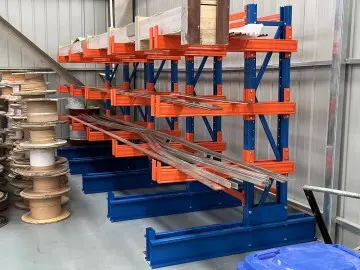
Unobstructed arm racking system engineered for long profiles, steel tubes, lumber, and irregular heavy industrial loads.
View Product Details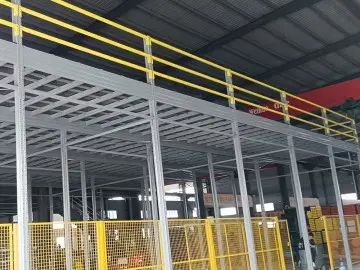
Heavy structural steel platforms featuring clear-span designs under decks for uninhibited ground-level forklift operations.
View Product Details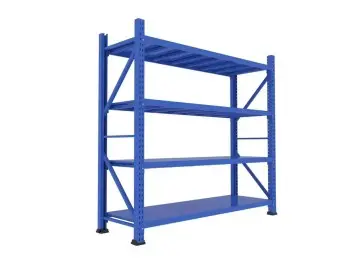
Robust industrial metal shelving engineered for maintenance shops, tool rooms, and heavy hand-loaded inventory items.
View Product Details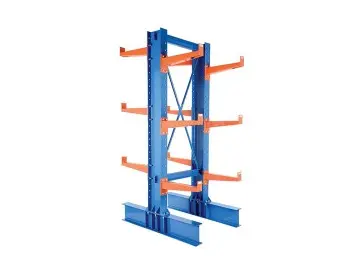
Adjustable cantilever arms providing continuous lateral storage channels for aluminum extrusions and PVC piping.
View Product Details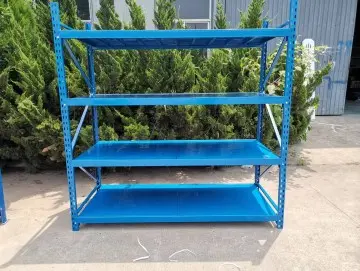
Quick assembly boltless shelving panels ideal for rapid deployment in retail backrooms, archives, and light assembly lines.
View Product Details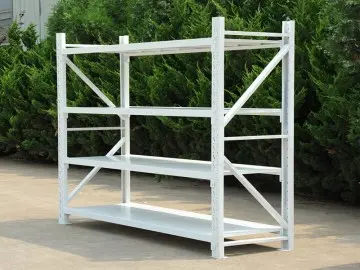
Versatile multi-tier light shelving matrix for high SKU density, pharmaceutical bin picking, and small component parts.
View Product Details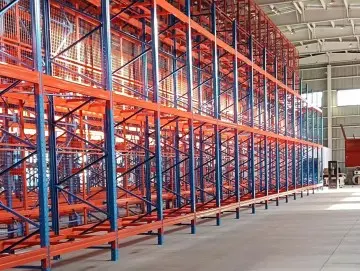
Industry-standard selective beam racks offering 100% direct pallet access for forklift handling in high-bay logistics centers.
View Product Details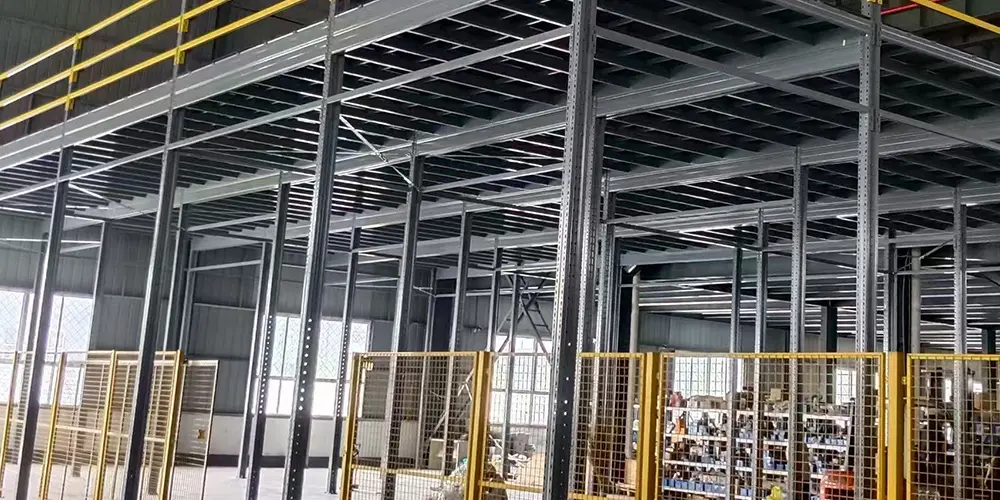
Custom multi-story engineering combining heavy pallet storage lower levels with picking floor upper decks for maximum ROI.
View Product DetailsContact our structural engineering team today for a complimentary warehouse layout evaluation, custom 3D CAD design proposal, and direct factory price quote.