Select from our certified industrial warehouse racking products, engineered for maximum volumetric efficiency, structural safety compliance, and seamless handling.
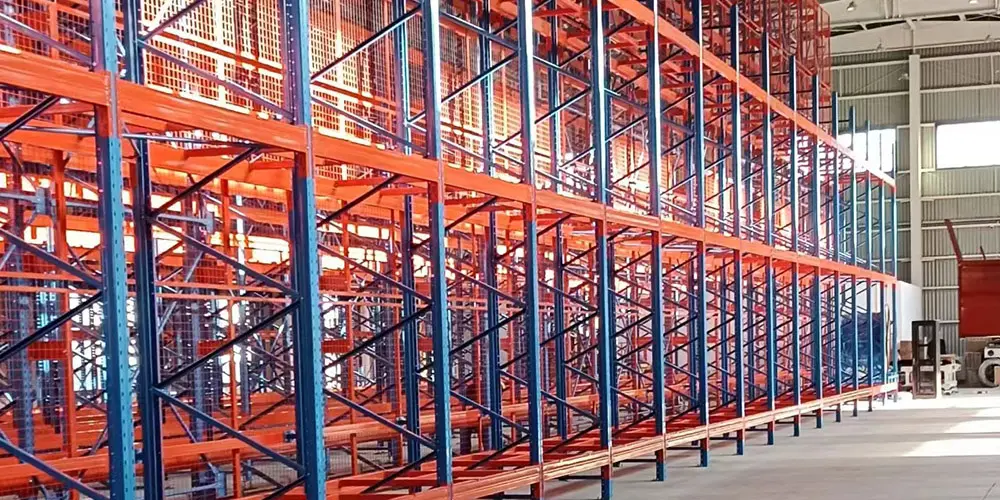
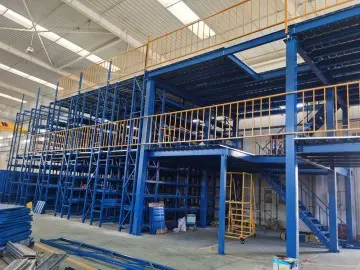
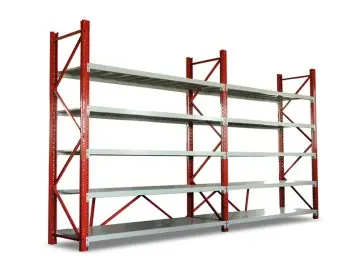
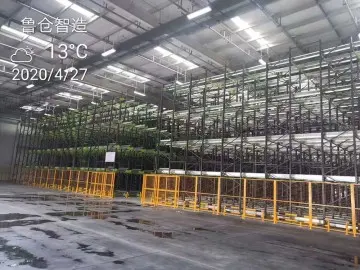
In modern industrial logistics, warehouse space constraints, skyrocketing urban industrial land values, and escalating labor costs have driven procurement managers, supply chain directors, and facility operations engineers toward high-density dynamic storage architectures. At the epicenter of this technological shift are Pallet Back systems—incorporating push-back dynamic cart arrays, mechanical back-stop safety beams, anti-drop wire mesh backings, and structural stop rails engineered to optimize cubic space while preventing catastrophic pallet spillage.
Historically, warehouses relied heavily on standard single-deep selective pallet racking. While selective systems afford 100% immediate SKU accessibility, they yield poor volumetric efficiency, allocating up to 60% of total facility floor space to working aisles for counterbalanced forklifts or reach trucks. In contrast, dynamic pallet back systems—most notably 2-to-6 deep push-back racking networks—allow facilities to condense aisles, increase pallet position storage density by 45% to 75%, and enforce rigid structural stop barriers that protect personnel, automated guided vehicles (AGVs), and lower-tier inventory.
Sourcing directly from tier-one China pallet back suppliers and structural manufacturing factories like Guake Logistics Technology (Shandong) Co., Ltd. provides international buyers with a distinct competitive advantage. By pairing high-grade cold-rolled structural steel (Q235B and Q355B grades) with automated robotic cold-roll forming and continuous electrostatic powder coating, Chinese factories deliver enterprise-grade, seismic-rated racking systems at a fraction of Western capital expenditure costs. This technical whitepaper explores the engineering fundamentals, structural dynamics, manufacturing supply chain advantages, and localized application scenarios of China-manufactured pallet back and push-back racking technologies.
A detailed technical teardown of nested cart geometry, gravitational slope gradients, back-stop load dissipation, and steel member cross-sections.
Precision-engineered inclined rails positioned at an angle of 1.5° to 3.0° allow nested carts to flow forward smoothly under gravity when the front unit load is retrieved by a forklift operator.
Low-profile, heavy-duty steel carts nest inside one another on low-friction sealed bearings. Carts support unit load weights up to 1,500 kg per pallet position with minimal rolling resistance.
Cold-formed structural back-stop beams and heavy-gauge wire mesh panels attached to the rear uprights absorb dynamic impact force and eliminate pallet push-through hazards.
In a standard dynamic pallet push-back system, when a forklift pushes the first pallet back to deposit the second, the required force ($F_{push}$) must overcome static friction, gravitational resistance up the inclined beam slope, and structural momentum. The mathematical relationship governing the force required is given by:
F_{push} = W \cdot (\sin\theta + \mu \cdot \cos\theta) + F_{inertia}
Where W represents the total weight of all previously loaded pallets residing on the nested carts, θ is the incline angle of the structural guide rail, μ is the rolling friction coefficient of the heavy-duty steel wheels, and F_{inertia} accounts for acceleration dynamics. Factory precision engineering ensures that μ is maintained below 0.015 through the use of permanently lubricated, shielded stainless-steel ball bearings, preventing operator fatigue and hydraulic strain on lift trucks.
Furthermore, back-stop structural members located at the lane apex are subjected to dynamic impact testing during production. Under Finite Element Analysis (FEA) modeling, structural rear beam profiles exhibit less than L/300 deflection under maximum static load rating, conforming fully to international RMI (Rack Manufacturers Institute) and European FEM 10.2.02 codes.
Original engineering benchmarks evaluating volumetric density, operational selectivity, capital expenditure (CapEx), and safety indexes across warehouse storage types.
| Racking Architecture | Storage Density | SKU Selectivity | Inventory Flow | Forklift Damage Risk | CapEx Index / Pallet |
|---|---|---|---|---|---|
| Standard Selective Racking | Base (1.0x) | 100% Direct | FIFO / LIFO | Moderate | Lowest ($) |
| Pallet Push Back (2–6 Deep) | High (1.75x) | Lane-level Access | LIFO | Low (No Rack Entry) | Moderate ($$) |
| Drive-In Racking (with Back-Stops) | Very High (2.1x) | Poor (Block Stock) | LIFO | High (Forklift Enters Rack) | Low-Moderate ($$) |
| Radio Shuttle Racking | Ultra High (2.5x) | Automated Lane Access | FIFO / LIFO | Very Low | High ($$$$) |
| Automated AS/RS High-Bay | Maximum (3.2x) | 100% Automated | FIFO / LIFO | Zero (Automated) | Premium ($$$$$) |
When calculating the return on investment for upgrading to a China-manufactured push-back or pallet back-stop system, procurement officers must evaluate both real estate footprint savings and operational throughput speed. For a benchmark 5,000 m² ambient warehouse operating in an industrial logistics corridor:
Why Shandong's raw material access, cold-roll steel clusters, and robotic automated production lines provide unmatchable global delivery speeds and competitive pricing.
Direct procurement of prime hot-rolled strip steel from domestic giants (BaoSteel, Shougang) minimizes raw material price volatility and guarantees certified tensile strength (Q235B / Q355B structural steel grades).
Multi-station continuous cold roll-forming machines guarantee structural upright profile tolerances within ±0.15mm, eliminating structural pitch errors during full-height building erection.
Integrated automated 9-stage pre-treatment wash and electrostatic thermosetting epoxy powder coating lines deliver scratch-resistant, anti-corrosive surfaces rated for 1,000+ hours salt spray test.
Pallet back racking systems engineered by Guake Logistics Technology are custom-adapted to rigorous environmental conditions and operational dynamics across diverse industrial sectors worldwide:
In cold chain storage, energy expenditure required to cool cubic space makes high-density storage mandatory. Standard mechanical grease thickens and solidifies in sub-zero environments, rendering standard cart rollers inoperable. Guake engineers supply custom low-temperature push-back cart arrays featuring synthetic low-viscosity fluorinated lubricants and stainless-steel wheel assemblies. The inclusion of heavy-duty pallet back-stops prevents freezer door interference and guards against ice build-up impact.
Automotive assembly plants handle dense, heavy engine blocks, metal stampings, and transmission cases stored in heavy steel skids or metal stillages. Pallet back safety stop beams with integrated polyurethane rubber bumpers cushion heavy metal-on-metal impacts, absorbing kinetic energy and preventing skid misalignment on picking faces.
FMCG environments demand rapid pallet placement and extraction cycles without damaging shrink-wrapped consumer packaging. 3-deep push-back cart systems equipped with continuous safety mesh backing on aisle perimeters prevent single carton drop-offs, ensuring full worker protection in high-speed picking tunnels underneath elevated storage bays.
For installations in earthquake-prone zones (such as Japan, the US West Coast, and western South America), pallet back racking is reinforced with heavy-duty baseplates, expanded anchor bolt patterns, dynamic cross-bracing arrays, and top-tier frame ties. Dynamic back-stop rails lock nested carts in place during lateral seismic oscillation, preventing stack collapse.
As logistics operations transition toward fully automated, data-driven smart warehouses, standard mechanical pallet backing is evolving through integration with Industry 4.0 technology stacks:
Next-generation back-stop beams embed micro-piezoelectric strain sensors and optical laser distance meters. Sensors relay real-time structural load data and lane occupancy status to Warehouse Management Systems (WMS) via wireless LoRaWAN protocols, detecting improper pallet seating instantly.
With Autonomous Mobile Robots (AMRs) and automated forklifts replacing manual drivers, pallet back stops now incorporate high-reflectivity optical target plates and magnetic sensors to facilitate precision robotic insertion without human oversight.
Additionally, sustainable green steel manufacturing initiatives are being actively adopted across Shandong steel mills. By utilizing Electric Arc Furnace (EAF) steelmaking powered by renewable energy and zero-VOC waterborne powder coatings, China racking suppliers are dramatically reducing the embodied carbon footprint of warehouse steel installations, aiding multinational brands in achieving Scope 3 carbon neutrality goals.
Guake Logistics Technology adheres to an uncompromising quality management system certified under ISO 9001:2015 standards. Every rack system shipped overseas is backed by comprehensive engineering calculation packages certified by independent structural engineers to meet local regulatory codes:
Direct, authoritative answers to common engineering, procurement, shipping, and installation inquiries.
A Pallet Back Stop is a stationary safety beam, rail, or mesh panel installed at the rear of standard pallet racking to prevent operators from inadvertently pushing a pallet off the rear edge of the rack frame. In contrast, Push-Back Racking is a complete high-density dynamic storage system utilizing inclined rails and nested rolling carts, allowing 2 to 6 pallets to be stored per lane depth under a Last-In, First-Out (LIFO) operational flow.
To produce an engineered proposal with structural calculations, please provide: (1) Facility building CAD/PDF floor plan showing column locations and clear ceiling height; (2) Pallet dimensions (Width x Depth x Height inclusive of cargo); (3) Maximum and average unit load weights; (4) Forklift truck specifications (turning radius, maximum lift height, and mast height); (5) Operating environment temperature range.
Components are engineered for tight container loading. Upright frames, nested push-back carts, and structural beams are bundle-packed using custom steel strapping and protective wood skids. Component lengths are optimized to maximize the payload volume of standard 40ft High Cube (40HC) ocean shipping containers, minimizing per-unit freight tariffs.
Yes. All structural beam levels, upright punch profiles, back-stop heights, wire mesh gauges, and powder coat surface finishes can be customized. We offer standard RAL color spectrum powder coating (e.g., RAL 5015 Blue, RAL 2004 Orange, RAL 7035 Grey) at no additional charge for volume orders.
We primarily utilize high-tensile hot-rolled carbon steel conforming to Q235B (equivalent to ASTM A36 / SS400) for standard beams and racking components, and Q355B (equivalent to ASTM A572 Grade 50) for high-load heavy-duty upright frames and cantilever arms requiring superior yield strength.
Yes. We provide complete 3D assembly engineering drawings, step-by-step installation manuals, and video documentation for every project. Additionally, for major turnkey warehouse installations, we can dispatch qualified structural installation supervisors and commissioning engineers directly to your site location globally.
Standard manufacturing lead time is 15 to 25 business days following final CAD drawing approval and deposit receipt. Large enterprise projects exceeding 10,000 pallet positions are delivered via rolling container shipments scheduled to match your building readiness timeline.
Yes. Our structural engineering department utilizes Finite Element Analysis (FEA) software to model dynamic ground acceleration forces based on your site's specific seismic zone acceleration parameters, designing customized heavy-duty baseplates and dynamic seismic sway bracing accordingly.
High-density pallet back storage, steel structural platforms, and automated warehouse equipment direct from Shandong manufacturing facilities.
Partner with Guake Logistics Technology (Shandong) Co., Ltd. Send us your building floor plan to receive a comprehensive structural proposal, load calculations, and factory-direct pricing within 24 hours.