Precision-engineered storage hardware designed and manufactured directly in Shandong, China.
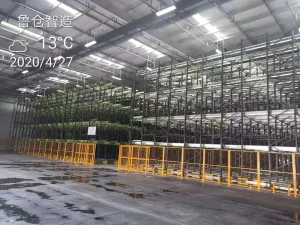
High-density semi-automated pallet shuttle systems for maximum cubic utilization and rapid throughput.
Explore Shuttle Racking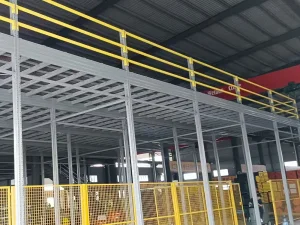
Heavy-duty structural steel platforms converting overhead space into operational floor levels.
Explore Steel Platforms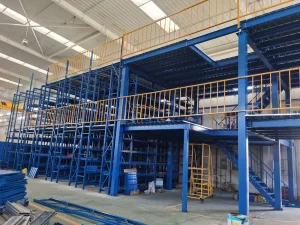
Multi-tier mezzanine shelving solutions for small-parts inventory picking and bulk expansion.
Explore Mezzanine Systems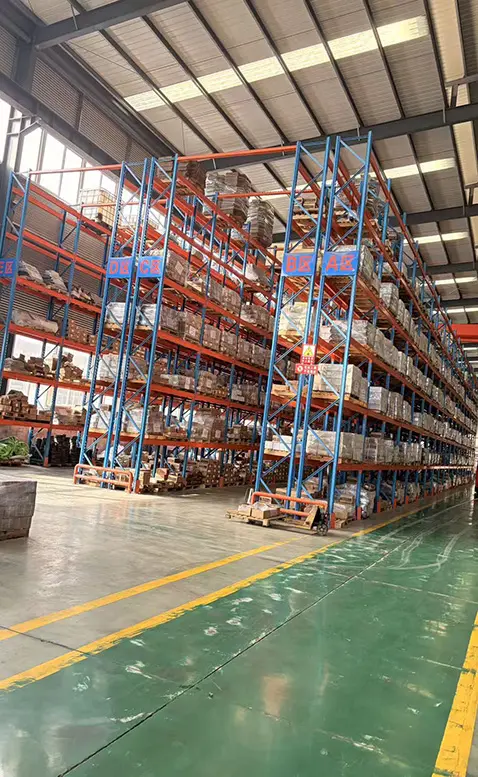
Maximum spatial density for homogeneous batch storage eliminating unnecessary aisles.
Explore Drive In Racking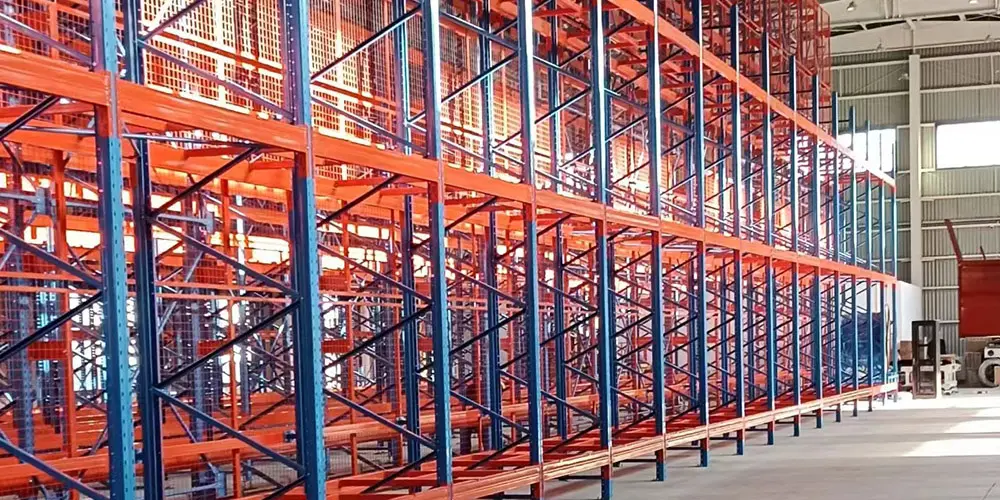
2-5 deep pallet cart systems offering Last-In, First-Out (LIFO) lane selectivity with single-aisle access.
Explore Push Back Racking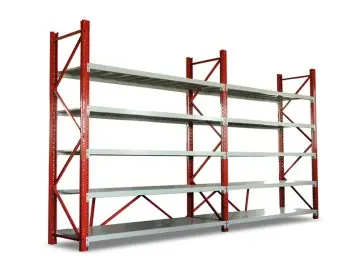
Heavy-duty racks mounted on electrically driven mobile bases to double warehouse capacity.
Explore Mobile Racking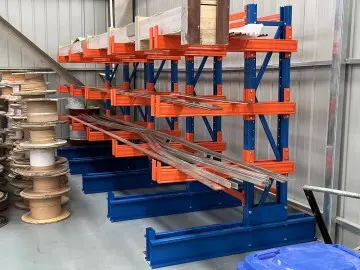
Engineered column-and-arm structures for uninhibited side loading of long, bulky, or irregular inventory.
Explore Special Racking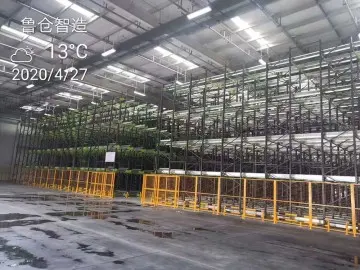
Autonomous battery-powered pallet runners managed via RF remote control or integrated WMS networks.
View Shuttle System SpecsModern global supply chains are undergoing structural pressure caused by escalating warehouse real estate costs, severe labor shortages in material handling, and rising energy tariffs for temperature-controlled environments. Industrial logistics operators across North America, Europe, Asia-Pacific, and the Middle East are rapidly moving away from traditional, static selective pallet racking toward semi-automated high-density storage solutions.
Among these technologies, the Radio Shuttle System (also designated as Pallet Runner or Pallet Shuttle Racking) has emerged as the definitive benchmark for enterprise storage optimization. Unlike conventional drive-in systems where forklifts must physically navigate deep within structural channels—causing operational delays and severe frame damage risks—the Radio Shuttle system decouples forklift movements from channel depth. A self-propelled, battery-powered robot travels inside specially designed guide rails underneath the pallets, executing load, unload, and continuous channel-compaction commands via radio frequency commands or Warehouse Control Systems (WCS).
Standard Selective Pallet Racking utilizes only 35% to 40% of total warehouse building volume due to expansive aisle space requirements. Drive-in Racking achieves 60% to 65%. Radio Shuttle Systems achieve up to 85% to 90% volumetric utilization, doubling operational pallet capacity without expanding physical floor footprints.
Eliminates forklift travel inside deep channels. Shuttles operate at speeds up to 1.2 m/s loaded and 1.5 m/s unloaded, cutting travel cycle times by over 40%.
Supports both First-In, First-Out (FIFO) for perishable goods and Last-In, First-Out (LIFO) for batch-manufactured dry inventory within the exact same structural framework.
Zero physical entry of forklifts into storage lanes drastically reduces upright impact hazards, structural maintenance costs, and workplace injury liability.
When enterprise procurement teams evaluate China Radio Shuttle System factories, understanding the underlying manufacturing infrastructure, steel metallurgy standards, and robotic automation capabilities is paramount to securing high-tier ROI.
The manufacturing cluster located in Shandong Province, represented by specialized producers such as Guake Logistics Technology (Shandong) Co., Ltd., has developed a globally recognized supply chain ecosystem. Established in 2010 in Linyi, Shandong, Guake operates over 20,000 square meters of specialized manufacturing space dedicated to structural roll-forming, robotic welding, and electromechanical assembly.
| Engineering Parameter | Western OEM Standard | Guake Shandong Factory Benchmark | Procurement Advantage |
|---|---|---|---|
| Steel Profile Tensile Strength | EN 10025 S355 / ASTM A572 Gr 50 | Q355B / Q235B Certified High-Grade Steel | Identical structural safety margins under FEM 10.2.02 standards. |
| Guide Rail Dimensional Tolerance | ±1.0 mm per 3m length | ±0.5 mm continuous roll-formed profile | Smoother shuttle displacement, zero jam rates. |
| System Cost / Pallet Position | $180 – $260 USD | $70 – $120 USD (Factory Direct) | 50-60% CAPEX Reduction with equivalent structural longevity. |
| Manufacturing Lead Time | 16 – 24 Weeks | 4 – 6 Weeks (Full Container Load) | Accelerated facility commissioning schedules. |
A high-performance Radio Shuttle Racking System consists of two seamlessly integrated subsystems: the Static Heavy-Duty Steel Structure and the Dynamic Autonomous Radio Shuttle Vehicle (RSV).
The rack design relies on cold-formed teardrop or omega-profile upright frames connected by heavy-duty box beams. However, the critical engineering differentiation lies in the Shuttle Guide Rail. Guake utilizes a specialized asymmetric Z-profile or C-profile guide rail engineered with double-flange anti-drop lips. This rail serves a dual purpose: supporting the weight of the pallet goods (up to 1,500 kg per position) while providing a smooth, high-friction track for the shuttle's drive wheels and lower guide wheels.
Utilizes high-torque brushless DC (BLDC) servo motors paired with planetary gearboxes. The lifting bed employs electro-hydraulic or eccentric mechanical linkage systems capable of lifting 1,500 kg loads in under 2.5 seconds.
Powered by high-energy-density Lithium Iron Phosphate (LiFePO4) battery packs (24V/48V, 30Ah–50Ah). Features fast-charge capabilities (80% charge in 1 hour) providing 8 to 10 hours of continuous operational autonomy.
Modern radio shuttles manufactured by top-tier Chinese suppliers feature comprehensive photoelectric and ultrasonic sensor arrays:
Radio Shuttle Systems engineered by Chinese OEM factories are currently deployed across high-intensity logistics hubs globally. Below are the primary industrial application profiles:
Cold storage facilities incur immense refrigeration power costs per cubic meter. Drive-in aisles waste space and retain heat. Guake’s specialized cold-chain Radio Shuttles feature low-temperature IP65 sealed electronics, heating elements inside gearbox enclosures, and anti-condensation sensors, operating flawlessly down to -30°C.
FMCG manufacturers manage high SKU volumes produced in large manufacturing batches. Radio Shuttle racking allows lanes up to 40 pallets deep, supporting continuous batch clearance and direct loading to outbound docks.
Human forklift entry into chemical storage zones poses severe toxic or flammable risk. Anti-spark polyurethane wheels, flame-retardant electrical wiring, and explosion-proof (EX-certified) shuttle configurations isolate risk outside the rack lanes.
Automotive stamping lines and engine plants require reliable buffer storage for heavy metal wire cages and custom post-pallets. Heavy-duty shuttle frames handle concentrated loads up to 1,500 kg per unit seamlessly.
The warehouse automation industry is advancing rapidly. Buyers negotiating with Chinese factories should align their procurement strategy with emerging technological trends:
Traditional Radio Shuttles operate in 2D (forward/reverse in a single lane, with a forklift relocating the shuttle between lanes). The market is increasingly adopting 4D Multi-Directional Shuttle Systems. A 4D shuttle can change tracks autonomously, traveling across longitudinal channels and lateral cross-aisles, while vertical lift elevators transport the shuttle between levels. This creates a fully automated, unmanned AS/RS matrix without forklift intervention.
Legacy RF remotes are being replaced by Wi-Fi 6 and private 5G mesh networks. Shuttles communicate real-time telemetry—including exact location, battery temperature, operational cycles, and motor diagnostics—directly to enterprise Warehouse Management Systems (SAP, Oracle, Manhattan) via standardized REST APIs or MODBUS/TCP protocols.
Leading Chinese OEM facilities are prototyping regenerative braking systems inside shuttles. Decelerating heavy 1.5-ton pallets converts kinetic energy back into electrical energy stored in supercapacitors, extending per-charge runtime by 12% to 15%.
Evaluating an overseas factory proposal requires structural verification. Procurement managers must demand compliance with internationally accepted design standards:
In-depth technical answers for procurement directors, logistics engineers, and plant managers.
Guake Logistics Technology manufactures a complete portfolio of heavy-duty industrial storage systems, including:
Selection depends on your SKU count, required throughput speed, and inventory rotation rules:
Yes. Our in-house structural engineering team provides complete 2D CAD layout drawings, 3D spatial models, and finite element analysis (FEA) structural calculation reports. We size all upright profiles, beam sections, and rail anchorages based on your seismic zone classification, concrete slab depth, and unit load data.
Standard lithium batteries experience severe voltage drops in sub-zero environments. Guake’s cold-room shuttles utilize specialized Lithium Iron Phosphate (LiFePO4) chemistry integrated with internal thermodynamic heating elements controlled by an intelligent BMS. This maintains internal battery core temperatures above +5°C even when operating inside -30°C freezer chambers, maintaining full 8-hour shift autonomy.
Every export shipment includes comprehensive step-by-step 3D assembly manuals, component identification tags, and anchor torque specifications. For large enterprise projects, Guake can dispatch experienced installation engineers to superintend local labor, perform electromechanical commissioning, and train site maintenance teams on shuttle operation and spare parts replacement.
Our structural manufacturing complies strictly with FEM 10.2.02, ANSI/RMI MH16.1, and ISO 9001 standards. Structural components undergo rigorous destructive load testing to ensure minimum structural safety factors of 1.65 to 1.95 on yield strength. All surface coatings are certified heavy-metal free and scratch-resistant under ISO 2409 adhesion testing.
Select your product category below to review engineering specs or request direct manufacturer pricing.
Automated pallet runners engineered for maximum density and high-throughput warehousing.
View Shuttle Racking
Heavy-duty steel floor platforms designed for industrial storage, logistics, and office expansion.
View Steel Platforms
Integrated multi-tier racking systems maximizing overhead vertical clear height.
View Mezzanine Racks
High-density LIFO pallet storage engineered for bulk homogeneous inventory.
View Drive In Systems
High-density dynamic cart systems providing rapid lane selectivity without rack entry.
View Push Back Systems
Motorized rail-guided bases maximizing 100% pallet access with minimal aisle footprint.
View Mobile Systems
Heavy-duty structural arm racking built for pipes, timber, steel bars, and heavy loads.
View Cantilever Racks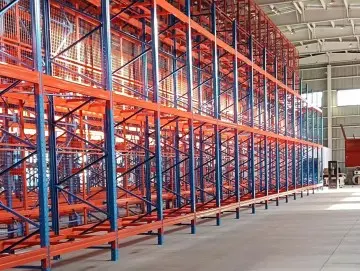
Versatile selective beam racks customized to exact pallet capacity and building height.
Explore Full Product Line