Factory-direct high-density storage platforms engineered for precision pallet handling, extreme load capacities, and seamless warehouse execution.
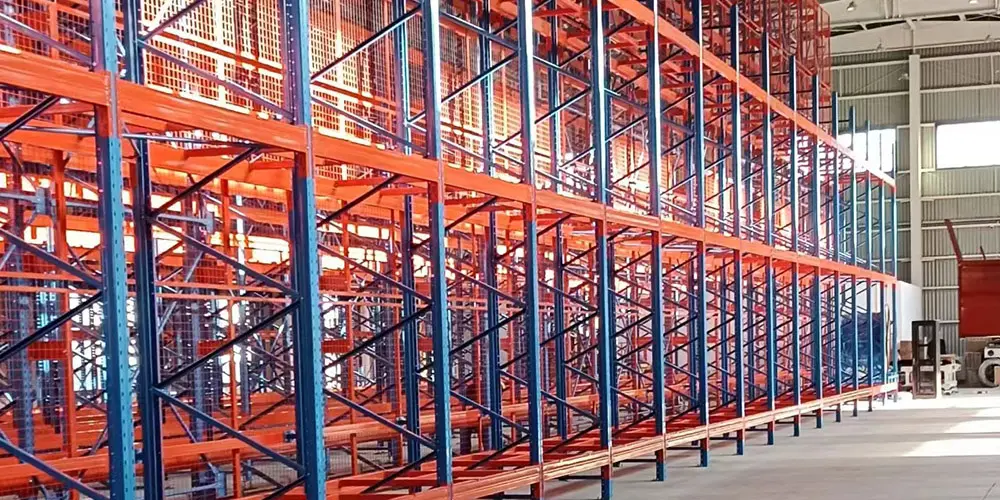
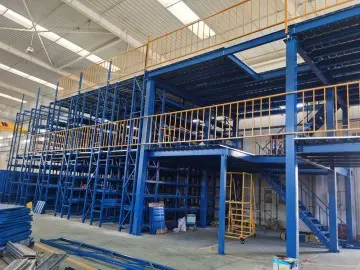
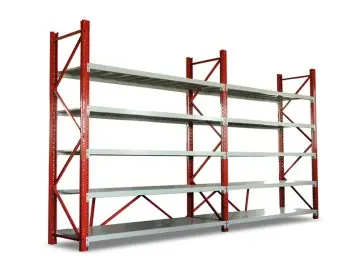
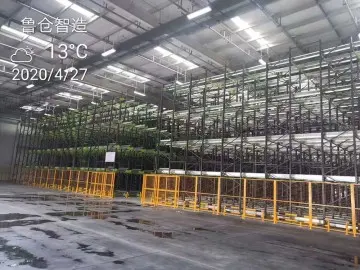
Analyzing the macro-economic shifts, space optimization pressures, and industrial engineering trends driving enterprise adoption of Chinese shuttle radio technology.
In modern industrial logistics, warehouse floor space represents one of the most significant recurring capital commitments. Global supply chain operators face compound pressures: escalating industrial real estate lease rates, persistent labor shortages in material handling, and stringent throughput velocity mandates driven by omnichannel retail. Within this operating environment, traditional selective pallet racking—which dedicates up to 60% of usable floor plate footprint solely to forklift access aisles—is increasingly obsolete for bulk storage.
As enterprise supply chains seek maximum volumetric efficiency, China shuttle radio suppliers and factories have stepped into a dominant global leadership role. By pairing precision structural steel fabrication (utilizing cold-rolled high-tensile Q235B and Q355B steel grades) with advanced wireless IoT telemetry and autonomous embedded shuttle cars, Chinese OEMs deliver high-density semi-automated storage systems that increase warehouse capacity by 70% to 85% compared to static selective layouts.
The strategic shift toward radio shuttle technology (also known as pallet runner or radio pallet shuttle systems) relies on decoupling forklift operators from the storage lanes. Instead of driving deep into hazardous drive-in rack tunnels, lift truck drivers deposit pallets at the entry interface of a deep channel. A battery-powered, radio-frequency-controlled autonomous shuttle robot picks up the pallet, travels down specialized galvanized guide rails at speeds up to 1.2 m/s, and places the payload at the next available high-density position with millimeter precision.
Information Gain Insight: Modern China shuttle radio manufacturers no longer simply fabricate static steel channels. Top-tier factories operate integrated robotics labs that engineer multi-directional 4-way shuttles, dynamic wireless RF mesh controllers, low-temperature cold-chain brushless motors, and real-time WMS/WCS middleware bridging physical material flows with enterprise SAP/Oracle ERP systems.
Eliminates operating aisles between rack rows. Shuttle channels can extend up to 40 meters deep, allowing full vertical utilization up to the warehouse clear ceiling height (12m to 25m+).
Forklifts operate strictly at the outer perimeter face, reducing travel cycle distances by up to 60%. Meanwhile, independent radio shuttles execute lane movements simultaneously.
Because forklifts never enter the rack matrix, structural rack upright column damage from collision impact is reduced by over 90%, dramatically lowering maintenance expenses and safety risks.
Inside the engineering components: RF modules, sensor fusion networks, lithium power systems, and structural metallurgy.
A high-performance radio shuttle storage system represents a complex synergy of structural civil engineering, mechanical design, electrical control, and RF telecommunications. Understanding the internal component stack enables procurement officers to audit factory quality and ensure long-term operational resilience.
Operating on dual-band 2.4GHz / 5.8GHz industrial wireless radio channels (or sub-GHz LoRa mesh networks), Chinese shuttle radio controllers maintain stable communication despite metal structural interference. Shuttles feature handheld RF remote pendants or direct WCS tablet links with point-to-point roaming algorithms to guarantee zero packet loss across expansive 100,000m² facilities.
Each shuttle is equipped with an array of photoelectric proximity sensors, laser distance measuring sensors, anti-collision bumper bars, and optical pallet-edge detection. The internal PLC executes automatic decelerations when approaching channel ends or adjacent pallets, ensuring smooth, vibration-free transport for fragile goods.
Modern radio shuttles utilize industrial-grade Lithium Iron Phosphate (LiFePO4) battery packs featuring fast-charging technology (80% charge in 30 minutes) providing 8 to 12 hours of continuous operation. Integrated BMS (Battery Management System) modules regulate cell balancing and prevent thermal runaway in harsh environments.
Leading Chinese OEM suppliers are actively advancing shuttle radio technology along a clear four-stage architectural roadmap:
Manual forklift placement of shuttle into deep lanes; remote RF command execution for basic LIFO/FIFO longitudinal movement.
WCS server controlling multiple shuttles via Wi-Fi; automated battery docking stations; optical barcode cross-aisle positioning.
Shuttles traverse both longitudinal channels and lateral cross-aisles autonomously without requiring forklift intervention.
Sub-millisecond 5G private network control, AI predictive maintenance telemetry, and full integration with Autonomous Mobile Robots (AMR).
How shuttle radio systems solve domain-specific supply chain challenges across key global industry sectors.
Refrigerated warehouse space incurs extremely high electrical utility overhead (up to 40% higher than ambient storage). Radio shuttle systems operate seamlessly in temperatures down to -30°C (-22°F), maximizing cubic density so operators freeze goods, not empty space.
High-volume, low-SKU beverage, food, and paper manufacturing facilities require massive continuous pallet buffering. Shuttle radio systems enable rapid bulk staging at production line discharge zones, ensuring zero production slowdowns.
Automotive OEMs utilize radio shuttles to manage heavy metal container bins and standard engine/transmission pallets weighing up to 1,500 kg – 2,000 kg per load, supporting Just-In-Time (JIT) sequence loading.
Evaluating Radio Shuttle Systems against traditional storage layouts to guide procurement decision-making.
Selecting the optimal warehouse storage architecture requires balancing capital expenditure (CapEx), operating expenses (OpEx), volumetric efficiency, and inventory rotation parameters (First-In, First-Out vs. First-In, Last-Out). The benchmarking matrix below outlines how Radio Shuttle systems perform against alternative high-density racking topologies.
| Storage Racking System | Volumetric Efficiency | Forklift Damage Risk | Inventory Rotation | Relative CapEx Cost | Throughput Speed |
|---|---|---|---|---|---|
| Selective Pallet Racking | 40% – 50% (Low) | Moderate | FIFO (100% Selectivity) | Baseline (Low) | Moderate |
| Drive-In Racking | 65% – 75% (High) | Extremely High | LIFO Only | Low - Medium | Slow |
| Push-Back Racking | 60% – 70% (Medium) | Low | LIFO (2–6 Deep) | Medium | Moderate |
| Radio Shuttle Racking | 80% – 88% (Maximum) | Extremely Low | FIFO or LIFO Configurable | Medium - High | Very Fast |
| Automated AS/RS Stacker Crane | 85% – 92% (Maximum) | Zero | FIFO / WMS Automated | Very High | Continuous High |
Operational ROI Formula: Radio Shuttle Racking bridges the gap between low-cost static racking and multi-million-dollar full AS/RS crane automation. By delivering up to 88% spatial utilization at roughly 35% of the initial capital cost of full crane automation, radio shuttle solutions achieve the fastest ROI payback in industrial material handling.
How tier-1 Chinese manufacturers ensure structural compliance, electrical safety certification, and global field support.
Top Shandong and Jiangsu factories perform FEA (Finite Element Analysis) structural simulation to meet European FEM 10.2.02, EN 15512, and American RMI (Rack Manufacturers Institute) guidelines. Rack uprights are calculated to withstand localized seismic acceleration forces and dynamic shuttle load braking.
Shuttle robot sub-assemblies carry full CE Marking, FCC ID wireless radio compliance, and RoHS environmental certifications. Internal relays, PLCs (Siemens/Schneider/Omron), and sensors adhere to IP65 / IP67 ingress protection standards.
To eliminate overseas downtime, qualified Chinese suppliers supply detailed 3D BIM/CAD assembly blueprints, plug-and-play spare parts kits (motors, sensors, wheels), dynamic remote IoT diagnostic gateways, and on-site engineering commissioning teams worldwide.
Detailed answers to technical, operational, and commercial questions asked by logistics directors and warehouse engineers.
Radio shuttle racking can be structurally configured for either inventory flow method. For LIFO (Last-In, First-Out), loading and unloading take place at the same front aisle interface. For FIFO (First-In, First-Out), loading occurs at the rear aisle while retrieval occurs at the front aisle. The shuttle robot receives wireless RF commands to pick pallets from either side accordingly.
Standard heavy-duty radio shuttle cars manufactured in China handle pallet weights ranging from 500 kg to 1,500 kg (1.5 tons), with customized heavy-load versions accommodating up to 2,000 kg. Unloaded travel speeds average 1.0 m/s – 1.2 m/s, while fully loaded travel speeds average 0.6 m/s – 0.8 m/s, ensuring rapid cycle times.
Equipped with high-capacity LiFePO4 batteries, a single full charge supports 8 to 12 hours of continuous operation. Quick-charging stations allow a 50% charge replenishment during 30-minute worker shift breaks. Batteries are designed for quick-swap installation so spare battery packs can keep shuttles operating 24/7.
Yes. Specialized cold-chain radio shuttles are engineered with anti-condensation internal heating circuits, low-temperature gear lubricants, sealed IP67 electronics, and specialized cold-resistant LiFePO4 battery chemistry to operate reliably without battery degradation in cold rooms down to -30°C.
While the specialized shuttle guide rail absorbs minor variances, the underlying concrete slab should meet DIN 18202 or FM2 super-flat floor specifications. Concrete slab thickness must support concentrated point loads from upright base plates, typically requiring 200mm – 300mm reinforced concrete rated at 30 MPa or higher.
Leading suppliers source structural coils directly from top state-owned steel mills (such as Baosteel or Shougang). Components undergo automated roll-forming, continuous robot welding, continuous shot blasting, and electrostatic powder coating. Factory quality control adheres to ISO 9001 quality management standards.
Select your high-density racking system below to view full technical engineering parameters and request custom project blueprints.