Direct factory manufacturing from Shandong, China. Fully customized load capacities, seismic safety factors, and high-bay rack layouts.
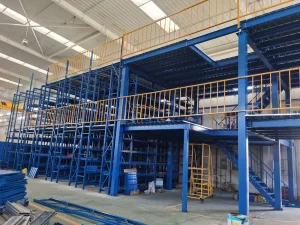
Multi-tier structural steel platforms expanding cubic warehouse space for manual picking and light-to-heavy carton storage.
View Mezzanine Specs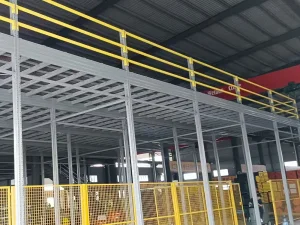
Heavy-duty structural platforms with bolted beam connections, rated for live loads from 300 kg/m² to 1,500 kg/m².
Explore Platforms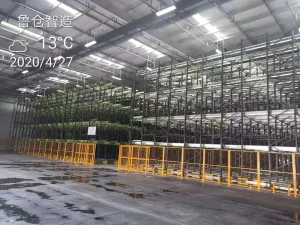
Semi-automated pallet runner system maximizing depth utilization with motorized radio shuttles in FIFO or LIFO flow.
Discover Shuttle Racks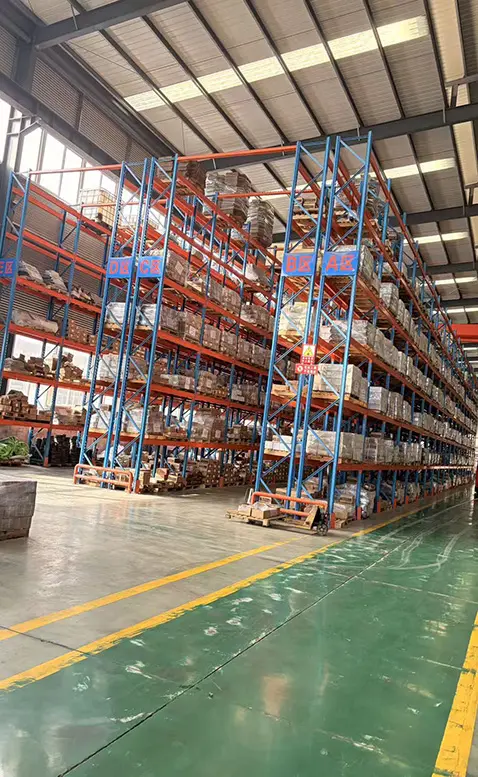
Eliminates operating aisles to allow forklifts to drive directly into storage lanes for high-density bulk goods.
View Drive In Systems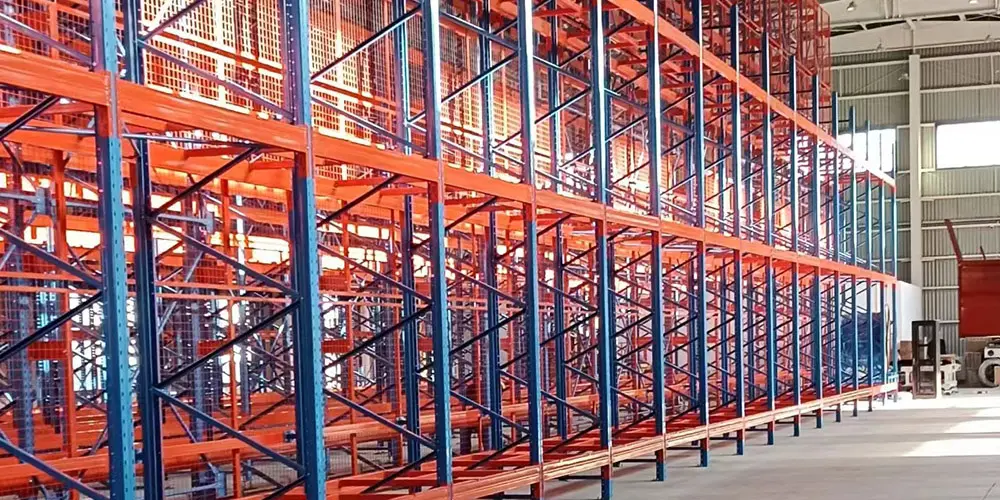
Gravity-fed nested cart designs storing 2 to 5 pallets deep per lane while maintaining immediate aisle selectivity.
View Push Back Racks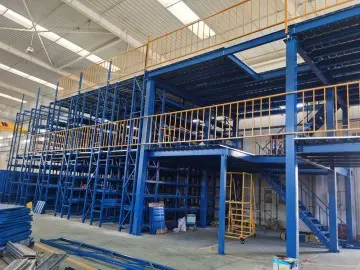
Custom structural uprights and floor joists built for e-commerce sorting hubs and integrated industrial offices.
View Heavy Platforms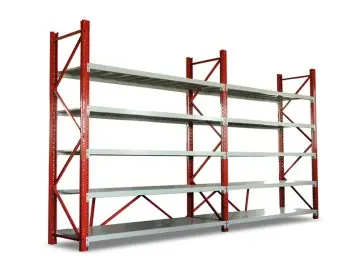
Electronic motorized mobile bases moving along floor rails to unlock up to 85% higher footprint efficiency in cold stores.
View Mobile Racking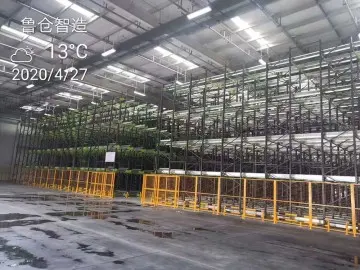
Wireless-controlled pallet runners engineered for fast throughput, high payload capacities, and extreme cold-room resilience.
View Radio ShuttleIn modern global supply chain logistics, steel racking systems serve as the structural backbone of physical asset management. Navigating modern industrial warehouse design demands an acute understanding of structural engineering, metallurgical specifications, load dynamics, and space optimization metrics. As a premier China steel rack designs supplier and factory, Guake Logistics Technology (Shandong) Co., Ltd. (founded in 2010) integrates structural FEA (Finite Element Analysis) with high-capacity automated roll-forming technologies to deliver storage infrastructure that balances high density with absolute operational safety.
Industrial steel rack designs are far more than static metal shelves. They represent precision-engineered structural frameworks subjected to complex static, dynamic, and seismic forces. Calculating upright column profiles, beam deflection limits (typically set at L/200 under full design load), and sway bracing stability requires rigorous mathematical modeling adhering to international standards such as EN 15512:2020 (European Standard for Steel Static Storage Systems), RMI MH16.1 (Specification for the Design, Testing and Utilization of Industrial Steel Storage Racks), and FEM 10.2.02.
Guake utilizes certified high-grade cold-rolled structural steel (Q235B and Q355B equivalent to ASTM A36 and ASTM A572 Grade 50). Upright profiles are cold-formed through multi-stage continuous roll-forming lines creating 11-13 fold bend geometry, significantly elevating the section modulus ($W_x, W_y$) and flexural-torsional buckling resistance without incurring unnecessary dead weight.
The operational longevity of steel racking in aggressive industrial environments—such as sub-zero cold storage facilities (-30°C) or high-humidity coastal distribution hubs—depends heavily on chemical metal treatment and protective surface coatings. Guake enforces a strict 7-stage surface preparation process prior to continuous electrostatic powder coating:
Why international procurement directors, 3PL managers, and warehouse systems integrators partner with Shandong Guake Logistics Technology for global projects.
Situated in Shandong Province—China's primary industrial metallurgy hub—Guake maintains direct long-term supply agreements with tier-1 steel mills like BaoSteel and Shougang. This guarantees direct access to certified prime coil raw materials, buffering global clients against international raw steel market volatility while maintaining competitive FOB pricing.
Our factory utilizes high-precision automated cold-roll forming lines, CNC automatic punching presses, and ABB multi-axis robotic welding cells. Automated beam connector welding ensures 100% deep weld penetration, eliminating human fatigue variance and guaranteeing tight structural tolerances (±0.5mm upright pitch accuracy across 12-meter columns).
We do not rely on rigid catalog dimensions. Every rack structure is tailored around specific pallet dimensions (Euro 1200x800, Industrial 1200x1000, GMA 48x40), forklift turning radii, clear building height under roof trusses, local seismic PGA coefficients, and warehouse floor slab concrete loading limits ($f'_c \ge 25\text{ MPa}$).
Selecting the optimal steel rack structure requires balancing three conflicting operational parameters: Storage Density, Pallet Selectivity, and Throughput Speed. Below is an engineering taxonomy of the core steel racking designs manufactured in our Shandong facility.
Selective pallet racking remains the most versatile structural configuration globally. Constructed using vertical upright frames connected by horizontal load beams featuring 3-claw or 4-claw drop-in connectors, it provides immediate 100% direct access to every single pallet position. It is ideal for distribution centers carrying high SKU diversity with fast stock rotation.
Radio shuttle systems combine heavy-duty deep lane rack frameworks with autonomous battery-powered shuttle vehicles. The shuttle runs along specialized galvanized guide rails beneath the pallet positions, controlled via radio remote or WMS (Warehouse Management System) interfaces. This architecture increases storage volume by 70% compared to standard selective racking while maintaining high throughput and eliminating forklift rack collisions.
When vertical warehouse clearance permits, custom steel structural platforms and rack-supported mezzanines convert unused overhead air space into usable floor space. Designed with structural H-beams, cold-formed floor joists, and heavy-duty steel grating or steel checkered plates, these platforms easily support live loads ranging from 300 kg/m² for light order picking up to 1,500 kg/m² for automated sorting machinery or office modules.
For high-cost spaces such as cold storage rooms (-25°C), mobile racking systems mount static heavy-duty pallet racks onto electrically driven motorized mobile bases that slide on embedded floor tracks. Opening only one operational aisle at a time via electronic sensors, mobile racking increases storage capacity by up to 85% within the exact same building footprint while retaining 100% individual pallet selectivity.
For homogeneous bulk products, Drive-In Racking allows forklifts to enter structural lanes to stack pallets on continuous side rails. Push-Back Racking utilizes nested rolling carts riding on inclined beam rails (typically set at a 1.5% to 2.0% gradient). As forklifts load each pallet, it pushes the preceding pallet back; during retrieval, gravity gently feeds the remaining pallets forward to the aisle face.
Cantilever racks eliminate front vertical columns, using central structural towers welded or bolted to heavy bases, paired with adjustable cantilever arms. Engineered with taper angles to prevent arm sagging under full load, cantilever racks safely store steel pipes, timber packs, aluminum extrusions, plastic tubing, and heavy metal sheets.
Compare the operational performance specs of primary steel rack designs to determine the right system for your facility.
| Rack Design Category | Storage Density | Pallet Selectivity | Inventory Flow | Operating Aisle (m) | Cost per Pallet Position |
|---|---|---|---|---|---|
| Selective Pallet Rack | Standard (40-50%) | 100% Direct Access | FIFO / LIFO | 3.0m - 3.8m (Standard) | Low ($) |
| Radio Shuttle System | Very High (75-85%) | Lane Dependent | FIFO or LIFO | 3.0m (Entry Lane) | Medium-High ($$$) |
| Mezzanine Platform Rack | Floor Area Multiplier | 100% Manual / Pick | Flexible | 1.2m - 2.0m (Manual) | Medium ($$) |
| Drive-In Racking | High (65-75%) | Low (20-30%) | LIFO Only | Drive-in Lanes | Low-Medium ($$) |
| Push-Back Racking | High (60-70%) | Lane Face Access | LIFO Only | 3.0m - 3.5m | Medium ($$) |
| Motorized Mobile Rack | Maximum (80-90%) | 100% Direct Access | FIFO / LIFO | Single Dynamic Aisle | High ($$$$) |
The global industrial racking market is undergoing a seismic shift driven by e-commerce expansion, rising land costs, labor shortages, and the rapid adoption of automated warehouse equipment. Key macro engineering trends shaping future rack manufacturing include:
Land scarcity in major global logistics corridors has accelerated demand for Automated Storage and Retrieval Systems (AS/RS). Modern steel rack designs now double as the structural building framework (Rack-Supported Buildings). In these ultra-tall high-bay installations (reaching heights up to 40 meters), the steel racking structure supports both the stored pallet inventory and the building roof cladding and wall side-insulation panels, eliminating the need for conventional structural building columns.
Global enterprises operate facilities across active seismic zones (e.g., California, Japan, Turkey, Chile, Southeast Asia). Steel rack designs must incorporate seismic baseplates, heavy-duty anchor bolts ($M12\text{ to }M20$ expansion or chemical anchors), and dynamic sway X-bracing. Finite Element Analysis (FEA) dynamic modal simulations ensure racks withstand horizontal ground acceleration ($PGA > 0.3g$) without structural collapse or load dislodgement.
With rapid growth in frozen food, biopharmaceuticals, and fresh produce distribution, steel racking must withstand low-temperature embrittlement. Standard carbon steels experience a transition from ductile to brittle fracture behavior under extreme cold. Guake engineers specialized steel formulations with controlled manganese and silicon additions, coupled with impact testing at -30°C (Charpy V-Notch impact values verified), ensuring long-term structural safety under freezing conditions.
Multi-tier mezzanine picking modules integrated with belt conveyors and spiral chutes allow simultaneous order picking across multiple vertical levels, boosting fulfillment speeds by up to 300% during peak volume spikes.
Heavy-duty selective pallet racks and cantilever racks customized with specialized wire mesh decking and heavy beam profiles to safely support engine blocks, body panels, metal dies, and tire racks weighing up to 4,000 kg per level.
Purchasing warehouse structural racking from an overseas factory requires a clear, rigorous engineering validation workflow. Shandong Guake Logistics Technology operates a standardized 5-step export procurement protocol designed to eliminate technical risk and ensure seamless installation on site.
Answers to common questions regarding steel rack engineering, structural safety standards, customization options, and global shipping.
Our structural rack designs maintain safety factors between 1.5 and 1.94 in strict accordance with EN 15512 and RMI MH16.1 specifications. Yield strength safety factors prevent permanent material deformation under full rated capacity, while beam connections include mechanical drop-in safety pins rated for a minimum shear load of 5 kN per connection.
Yes. For installations in seismic zones, we calculate peak ground acceleration (PGA) metrics and configure oversized, heavy-gauge structural baseplates, anchor bolt patterns ($M14/M16$ heavy anchor studs), thicker upright profiles, and top/rear horizontal and vertical X-bracing systems to absorb lateral seismic forces.
Powder coating provides a durable, cost-effective, high-visibility finish suitable for standard dry indoor warehouses. Hot-dip galvanizing (HDG) involves submerging fabricated steel components into molten zinc to achieve a coating thickness of 60–80 microns. HDG is strongly recommended for outdoor exposed racking, harsh chemical environments, or high-humidity cold-storage facilities prone to condensation.
For standard heavy-duty selective racking (up to 8-10 meters high), a reinforced concrete floor slab with a minimum thickness of 150mm–200mm and a compressive strength rating of $f'_c \ge 25\text{ MPa}$ ($3,600\text{ PSI}$) is required. Flatness and levelness tolerances must adhere to DIN 15185 or TR34 Superflat specifications for VNA (Very Narrow Aisle) high-bay installations.
We utilize customized packing jigs to nest roll-formed uprights and load beams tight within 40ft High Cube (40HQ) ocean containers. Structural components are separated by protective cardboard strips, strapped with high-tensile steel banding, and base-supported on heavy wood skids to allow easy forklift unloading at target ports.
Explore our extended range of special purpose racking, heavy-duty cantilever solutions, boltless shelving, and integrated steel structures.
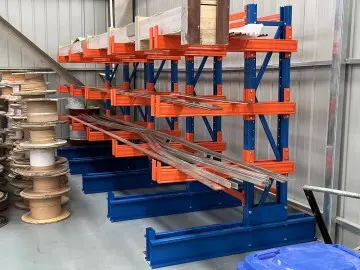
Custom cantilever and application-specific racks for long pipes, steel bars, timber packs, and irregular heavy loads.
View Special Purpose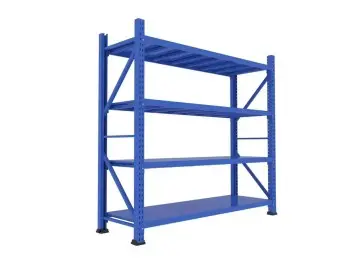
Modular, heavy-duty steel shelving units designed for workshop organization, tool storage, and industrial maintenance shops.
Explore Shelving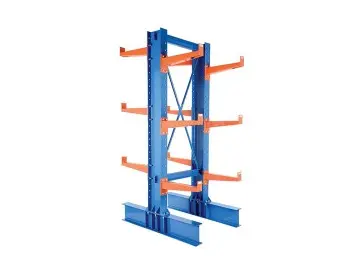
Adjustable arm racking engineered for light-to-medium long profiles, PVC pipes, extrusions, and sheet materials.
View Cantilever Specs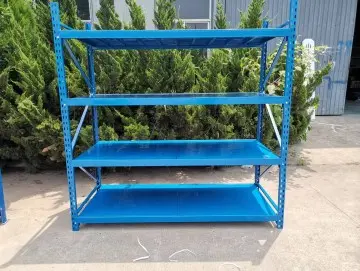
Quick-assembly snap-in metal shelving ideal for e-commerce hand-pick operations, archives, and retail backrooms.
View Boltless Racks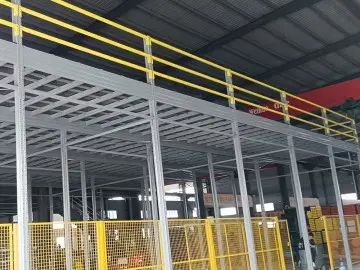
Integrated mezzanine platforms engineered with staircase towers, safety handrails, and pallet drop gates.
Explore Structural Platforms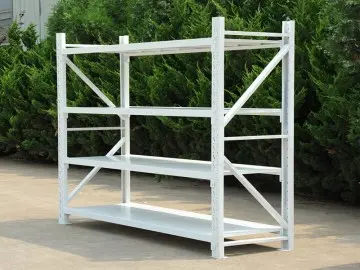
Versatile steel shelf units featuring adjustable steel decks, perfect for bin storage, electronics, and spare parts handling.
View Light Shelving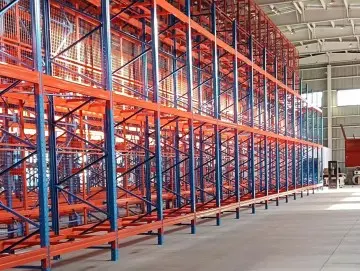
High-capacity structural beam racks supporting up to 4,500 kg per level, manufactured for intensive pallet logistics.
View Heavy Racking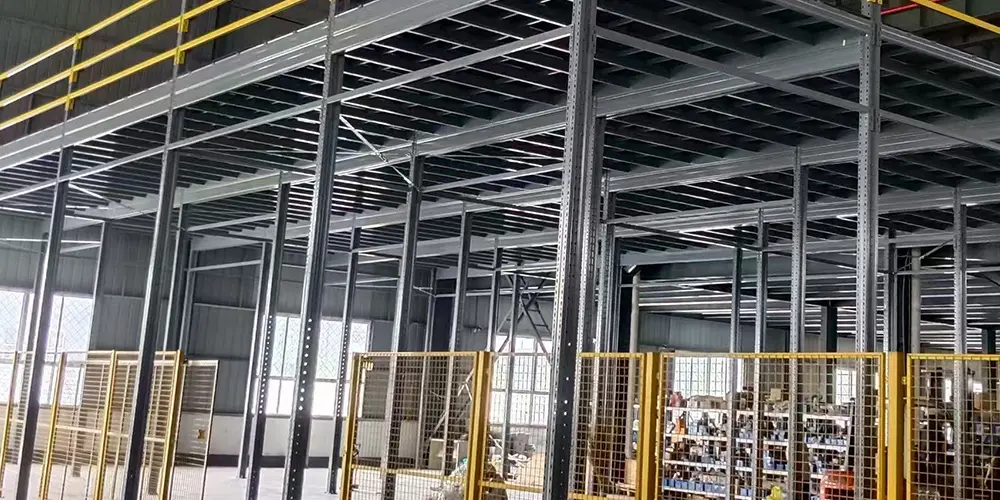
Narrow-aisle high-bay pallet racking designed for maximum vertical volume utilization and VNA turret truck operations.
View High-Bay SystemsSend us your warehouse CAD floor plan, target pallet loads, and operational requirements. Our Shandong engineering team will deliver a complete 3D racking layout drawing and quotation within 24 hours.