Direct factory-engineered storage systems designed to maximize pallet capacity and structural stability under extreme weight tolerances.
A comprehensive evaluation of vertical cubic space utilization, static/dynamic load tolerances, and international procurement standards for enterprise warehousing.
As global industrial real estate costs escalate—surging past record rates per square foot across North America, Europe, and the Asia-Pacific—logistics enterprise managers are shifting focus from horizontal footprint expansion to vertical cubic volumetric optimization. Calculating and maximizing Warehouse Rack Capacity is no longer merely a storage decision; it is a critical capital deployment strategy.
Optimizing load-bearing structures allows operators to double or triple total pallet capacity within identical building envelopes. However, high-density storage requires precise structural engineering, rigorously conforming to standards such as FEM 10.2.02, RMI (Rack Manufacturers Institute), and EN 15512 specifications. Calculating beam deflection under heavy static loads while preserving dynamic stability during forklift placement is paramount.
When sourcing industrial storage systems from a leading China Warehouse Rack Capacity Manufacturer, procurement leaders must differentiate between three distinct mechanical load profiles:
Unpacking the structural steel supply chain, high-precision roll-forming technology, and total cost of ownership (TCO) advantages of direct Chinese supplier partnerships.
Headquartered in Linyi, Shandong Province, Guake Logistics Technology (Shandong) Co., Ltd. benefits from immediate proximity to China’s top structural steel refining clusters. This direct access to high-tensile hot-rolled coil steel (Q235B, Q355B structural grades) ensures consistent chemical composition, superior tensile strength, and resilient yield tolerances.
Eliminating third-party steel trading markups enables Guake to pass direct material cost efficiencies to global warehouse developers without compromising structural gauge thickness or safety factors.
High-capacity rack manufacturing demands precision. Guake operates continuous 20-pass cold-roll forming lines capable of pressing complex upright profiles with up to 12 distinct bending folds. Multi-fold profile geometry dramatically increases column buckling resistance under extreme axial compression loads.
Automated robotic fiber-laser cutters and 3D plasma welding lines execute seamless beam connector welds, guaranteeing zero structural voiding and uniform load transfer from horizontal beams to vertical frames.
Durability in high-impact industrial environments requires superior surface protection. Guake’s automated multi-stage pre-treatment and electrostatic powder coating lines apply a 60–80 micron thick epoxy-polyester coating layer.
Formulated for high impact resistance, corrosion protection, and harsh cold-chain storage environments (down to -30°C), our surface finishing ensures long-term operational integrity and salt-spray test compliance under ASTM B117 standards.
Analyzing structural load pathways, aisle footprint dynamics, and mechanical selectivity across premier heavy-duty warehouse racking configurations.
Primary Function: 100% SKU Selectivity with Standard Load Access.
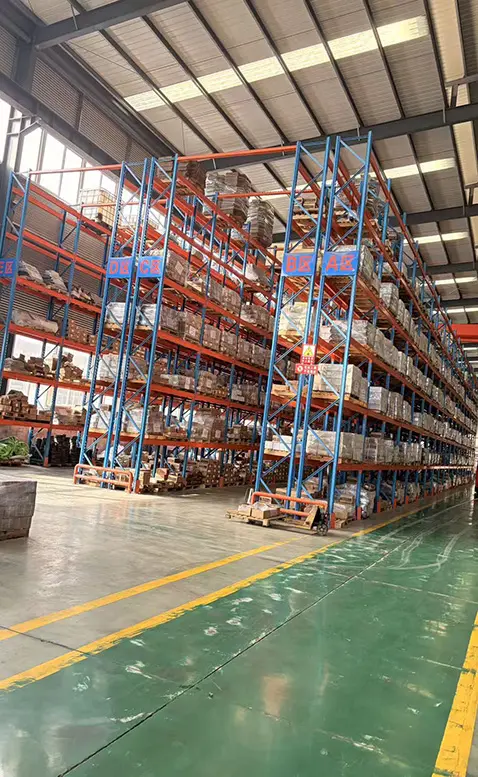
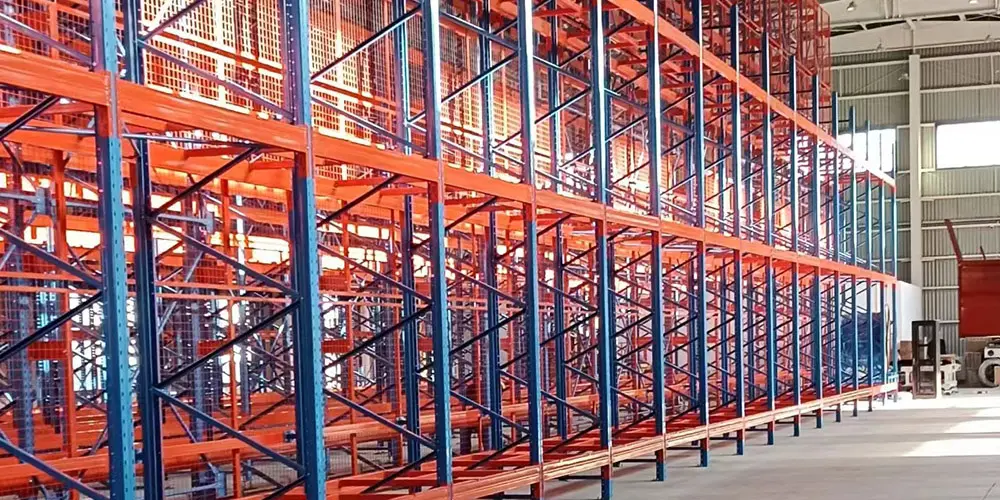
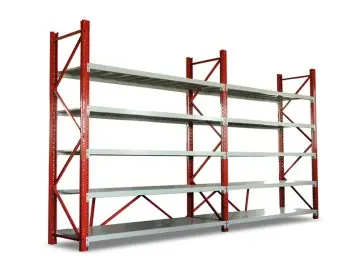
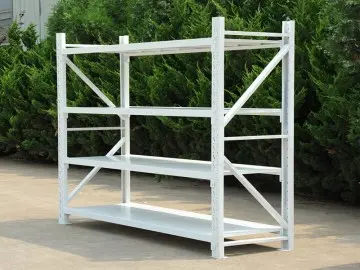
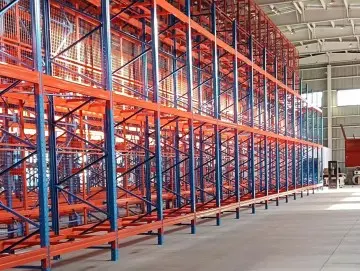
Selective pallet racking represents the global benchmark for warehouses managing diverse inventory profiles. Composed of upright frames connected by horizontal step beams or box beams, every pallet position remains directly accessible by standard reach trucks or counterbalanced forklifts.
Engineered with adjustable 50mm or 75mm beam pitches, Guake's selective racks accommodate payload capacities ranging from 1,000 kg to over 4,500 kg per beam level.
Primary Function: Deep-Lane High-Density Storage (FIFO / LIFO).
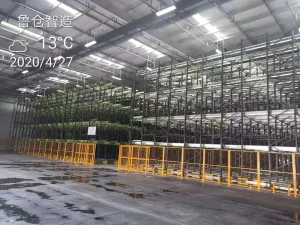
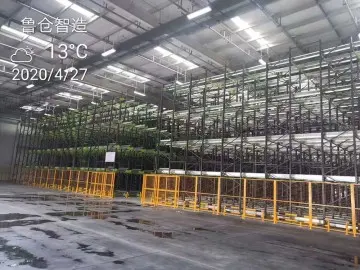
Radio shuttle systems eliminate operating aisles inside the rack structure. Self-powered, remote-controlled shuttles travel along specialized guide rails within deep storage channels to retrieve or deposit pallets autonomously.
Ideal for food processing, high-volume fast-moving consumer goods (FMCG), and cold storage operations where operating costs per cubic meter are extreme.
Primary Function: Bulk Homogeneous Storage & Nested Cart Dynamics.
Drive-In Racking: Forklifts drive directly into storage bays on continuous side cantilever rails. Operates on a Last-In, First-Out (LIFO) protocol, maximizing floor space by consolidating working aisles into a single access face.
Push-Back Racking: Utilizes nested wheeled carts sliding on inclined structural steel tracks. As a forklift loads a new pallet, it gently pushes existing pallets backward. Upon retrieval, gravity advances subsequent pallets forward to the aisle pick face.
Primary Function: Vertical Footprint Multiplication for Picking & Offices.
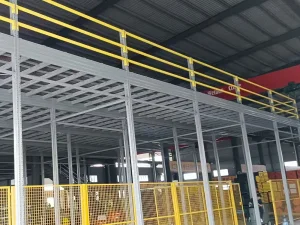
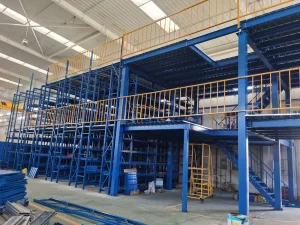
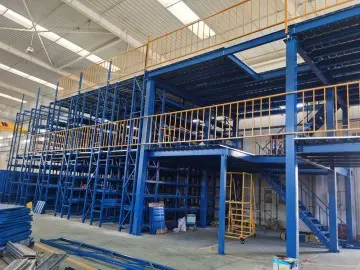
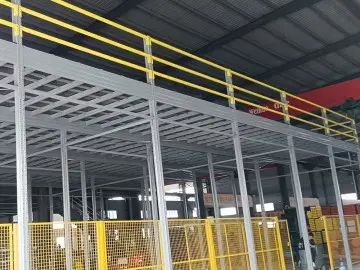
Mezzanines transform open overhead building volume into usable structural floor levels. Constructed using heavy-duty steel columns, primary steel I-beams, secondary cold-formed purlins, and specialized steel decking or steel grating floors.
Guake mezzanine structures support floor payloads from 300 kg/m² up to 1,500 kg/m², providing fully integrated staircases, safety handrails, pallet gates, and conveyor integration channels.
Technical evaluation parameter table to guide procurement executives and logistics engineers in system selection.
| Racking System Type | Volumetric Density | Pallet Selectivity | Max Payload (Per Level) | Handling Equipment | Optimal Industry Application |
|---|---|---|---|---|---|
| Selective Pallet Rack | Moderate (40–50%) | 100% Direct Access | 1,000 kg – 4,500 kg | Standard Reach / Counterbalance | General Logistics, E-Commerce, 3PL |
| Radio Shuttle System | Very High (80–90%) | Batch / Channel Level | 500 kg – 2,000 kg | Radio Shuttle + Forklift | Cold Storage, Food & Beverage, Bulk FMCG |
| Drive-In Racking | High (65–75%) | Low (LIFO Protocol) | 1,000 kg – 1,800 kg | Specialized Narrow-Chassis Forklift | Seasonal Bulk Goods, Raw Materials |
| Push-Back Racking | High (60–70%) | Lane Face Access (LIFO) | 1,000 kg – 1,500 kg | Standard Counterbalance Forklift | Medium-SKU Storage, Distribution Hubs |
| Motorized Mobile Rack | Extreme (85–95%) | 100% Direct (Sequential) | 1,000 kg – 3,000 kg | Standard Forklifts / AGVs | High-Cost Real Estate, Freezer Stores |
| Steel Structural Platform | Multiplies Floor Area | Manual / Pallet Access | 300 – 1,500 kg/m² | Stairways, Lifts, Conveyors | Parts Assembly, E-Commerce Order Pick |
Ensuring structural integrity, preventing frame buckling, and adhering to strict international safety factors.
The structural capacity of vertical upright frames is governed by column stability and effective unbraced length. Guake engineers utilize finite element analysis (FEA) alongside Euler's critical buckling formula to verify frame safety factors:
By engineering specialized tear-drop and omega upright profile bends, Guake maximizes the moment of inertia (I), preventing structural buckling even under maximum concentrated axial loads.
Overloading racking beams causes permanent plastic deformation, compromising beam-to-column connector teeth. Guake strictly enforces the International Beam Deflection Standard:
Furthermore, all structural components engineered by Guake feature a minimum structural safety factor of 1.5 to 1.65 against ultimate steel tensile failure, ensuring complete compliance with global safety codes.
How Guake delivers guaranteed quality control, certified material traceability, and seamless export container logistics.
Every steel batch entering Guake’s manufacturing plant undergoes strict chemical spectrometry and tensile testing. We provide full Material Test Certificates (EN 10204 3.1 MTC) detailing yield strength ($R_e$), tensile strength ($R_m$), and elongation percentages to verify steel purity.
Before production, Guake’s structural engineers supply complete 3D CAD models and Building Information Modeling (BIM) floor plan integration. We evaluate structural slab capacity, building clearance columns, sprinkler systems, and forklift turning radii to eliminate on-site installation bottlenecks.
Maximizing container freight efficiency is critical. Guake utilizes automated bundling machines, heavy steel strapping, protective corrugated edge guards, and vapor-corrosion inhibitor (VCI) plastic wrapping to safeguard finished components across long maritime transport voyages.
Exploring the dynamic convergence of automated storage and retrieval systems (AS/RS), IoT strain sensor grids, and sustainable low-carbon steel production.
Next-generation heavy-duty rack structures are integrating micro-strain gauges and IoT acceleration sensors into critical column nodes. These smart sensors transmit real-time deflection data and impact alerts directly to warehouse management software (WMS), warning maintenance crews of forklift structural impacts instantly.
As Autonomous Mobile Robots (AMRs) replace traditional manual forklifts, racking upright footings and bottom guide rails require sub-millimeter manufacturing tolerances. Guake’s high-precision automated production lines deliver laser-aligned guide profiles optimized for magnetic and optical robot positioning system interfaces.
In response to global ESG (Environmental, Social, and Governance) mandates, Guake is expanding the use of green recycled structural steel alloys and VOC-free, low-bake thermosetting powder coatings, reducing embedded carbon footprints across large-scale logistics construction projects.
Expert answers from Guake’s senior structural engineering team addressing key technical, logistical, and design considerations.
To calculate the required beam load capacity, determine the maximum gross weight of your heaviest palletized unit load (including pallet weight). Multiply this weight by the number of pallets stored per beam level (typically 2 or 3 pallets per bay). Then, apply a minimum engineering safety margin of 10-15% to account for dynamic placement impact forces. For example, storing two 1,200 kg pallets per level requires a beam pair rated for at least 2,700 kg UDL (Uniformly Distributed Load).
Guake primarily utilizes Q235B and high-strength Q355B hot-rolled steel coils, equivalent to European standards S235JR and S355JR under EN 10025. Q355B steel offers superior yield strength (355 MPa), allowing us to engineer thinner profile gauges with higher load ratings, reducing overall structural weight while increasing column stability and frame rigidity under maximum load conditions.
To prepare an accurate structural design and commercial proposal, our engineering team requires:
While both systems offer high volumetric storage density (65-85% cube utilization), Radio Shuttle Racking provides significantly higher handling throughput and operational safety. In Drive-In systems, forklifts must physically drive inside narrow racking lanes, increasing structural collision risks and operating cycle times. In Radio Shuttle systems, forklifts remain in main aisles while autonomous shuttles handle deep-lane pallet travel, reducing pallet loading time by up to 50% and protecting upright frames from forklift damage.
Yes. Every global project delivered by Guake Logistics Technology includes complete assembly engineering drawings, structural 3D assembly guides, component identification lists, and video tutorials. For large enterprise projects, we dispatch experienced installation supervisors and commissioning engineers directly to your site overseas to manage local installation teams, verify structural anchor torque, and conduct certified load testing.
For standard ambient warehouses, components undergo multi-stage iron-phosphate pre-treatment followed by thermosetting epoxy-polyester powder coating. For cold-storage environments (-30°C) or high-humidity regions, Guake provides pre-galvanized structural steel profiles or hot-dip galvanized (HDG) treatments conforming to ISO 1461 standards, delivering zinc coating thicknesses of 60–80 microns for decades of rust-free performance.
Our structural engineering designs conform strictly to international standards, including FEM 10.2.02 (European Federation of Materials Handling), RMI (Rack Manufacturers Institute ANSI MH16.1), and EN 15512 codes. All structural calculations incorporate nominal safety factors of 1.55 for steel yield stress and 1.50 for beam connector lock-up mechanics, guaranteeing stability during accidental impact loading or seismic activity.
Browse our full series of heavy-duty, medium-duty, and custom-engineered warehouse storage products.
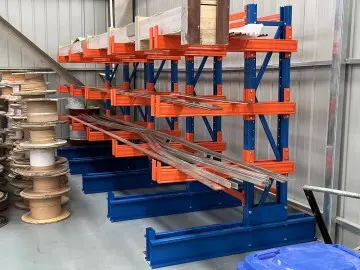
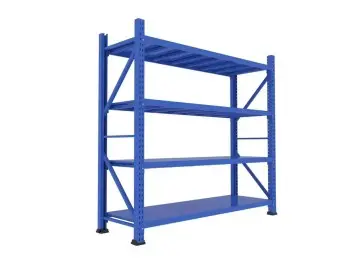
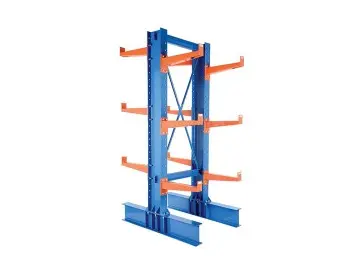
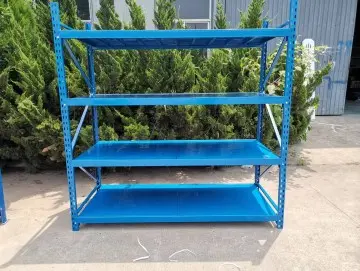
Partner directly with Shandong’s premier racking manufacturer. Send us your warehouse floor plan to receive a certified structural CAD layout and factory-direct commercial proposal within 24 hours.