Industrial Structural Engineering

China Warehouse Racking Weight Capacity Manufacturer & Manufacturers

Technical White Paper & OEM Engineering Guide: Precision Load Ratings, Structural Yield Mechanics, and Heavy-Duty Storage System Optimization from Shandong Manufacturing Hub.

Featured Product Engineering Portfolio

Heavy-Duty Warehouse Racking & High-Density Load Systems

Explore our top-tier industrial storage solutions engineered to certified international weight capacities and dynamic load specifications.
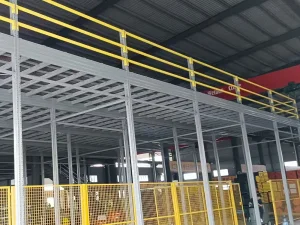
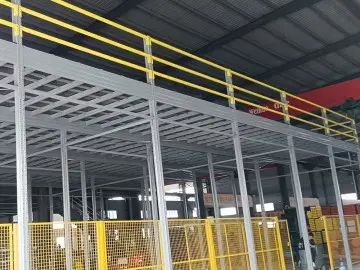
China Steel Platform Racks

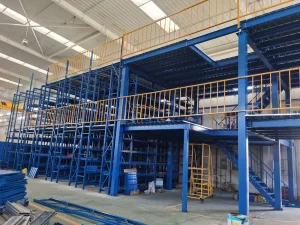
China Steel Platform Racks (Steel Structure Platforms)

View Product Specs
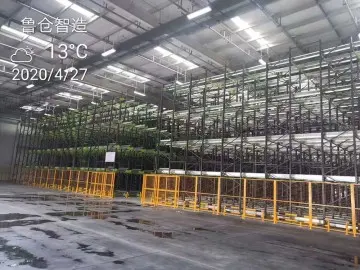
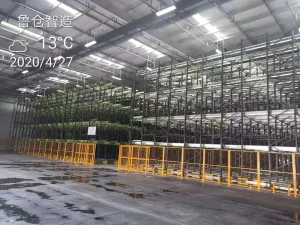
China Shuttle Racking

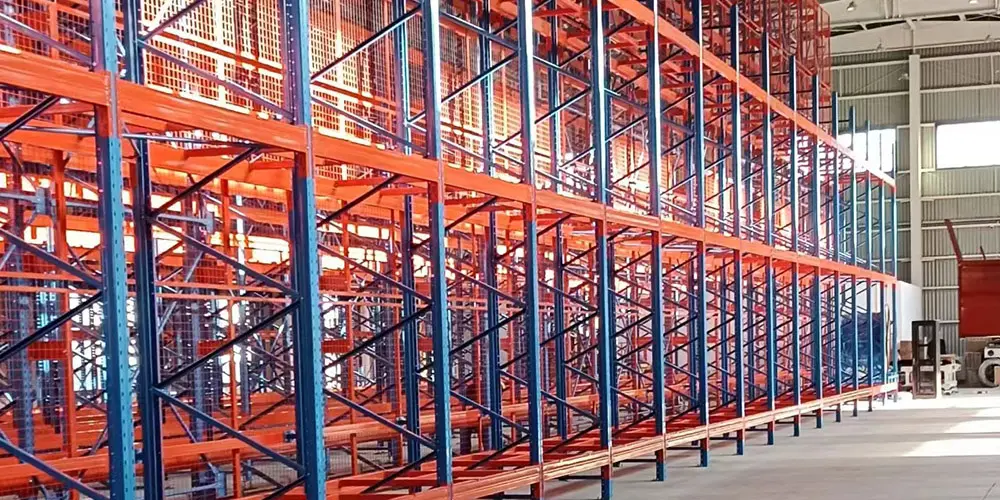
China Shuttle Racking (Pallet Shuttle System)

View Product Specs
China Mezzanine Racking

China Mezzanine Racking & Steel Platform Shelving

View Product Specs
Drive In Racking System

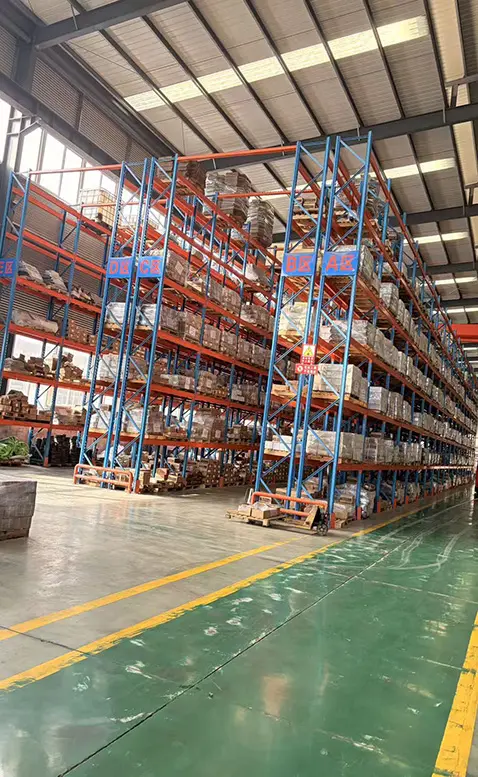
High-Density Drive In Racking Systems

View Product Specs
Push Back Racking

Heavy-Duty Push Back Pallet Racking

View Product Specs
Mezzanine Steel Platform

Multi-Tier Mezzanine & Structural Steel Platform

View Product Specs
Mobile Racking System

Motorized Mobile Racking System

View Product Specs
Radio Shuttle Racking System

Automated Radio Shuttle Racking System

View Product Specs
Structural Mechanics & Physics

Understanding China Warehouse Racking Weight Capacity Mechanics

How steel yield strength, beam cross-section profiles, unbraced upright height, and dynamic safety coefficients dictate real-world load limits.

Steel Yield & Grade Selection

The weight capacity of industrial racking begins at the molecular level. Leading Chinese manufacturers utilize cold-rolled Q235B and high-tensile Q355B structural steel. Q355B offers a yield strength of 355 MPa, allowing for higher load tolerances with reduced structural dead weight, ideal for seismic zones and ultra-tall bay systems.

Euler Buckling & Beam Pitch

Upright frame load capacity is non-linear. According to Euler's column load formula, the allowable vertical load drops exponentially as the distance between beam levels (unbraced length) increases. A frame rated for 15,000 kg at a 1.2m beam pitch may drop to 9,500 kg if the lowest beam pitch is expanded to 2.2m.

Beam Deflection Ratios ($L/200$)

Under maximum Uniformly Distributed Load (UDL), structural beam deflection must not exceed $1/200$ of the clear span length (or $1/240$ for high-precision automated systems). For a 2700mm beam carrying 3,000 kg, maximum central sag is strictly capped at 13.5mm to guarantee structural elasticity and operator safety.

5,000 kg
Max Beam Pair UDL Rating
25,000 kg
Heavy Upright Frame Limit
1.50
FEM / EN Safety Factor
100%
Mill-Certified Steel Quality
Engineering Specifications Matrix

Racking System Weight Capacity & Dimensional Specifications

Direct comparative engineering data evaluating standard load thresholds, beam profile depth, upright column sizes, and application density across major racking architectures.

Racking System Type Typical Load Capacity (UDL) Upright Profile Options Beam Section Height Safety Factor Standard Primary Density Factor
Selective Pallet Racking 1,000 kg – 4,500 kg / level 80×60, 90×70, 100×70, 120×95 mm 80 mm – 160 mm Box / Step FEM 10.2.02 / RMI 100% Direct Selectivity
Radio Shuttle Racking 500 kg – 2,000 kg / pallet 90×70, 100×70, 120×95 mm Custom Guided Rail Profiles EN 15512:2020 Ultra-High (Up to 85% Cubic)
Drive-In Pallet Racking 800 kg – 1,800 kg / position 90×70, 100×70, 120×95 mm Continuous Cantilever Corbel Rails AS4084-2012 High Bulk Storage (LIFO)
Push-Back Racking 1,000 kg – 2,500 kg / lane cart 90×70, 100×70 mm Nested Inclined Rail Carts RMI / EN 15512 2–5 Deep Lane Storage
Steel Structure Platform / Mezzanine 300 kg – 1,500 kg / m² H-Beam Columns (150 – 300 mm) Primary/Secondary Beam Grids GB50017 / ANSI Vertical Space Multiplier
Heavy Cantilever Racking 500 kg – 3,000 kg / arm 200 – 350 mm Column Sections Tapered Pin Connection Arms FEM 10.2.09 Long / Irregular Goods
Industrial Supply Chain Synergy

China Racking Manufacturing Ecosystem & Shandong Factory Advantages

Why international logistics developers, warehouse integrators, and procurement directors source structural steel racking directly from Shandong, China.

Raw Material Supply Chain Proximity

Shandong Province sits at the geographic center of China's premier steel mills (BaoSteel, Shougang, Shandong Steel). This proximity guarantees immediate access to certified hot-rolled coil stock, maintaining consistent steel grade purity, chemical composition compliance, and raw material cost optimization passed directly to global buyers.

Automated Continuous Roll-Forming

Modern Chinese racking facilities utilize high-precision 26-pass automatic continuous roll-forming production lines. This process maintains tight tolerance control ($\pm0.2\text{mm}$) on complex upright profiles and beam shapes, preventing structural micro-fissures and stress concentration points that compromise load ratings.

Robot Welding & Epoxy Powder Coating

Equipped with multi-axis OTC robotic welding cells, beam-to-connector joints undergo 100% full-penetration structural welds. Finished components pass through automatic 180-meter electrostatic powder coating tunnels, yielding an anti-corrosion barrier exceeding 500 hours of salt spray testing.

Global Enterprise Procurement Standards

Quality Verification, Finite Element Analysis (FEA) & Compliance

Meeting rigorous engineering criteria for international 3PL operators, cold chain conglomerates, and industrial procurement managers.

Structural Simulation via ANSYS FEA

Before physical rolling, structural engineers execute Finite Element Analysis (FEA) simulations under severe stress combinations: maximum static dead load, live fork impact forces, dynamic shuttle braking loads, and regional seismic spectral accelerations ($S_s, S_1$). This eliminates structural design flaws and certifies global compliance with AS4084-2012 and EN 15512.

Full-Scale Prototype Destructive Load Testing

Factory Quality Assurance teams execute real-world destructive load tests on stub columns, beam-end connectors, and baseplate anchor assemblies. Hydraulically applied test rigs load components to 150% of nominal rating ($1.5\times \text{Safety Factor}$) to confirm shear tolerance, beam clip lock stability, and ultimate compressive failure points.

Industry Vertical Integration

Localized Application Scenarios & Macro Industry Solutions

Tailored structural racking configurations engineered for specialized operational environments across global supply chains.

Cold Chain ($-30^\circ\text{C}$) Logistics

High-density radio shuttle racks fabricated from low-temperature resistant structural steel alloys. Prevents cold-temperature embrittlement and maximizes expensive freezer volume utilization.

Automotive Heavy Die Storage

Custom heavy-duty beam racks with integrated support bars and metal decking engineered for concentrated die and engine block loads up to 4,500 kg per level.

E-Commerce High-Bay Fulfillment

Multi-tier mezzanine racking systems integrated with carton flow tracks and automated conveyor loops, boosting floor surface utilization by up to 300%.

Chemical & Hazmat Vaults

Hot-dip galvanized cantilever and selective racks featuring chemical-resistant coatings, anti-spill containment deck trays, and grounding copper strips.

Technical & Engineering Q&A

Frequently Asked Questions: Racking Weight Capacity & OEM Sourcing

Detailed authoritative answers regarding load calculations, safety coefficients, customization options, and global project delivery.

How is the maximum load capacity calculated for heavy-duty selective pallet racks?
Maximum load capacity is calculated based on Uniformly Distributed Load (UDL) principles across beam pairs, matched against the upright frame's unbraced height (beam pitch). Engineering teams utilize stress-strain formulas and Finite Element Analysis (FEA) to ensure beam deflection never exceeds $L/200$ and upright column stress stays well within certified yield strengths (Q235B or Q355B) with a minimum safety factor of 1.50 under FEM 10.2.02 / RMI guidelines.
What is the difference between nominal rack load capacity and safe working load (SWL)?
Nominal load capacity represents the structural limit of components under ideal laboratory static testing. Safe Working Load (SWL) is the maximum operational weight permitted in real warehouse environments, accounting for forklift placement impact, dynamic braking forces, pallet overhang, and building floor slab engineering limits. SWL is always the governing specification displayed on factory load plaques.
Why is steel profile thickness critical when choosing a Chinese racking manufacturer?
Structural steel thickness directly correlates with column moment of inertia and buckling resistance. Inferior manufacturers may attempt to lower costs by thinning steel walls from 2.0mm to 1.5mm while claiming identical capacity. Qualified manufacturers maintain strict millimeter tolerances on 1.8mm, 2.0mm, 2.3mm, and 2.5mm profiles backed by raw material Mill Test Certificates (MTC).
How do seismic requirements affect warehouse racking weight capacity engineering?
In seismic zones (e.g., Seismic Design Categories C through F), racks experience severe horizontal shear forces and overturning moments during an earthquake. Racking weight capacity ratings must be down-rated, or structural modifications added: oversized baseplates, heavy-duty floor anchor bolts, top-tie bracing, and reinforced frame bracing patterns engineered according to local seismic accelerations.
What surface treatment options ensure long-term load integrity in humid or cold environments?
For indoor dry warehouses, thermosetting epoxy powder coating provides a robust, scratch-resistant finish. For cold storage facilities (down to $-30^\circ\text{C}$) or humid environments, Hot-Dip Galvanizing (HDG) conforming to ISO 1461 is recommended. HDG applies a 60–80 micron zinc coating that rust-proofs structural steel internally and externally.
Can racking bay configurations and beam levels be customized for unique pallet sizes?
Yes. Every racking system manufactured by Guake is tailor-engineered to match the client's specific pallet footprint (e.g., Euro pallets 800x1200mm, Standard US pallets 40x48 inch, or custom industrial skids), unit load height, lift truck reach limits, and building clear heights.
What international quality certifications should buyers require from racking suppliers?
Overseas buyers should verify ISO 9001:2015 Quality Management certification, ISO 14001 Environmental Management compliance, CE markings for automated systems, structural design compliance reports under European FEM 10.2.02 / EN 15512, US RMI (Rack Manufacturers Institute) standards, or Australian AS4084-2012 codes.
How does Guake assist global customers with overseas installation and project support?
Guake provides complete installation packages with every shipment, including detailed 3D assembly CAD drawings, component mark-up lists, and step-by-step installation manuals. For large-scale projects, experienced structural installation supervisors or remote video guidance engineers can be dispatched to ensure proper erection and safety compliance.
Full Product Range & Catalog

Industrial Racking & Custom Storage Systems Catalog

Review additional heavy-duty racking, cantilever systems, boltless shelving, and multi-tier platforms available directly from our Shandong factory.
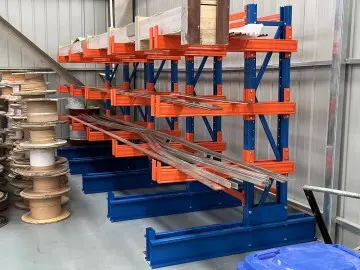
Special Purpose Cantilever Racking

Special Purpose Heavy-Duty Cantilever Racking

View Product Specs
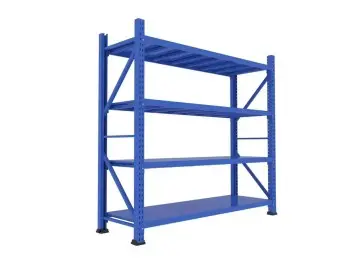
Garage Metal Shelving Unit

Industrial & Garage Heavy Metal Shelving Unit

View Product Specs
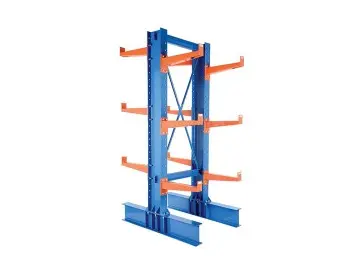
Medium-Duty Cantilever Racking

Medium-Duty Pipe & Timber Cantilever Racking

View Product Specs
Screw-Free Metal Shelving

Screw-Free Boltless Steel Warehouse Shelving

View Product Specs
Steel Structure Platform Racks

Heavy Structural Steel Platform Racks

View Product Specs
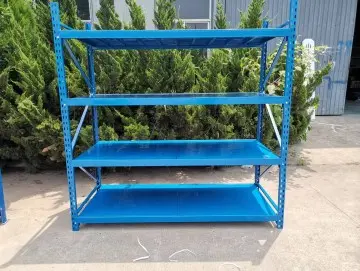
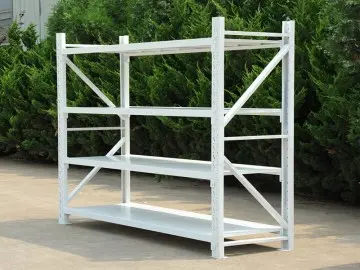
Light-Duty Multi-Layer Shelving

Light-Duty Multi-Layer Warehouse Shelving

View Product Specs
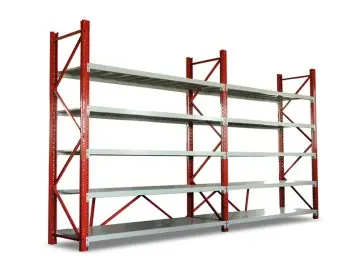
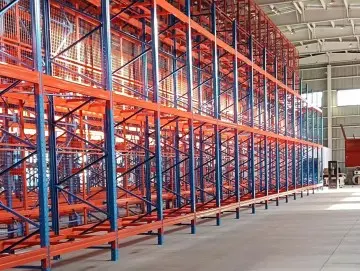
Heavy-Duty Metal Pallet Racking

Heavy-Duty Metal Warehouse Pallet Racking

View Product Specs
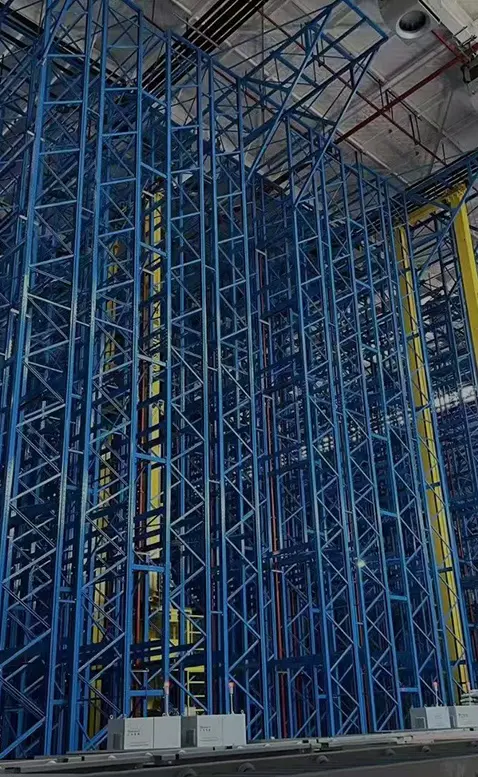
Automated High-Bay Warehouse Racking

Intelligent ASRS Automated High-Bay Racking

View Product Specs