
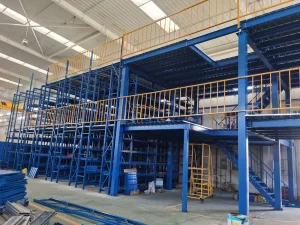


Engineered for maximum vertical cubic volumetric conversion, heavy structural load handling, and flawless intralogistics throughput.
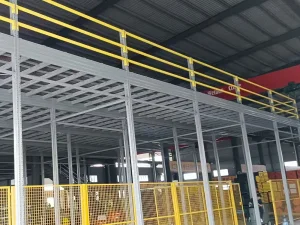
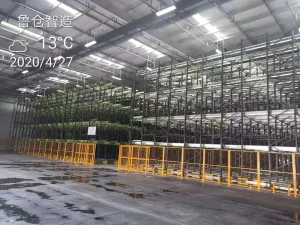
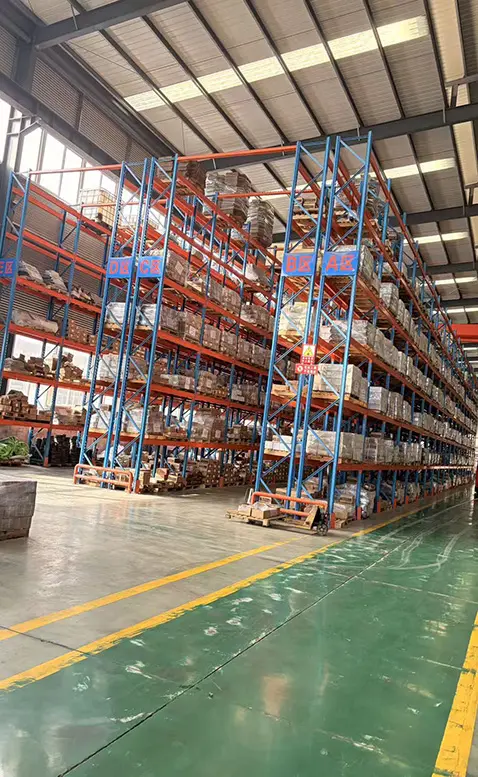
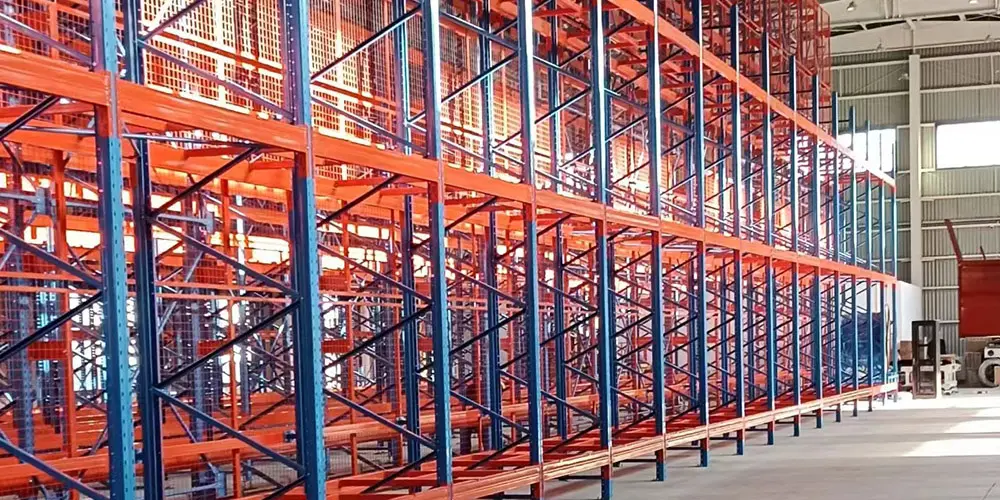
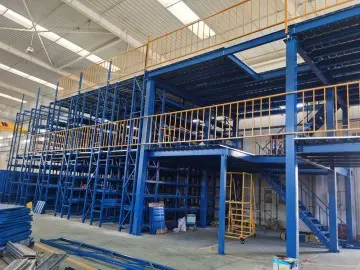
Analyzing the shift from horizontal facility acquisition to heavy vertical structural mezzanine platforms in global intralogistics.
In modern global logistics hubs—spanning North America, Europe, Australia, and East Asia—industrial real estate land values and warehouse leasing rates have experienced compounded annual increases exceeding 14.8%. Purchasing adjacent industrial land for horizontal expansion requires massive capital expenditure, lengthy zoning permits, and severe municipal tax surcharges. Industrial facility operators can no longer afford to leave overhead clear height unutilized.
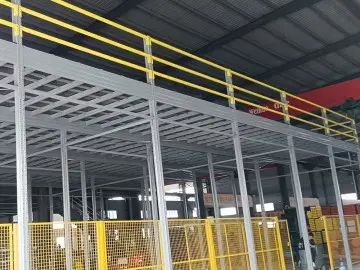
Structural steel platforms and rack-supported mezzanines engineered by a leading China warehouse storage platform manufacturer like Guake Logistics Technology convert overhead clear vertical height (typically 6.0m to 14.0m) into multiple usable working floors. By doubling or tripling operable floor surface without expanding the building footprint, enterprises achieve a 300% storage area expansion at a fraction of standard construction costs.
Ensuring maximum seismic integrity, deflection tolerance, and dynamic load safety for demanding global industrial buyers.
Guake platform structures utilize high-tensile structural carbon steel (Q235B & Q355B), equivalent to ASTM A36 and ASTM A572 Grade 50. Cold-formed profile geometry combined with hot-rolled H-beam main columns ensures superior yield strength (up to 355 MPa) and dynamic torsional resistance under heavy forklift movement.
Engineering integrity dictates strict deflection parameters under full load. Main load-bearing primary beams are calculated to an allowable deflection of L/300 to L/400 for human walking and storage mezzanine floors, and up to L/500 for automated AGV/AMR robotic sorting platforms.
Every structural platform calculation complies strictly with global design specifications including ANSI/RMI MH16.1 (USA), FEM 10.2.02 / FEM 10.2.09 (Europe), EN 15512 (Static Steel Storage Systems), and AS 4084 (Australia), featuring full seismic zone modeling (Category D, E, F).
How Shandong's industrial steel ecosystem powers unmatched manufacturing efficiency, cost transparency, and continuous technological innovation.
Located in Linyi, Shandong—the premier logistics and steel fabrication hub of Northern China—Guake operates state-of-the-art automated continuous roll-forming lines. CNC laser-guided punching and cold-roll shaping ensure dimensional accuracy within ±0.5mm across 12-meter continuous upright profiles, ensuring zero structural slop during site assembly.
Structural beam connectors, floor support braces, and main column baseplates undergo 100% penetration robotic MIG welding. Components pass through an automated 8-stage pre-treatment chemical washing process before receiving electrostatically applied epoxy-polyester powder coating (60–90 µm thickness), providing superior salt spray corrosion resistance (1,000+ hours).
Selecting the optimal platform topology based on dynamic floor loads, column grid requirements, operational throughput, and capital outlay.
| Platform Topology | Load Capacity (kg/m²) | Column Spacing Grid | Structural Decking Types | AGV / AMR Compatible | Primary Industrial Use Case |
|---|---|---|---|---|---|
| Heavy Structural Steel Platform | 500 – 2,000 kg/m² | Wide Grid (4.0m – 9.0m) | Checkered Steel Plate / Heavy Grating | High (with steel deck) | Heavy Machinery, Tooling, Equipment Assembly |
| Rack-Supported Mezzanine System | 300 – 800 kg/m² | Dense Rack Grid (1.5m – 2.7m) | Steel Decking / Perforated Grating | Moderate (Carton Handling) | E-Commerce Picking, Multi-SKU Spare Parts |
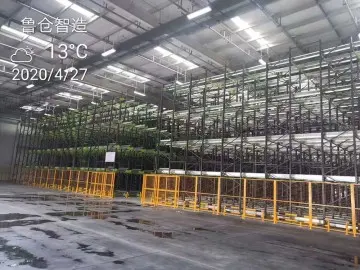
| Shuttle-Integrated Platform Racking | 1,000 – 1,500 kg/level | Shuttle Rail Lane Grid | Guided Steel Pallet Rails | Fully Automated (Shuttle) | Cold Storage (-30°C), FMCG Bulk Storage |
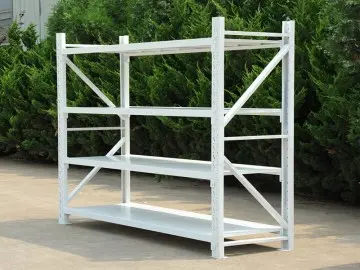
| Multi-Tier Mezzanine Shelving | 200 – 500 kg/m² | Shelving Post Grid (1.0m – 1.8m) | Plywood / Thin Steel Panels | Manual / Tote Conveyor | Garment Distribution, Hardware, Pharmaceuticals |
Tailor-engineered storage platform architectures operating in high-demand global commercial and industrial sectors.
Multi-level rack-supported mezzanines integrated with gravity carton flow tracks, spiral tote conveyors, and dedicated packing stations. Maximizes hourly order-picking output in fast-turnover fulfillment centers.
Hot-dip galvanized structural platform components engineered from low-temperature certified steel grades. Eliminates structural cold embrittlement while maximizing cubic air-freezing energy efficiency.
High-capacity structural H-beam platforms designed for concentrated point loads of heavy engine blocks, stamping dies, and automated robotic assembly tooling, complete with crane drop zones.
Dust-free sealed powder-coated platforms with smooth steel decking underlayment, seamless edge kickplates, and NFPA-compliant sprinkler pipe penetration grids for high-tech manufacturing.
From initial 3D FEA stress calculation through factory production and international installation supervision.
Guake structural engineers utilize advanced 3D Finite Element Analysis (FEA) software to model stress distribution, deflection limits, dynamic load cycles, and seismic force response before any steel cutting begins.
Components are manufactured under certified ISO 9001 quality management systems. Automated punching, cold-roll forming, and robotic MIG welding guarantee structural interchangeability and rapid site assembly.
Knock-down modular components are securely packaged into 40ft High-Cube containers for safe export ocean transport. We provide detailed installation CAD drawings, video guidance, and optional overseas engineer deployment.
Clear, definitive structural, logistical, and architectural answers to essential enterprise procurement inquiries.
A Heavy Structural Steel Platform utilizes solid hot-rolled H-beam main columns and primary I-beam joists to create wide, uninterrupted column grids (typically 4.0m to 9.0m spans). This delivers an open ground floor suitable for forklift traffic, heavy equipment, or office buildouts, supporting extreme loads up to 2,000 kg/m².
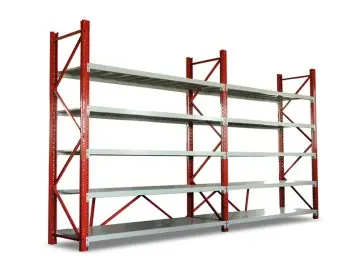
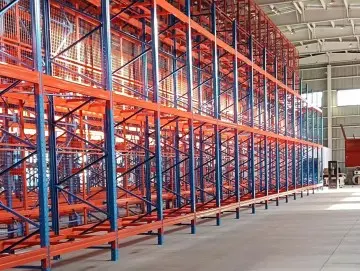
In contrast, a Rack-Supported Mezzanine utilizes high-density pallet racking or medium-duty shelving upright frames as the structural base supporting the upper floor deck. This configuration maximizes item-level storage density and picking operations on both ground and upper levels, supporting standard uniform loads of 300 to 800 kg/m² at lower structural capital investment.
Guake designs mezzanine decking options specifically tailored to satisfy local municipal fire codes (such as NFPA 13 in North America or EN 12845 in Europe). Options include open steel bar grating or perforated galvanized steel planks offering 50% to 75% open surface area, allowing fire sprinkler water to penetrate seamlessly down to ground levels without triggering costly secondary under-mezzanine sprinkler piping installations.
We supply five distinct floor deck finishes:
Every platform order undergoes rigorous computer-aided mechanical verification. Our structural engineering department utilizes Finite Element Analysis (FEA) software to perform stress tensor modeling, dynamic load calculations (dead loads, live loads, impact loads), and deflection analysis according to ANSI MH16.1 or FEM 10.2.02 codes. Customers receive complete structural calculation documentation signed off by experienced structural engineers prior to manufacturing.
For installations in designated seismic risk zones (e.g., Seismic Design Categories D, E, and F), platform structural frames are engineered with heavy-duty horizontal cross-bracing, vertical X-bracing, enlarged floor anchor baseplates, and high-tensile chemical anchor bolts embedded deep into the reinforced concrete slab. Structural connections are designed to absorb seismic energy without catastrophic shear failure.
Guake platforms integrate seamlessly with multiple vertical cargo transport mechanisms, including:
Guake is strategically located in Linyi, Shandong—the heart of China's structural steel raw material belt. By purchasing high-tensile steel coils directly from premier domestic steel mills without intermediary metal trading markups, operating automated continuous roll-forming lines, and leveraging direct ocean port access (Qingdao Port), we deliver direct factory pricing that achieves 30% to 45% CAPEX savings compared to Western local platform fabricators, without sacrificing engineering standards.
Yes. All Guake structural steel platforms and rack-supported mezzanines feature 100% bolted knock-down assembly designs. Zero field welding is required during site installation. This modular architecture allows systems to be easily expanded vertically/horizontally, reconfigured to match changing logistics workflows, or completely dismantled and reassembled at a new facility.
Standard engineering layout and CAD proposal delivery takes 24 to 48 hours. Once structural calculations and CAD shop drawings are approved by the client, manufacturing typically requires 15 to 25 calendar days. Ocean freight shipping times range from 12 days (Southeast Asia) to 25-35 days (North America, Middle East, Europe). All products are bundled in protective export steel strapping and wrapped to prevent moisture damage during sea transit.
Yes. Every platform project is delivered with comprehensive 3D step-by-step assembly CAD manuals, component mark lists, and HD video installation guides. For large-scale industrial projects, Guake can dispatch experienced installation supervisors to direct your local installation crew on-site, ensuring absolute structural alignment, anchoring integrity, and safety handover commissioning.
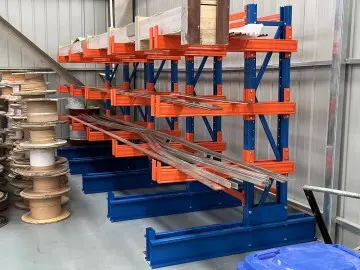
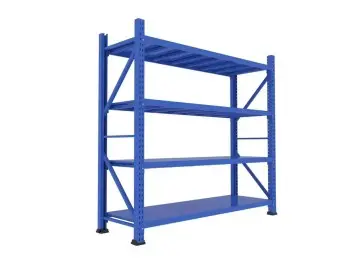
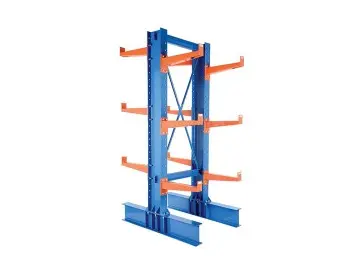
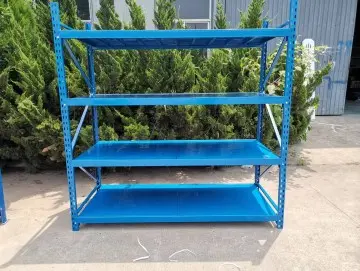
Review our specialized platform configurations, cantilever solutions, and heavy selective racking systems engineered for global industry.
Send your facility dimensions, clear vertical height, target load capacity per square meter, and forklift specifications to Guake's senior structural engineering team for a free 24-hour CAD proposal.
Consult Our Structural Engineers