Explore our foundational storage systems optimized for heavy loads, high density, and long-item warehousing.
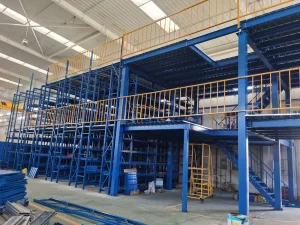
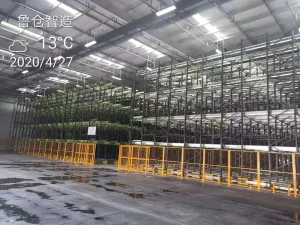
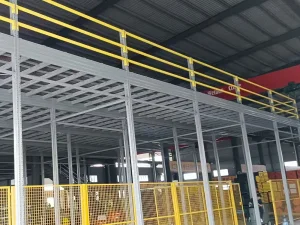
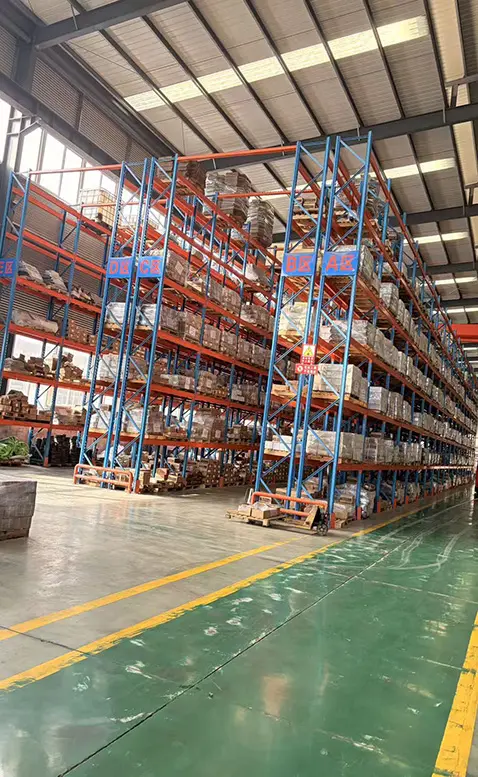
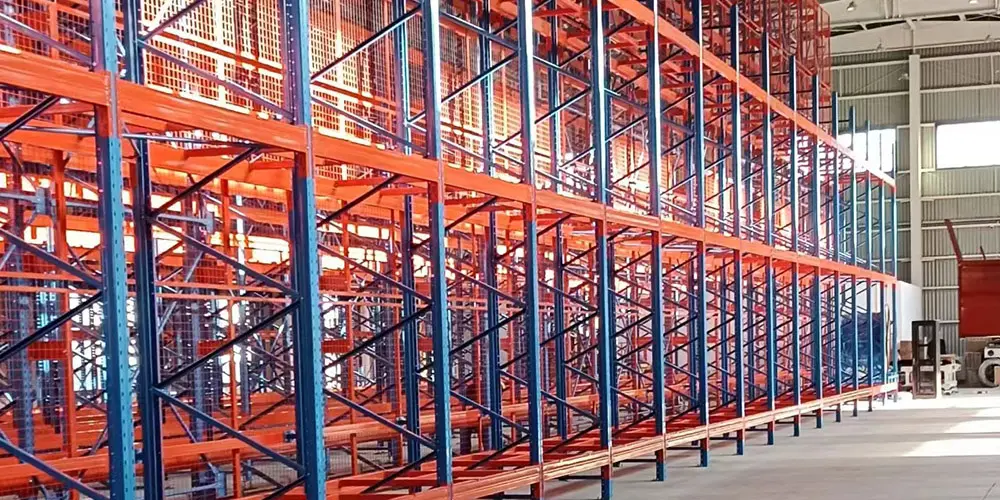
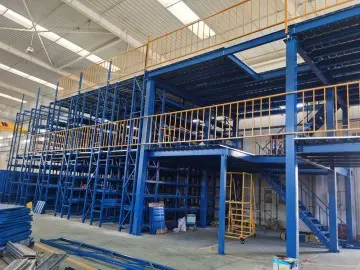
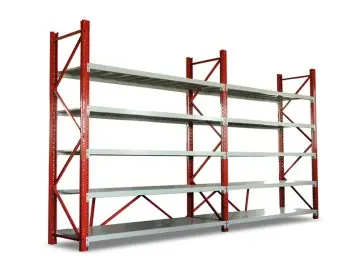
In modern industrial warehousing, managing non-standard, linear, and extra-long inventory—such as steel structural columns, aluminum extrusions, timber packs, PVC piping, and heavy sheet metal—presents a severe bottleneck for traditional pallet racking infrastructure.
Industrial land costs across North America, Europe, and Asia-Pacific have risen by over 34% in recent cycles. Standard floor-stacking of pipes and timber results in up to 70% wasted vertical air space and severe safety hazards. Cantilever rack design directly solves floor congestion by converting horizontal footprint into rigid vertical capacity.
Restacking bundles to access lower stock items accounts for over 42% of material degradation in metal service centers and lumber distribution yards. Cantilever architecture provides 100% direct selectivity to every SKU level without moving surrounding inventory, dramatically lowering labor cycle times.
With global supply chain disruptions requiring distributors to buffer higher safety stock volumes, modular cantilever designs allow quick vertical adjustments (typically in 75mm or 100mm increments), enabling quick adaptation to variable product length profiles without facility structural alterations.
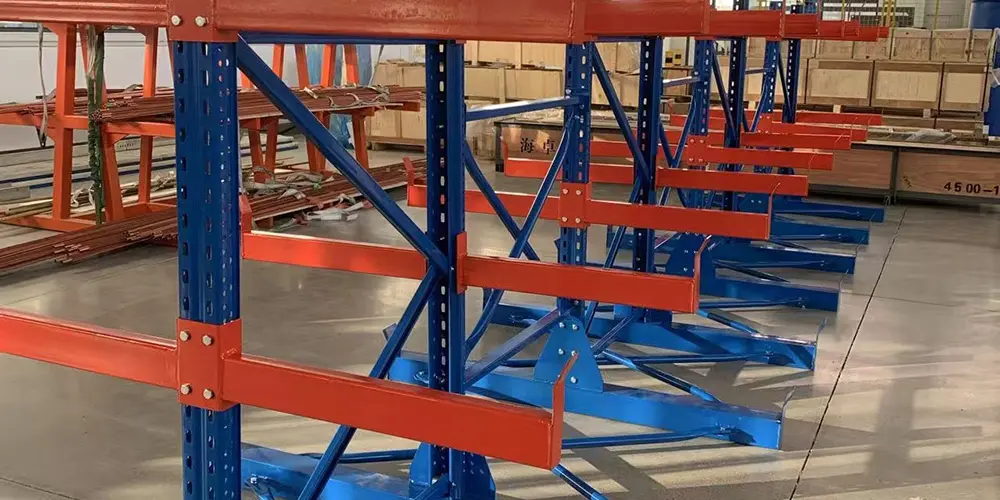
Unlike standard selective rack structures where front vertical columns restrict horizontal entry, Cantilever Racks rely on a continuous central column spine with cantilevered arms extended outwards. This complete elimination of front vertical obstruction makes it the only structural rack geometry capable of holding continuous long loads safely under severe mechanical loads.
A rigorous examination of load distribution, moment forces, arm deflection limits, and structural steel selection parameters based on ANSI MH16.2 and FEM 10.2.09 standards.
The column in a cantilever rack is subjected to combined axial compression ($P$) and high bending moment ($M$). When load $W$ is placed on an arm at eccentricity $e$ (distance from column centerline to load centroid):
M = W × e
The cumulative bending moment at the base of the upright column is the sum of all individual arm moments acting on that side. Structural engineers must size the section modulus ($Z_x$) to ensure maximum bending stress ($\sigma_{max} = M / Z_x$) remains well below the allowable steel yield stress ($\sigma_{allow} = F_y / \gamma_m$).
Arm deflection under full design load is critical to prevent product slippage and forklift tine interference. According to global standard EN 15635, maximum vertical arm deflection ($\delta$) under Uniformly Distributed Load (UDL) is capped at:
δ_max = L / 180 or L / 200
Where $L$ is the usable length of the arm. Calculated using beam deflection theory for a cantilever beam fixed at one end: $\delta = (W \cdot L^3) / (8 \cdot E \cdot I_x)$, where $E$ is Young’s Modulus ($210 \text{ GPa}$) and $I_x$ is the Moment of Inertia.
If a load spans across $N$ arms, rigid body dynamics dictate that uneven placement causes localized overloading. Sourcing engineers must calculate an Arm Load Factor ($K_L$):
P_arm = (W_total / N) × K_L
Where $K_L$ ranges from 1.10 to 1.25 to account for potential deflection variance between adjacent columns and non-ideal straightness of stored pipes or timber bundles.
| Structural Parameter | Roll-Formed Cold-Rolled Cantilever | Heavy Structural Steel (I-Beam / H-Beam) |
|---|---|---|
| Steel Grade & Thickness | Q235B / Q355B Cold-Rolled Sheet (2.0mm – 4.0mm) | Q355B / ASTM A572 Grade 50 Hot-Rolled I-Beams (8mm – 20mm+) |
| Column Profile Construction | Open C-Channel or Omega Profile with punched teardrop slots | Solid Hot-Rolled Structural Profile (IPE, HEA, HEB, or Standard I-Beam) |
| Load Capacity Per Arm | Light to Medium: 100 kg to 800 kg per arm | Heavy to Ultra-Heavy: 800 kg up to 5,000+ kg per arm |
| Impact Resistance | Moderate. Vulnerable to structural bucking from heavy forklift impacts | Extreme High Impact Strength. Resists severe collisions without collapse |
| Arm Connection Type | Hairpin clip lock or wedge connection into open slots | High-Tensile Bolted Connections (Grade 8.8 / 10.9) with shear pin locks |
| Primary Application Scenarios | Light PVC pipes, carpet rolls, furniture, lightweight extrusions | Heavy steel billets, thick pipes, structural timber, sheet metal coils, dies |
How wholesale suppliers and manufacturing facilities are evolving cantilever design through automation, sensor technology, and sustainable metallurgy.
Transitioning from manual sideloader forklifts to fully automated high-bay Cantilever ASRS. Rail-guided stacker cranes equipped with telescopic fork attachments extract 12-meter steel bundles at heights up to 25 meters with millimeter accuracy, completely eliminating operator hazard.
Next-generation cantilever arms incorporate embedded fiber-optic strain gauge sensors and Wireless IoT telemetry. Real-time telemetry alerts facility managers when localized overloading or subtle seismic micro-shifts approach plastic deformation thresholds.
Global buyer ESG mandates require suppliers to utilize hydrogen-reduced steel with certified low-embodied carbon footprints. Advanced electrostatic dry powder coating eliminates VOC emissions while achieving 1,000+ hour salt-spray corrosion resistance for harsh outdoor environments.
Vertical Density Gain vs Floor Stacking
Max Arm Capacity Structural Rating
Robotic Weld Certification Standard
Front Upright Access Obstruction
When sourcing cantilever racks from global factories, compliance with local regional structural codes is non-negotiable for building permit approvals and operational safety insurance.
In the United States and Canada, cantilever rack designs must comply strictly with ANSI MH16.2 (Specification for the Design, Testing and Utilization of Industrial Steel Cantilever Racks). Key requirements include baseline vertical deflection caps, dynamic seismic design factors based on USGS soil profiles, and mandatory base plate anchor tension calculations.
European installations demand design verification according to FEM 10.2.09 (The Design of Cantilever Racking) and operational safety adherence to EN 15635. These standards enforce rigid safety factor multipliers ($\gamma_{M0}, \gamma_{M1}$) on structural welds, arm connection fatigue, and mandatory annual structural integrity inspection protocols.
Australian standards mandate rigorous testing of arm-to-column connector stiffness under combined moment and shear force conditions. Base anchor engineering must account for concrete slab thickness, compressive strength ($f'_c \ge 25 \text{ MPa}$), and mechanical expansion vs chemical epoxy anchor bolt specifications under wind/seismic loadings.
In seismic-prone regions (such as California, Japan, Turkey, or New Zealand), standard baseline cantilever calculations are insufficient. Structural design suppliers must calculate horizontal seismic shear force ($V = C_s \cdot W$) and incorporate heavy structural vertical cross-bracing bays, enlarged heavy-gauge base plates, and multi-anchor pattern configurations to prevent overturning moments during peak ground acceleration (PGA) events.
Specific physical load characteristics require dedicated specialized hardware adaptations within the general cantilever rack design framework.
Environment: Rain, snow, UV, salt corrosion.
Design Solution: Heavy structural I-beam cantilever systems treated with Hot-Dip Galvanizing (HDG) under ASTM A123 specs (85+ micron coating thickness). Integrated outdoor roof canopy extensions fitted directly to top column extensions shield lumber and structural steel bundles from direct precipitation.
Environment: Concentrated point loads, delicate finished surfaces.
Design Solution: Pipe/Coil Support Cantilever Arms featuring concave saddles or specialized cradle attachments to prevent coil roll-off. Polyurethane arm covers or rubber liners protect polished stainless steel or aluminum sheets from surface scratches during crane loading.
Environment: High SKU variety, flexible sagging material.
Design Solution: Close-column spacing cantilever systems (e.g., columns placed every 1,000mm instead of 1,500mm) combined with continuous steel deck pans or wire mesh decking laid across cantilever arms to provide full horizontal support for flexible plastic or copper tubing.
A structural engineering checklist for international procurement teams evaluating Chinese and global wholesale cantilever suppliers.
Verify that raw steel materials are sourced from Tier-1 steel mills with EN 10204 3.1 Mill Test Certificates. Tensile strength, yield strength ($F_y \ge 355 \text{ MPa}$ for Q355 structural steel), and chemical composition must be validated before roll-forming or plasma cutting begins.
Cantilever arm-to-column connectors endure high cyclic shear stress. Require suppliers to maintain ISO 3834-2 robotic welding certifications. Critical structural welds must undergo non-destructive testing (NDT) such as Ultrasonic Testing (UT) or Magnetic Particle Inspection (MPI).
Insist on a 100% factory pre-assembly inspection for custom engineered orders. Audit column straightness tolerance ($\le L / 1000$), hole pitch accuracy ($\pm 0.5\text{mm}$), and arm pin locking fitment to prevent installation delays at distant job sites.
Detailed engineering answers to the most common queries raised by warehouse developers and purchasing directors.
Single-sided cantilever racks are designed to sit flush against facility perimeter walls, accessed from one operational aisle. Double-sided cantilever racks feature a central column spine with arms extending in both directions, placed in central warehouse floor space. Double-sided units provide substantially superior structural stability because opposing arm loads partially balance bending moments across the central column profile, optimizing overall steel weight efficiency.
Straight cantilever arms are perpendicular (90 degrees) to the vertical column and are ideal for flat, rigid sheet metal, crates, and stable timber bundles. Inclined arms feature a slight upward tilt (typically 2 to 5 degrees). This upward tilt creates a gravity-assisted retention incline, preventing round profile goods—such as loose steel pipes, tubing, or round bar stock—from rolling forward off the arm tip without requiring removable front stop pins.
Heavy structural cantilever designs frequently utilize specialized pivot pin and shear locking mechanisms instead of rigid rigid bolt patterns. When a forklift operator accidentally strikes a pin-connected cantilever arm from underneath during loading, the arm dislodges upward vertically along the pivot point without bending the main column. Rigid bolt connections transmit the full impact kinetic energy into column twisting, causing permanent structural damage.
Because cantilever upright columns lack front aisle supports, base anchor bolts experience high tensile uplift forces. Standard heavy-duty installations require reinforced concrete slabs with a minimum compressive strength of 25 MPa (3,600 PSI) to 30 MPa, with an uncracked thickness of at least 150mm to 250mm. Specific seismic zones require chemical epoxy anchor studs engineered under ACI 318 crack-concrete anchor standards.
Yes. Heavy-duty cantilever columns can be mounted directly onto electric motorized mobile carriages that move along floor-embedded steel rails. By eliminating fixed operational aisles between every rack row and opening only one active working aisle via PLC remote control, Mobile Cantilever Racks increase long-goods warehouse cubic storage density by up to 85% in the exact same footprint.
For indoor industrial facilities, components undergo a multi-stage chemical pretreatment process (degreasing, iron phosphate conversion coating) followed by electrostatic application of thermosetting epoxy-polyester powder coat baked at 180°C–200°C. Standard dry film thickness (DFT) should measure between 70 to 110 microns to resist impact chipping, scratch abrasion, and chemical exposure.
Cantilever columns are never installed as isolated stand-alone towers; they must be tied together into rigid structural frames using Horizontal and Diagonal Bracing sets. Bracing sets constructed from structural channel or angle iron are bolted between adjacent columns, creating a rigid vertical truss system that resists longitudinal shear forces and prevents side-sway buckling during seismic loading or material handling.
To produce a fully compliant structural CAD layout and calculation report, buyers must supply: (1) Target stored material dimensions [Length x Width x Height] and weight range per load unit; (2) Maximum required storage height and facility clear ceiling height; (3) Forklift truck type, reach height, and minimum turning radius; (4) Floor slab thickness and concrete strength; (5) Local geographic seismic zone data.
Explore our complete OEM/ODM product portfolio engineered for global logistics projects.
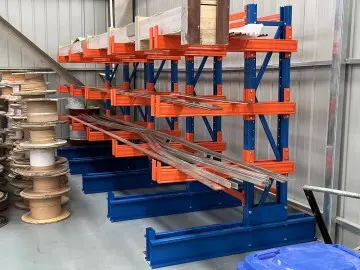
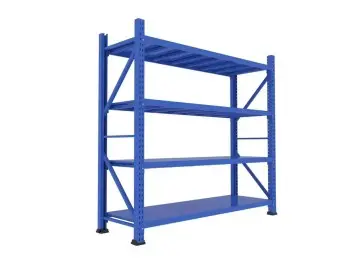
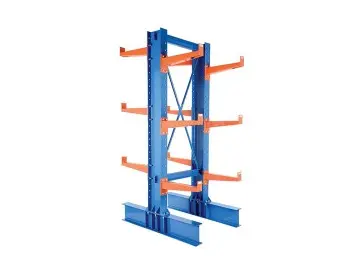
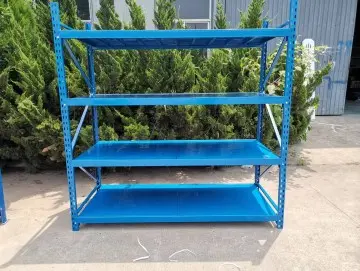
Our senior structural logistics engineers provide full layout planning, CAD drawing generation, static structural calculation reports, and factory-direct wholesale pricing within 24 hours.