Factory-direct engineered equipment designed for high-density storage, structural safety, and seamless warehouse operations.
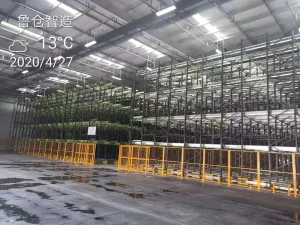
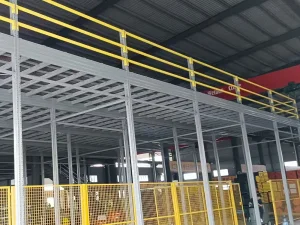
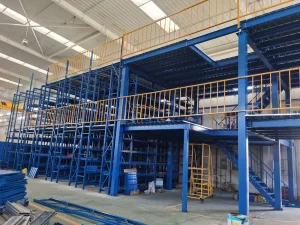
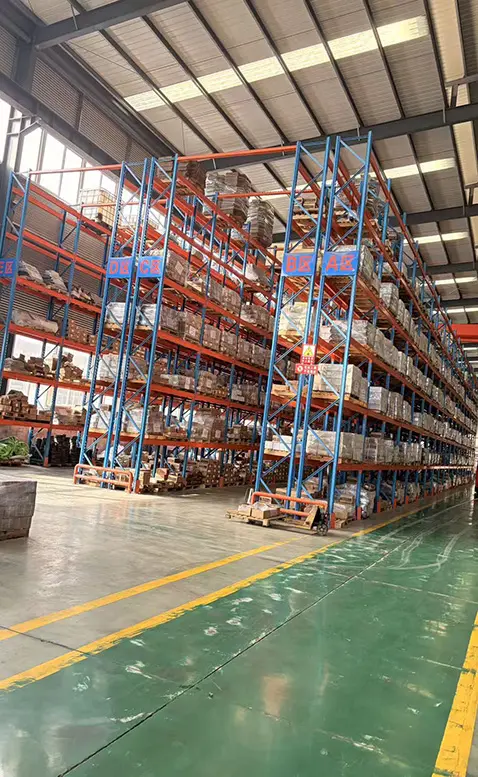
In modern industrial logistics, supply chain architecture, and commercial real estate development, the terminology surrounding industrial storage hardware is frequently conflated. Business executives, procurement managers, and logistics consultants often use the terms "Racking" and "Shelving" interchangeably. However, from structural engineering, metallurgical specification, material handling dynamics, and capital expenditure (CapEx) perspectives, racking and shelving represent fundamentally distinct storage paradigms designed for different operational workflows.
This technical whitepaper—authored from the perspective of direct factory engineering and global logistics integration—provides an exhaustive comparative analysis of industrial racking systems versus commercial/light-industrial shelving systems. By analyzing structural physics, steel grade selection, automated integration capabilities, and manufacturing economics, this report equips procurement directors and warehouse operations teams with the actionable intelligence required to optimize storage density, ensure structural load integrity, and maximize Return on Investment (ROI).
To evaluate the direct wholesale differences between racking manufacturers and shelving factories, one must examine the raw material engineering, cold-roll profile geometry, connections, and anchorage mechanics of each system.
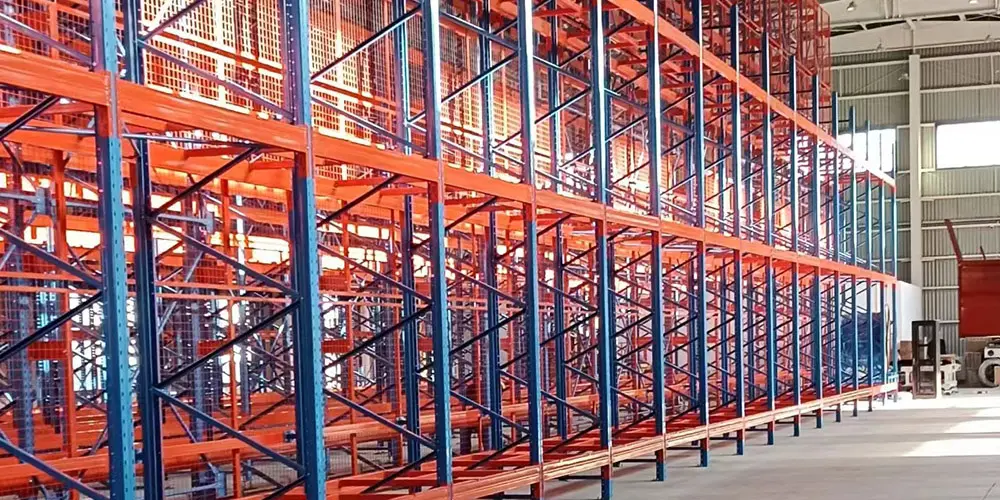
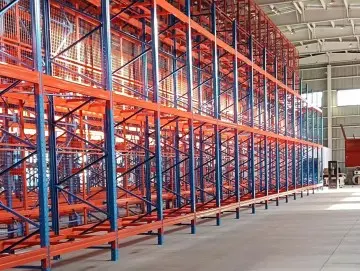
Industrial racking systems utilize heavy-gauge structural carbon steel (such as Q235B and high-tensile Q355B / SS50), continuous cold-roll formed into complex 11-fold or 13-fold cross-sectional profile uprights (Omega profiles). These multi-flange profiles provide exceptional torsional rigidity and resistance to Euler column buckling under immense vertical axial loads.
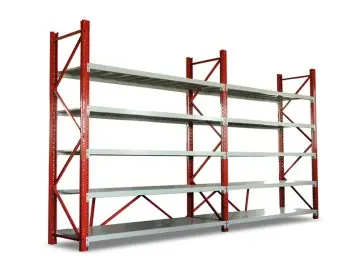
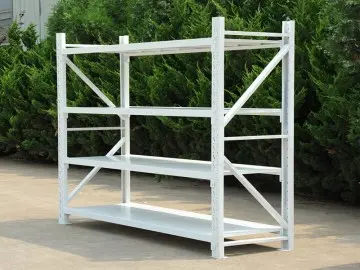
Conversely, commercial shelving systems utilize lighter-gauge sheet steel (0.6mm to 1.5mm thickness) formed into basic angle, C-channel, or box profiles. While adequate for hand-loaded static items, light shelving profiles lack the moment-resisting geometry required to withstand impact loads from material handling equipment (MHE).
Structural racking is designed according to strict international codes (such as EN 15512, FEM 10.2.02, and RMI ANSI MH16.1). The calculations account for dynamic force vectors including forklift placement impact, sway frames under horizontal seismic activity, beam deflection limits ($L/200$), and point loads delivered through pallet runners. Shelving design, regulated under standards like FEM 10.2.06, primarily assumes static, uniformly distributed loads (UDL) without dynamic shock loading.
| Engineering Attribute | Industrial Racking Systems | Industrial / Commercial Shelving |
|---|---|---|
| Primary Handling Mode | Mechanical (Forklifts, Reach Trucks, AS/RS, AGVs) | Manual (Hand picking, carton handling, tote access) |
| Unit Load Capacity | 1,000 kg – 4,500+ kg per beam level | 50 kg – 800 kg per shelf tier |
| Structural Steel Grade | Q355B / Q235B Cold-Formed Heavy Steel (1.8mm–3.0mm+) | Q195 / Cold-Rolled Light Sheet Steel (0.6mm–1.5mm) |
| Upright Profile Geometry | 11 to 13-fold Omega profiles with teardrop/diamond slots | Slotted angle, C-profile, or light box uprights |
| Slab Anchorage & Foundation | Heavy floor plates anchored into reinforced concrete slab | Free-standing, light plastic foot caps or light floor anchors |
| System Height Limits | Vertical clearance up to 15m – 40m+ (High-Bay / AS/RS) | Standard 1.8m – 3.0m (up to 8m in multi-tier mezzanines) |
| Global Design Standards | EN 15512, RMI ANSI MH16.1, FEM 10.2.02, AS4084 | FEM 10.2.06, ISO 9001, OSHA Light Industrial Guidelines |
| Impact Resistance | High (equipped with column protectors & guide rails) | Low (susceptible to permanent deformation from vehicle collision) |
Why leading global EPCs, 3PL operators, and warehouse developers source structural racking and shelving directly from Shandong manufacturing hubs.
Facilities based in Shandong, such as Guake Logistics Technology, leverage direct strategic supply contracts with premier steel mills (BaoSteel, ShanSteel). This guarantees mill-certified Q235B and Q355B steel coils with consistent tensile strength, strict chemistry control, and minimal thickness tolerances.
Modern Chinese racking factories operate continuous high-precision cold roll-forming lines, automated laser-pipe cutting workcells, and robotic welding arms for beam connector claws. Fully automated electrostatic powder coating lines ensure salt-spray corrosion resistance up to 500+ hours.
Unlike standard off-the-shelf shelving distributors, specialized Chinese manufacturers maintain in-house structural analysis units. Engineers execute FEA (Finite Element Analysis) structural stress simulations and deliver customized CAD/3D layouts tailored to site seismic codes, building clear heights, and load requirements.
How warehouse racking and shelving manufacturers are evolving to support Industry 4.0, robotic automation, and sustainable green logistics.
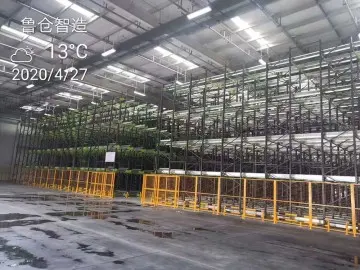
Traditional static pallet racking is rapidly transitioning into semi-automated and automated systems. High-density Radio Shuttle Racking Systems utilize autonomous battery-powered shuttles to navigate deep channels, eliminating the need for forklifts to enter rack lanes. For maximum cubic utilization, Automated Storage and Retrieval Systems (AS/RS) combine ultra-precise tolerances with stacker cranes and conveyor networks.
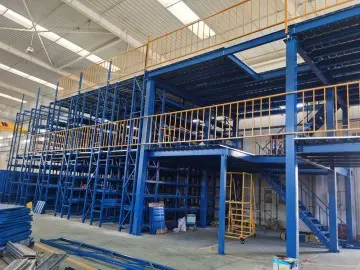
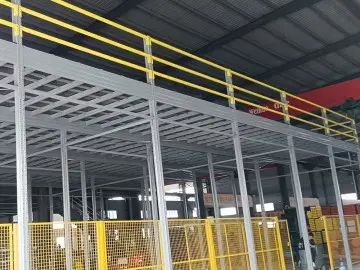
Driven by rapid e-commerce expansion, urban logistics facilities are maximizing vertical space via Mezzanine Steel Platforms integrated with light-to-medium-duty boltless shelving. These multi-tier structures create separate picking levels equipped with gravity chutes, conveyors, and Autonomous Mobile Robots (AMRs) for high-speed tote and bin handling.
Next-generation heavy-duty industrial racking installations incorporate IoT shock sensors and deflection monitoring arrays attached to critical frame uprights. Real-time data alerts warehouse managers to structural impacts from material handling equipment before catastrophic rack collapse can occur.
Environmental standards demand lightweight, high-yield steel formulations (e.g., micro-alloyed Q355B) that reduce total steel consumption while increasing load ratings. Furthermore, advanced factory powder-coating processes utilize zero-VOC epoxy formulas and heavy metal-free pre-treatments.
Selecting between industrial racking and commercial shelving depends entirely on the operational environment, handling velocity, SKU profiles, and space availability. Below are key deployment scenarios where specialized systems deliver optimal performance.
System Recommended: Radio Shuttle Racking or Drive-In Racking
In cold chain environments, operational costs are dominated by cubic refrigeration volume. High-density pallet racking systems maximize storage cubic utilization up to 85%. Hot-dip galvanized or specialized cold-resistant powder coatings are applied to prevent steel embrittlement and surface rust caused by thermal condensation.
System Recommended: Hybrid Mezzanine Shelving + Selective Pallet Racks
E-commerce fulfillment centers handle tens of thousands of unique SKUs. A hybrid layout places heavy bulk pallet reserve stock on selective pallet racking on the perimeter, while fast-moving piece items are stored on multi-tier boltless steel shelving platforms for fast hand-picking.
System Recommended: Special Purpose Cantilever Racking & Heavy Duty Beams
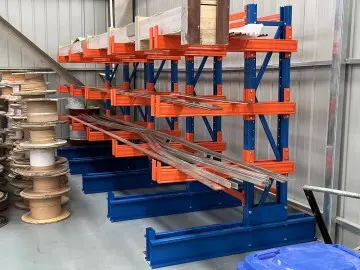
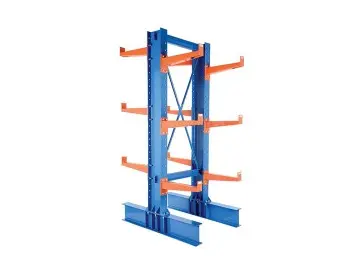
Manufacturing plants holding steel bars, aluminum extrusions, sheet metal, and automotive dies require unobstructed side loading. Cantilever racking eliminates front upright columns, allowing overhead cranes or side-loader forklifts to store long stock safely.
System Recommended: Light to Medium-Duty Boltless Steel Shelving
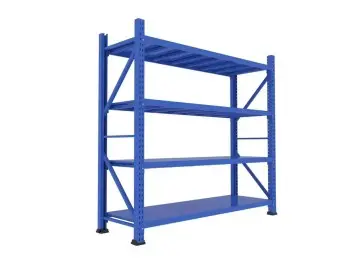
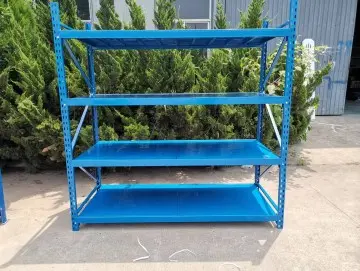
Retail stockrooms and corporate archives require quick tool-free assembly, adjustable shelf pitches (e.g., 50mm increments), and clean aesthetics. Rivet or clip-type metal shelving units provide low-cost, adaptable storage for hand-stacked goods.
When enterprise procurement teams issue RFQs for warehouse infrastructure, evaluating bids based solely on FOB (Free on Board) unit price often leads to costly long-term project risks. A robust Total Cost of Ownership evaluation model must incorporate structural compliance, container packaging volume, freight efficiency, and long-term installation support.
Detailed technical answers from senior structural engineers to common procurement and warehouse design queries.
The primary difference lies in the material handling method and load capacity. Racking systems are heavy-duty structural steel frameworks engineered for mechanical handling of unitized loads (such as palletized goods handled by forklifts, reach trucks, or AS/RS cranes) with capacity per level typically ranging from 1,000 kg to over 4,500 kg. Shelving systems are lighter structures designed for manual hand-loading of un-palletized items, cartons, or bins, with load capacities usually ranging from 50 kg to 800 kg per shelf tier.
Guake Logistics Technology manufactures a complete portfolio of warehouse storage equipment including:
Each high-density pallet storage system satisfies distinct inventory profiles and throughput requirements:
Yes. Guake’s engineering team provides full turnkey layout design. By submitting your building CAD or PDF floor plan, clear ceiling height, slab load specs, unit load pallet dimensions (Width x Depth x Height + Gross Weight), and handling equipment details, our structural engineers will generate 2D rack layout drawings, 3D spatial models, and verified structural load calculations tailored to your operation.
Guake utilizes structural certified cold-rolled carbon steel, primarily Q235B for standard beams/shelving and high-tensile Q355B / SS50 for heavy-duty upright frames. Surface finishing is completed using an automated multi-stage chemical wash and electrostatic epoxy powder coating line, producing a durable finish (60–90 micron thickness) with excellent impact and corrosion resistance compliant with ISO 9001 and ISO 14001 standards.
Yes. Every international project includes detailed installation drawings, component piece lists, and step-by-step assembly manuals. For major global developments, Guake provides remote engineering oversight or dispatches experienced installation supervisors to manage local installation crews and perform final structural commissioning.
Racking structural designs are verified via Finite Element Analysis (FEA) and physical destructive load testing. Calculations strictly enforce beam deflection limits (typically capped at $L/200$, where $L$ is beam length) under maximum rated uniformly distributed loads. Baseplates, upright bracing geometry, and floor expansion anchor bolts are calculated to withstand seismic shear and horizontal impact dynamic forces per international standards (EN 15512 / RMI).
Yes. Everything is manufactured to order. Upright heights (up to 15+ meters), beam lengths, depth profiles, number of beam levels, safety accessories (mesh decking, pallet support bars, column guards), and RAL powder-coating colors can all be customized to align with corporate visual guidelines and facility specs.
Explore specialized storage equipment engineered for heavy manufacturing, long-goods storage, and multi-tier picking.
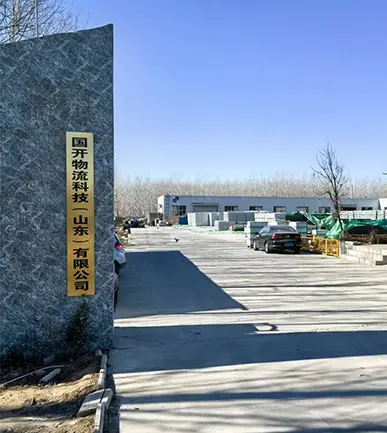
Partner directly with Guake Logistics Technology (Shandong) Co., Ltd.—a trusted manufacturer of warehouse racking and intelligent storage systems since 2010. Submit your floor plan today for expert structural analysis and factory-direct pricing.
Factory Address: 200 meters west of the intersection of Kunming Road and Xiamen Road, Linyi City, Shandong Province, China | Email: [email protected]