Direct factory wholesale systems engineered for optimum volumetric efficiency, load compliance, and long-term operating safety.
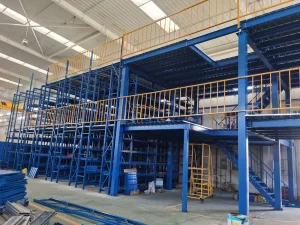
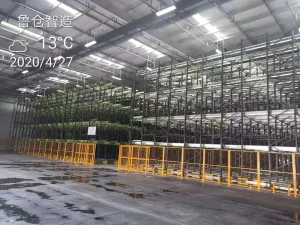
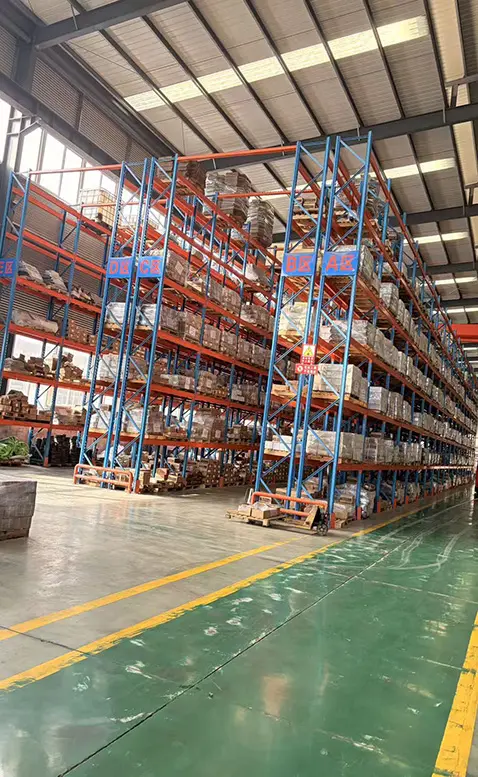
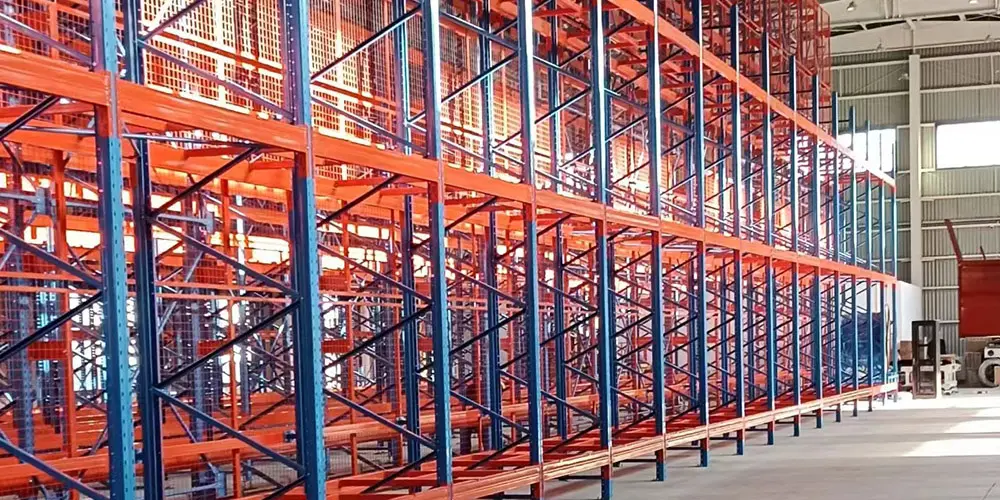
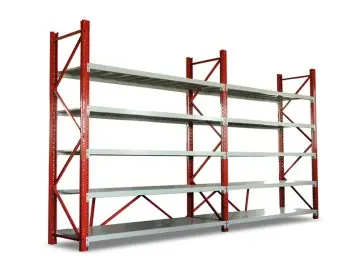
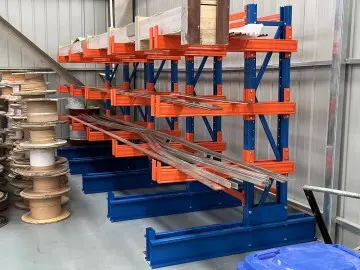
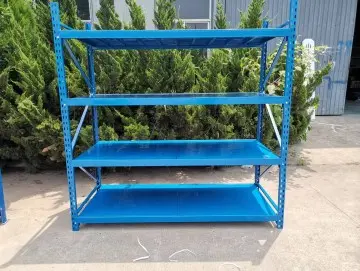
Understanding the fundamental structural, operational, and mechanical variances between industrial shelving units and heavy-duty pallet racking systems for global supply chain infrastructure.
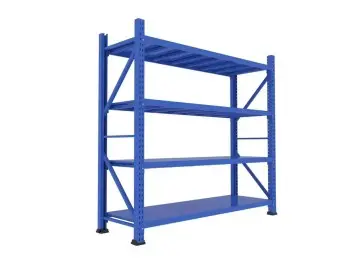
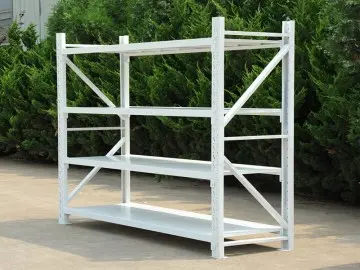
Industrial shelving refers to low-to-medium-capacity storage structures engineered primarily for manually accessed, un-palletized items, small parts bin picking, and light carton storage. Constructed typically from cold-rolled steel sheet components, solid steel decks, or particle board, shelving systems generally operate under unit load thresholds between 50 kg to 800 kg per shelf level.
Key operational traits include lower overall structural height (typically under 3 meters), narrow vertical post profiles, toolless boltless clips, and direct human interaction without mechanical lift equipment.
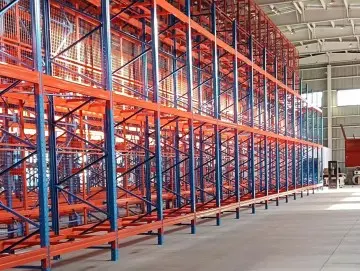
Industrial racking systems are structural engineering assemblies designed specifically to handle unitized pallet loads, heavy containers, and mechanized handling equipment such as counterbalance forklifts, reach trucks, and VNA (Very Narrow Aisle) stacker cranes. Racking systems are engineered to withstand severe dynamic forces, seismic accelerations, and heavy static weights ranging from 1,000 kg to over 4,500 kg per beam level.
Key features include structural upright frames built from high-tensile steel profiles (Q235B / Q355B grades), heavy beam connectors with safety locks, expansion floor anchoring, and vertical integration up to 40 meters in automated high-bay warehouses (ASRS).
A side-by-side engineering breakdown designed to help warehouse architects, B2B procurement heads, and logistics engineers select the correct storage geometry.
| Evaluation Parameter | Industrial Shelving Systems | Heavy-Duty Racking Systems |
|---|---|---|
| Primary Loading Mechanism | Manual hand-loading, piece-picking, carton placement. | Mechanized forklift trucks, AGV/AMRs, ASRS stackers. |
| Load Capacity Benchmark | Light to Medium Duty: 50 kg – 800 kg / level. | Heavy Duty: 1,000 kg – 4,500+ kg / level. |
| Structural Member Steel Profiles | Cold-rolled light gauge steel angles, open columns, sheet shelves. | Heavy roll-formed box beams, step beams, closed-upright profiles (Q355B). |
| Vertical Elevation Capability | Standard: 1.8m to 3.5m (Up to 8m for multi-tier mezzanine shelving). | Standard: 4.5m to 12m (Up to 45m for self-supporting clad rack ASRS). |
| Floor Slab Baseplate Anchoring | Light plastic caps or thin sheet footplates; minimal slab stress. | Heavy welded/bolted structural baseplates with heavy anchor bolts & shim plates. |
| Seismic & Dynamic Sway Resistance | Designed primarily for static dead loads; low lateral resistance. | Rigidly calculated using FEA for dynamic forklift impact and seismic accelerations. |
| Safety Accessories & Infrastructure | Back mesh, side dividers, shelf retainers, shelf label holders. | Column protectors, frame guards, pallet backstops, wire mesh decking, guide rails. |
| Capital Investment & Installation Cost | Lower initial CAPEX; rapid manual assembly without crane/lift trucks. | Higher initial investment; requires professional installation crews and scissor lifts. |
Why sourcing industrial racking and shelving directly from Shandong industrial clusters provides unmatched structural integrity, cost efficiency, and global scalability.
Our proximity to China's leading steel manufacturing mills in Shandong and Hebei guarantees direct access to prime cold-rolled structural steel coils (Q235B and high-yield Q355B). We perform rigorous chemical spectrometry and tensile strength validation to ensure zero material structural flaws prior to roll-forming.
Utilizing multi-stage automated roll-forming production lines, our upright posts achieve pitch tolerances under ±0.5mm. Heavy beam connectors are joined to box profiles using multi-axis OTC robotic welding cells, creating consistent weld penetration and eliminating human stress concentrations.
Components undergo an automated 9-stage pre-treatment wash including chemical degreasing, phosphating, and deionized water rinsing. Electrostatic thermosetting epoxy powder coating yields a durable finish resistant to impact, abrasion, moisture, and chemical exposure in harsh warehouse environments.
Matching the correct storage topology—whether heavy pallet racking or versatile steel shelving—to precise industrial operational workflows.
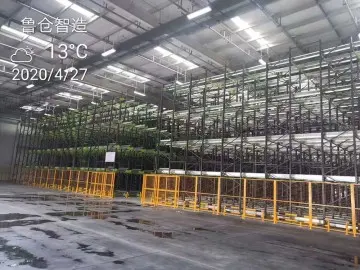
Cold storage operating costs require extreme volumetric density. Radio Shuttle Racking and Mobile Racking Systems are preferred over standard shelving due to their ability to maximize cubic space and reduce refrigeration energy waste. Galvanized steel components are specified to prevent corrosion from condensation.
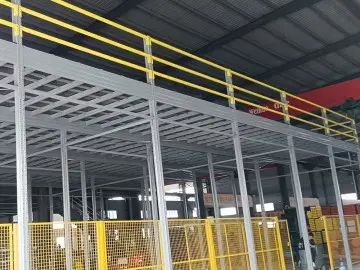
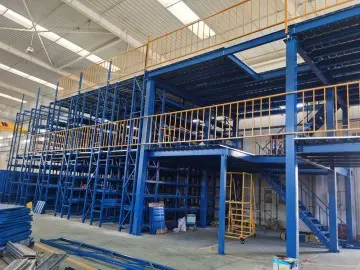
Modern fulfillment operations combine high-bay Selective Pallet Racks for bulk reserve inventory alongside multi-tier Mezzanine Steel Platforms integrated with light-duty boltless shelving for fast-moving piece-picking and packing operations.
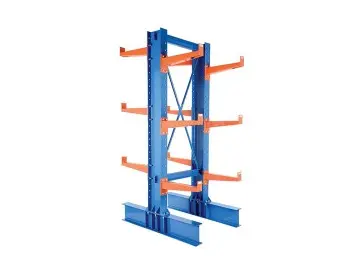
Manufacturing facilities requiring raw bar steel, pipe stock, or heavy stamping dies rely on Cantilever Racking and custom heavy-duty mold racks capable of carrying point loads exceeding 5,000 kg per shelf, which standard shelving cannot accommodate.
Urban micro-fulfillment centers leverage modular, easy-to-reconfigure Medium-Duty Steel Shelving units with clear spans to handle fast SKU rotation, mixed carton sizes, and ergonomic hand-sorting without heavy forklifts.
Structural reliability requires full adherence to regional building codes, finite element structural calculations, and seismic verification.
Our structural design practices conform to RMI (Rack Manufacturers Institute) standards. Frame calculations account for axial loading, beam deflection limits ($L/200$), connection rigidity, and baseplate anchoring parameters dictated by local building codes.
Engineering procedures adhere to FEM standards (Fédération Européenne de la Manutention) and EN 15512 specifications. Global projects carry valid CE certification for structural steel fabrication and quality safety controls.
We supply steel racking tested and verified under Australia’s updated AS4084-2023 code, incorporating detailed finite element analysis (FEA) to withstand high-impact forklift loads and local seismic zones.
The evolution of industrial storage from passive steel frameworks to intelligent, sensor-driven logistics infrastructure.
Integration of wireless strain sensors, inclination gauges, and impact detection modules directly on racking uprights to alert managers of structural damage caused by forklift strikes in real time.
Development of ultra-precise baseplates and automated guided vehicle dock lanes, enabling seamless integration between autonomous mobile robots and radio shuttle rack networks.
Full 3D Building Information Modeling (BIM) structural files allowing warehouse operators to run dynamic digital twins for inventory slotting, load simulations, and automated maintenance scheduling.
Detailed technical answers provided by our senior racking engineers to assist overseas logistics planners and procurement executives.
The primary difference lies in structural load-bearing capacity and handling method. Industrial shelving is engineered for manual piece-picking with lighter unit loads (typically under 800 kg per shelf) using lighter steel profiles. Heavy-duty pallet racking is structural steel infrastructure designed for unitized pallet loads (1,000 kg to 4,500+ kg per level) loaded via forklifts or automated stacker cranes, requiring heavy anchoring and compliance with seismic structural standards.
Your choice depends on SKU diversity, inventory throughput, and space cost:
Yes. Hybrid storage designs often incorporate multi-tier Mezzanine Platforms where heavy pallet racking forms the structural lower foundation while the upper levels feature light- or medium-duty shelving for piece picking. Wire mesh decking or drop-in step shelves can also turn lower pallet racking beam levels into hand-load picking locations.
Heavy pallet racking typically requires a reinforced concrete floor slab with a minimum compressive strength of 25 to 30 MPa (3,500 to 4,000 psi) and a slab thickness of at least 150mm to 200mm, depending on vertical post point-loads. Floor levelness (FF/FL ratings) is critical for reach trucks and VNA operations.
Every engineering proposal undergoes Finite Element Analysis (FEA) simulation customized to your facility's seismic zone factor (Acceleration coefficient). We supply oversized baseplates, heavy anchor bolts, top-tier bracing frames, and column protection accessories compliant with RMI, FEM, and AS4084 guidelines.
We strictly utilize certified high-tensile hot-rolled and cold-rolled steel coils, specifically Q235B and high-yield Q355B (equivalent to SS400 / S355). Our surface treatment includes automated degreasing, phosphating, and electrostatic epoxy powder coating or continuous hot-dip galvanization for outdoor and cold storage deployments.
Factory-direct industrial storage products engineered and manufactured in Shandong, China for global export.