Explore our high-density storage hardware engineered in Shandong, China. Built for rigorous structural integrity, high throughput, and seamless material handling integration.
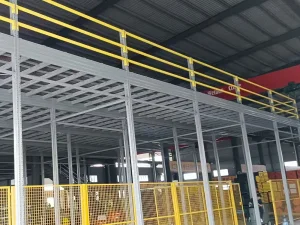
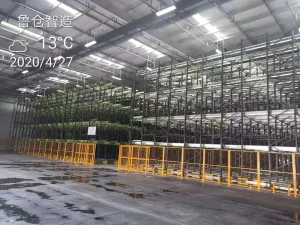
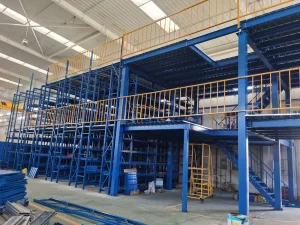
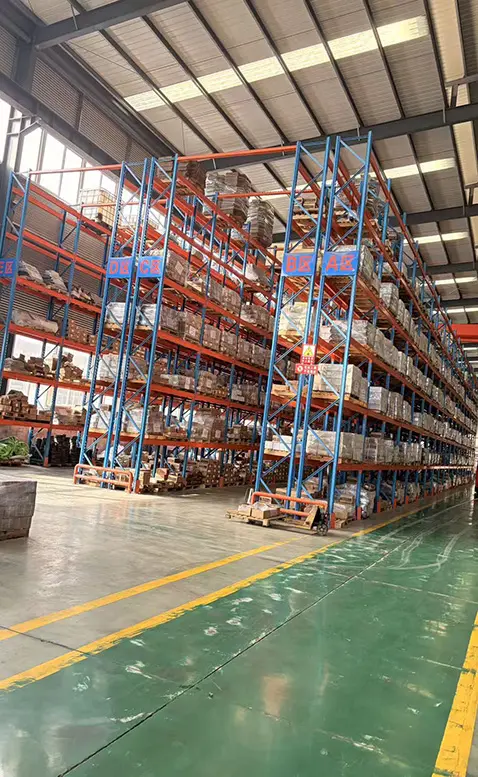
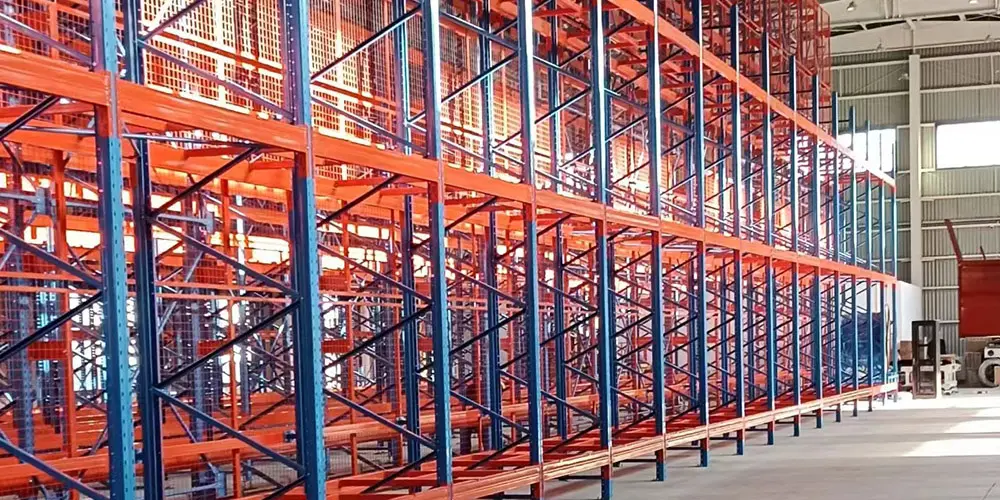
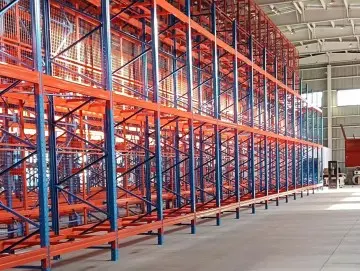
Flow Through Racking Systems (also known as Gravity Flow Racking, Pallet Live Storage, or Dynamic Flow Racks) represent the apex of unpowered, high-density warehouse storage technology. Utilizing structural pitch engineering and kinetic physics, these systems transform static storage into an active, automated material movement pipeline.
Pallets are loaded from the loading aisle (rear) and glide down inclined roller tracks toward the picking aisle (front). This guarantees strict First-In, First-Out (FIFO) turnover, making it imperative for date-sensitive SKUs, pharmaceuticals, and perishables.
Engineered with a precise incline slope (typically 3% to 5%), gravity moves unit loads seamlessly. Integrated centrifugal brake rollers regulate pallet velocity to a safe controlled speed of 0.2m/s to 0.3m/s, preventing impacts regardless of load mass.
At the pick face, custom mechanical separators isolate the front pallet from the accumulated trailing pallets. This eliminates line pressure, allowing forklifts to extract pallets without friction or structural pinch points.
A heavy-duty flow through racking system engineered by direct China factories relies on five primary mechanical sub-assemblies:
Procuring enterprise racking systems from established Shandong logistics equipment factories gives global buyers a massive competitive leverage. Combining ultra-modern steel forming automation with high structural engineering compliance (ISO9001, FEM 10.2.02, RMI, CE), China manufacturers provide wholesale cost structures without compromising on safety or lifespan.
Located in Shandong, Guake Logistics Technology leverages direct supply chains with China's premier steel mills. We source certified hot-rolled and cold-rolled coil steel with consistent yield strength (Q235B / Q355B equivalent to ASTM A36 / Grade 50). This localized raw material integration allows tight control over coil tolerances, grain orientation, and structural integrity under heavy loads.
Modern factories utilize continuous multi-pass automated cold-roll forming lines. Upright columns are punched with high precision teardrop or diamond hole patterns using computer-controlled CNC punch presses. This guarantees millimeter-perfect beam clip engagement, zero rotational play, and flawless structural squareness across multi-tier elevated installations.
By eliminating intermediate brokerage agents and purchasing directly from Shandong manufacturing hubs, global procurement managers reduce project capital expenditures by 30% to 45%. Efficient mass production, automated robotic welding, and optimized sea freight container loading layout cut total landed costs significantly.
Wholesale OEM manufacturers do not force off-the-shelf standardized racks. Every flow lane slope, roller diameter, track coating, speed controller frequency, and frame depth (from 2 to 20+ pallets deep) is designed dynamically to fit your specific pallet type (Euro, GMA, CHEP, plastic, steel, or skid).
The material handling industry is evolving rapidly toward smart, hybrid, and sustainable warehousing. As global supply chains prioritize resilience and zero-carbon energy efficiency, flow through racking systems are undergoing technological enhancements.
Integrating optical sensors and micro-switches along gravity lanes enables real-time occupancy tracking. Connected to warehouse management software (WMS), operators receive instant visual feedback on pallet location, lane fullness, and discharge readiness.
Modern flow racks are increasingly designed for automated integration. Autonomous Mobile Robots (AMRs) or Automated Guided Vehicles (AGVs) handle loading at the rear lane, while human operators or robotic arms execute fast-picking at the front face.
Advanced synthetic polymer materials and specialized low-viscosity grease allow brake rollers to operate reliably in deep-freeze environments down to -30°C without freezing, lockup, or steel embrittlement.
Flow Through Racking is tailored for operations demanding continuous throughput, zero power reliance, strict date rotation, and dense spatial storage.
High turnover rates and short product shelf-lives demand perfect FIFO management. Flow through racking ensures older inventory is picked first, virtually eliminating product expiration waste, stock obsolescence, and manual stock reorganization.
Strict regulatory compliance mandates meticulous lot tracking and zero contamination risk. Gravity flow lanes physically segregate loading dock personnel from order assembly picking corridors, minimizing cross-aisle traffic and enhancing hygiene protocols.
Carton flow and heavy-pallet dynamic flow racks provide continuous components directly to assembly technicians. As empty bins or empty pallets are removed at the front face, gravity feeds the next full container immediately, maximizing assembly efficiency.
Refrigerated warehouse space is extremely expensive to build and power. Flow racking dramatically increases cubic utilization up to 75% compared to standard beam racks, drastically lowering energy consumption per pallet position stored.
Choosing the right high-density storage technology requires evaluating spatial efficiency, selectivity, throughput speed, and capital expense. The comparative matrix below highlights how Flow Through Racks perform against alternative racking systems.
| Storage System Type | Storage Density | Inventory Flow Type | Forklift Aisle Needs | Energy Power Consumption | Direct Access / Selectivity |
|---|---|---|---|---|---|
| Flow Through Racking (Gravity Flow) | Very High (Up to 80%) | 100% Strict FIFO | Only 2 (Dedicated Load & Unload) | Zero Power (Pure Gravity) | Lane Face Selectivity |
| Selective Pallet Racking | Standard (35% - 40%) | Flexible (FIFO / LIFO) | High (Aisle between every rack) | Zero Power | 100% Immediate Access |
| Radio Shuttle Racking | Ultra High (85%+) | FIFO or LIFO Selectable | 1 or 2 Working Aisles | Low (Battery Powered Shuttles) | Lane Face Selectivity |
| Push Back Racking | High (60% - 70%) | Strict LIFO | Only 1 Front Loading Aisle | Zero Power (Mechanical Carts) | Lane Face Selectivity |
| Drive-In Racking | Very High (75%) | Strict LIFO | Forklift Enters Rack Stacks | Zero Power | Low (Block Stored SKUs) |
| Fully Automated ASRS | Maximum (90%+) | Software Controlled | Integrated Crane Aisles | High Electrical Power | 100% Computerized Access |
By separating loading and unloading traffic, forklift travel distance inside the warehouse is cut by up to 60%. Fuel/battery consumption drops proportionally, while pallet handling capacity per driver increases by 2.5x. Most enterprise logistics facilities achieve full capital cost payback on China wholesale flow racking within 14 to 18 months of commissioning.
Since 2010, Guake Logistics Technology (Shandong) Co., Ltd. has delivered end-to-end engineering, manufacturing, and global installation support for heavy-duty warehouse storage equipment.
Every dynamic flow rack layout undergoes computer-simulated Finite Element Analysis to verify buckling resilience, vertical deflection limits (L/300 standard), and seismic shear resistance before steel coil slitting begins.
Components pass through an automated 6-stage pre-treatment washing process, followed by thermosetting electrostatic epoxy powder coating (60-80μm thickness). Provides exceptional impact resistance and rust protection.
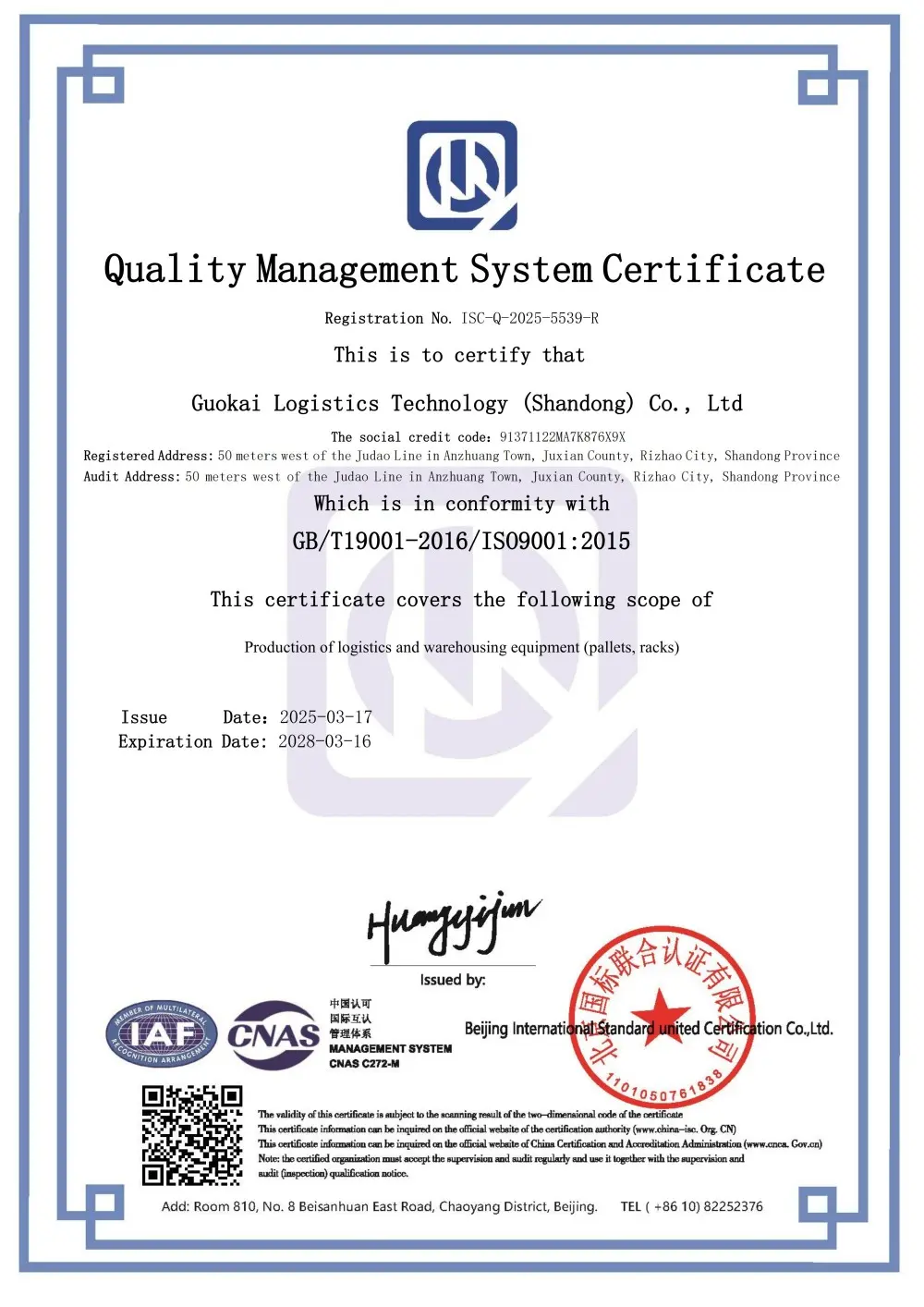
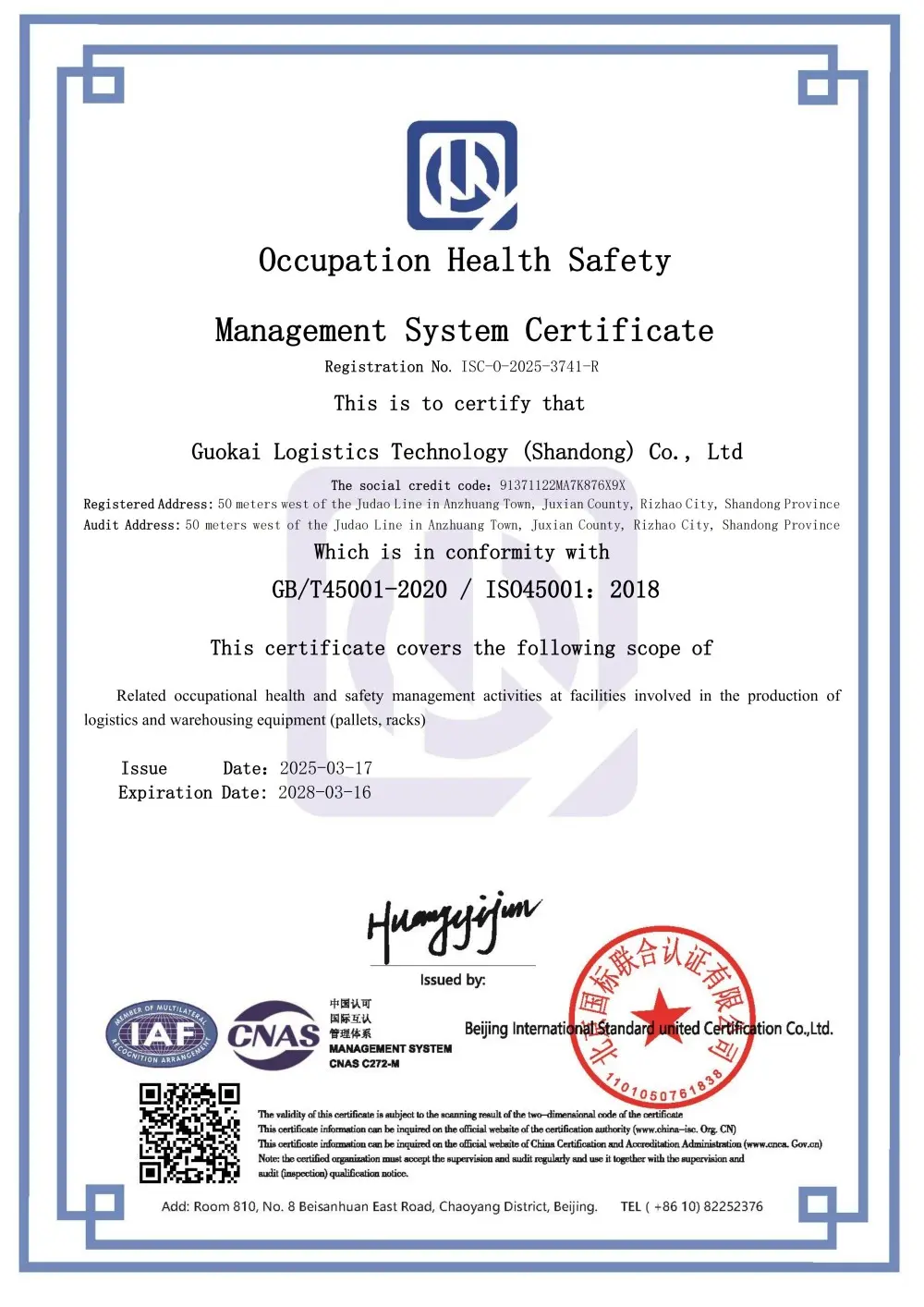
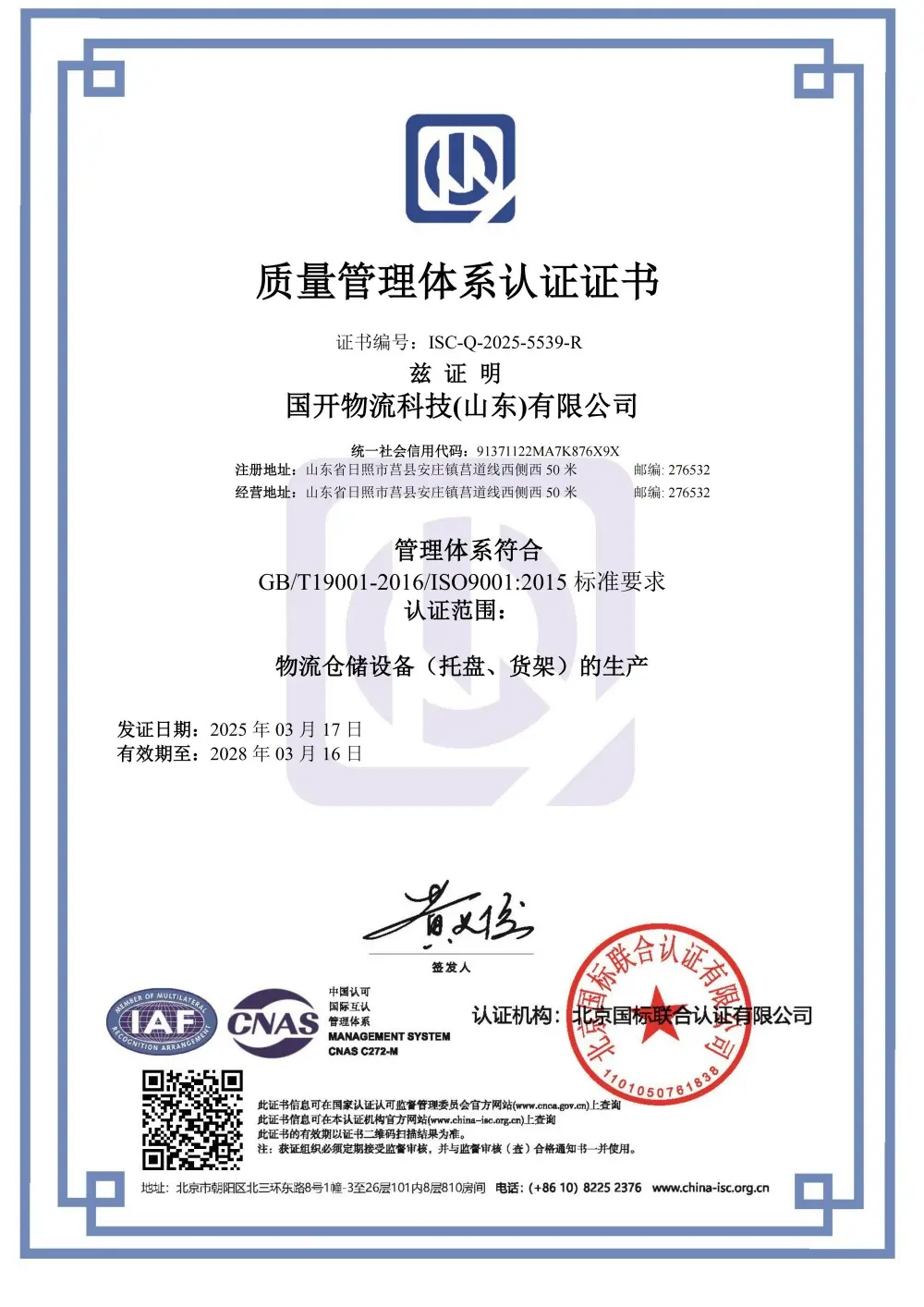
Production conforms strictly to ISO9001 quality management systems. Every batch of gravity rollers, speed dampeners, and safety locks is dynamic-load tested in our factory bay prior to overseas shipment container loading.
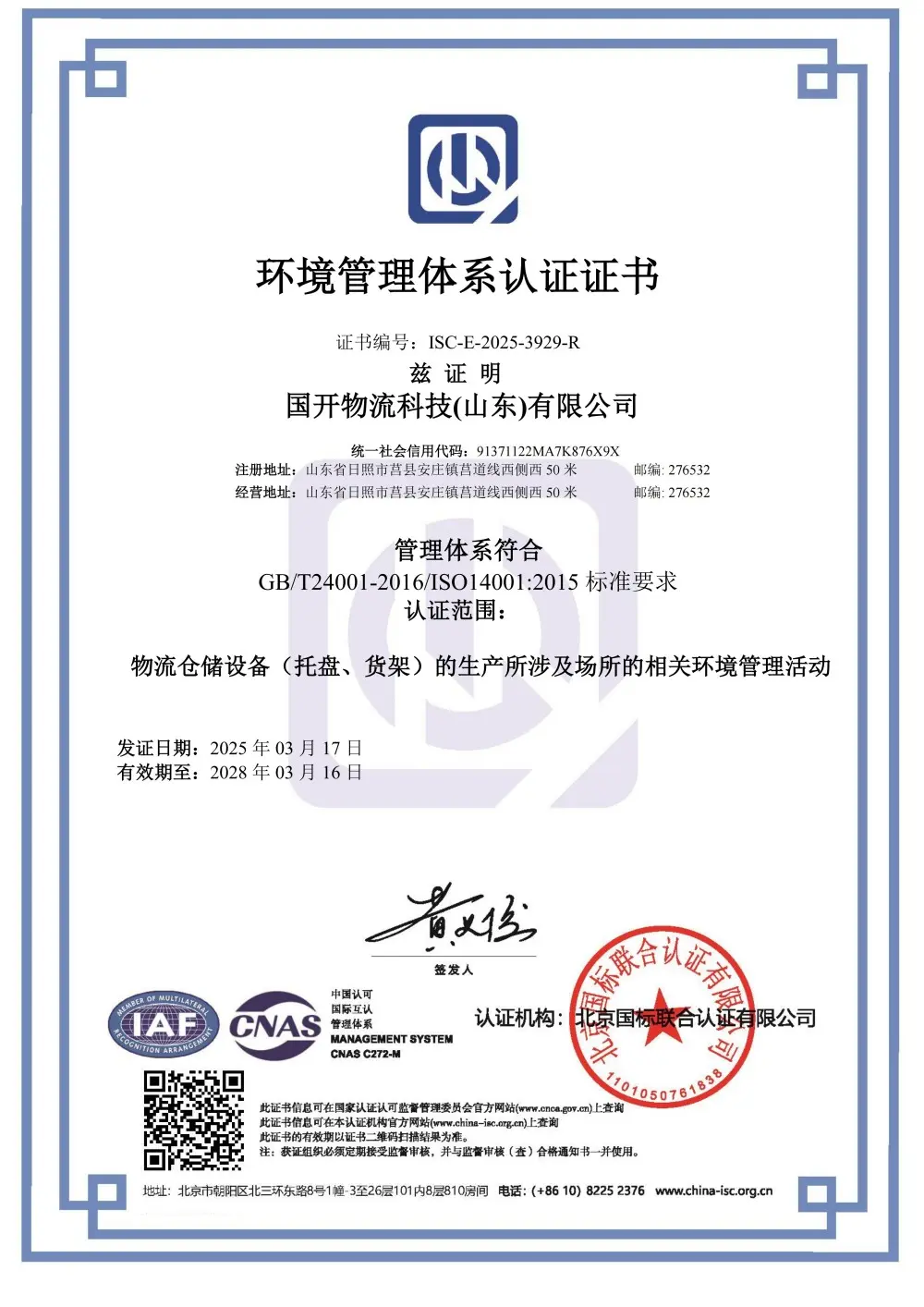
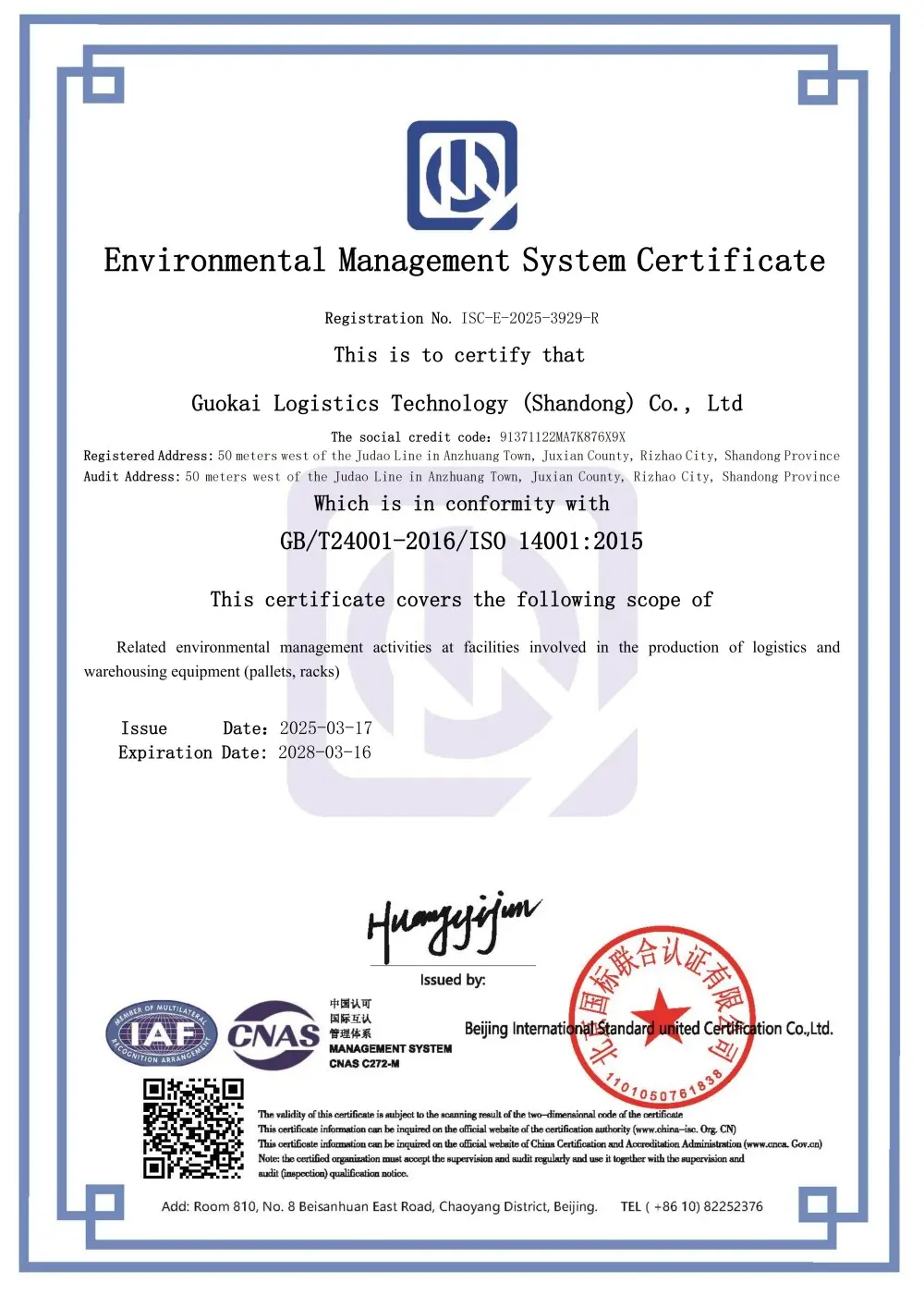
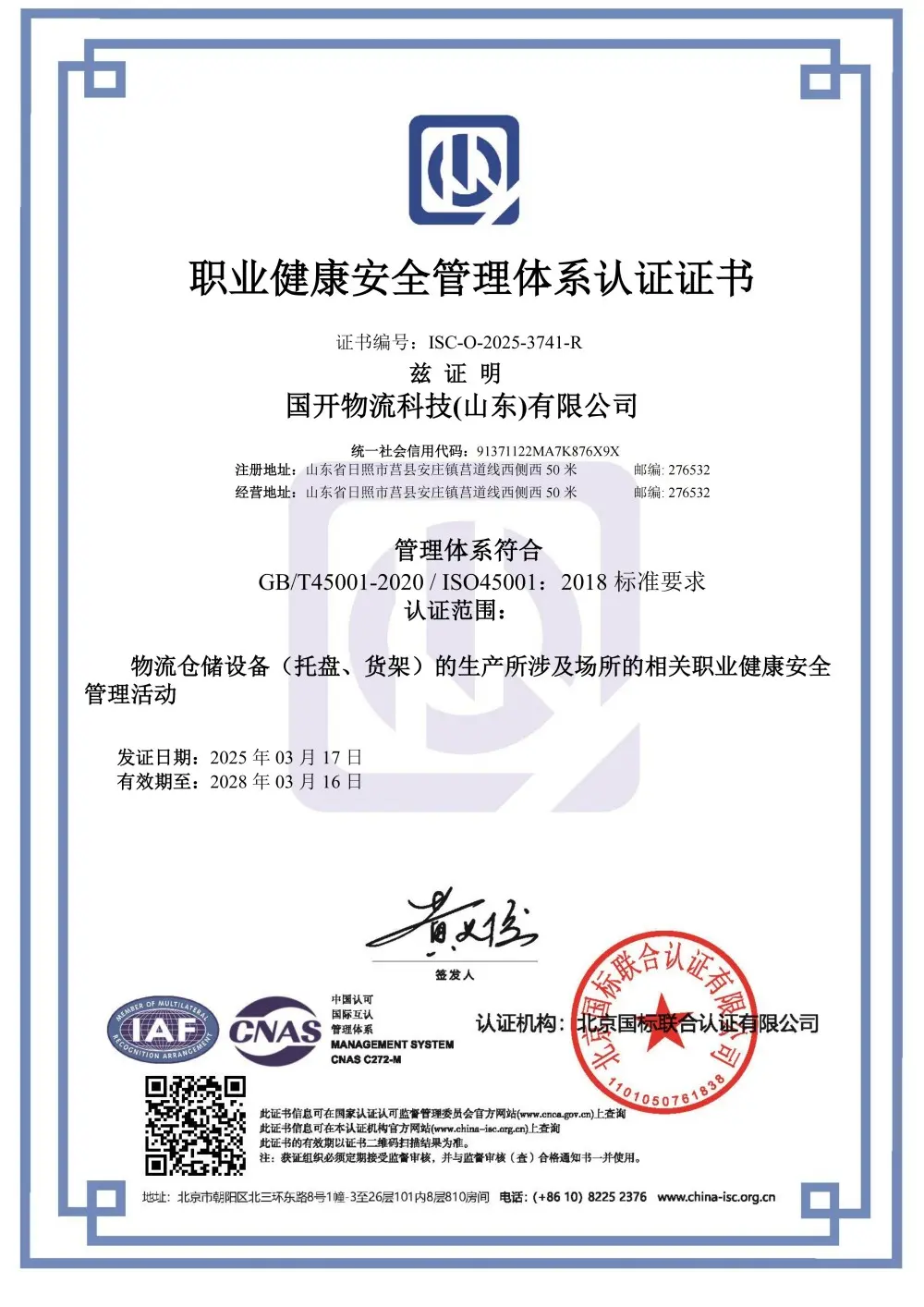
Our structural components and safety management processes pass rigorous independent audits.
Detailed technical answers to help procurement managers, logistics engineers, and warehouse planners evaluate flow storage implementations.
Flow Through Racking relies strictly on kinetic potential energy and gravity force. The dynamic roller lanes are installed at a slight engineered slope (typically 3.5% to 4.5% decline). When a forklift places a pallet into the loading side of the rack lane, gravity pulls the pallet forward down the smooth steel rollers. Interspersed magnetic or centrifugal brake rollers regulate speed, keeping momentum controlled until the pallet safely contacts the front separation mechanism at the picking face.
Because pallets move directly on rollers, wooden or plastic pallets must have clean, flat bottom runners without broken bottom boards or dangling nails. Standard Euro pallets (800x1200mm), GMA pallets (48x40 inch), and CHEP wooden/plastic pallets perform exceptionally well. For slave boards or non-standard plastic skids, our engineers customize roller spacing and wheel track patterns to prevent sagging or tracking deviation.
Centrifugal speed controller rollers (brake rollers) are integrated at calculated intervals along each flow track (typically every 1 to 2 pallet lengths). Inside these specialized rollers is an internal gear mechanism connected to centrifugal brake shoes. As a pallet rolls over and turns the brake roller, higher rotation speeds cause the internal shoes to expand against the inner roller casing, generating dynamic resistance that caps pallet speed at approximately 0.25 meters per second.
While both systems utilize dynamic sloped lanes, their loading access and inventory rotation differ significantly:
Yes. Guake specializes in cold-chain flow storage engineering. For freezing environments down to -30°C, we supply cold-rated synthetic lubricants inside the roller bearings to prevent grease gelation, use stainless steel bearing balls, and apply specialized low-temperature powder coatings or hot-dip galvanizing to eliminate moisture rust and structural steel embrittlement.
To receive an engineered rack drawing and exact factory direct price proposal, please share:
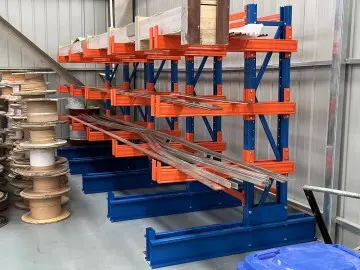
Discover our full ecosystem of Shandong-manufactured warehouse logistics equipment, engineered to optimize spatial density and handling efficiency.
Consult directly with our Senior Engineering Team for custom CAD layout designs, dynamic load calculation reports, and factory-direct wholesale pricing estimates.