Factory-direct warehouse storage solutions precision-manufactured in Shandong, China to strict international load-bearing standards.
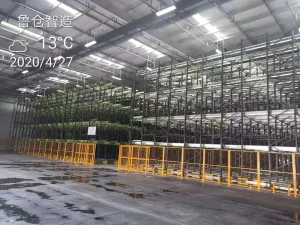
High-density semi-automated storage supporting up to 1,500 kg per pallet load with automated radio runners.
View Specifications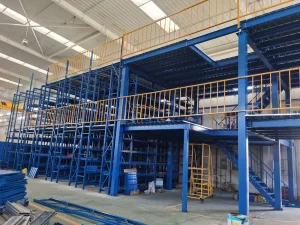
Multi-tier structural steel platform expanding vertical cubic floor space with 300–1,000 kg/m² uniform load limits.
View Specifications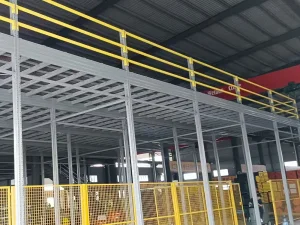
Heavy-duty bolted structural steel platforms engineered for heavy machinery, picking operations, and office mezzanines.
View Specifications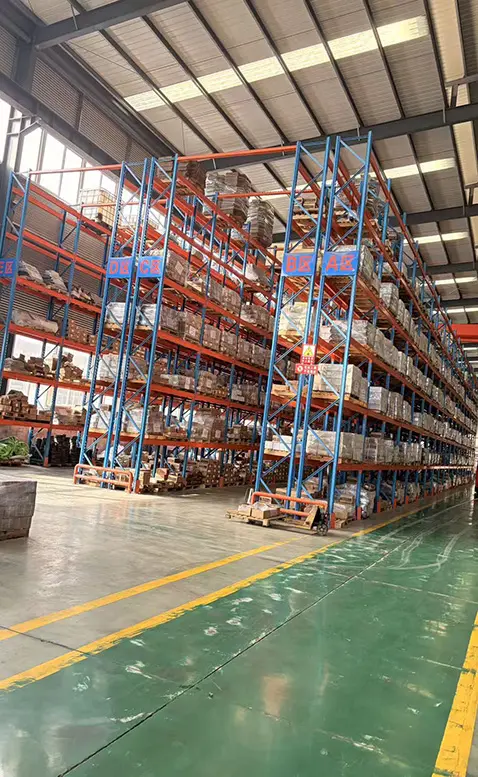
Maximum spatial utilization removing aisles for bulk homogeneous SKU storage with continuous rail support.
View Specifications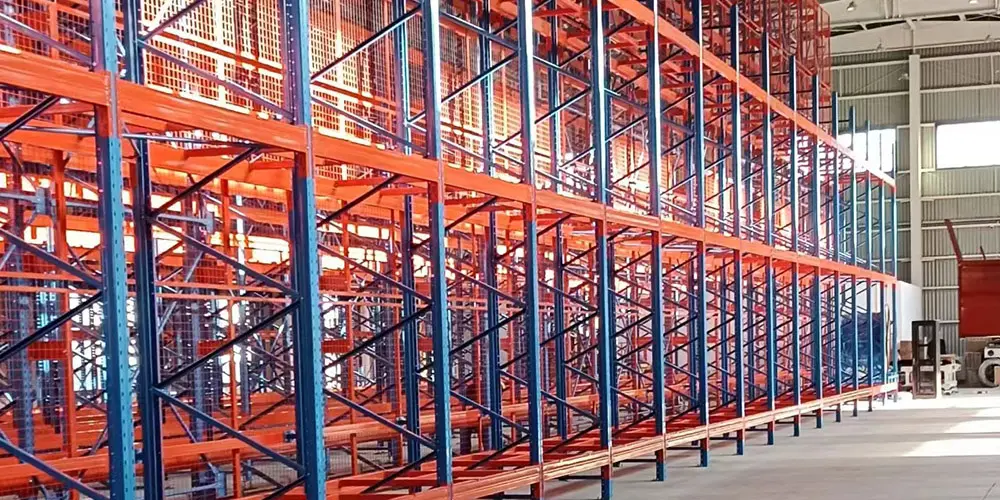
Nested cart system storing 2 to 5 pallets deep with automatic gravity front-facing presentation for LIFO picking.
View Specifications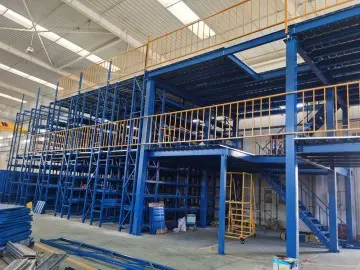
Integrated rack-supported floors customized for order fulfillment, e-commerce picking, and industrial staging.
View Specifications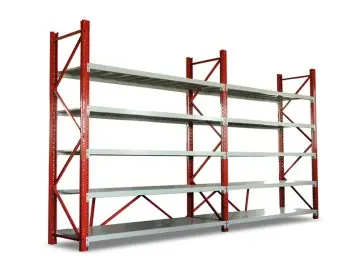
Electric mobile bases running on floor rails, eliminating static aisles to double cold storage density.
View Specifications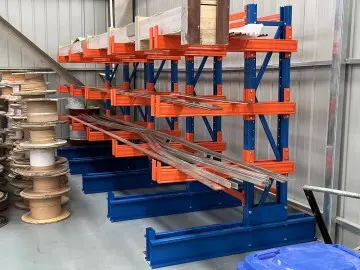
Unobstructed arm storage designed for steel bars, pipes, timber, and heavy oversized industrial profiles.
View SpecificationsIn modern industrial logistics, calculating and respecting industrial racking weight limits is not merely a matter of material allocation; it is a foundational safety requirement mandated by global structural standards including ANSI MH16.1, FEM 10.2.02, and EN 15512. When procurement managers and structural engineers evaluate wholesale pallet racking systems from OEM manufacturers, understanding the load-bearing mechanics under both static and dynamic conditions is essential to preventing catastrophic structural failures.
Industrial racking systems operate as cold-formed, thin-walled steel structures under complex stress combinations: axial compression, flexural bending, shear stress, and torsional buckling. Determining the load-carrying capacity of a rack frame or beam pair involves rigorous mathematical modeling of structural behavior.
Under international standards, maximum horizontal beam deflection under a full Uniformly Distributed Load (UDL) must not exceed 1/240th of the clear span length ($\delta \le L/240$). For a standard 2700mm beam, maximum deflection is strictly capped at 11.25mm to prevent beam displacement and hook unlatching.
Racking capacities are rated based on Uniformly Distributed Loads (UDL). Placing a concentrated point load (e.g., a heavy die or small 2-runner skid) in the center of a beam pair increases localized bending stress by up to 200%, effectively cutting the safe operational capacity in half.
The vertical load capacity of an upright frame drops non-linearly as the first beam level pitch increases. According to Euler's buckling theory ($P_{cr} = \frac{\pi^2 E I}{(K L)^2}$), increasing unbraced beam height from 1200mm to 2000mm reduces overall frame load limit by up to 35%.
Guake Logistics Technology utilizes high-grade structural coil steel to ensure consistent strength and structural elasticity across all manufactured profiles:
Technical load specifications, safety factors, and structural capabilities across major racking configurations.
| Storage System Type | Typical Max Pallet Weight | Max Level Capacity (UDL) | Max Bay / Frame Capacity | Safety Factor Ratio | Dominant Failure Mode |
|---|---|---|---|---|---|
| Selective Pallet Racking | 500 – 2,500 kg | 4,500 kg / level | 24,000 kg / frame | 1.50 : 1 to 1.65 : 1 | Beam flexural bending & connector shear |
| Drive-In Pallet Racking | 800 – 1,500 kg | 1,500 kg / rail lane | 16,000 kg / bay | 1.65 : 1 | Cantilever arm deflection & frame sway |
| Push-Back Cart System | 1,000 – 1,800 kg | 1,800 kg / cart lane | 18,000 kg / bay | 1.50 : 1 | Cart wheel bearing load & track distortion |
| Radio Shuttle Racking | 1,000 – 2,000 kg | 2,000 kg / deep lane position | 28,000 kg / structure bay | 1.65 : 1 | Shuttle rail dynamic impact & axial compression |
| Multi-Tier Mezzanine Platform | 300 – 1,200 kg/m² | 1,000 kg/m² floor UDL | 50,000 kg / primary column | 1.65 : 1 (Structural Steel) | Column baseplate shear & joist deflection |
| Heavy Cantilever Racking | 500 – 3,000 kg / arm | 6,000 kg / arm pair | 30,000 kg / column tower | 1.50 : 1 | Column connection moment flexure & base anchors |
The industrial racking industry is undergoing a digital transformation. Traditional static weight limits are evolving into real-time IoT-monitored structural load limits. As automated warehouses push storage heights past 30 to 40 meters, understanding static structural limits alone is no longer sufficient.
Future high-bay racking systems integrate micro strain gauges inside load-bearing beam profiles and column bases. These sensors transmit real-time stress data to the Warehouse Management System (WMS), alerting operators immediately if a pallet exceeds beam deflection limits or creates structural eccentricity.
Artificial Intelligence algorithms in modern ASRS and shuttle warehouses calculate structural center-of-gravity distributions automatically. Heavy pallet loads (e.g., 1,500 kg) are dynamically routed to bottom beam levels, while light pallets (<400 kg) are placed at upper bays, maximizing structural stability and seismic resilience.
Different industrial sectors impose unique load characteristics on warehouse racking infrastructure. Guake Logistics Technology engineers specialized racking layouts tailored to sector-specific stress profiles:
At freezing temperatures, structural steel undergoes a ductile-to-brittle transition. Guake utilizes specialized killed-steel alloys with controlled carbon content and enhanced Charpy V-notch impact toughness. Racking systems are designed for high-density shuttle operation with enlarged baseplates to spread loads over insulated floor slabs.
Automotive metal stamping dies present extreme concentrated point loads (up to 5,000 kg per position). Standard pallet beams fail quickly under such point loads. Guake integrates heavy structural steel I-beams (H-sections) with reinforced steel decking plates and heavy-duty frame column connectors.
Drum racks for liquid chemicals must accommodate both static fluid weight and dynamic dynamic fluid sloshing during seismic events. Systems are fitted with chemical-resistant epoxy coatings, integrated liquid containment sumps, and reinforced lateral sway bracing.
E-commerce fulfillment relies on multi-tier rack-supported mezzanine structures with fast human picking access. Floor systems must support dense uniform human pedestrian traffic (300-500 kg/m²) along with continuous automated conveyor lines without resonant vibration.
Deploying wholesale industrial racking globally requires strict compliance with local building codes, structural fire standards, and safety regulatory bodies. A rack certified in one jurisdiction may fail compliance audits in another if proper design modifications are not made prior to manufacturing.
Racking systems in the United States and Canada must adhere to Rack Manufacturers Institute (RMI) guidelines. Mandatory requirements include explicit dynamic load plaque placement, column impact resistance up to 18 inches high, and seismic engineering per IBC (International Building Code).
EN 15512 specifies limit state design principles for steel static storage systems. It requires rigorous finite element structural testing, strict limit state calculation factors for material strength, and dynamic safety coefficients for forklift beam loading.
AS 4084 dictates stringent operational safety tolerances, seismic bracing requirements for high wind/earthquake zones, and mandatory annual structural racking audits with strict upright deformation limits.
Guake Logistics Technology collaborates with registered Professional Engineers (PE) across the United States, EU, and Australia to deliver localized structural calculations, stamped engineering drawings, and site-specific floor slab capacity verifications for every major warehouse project.
Located in Linyi, Shandong Province—one of China’s major logistics and industrial steel hubs—Guake Logistics Technology operates over 20,000 m² of modern manufacturing space. By integrating Industry 4.0 automation into cold-roll forming, laser cutting, robotic welding, and powder coating, Guake delivers wholesale industrial racking with precision load specifications and stable global delivery cycles.
Multi-stage precision roll-forming mills shape high-strength steel strip into multi-flanged upright profiles. Consistent section profile dimensions ensure predictable flexural rigidity and eliminate structural weak points.
Automated robotic welding cells weld beam end connectors to box beams with full penetration and zero seam porosity. This guarantees maximum beam connector shear resistance under dynamic pallet placement.
Automated 6-stage pre-treatment cleaning followed by electrostatic epoxy-polyester powder coating guarantees a durable 80-100 micron protective finish resistant to abrasion, impact, and chemical exposure.
Every batch of steel entering Guake’s factory undergoes strict incoming inspection. We issue Mill Test Certificates (MTC EN 10204 3.1) verifying chemical composition (Carbon, Manganese, Phosphorus, Sulfur) and mechanical tensile testing for ultimate peace of mind.
Procuring industrial racking at scale requires warehouse managers and buyers to establish precise technical specifications before submitting Requests for Quotation (RFQs). Inadequate initial load specs often lead to costly design modifications during installation.
Detailed technical answers from Guake’s senior structural design team.
Maximum level load capacity is calculated based on a Uniformly Distributed Load (UDL) across a pair of beams. The formula considers the beam cross-sectional profile, material yield strength ($f_y$), clear span length ($L$), and the maximum allowable beam deflection ($\delta \le L/240$). For example, a standard 2700mm box beam with a 100x50x1.5mm profile rated for 2,000 kg per level can safely hold two 1,000 kg pallets placed evenly across the span.
Static load capacity refers to the maximum weight the racking structure can safely support when pallets are stationary and stationary forces are evenly distributed. Dynamic load capacity accounts for operational forces, such as the impact force of a forklift dropping a load onto a beam, automated shuttle movement, or seismic acceleration. Standard engineering applies a dynamic amplification factor (typically 1.15 to 1.25) during structural calculations.
Upright frames fail primarily through structural buckling. The vertical distance between beam levels represents the unbraced length ($K L$) of the column. According to Euler's buckling theory, as the unbraced length increases, the frame's axial compression load resistance decreases non-linearly. Raising the first beam level from 1.2 meters to 2.2 meters can significantly reduce the overall frame weight capacity.
Uneven or point loading creates eccentric force distributions. Concentrating weight in the center of the beam span increases flexural moment stress, causing the beam to exceed its $L/240$ deflection limit. Placing weight too far to one side causes uneven shear stress on connector hooks and distorts the upright frame, increasing risk of structural failure.
Yes. All racking systems manufactured by Guake Logistics Technology are structural engineer-designed in compliance with ANSI MH16.1 (RMI) for the Americas and EN 15512 / FEM 10.2.02 for European markets. We provide full structural calculation packages, raw material mill certificates, and third-party stamped PE calculations upon request.
Any modification to beam heights, removal of levels, or alterations to frame bracing directly changes the structural engineering parameters of the rack bay. Before adjusting beam elevations, consult with Guake’s engineering team to re-evaluate upright frame capacity curves and confirm that new beam configurations remain within safe weight limits.
High-performance industrial storage solutions manufactured for global logistics standards.
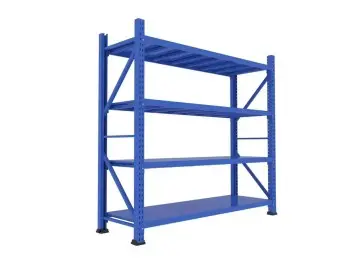
Heavy-duty boltless metal shelving units engineered for industrial hand-loading, archive storage, and workshop organization.
View Product Line
Versatile longspan shelving systems supporting 300 to 800 kg per level for non-palletized manual picking.
View Product Line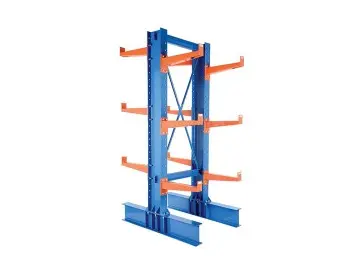
Adjustable arm racking specifically designed for medium-weight tubing, extruded plastics, and aluminum profiles.
View Product Line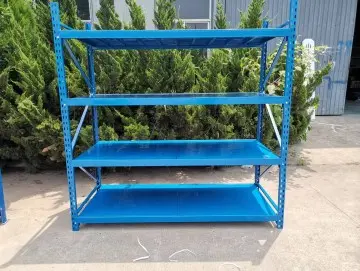
Rapid snap-in assembly shelving featuring high rigidity and adaptable shelf deck heights.
View Product Line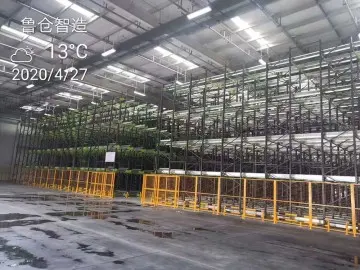
Deep lane shuttle racking system optimizing warehouse cubic space and accelerating pallet throughput.
View Specifications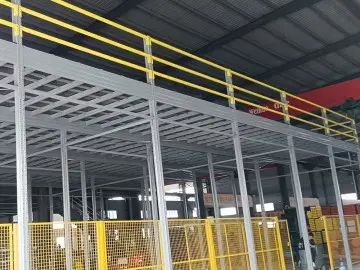
Custom engineered multi-story structural floor platforms designed for heavy industrial floor loading.
View Specifications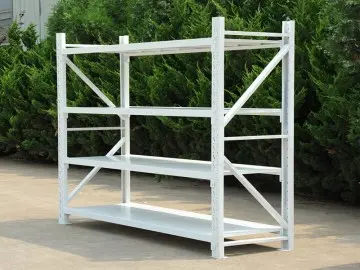
Economical multi-tier hand-pick shelving for bin storage, spare parts, and e-commerce picking.
View Product Line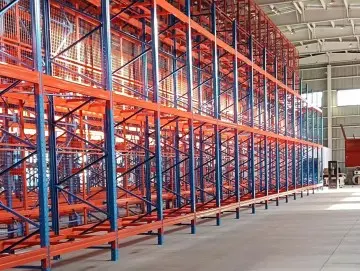
Industry-standard selective racking offering 100% pallet accessibility and heavy beam capacities.
View Product Line