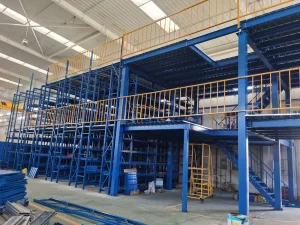


Select from precision-engineered racking configurations designed for high-density storage, structural integrity, and seamless integration with automated handling equipment.
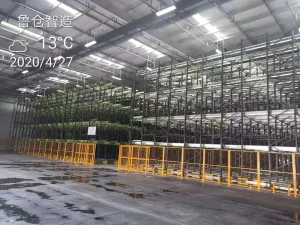
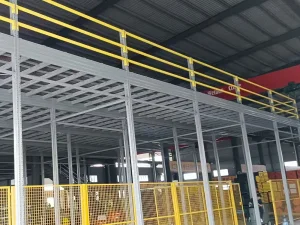
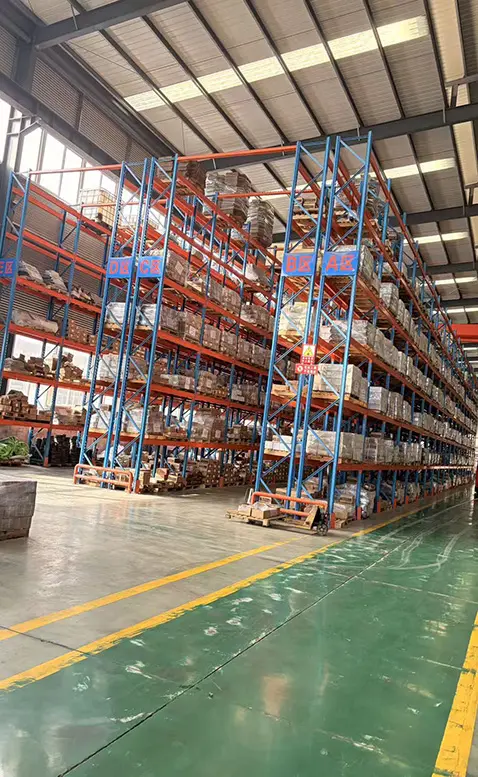
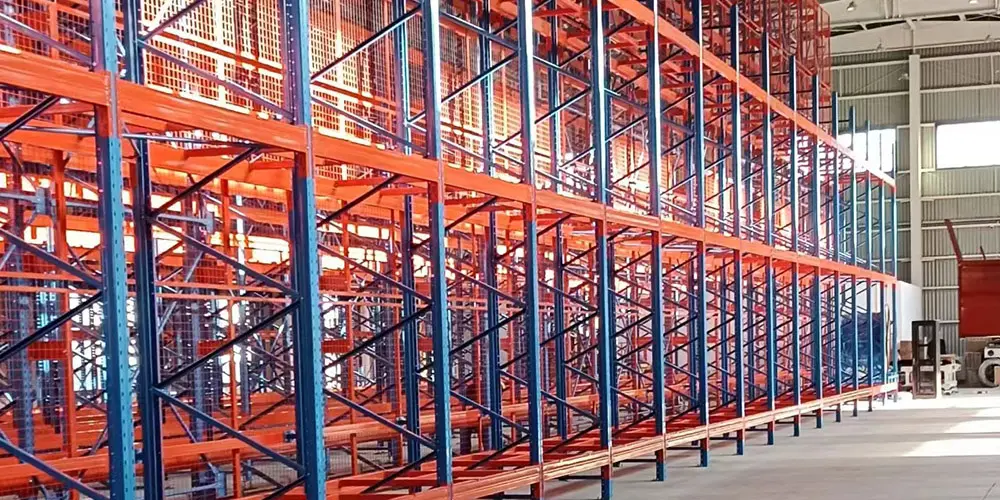
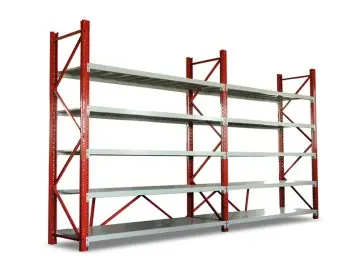
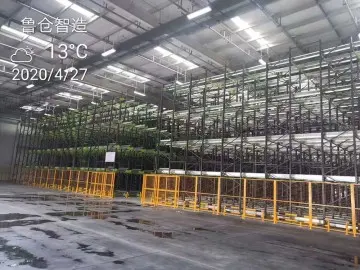
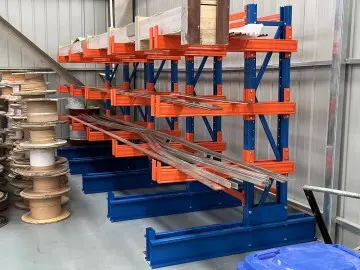
In the contemporary global logistics economy, commercial real estate expenditures have skyrocketed, forcing supply chain executives, warehouse logistics managers, and industrial procurement agents to maximize the volumetric efficiency of every square meter of floor space. As global industrial prime rents continue to climb annually across North America, Western Europe, and the Asia-Pacific region, static floor-based storage and traditional low-density racking configurations are no longer economically viable for enterprise operations.
Strategic procurement of wholesale metal rack storage solutions has transitioned from a routine capital equipment purchase to a critical engineering initiative. Industrial decision-makers are seeking high-density engineering topologies—such as multi-tier mezzanine steel platforms, automated radio shuttle channels, and push-back trolley tracks—that directly elevate cubic space utilization from a benchmark 35% up to 85% without necessitating expensive physical building footprint expansions.
Information Gain Insight: Structural integrity in modern pallet racking is governed not merely by static yield strength, but by structural dynamics under seismic loads and asymmetric loading conditions. Sourcing heavy-duty racking directly from qualified Chinese original equipment manufacturers (OEMs) provides customized finite-element-analyzed (FEA) cold-formed profiles that meet international FEM 10.2.02 and ANSI MH16.1 specifications at optimized structural weight-to-load ratios.
Enterprise procurement strategies for industrial storage equipment have undergone a radical transformation over the past decade. Modern procurement officers are no longer analyzing price-per-ton metrics in isolation; instead, they operate based on comprehensive Total Cost of Ownership (TCO) models that incorporate structural longevity, floor slab re-engineering costs, installation labor velocity, and future adaptability for automated guided vehicle (AGV) or autonomous mobile robot (AMR) integration.
Sub-zero environments (-25°C to -30°C) demand specialized low-temperature carbon steel chemistries (such as aluminum-killed fine-grain steels) paired with electrostatic epoxy-polyester powder coatings that prevent embrittlement, micro-cracking, and delamination under thermal cycling.
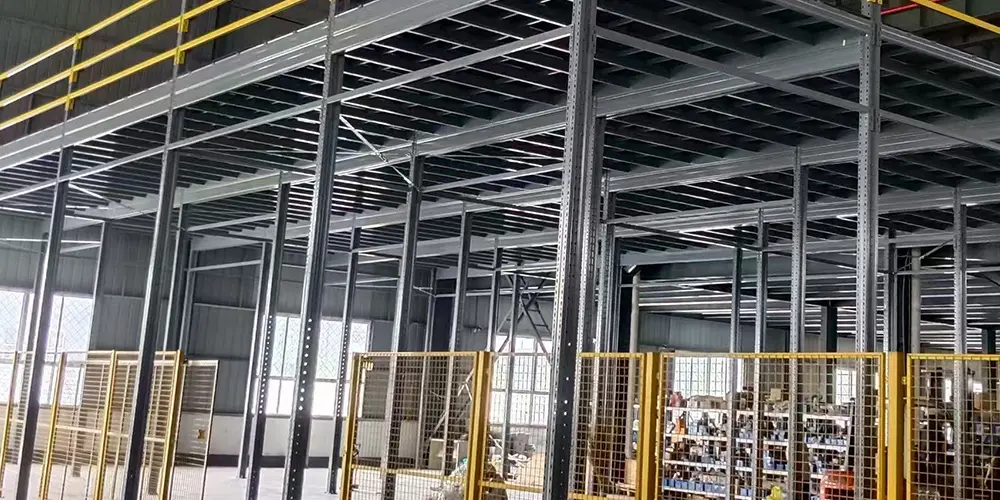
High-turnover SKU environments require dense, multi-tier rack-supported mezzanines integrated with carton-flow lanes and vertical conveyor shafts to maximize horizontal order-picking throughput across thousands of individual picking locations.
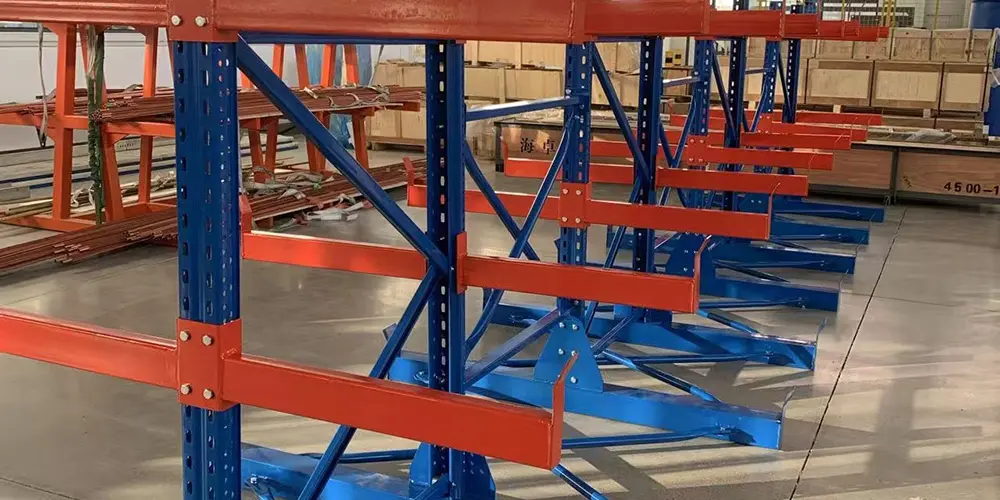
Heavy machinery manufacturing, automotive component storage, and steel sheet processing demand custom-engineered cantilever and heavy-duty beam racks capable of supporting point loads exceeding 4,000 kg per shelf beam level with minimal deflection.
The concentration of advanced metal fabrication ecosystems in China—specifically in heavy industrial hubs like Shandong Province—provides global procurement buyers with unmatched supply chain resilience, cost efficiency, and manufacturing velocity. Standardizing logistics technology operations with Chinese manufacturing leadership offers crucial architectural and commercial advantages:
Direct co-location with prime steel mills allows suppliers like Guake Logistics Technology to source certified Q235B and Q355B cold-rolled steel coils with verified mill test reports (MTRs), protecting buyers from raw material cost spikes and material inconsistency.
State-of-the-art continuous cold roll-forming mills punch, notch, and form upright profiles with sub-millimeter precision, guaranteeing exact slot alignment across 12-meter continuous vertical columns without residual torsional stress.
Multi-axis robotic welding cells execute structural beam connector welds under constant shielding gas coverage, followed by 9-stage automatic phosphate washing and thermocured powder coating exceeding 500 hours of salt-spray corrosion testing.
Compare core structural configurations, density metrics, selectivity profiles, and target handling equipment to identify the optimum system architecture for your facility layout.
| Racking System Type | Cubic Storage Density | Pallet Selectivity | Stock Access Flow | Typical Load Capacity | Ideal Industry Scenario |
|---|---|---|---|---|---|
| Selective Pallet Racking | Standard (40-50%) | 100% Direct Access | FIFO (First-In, First-Out) | 1,000 - 4,000 kg / level | High-SKU distribution, FMCG, retail logistics hubs |
| Drive-In / Drive-Thru Racking | Very High (75-85%) | Low (Per Lane Face) | LIFO / FIFO Option | 1,000 - 1,500 kg / pallet | Bulk homogeneous stock, cold rooms, seasonal inventory |
| Push Back Cart Racking | High (60-70%) | Medium (2-5 Pallets Deep) | LIFO (Last-In, First-Out) | 1,000 - 1,500 kg / cart position | Medium-SKU batch storage, staging lanes, food processing |
| Radio Shuttle Runner System | Maximum (80-90%) | Medium-High (Lane Control) | Software Configurable FIFO/LIFO | 1,500 kg / shuttle unit | Cold storage (-25°C), high-volume beverage, buffer storage |
| Electric Mobile Racking | Maximum (85-90%) | 100% (Moving Aisle) | FIFO / LIFO Flexible | 8,000 - 24,000 kg / mobile bay | High-value cold chain, pharmaceutical vaults, costly footprint |
| Mezzanine & Steel Platform | Multiplies Floor Area | 100% Manual / Conveyor Access | Custom Operational Flow | 300 - 1,000 kg / m² floor load | E-commerce order fulfillment, parts picking, light assembly |
Challenge: A third-party logistics (3PL) provider in Hamburg operated a cold storage center maintaining -28°C. Energy costs demanded maximum density without sacrificing throughput velocity.
Solution: Implementation of a custom multi-deep Radio Shuttle Racking System engineered with low-temperature lithium battery runner shuttles and high-ductility Q355B cold-rolled steel frames. Energy consumption per pallet position decreased by 38%, while storage density rose by 72%.
Challenge: An online retail fulfillment hub in Texas faced rapid SKU proliferation and severe floor space constraints ahead of peak shopping seasons.
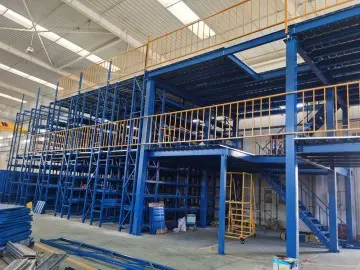
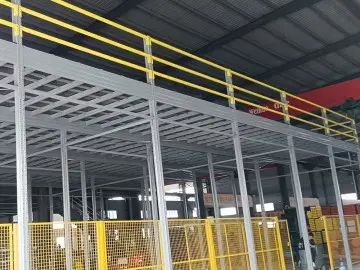
Solution: Deployment of a 3-tier rack-supported Mezzanine & Steel Structure Platform featuring integrated steel grating walkways, safety mesh guards, and gravity roll drop stations. Vertical building clear height was fully converted into 4,500 m² of active picking floor space.
Challenge: An auto parts manufacturer in Thailand required specialized heavy-duty racks to store long, non-standard metal stamping dies and structural body panels.
Solution: Custom heavy-duty Cantilever Racking Systems paired with high-capacity roll-formed box beams, calculated to absorb high impact forces from overhead crane loading without structural twist or frame displacement.
Industrial storage systems are structural steel assemblies that carry massive load burdens over prolonged operational lifecycles. Structural failures in high-bay racking systems can lead to catastrophic inventory loss, operational downtime, and life-safety hazards. Leading OEM suppliers adhere strictly to structural calculation methodologies governed by international standard codes:
Before steel fabrication commences, upright column profiles, connector teardrops, and beam-to-column locking hooks are subjected to non-linear FEA static and dynamic load simulations to calculate exact buckling factors and stress concentrations under maximum rated capacity.
Rack structures deployed in active seismic zones (Richer scale zones 3 and 4) are designed with enlarged baseplates, heavy-duty wedge anchor bolts, and horizontal/vertical back-to-back sway bracing to dissipate kinetic energy during seismic events.
Under full rated load conditions, beam deflection must not exceed L/200 (where L is the clear span beam length). This structural limit guarantees smooth forklift tine insertion and eliminates permanent plastic deformation over years of heavy cycling.
To produce an accurate structural design proposal and CAD layout, our engineering team requires:
Sourcing directly from tier-1 Chinese manufacturers like Guake Logistics Technology provides substantial cost efficiencies—typically offering 30% to 50% capital savings on equivalent structural steel tonnage. These cost advantages stem from integrated regional steel mill supply chains, automated high-throughput roll-forming technology, and lower fabrication overheads, while maintaining full compliance with international FEM and ISO structural standards.
Cold-rolled steel is passed through forming rollers at room temperature, producing superior surface finish, tighter dimensional tolerances, and higher yield strengths (e.g., Q235B / Q355B cold steel), making it ideal for precision upright profiles and beam connectors. Hot-rolled steel structural sections (such as I-beams and structural channels) are typically utilized for heavy-duty structural steel platforms, heavy mezzanine main beams, and specialized extra-heavy-duty cantilever columns.
All component parts are bundled using heavy-duty plastic strapping, corrugated edge protectors, and waterproof stretch film wrapping. Upright frames, beams, and shelf panels are secured on reinforced wooden or steel cradles designed for rapid forklift unloading from 40ft High Cube (40HC) shipping containers, protecting painted powder coatings against sea humidity, vibration, and mechanical abrasion.
Yes. Every rack supply project is supplied with comprehensive structural installation drawings, numbered component packing lists, and step-by-step assembly guides. For large-scale multi-tier mezzanines, mobile rack installations, or automated shuttle projects, we dispatch experienced installation supervision engineers to site to oversee local labor installation, system commissioning, and safety inspection certification.
Explore our factory-direct industrial product portfolio. Request custom engineering dimensions, load capacity testing documentation, and direct manufacturer pricing.