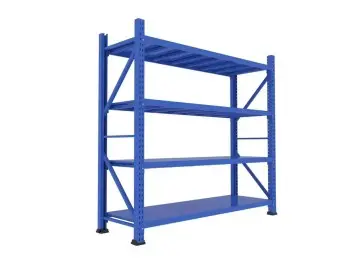
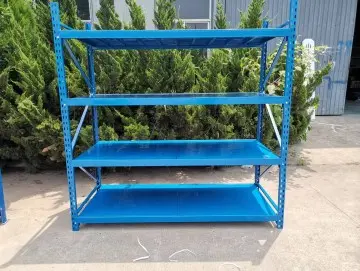
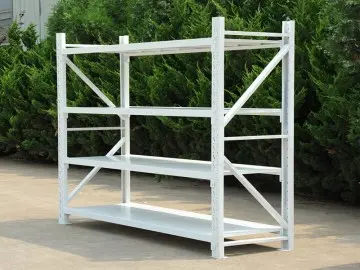
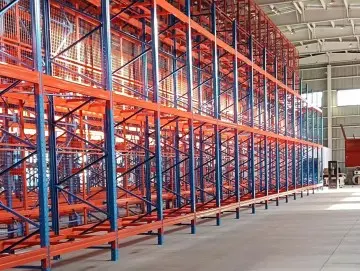
Select high-capacity pallet racking hardware designed for heavy-duty industrial application and maximum volume density.
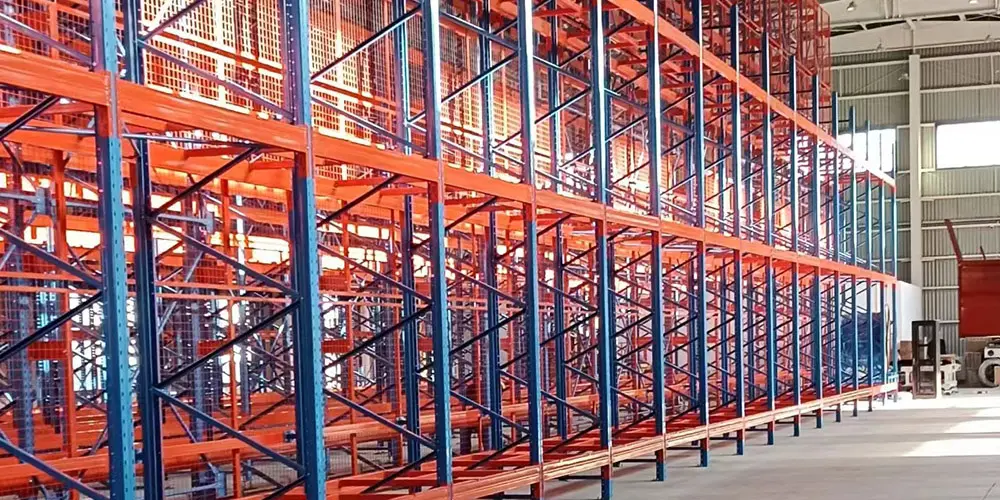
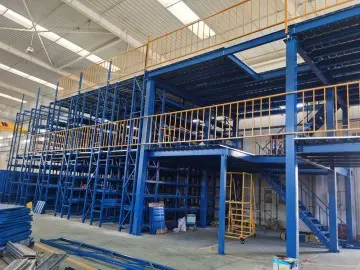
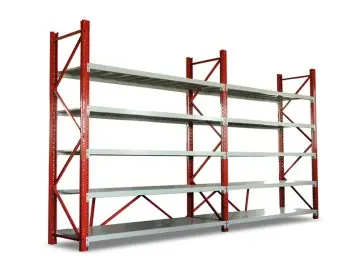
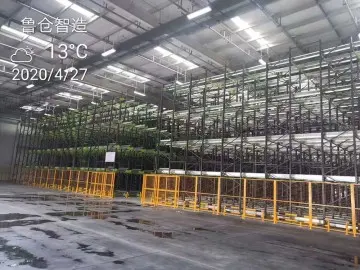
An authoritative engineering guide for supply chain executives, warehouse logistics engineers, and global procurement officers.
In modern industrial logistics, calculating Pallet Rack Capacity requires an exact balance of structural mechanics, cold-formed steel metallurgy, and operational risk mitigation. Pallet racking is not simply static shelving; it is an engineered structural matrix subjected to multi-axial stress, dynamic forklift impact loads, operational vibrations, and localized floor slab displacements.
At Guake Logistics Technology (Shandong) Co., Ltd., every racking system is engineered in accordance with international design standards, including the Rack Manufacturers Institute (RMI MH16.1) specifications in North America and FEM 10.2.02 / EN 15512 standards across Europe. Calculating safe rack capacity relies on evaluating three distinct weight limit threshold metrics:
The maximum evenly distributed load (UDL) a pair of horizontal beams can support without exceeding a maximum deflection limit of L/180 (where L is the clear beam length span).
The total vertical compression force an upright frame can withstand. Frame capacity drops significantly as beam elevation height (unbraced vertical length) increases.
The specific point-load tolerance of steel decking, wire mesh, or support bars placed beneath concentrated pallet footprints (e.g., GMA, Euro pallets, or custom skid runners).
The total load capacity of wholesale racking systems is fundamentally tied to material selection. Guake utilizes structural grade high-tensile cold-rolled steel profiles (predominantly Q235B and Q355B structural steel grades, equivalent to SS400 and S355 Jr). The yield strength ($\sigma_y$) of Q355B steel reaches $355\text{ MPa}$, granting our upright columns higher resilience against frame buckling under eccentric compressive loads.
During cold-roll forming, continuous steel strips pass through precision progressive rollers, inducing strain hardening that increases local yield strength at column corners. This structural profiling allows Guake uprights to achieve superior strength-to-weight ratios compared to standard structural channel profiles.
How global enterprise buyers are adapting storage architecture to counter rising real estate costs and high-throughput automation demands.
With urban logistics real estate costs climbing globally, enterprises are expanding vertically up to 15-30 meters. This vertical scaling demands high-rigidity heavy-duty upright frames capable of bearing top-tier loads exceeding 25,000 kg per bay without lateral sway.
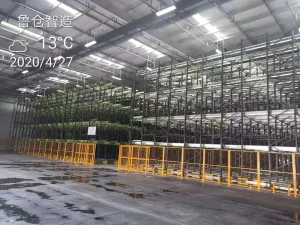
Cold storage logistics operating at $-25^\circ\text{C}$ to $-30^\circ\text{C}$ require specialized steel formulations that maintain ductile toughness without embrittlement. Ultra-dense systems like Radio Shuttle Racking increase refrigeration volume efficiency by up to 85%.
Modern buyers are shifting from purely manual forklift selective racks to semi-automated and automated systems. These setups require tighter fabrication tolerances (under $\pm 1.0\text{ mm}$ beam deviation) to guarantee smooth robot transit.
Cross-system structural parameters to aid procurement teams in specifying systems aligned with operational load requirements.
| Racking System Classification | Typical Load Capacity / Level | Max Bay Load Capacity | Storage Density Rating | Selectivity & Access | Recommended Industrial Use |
|---|---|---|---|---|---|
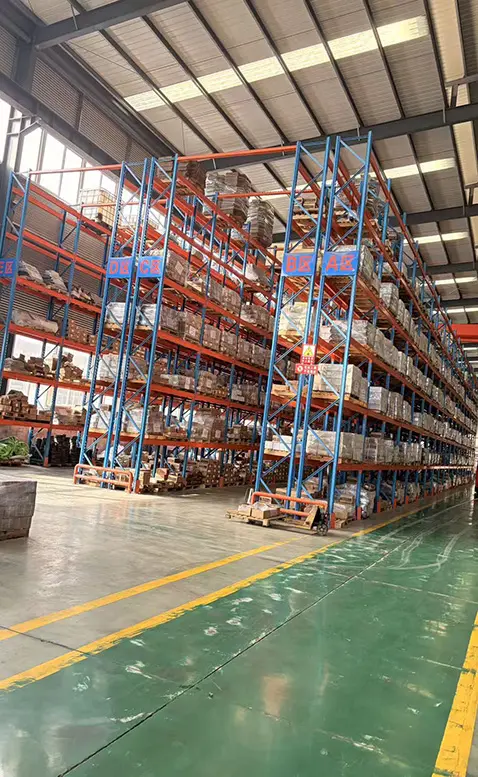
| Heavy-Duty Selective Pallet Racking | 1,000 kg – 4,500 kg | Up to 24,000 kg | Standard (60%) | 100% Immediate Direct Access | General Logistics, High-SKU Warehousing |
| Drive-In Racking System | 1,000 kg – 1,800 kg / Pallet | Up to 18,000 kg | Very High (85%) | LIFO (Last-In, First-Out) | Bulk Homogeneous Goods, Cold Storage |
| Push Back Racking System | 1,000 kg – 1,500 kg / Pallet | Up to 16,000 kg | High (75%) | LIFO (2 to 5 Pallets Deep) | Medium SKU Diversity, Fast Batching |
| Radio Shuttle Racking System | 1,000 kg – 2,000 kg / Pallet | Up to 30,000 kg | Ultra-High (90%) | FIFO or LIFO Automated | Beverage Distribution, High-Throughput Cold Stores |
| Motorized Mobile Racking | 1,000 kg – 3,500 kg / Level | Up to 36,000 kg / Base | Maximum (95%) | 100% Selectivity (Moving Aisle) | High-Cost Real Estate, Cold Storage Facilities |
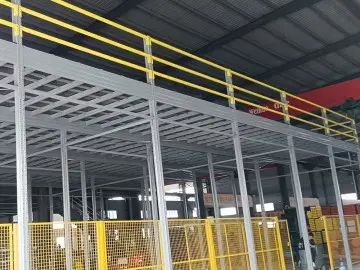
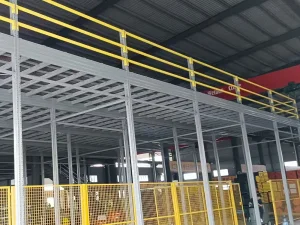
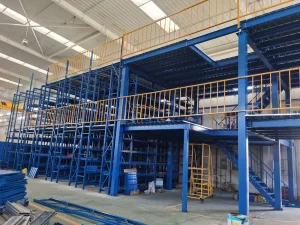
| Mezzanine & Steel Platform | 300 kg – 1,200 kg / m² | Custom Structural Load | Doubles/Triples Floor Space | Multi-Tier Walkway Access | E-commerce Picking, Assembly, Modular Office Space |
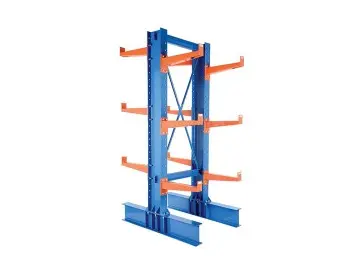
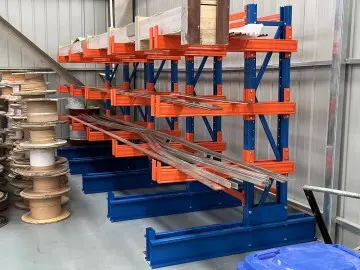
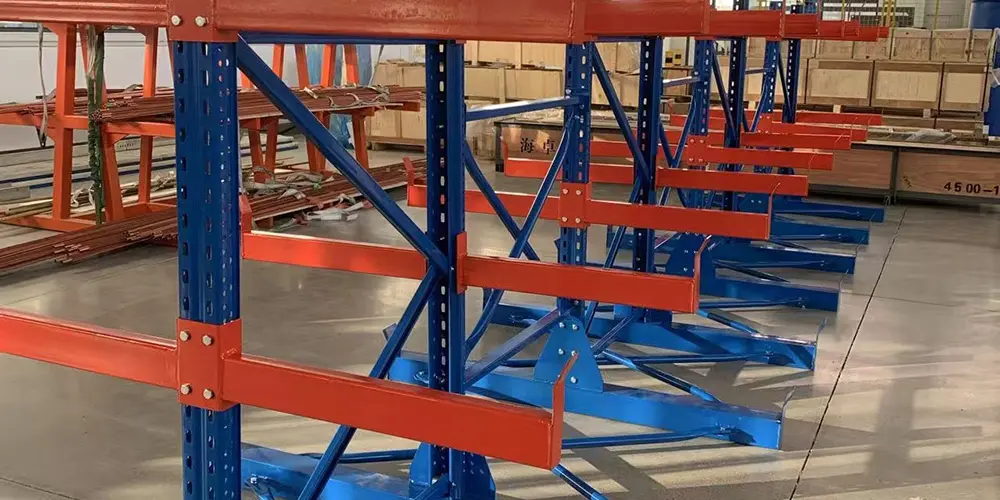
| Cantilever Racking System | 500 kg – 3,000 kg / Arm | Up to 20,000 kg | Specialized for Long Loads | 100% Side Loading Clearance | Pipes, Steel Profiles, Lumber, Sheet Metal |
How Guake integrates advanced structural mechanics, seismic engineering, and impact safety into turn-key racking designs.
The stability of a selective racking frame relies heavily on the flexural rigidity of the connection between the upright column and horizontal beam. Guake engineers utilize custom-stamped multi-claw connector brackets (4-hook and 5-hook designs) with tapered lock slots.
Under vertical loading, the downward wedge action tightens the connector against the column face, minimizing rotational hinge deformation. Every beam connection is fitted with an automatic safety drop-lock pin that withstands dynamic upward dislodgement forces over $1,000\text{ kg}$, preventing accidental dislodgement from forklift mast movement.
For installations in seismic zones (conforming to USGS or Eurocode 8 seismic parameters), rack structural calculations must account for horizontal shear and vertical acceleration vectors. Guake designs seismic moment-resisting upright bases utilizing heavy-gauge baseplates anchored directly into reinforced concrete slabs via chemical expansion bolts.
By integrating cross-aisle and top-beam portal bracing networks, lateral sway displacement ($\Delta$) is maintained within strict safety margins, mitigating frame collapse risks during seismic events.
From raw coil verification to international structural certification and global on-site assembly guidance.
Guake maintains ISO9001 and ISO14001 quality management systems. Raw steel shipments undergo tensile strength testing, weld seam ultrasonic inspections, and powder coating thickness verification ($60\text{–}90\,\mu\text{m}$ electrostatically cured coating).
Export shipments require specialized packing strategies to prevent transport damage. Uprights and beams are bound into wood-cradled bundles with protective corner edge guards, maximizing sea container cube space utilization.
We provide comprehensive structural CAD layouts, 3D step-by-step assembly guides, and detailed component load placement markers. For major international logistics projects, Guake can dispatch experienced installation engineers on-site.
How structural sensors, IoT load telemetry, and ultra-high-strength steel alloys are shaping next-generation warehouse racking.
Future pallet rack systems are integrating micro strain-gauge sensors directly into main load beams. These sensors trigger immediate safety warnings if forklift operators place pallet loads exceeding maximum rated beam capacity, feeding real-time telemetry into the Warehouse Management System (WMS).
As autonomous material handling equipment replaces traditional forklifts, bottom rack levels are designed with flush-mounted structural base rails and optical reflector targets to aid precise autonomous navigation and drop-off accuracy.
Advancements in HSLA cold-rolled steel manufacturing allow Guake to reduce component structural tare weight while maintaining identical yield strength parameters. This reduces raw material consumption and container transport carbon footprint per storage bay.
Answers to common structural design and procurement queries encountered by warehouse logistics planners.
Beam load capacity is governed by both structural yield strength (flexural stress) and maximum allowable deflection limits. Per RMI MH16.1 and FEM standards, under maximum Uniformly Distributed Load (UDL), a pair of load beams must not deflect vertically by more than 1/180th of their clear span length (Deflection limit = L / 180). For example, a 2700mm (9-foot) beam must not bend more than 15mm under full rated load. Exceeding this limit compromises load stability and risks permanent structural beam sag.
The elevation height of the lowest beam level (unbraced vertical length) directly impacts the Euler buckling strength of upright frames. Raising the first beam level from 1.5 meters to 2.2 meters increases the column’s effective slenderness ratio ($\lambda$), reducing total upright load capacity by up to 20–30%. Upright capacities must always be evaluated based on the specific vertical beam spacing layout of the warehouse design.
Static capacity refers to the maximum dead-weight stationary load a rack system can support safely when goods are completely at rest. Dynamic load accounts for temporary mechanical forces introduced during operation, such as forklift impacts, acceleration during pallet placement, or motorized movements in Mobile Racking Systems and Radio Shuttle Racks. Structural safety factors (typically 1.65 to 1.94) are incorporated to safely absorb these operational impact forces.
In high-density lane systems like Drive-In Racking, pallets rest on continuous cantilevered side rails rather than full-width cross beams. This creates eccentric bending moments on the upright columns. To offset this, Guake utilizes heavy-gauge structural stiffeners, robust top portal bracing, and back-to-back frame ties that transfer torsional forces across adjacent frames, maintaining system rigidity.
Yes. As a direct original equipment manufacturer, Guake customizes upright column profiles, beam cross-sections, material thicknesses, bay depths, clear beam lengths, and deck accessories to match your exact pallet dimensions and forklift operating clearances. Powder coat surface finishes can be customized to any standard RAL color palette for operational zoning or corporate identification.
Heavy-duty warehouse racking requires a level, reinforced industrial concrete slab with a minimum compressive strength of 25–30 MPa (C25/C30 concrete grade) and minimum slab thickness of 150mm to 200mm. The slab must be capable of bearing point-load forces transmitted through upright baseplates, which can exceed 5,000 kg per post in high-bay setups.
Complete warehouse infrastructure solutions for manufacturing facilities, logistics hubs, and retail distribution centers.