
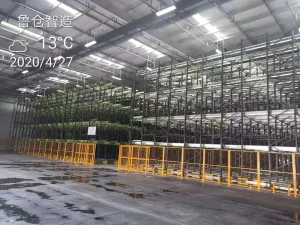
China Shuttle Racking (Pallet Shuttle System)
Semi-automated deep lane pallet storage utilizing radio-controlled shuttles for maximum volume optimization.
Request Spec Sheet


Engineered to satisfy stringent global structural codes including EN 15512, ANSI/RMI MH16.1, and FEM 10.2.02. Explore our primary heavy-duty warehouse storage configurations.
Semi-automated deep lane pallet storage utilizing radio-controlled shuttles for maximum volume optimization.
Request Spec Sheet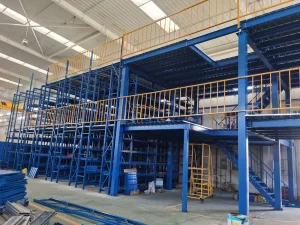
Multiply usable warehouse floor space vertically with heavy-duty structural steel platform systems.
Request Spec Sheet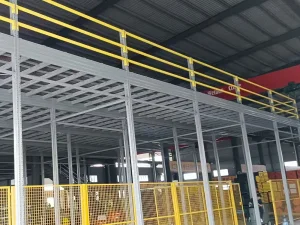
Heavy-duty beam-supported platforms designed for industrial equipment mounting and upper-floor picking.
Request Spec Sheet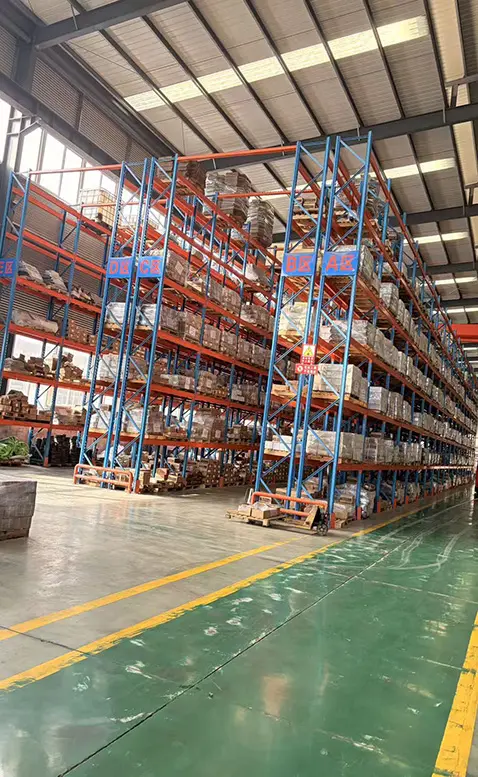
Eliminate working aisles for homogeneous batch goods with continuous lane pallet rail support.
Request Spec Sheet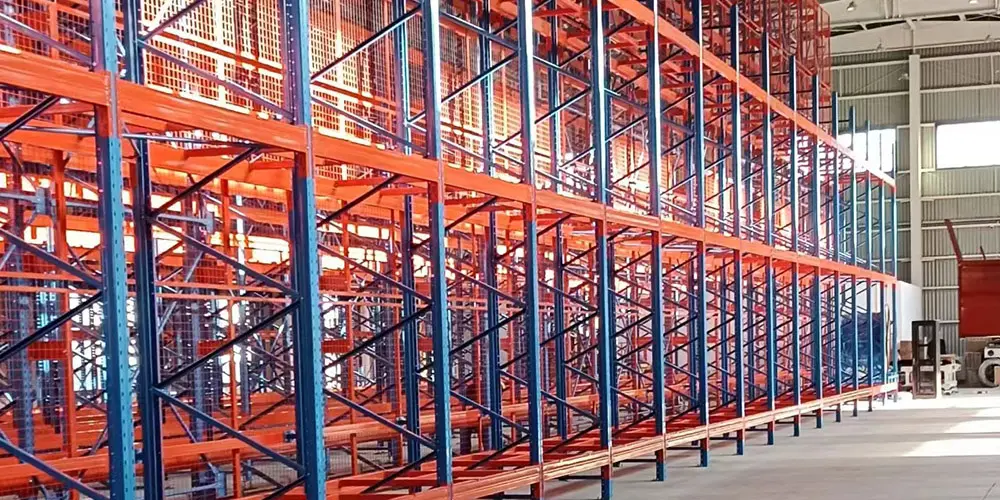
Nested cart technology supporting 2 to 6 pallets deep per lane with Last-In, First-Out (LIFO) order handling.
Request Spec Sheet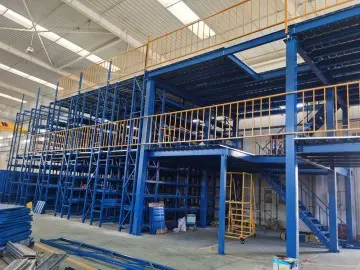
Custom bolted structural steel floor extensions engineered for high uniform live load capacities.
Request Spec Sheet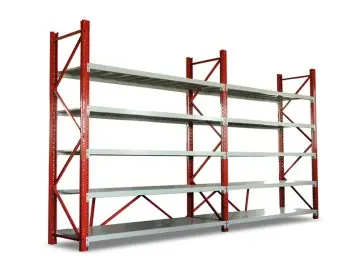
Electronically driven rack bases sliding along floor rails to achieve 100% pallet selectivity with 80% space saving.
Request Spec Sheet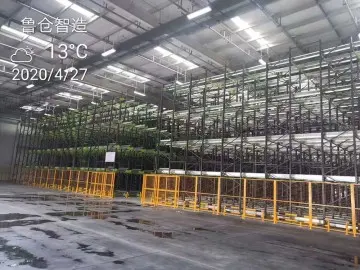
High-speed automated shuttle solution supporting both FIFO and LIFO storage logic in cold and dry storage.
Request Spec SheetIn modern industrial manufacturing plants, automated logistics hubs, and commercial fulfillment centers, the installation of heavy-duty pallet racking systems is far more than a simple assembly task—it is a critical civil and structural engineering operation. When procurement managers and facility directors source wholesale pallet racking systems directly from China factories, ensuring flawless execution during site erection dictates the operational safety, structural lifespan, and regulatory compliance of the entire logistics facility.
This authoritative technical whitepaper outlines the essential engineering prerequisites, floor slab tolerances, seismic anchoring dynamics, and installation protocols required to install industrial storage systems safely. By maintaining strict alignment with international structural standards—including **ANSI/RMI MH16.1** (Specification for the Design, Testing and Utilization of Industrial Steel Storage Racks), **EN 15512** (European Standard for Steel Static Storage Systems), and **FEM 10.2.02**—this guide delivers actionable insights that minimize lifecycle risk and maximize storage density for global enterprise projects.
Prior to unboxing components manufactured at our Shandong production base, factory conditions must be rigorously assessed by qualified structural engineers. Failing to comply with floor slab requirements or vertical tolerances can lead to catastrophic rack collapses, localized frame buckling, and invalidation of structural warranties.
The warehouse floor slab acts as the foundational load-bearing element. Industrial pallet rack upright footplates exert concentrated point loads (punching shear forces) that can exceed 100 kN per post in high-bay setups.
Unlevel floors induce bending moments in racking columns and alter forklift mast angles, heightening collision risks during high-level pallet placement.
Precision vertical alignment prevents eccentric axial loading on cold-formed upright profiles.
| Parameter / Parameter Category | Standard Selective Racking | Radio Shuttle / Push-Back Racking | ASRS Automated High-Bay Racking |
|---|---|---|---|
| Max Frame Verticality (Out-of-Plumb) | H / 500 (Max 25mm) | H / 750 (Max 15mm) | H / 1000 (Max 10mm) |
| Concrete Compressive Strength ($f'_c$) | ≥ 25 MPa (3,600 PSI) | ≥ 30 MPa (4,350 PSI) | ≥ 35 MPa (5,000 PSI) |
| Anchor Bolt Specification | M12 × 100mm Mechanical Wedge | M12 / M16 Expansion / Chemical | M16 × 150mm High-Tensile Chemical |
| Max Allowable Beam Deflection | L / 200 of Clear Span | L / 250 of Clear Span | L / 300 to L / 400 Span Limit |
| Clearance to Building Structure | ≥ 100mm Overhead / Wall | ≥ 150mm Overhead / Wall | ≥ 200mm Laser Survey Clearance |
The factory storage ecosystem is undergoing a dramatic shift toward digital integration, real-time structural monitoring, and robotic automation. As global warehouses transition into Industry 4.0 Smart Logistics Hubs, installation requirements are evolving to support physical structures coupled with intelligent electronic feedback loops.
Modern heavy-duty racks are increasingly fitted with integrated strain gauges, optical deflection sensors, and IoT-enabled vibration monitors. These sensors detect real-time overload conditions, dynamic forklift impacts, and micro-settlement of concrete foundations before structural failure occurs.
Future-proof racking installations require millimeter-precise floor embedding of magnetic tracks, QR-code grid matrices, and charging station anchor points. Racking upright footprints are engineered with recessed baseplates to allow seamless navigation of floor-running AMRs and AGVs.
By combining BIM (Building Information Modeling) layout data with operational WMS metrics, logistics managers can visualize structural strain heatmaps. Annual inspection routines shift from manual visual checks to predictive digital twin maintenance algorithms.
Different manufacturing sectors impose vastly different physical environments and operational stress profiles on storage infrastructure. Custom engineering and targeted material selection are vital to long-term reliability.
Challenge: Low temperatures (down to -30°C) induce steel embrittlement and thermal contraction.
Requirement: High-ductility steel grades (Q355E / S355JR with impact testing at sub-zero temps), specialized anti-freeze epoxy powder coating, and thermal break plates beneath upright baseplates.
Challenge: Concentrated heavy loads such as stamping dies, engine blocks, and steel coils.
Requirement: Heavy cantilever racks and structural steel platforms reinforced with custom saddles, impact-resistant column guards, and dual-anchor baseplates.
Challenge: Rapid SKU turnover, frequent layout reconfigurations, and mixed picking models.
Requirement: Hybrid racking systems combining high-level selective pallet storage with lower-tier carton live flow tracks and modular mezzanine floors.
Challenge: Massive volume, strict FIFO/LIFO rotational compliance, and high throughput.
Requirement: Radio shuttle systems and drive-in racks engineered with heavy-duty guide rails, pallet entry funnels, and automated shuttle charging docking bays.
Global logistics projects require seamless localization to pass local authority building plan reviews, fire marshal inspections, and structural engineering sign-offs. Installing racking components without certified structural calculation packages tailored to the site location risks project shutdown or severe liability.
Guake's engineering department utilizes finite element analysis (FEA) to simulate seismic accelerations ($S_s, S_1$ coefficients per IBC / Eurocode 8). Racking frames installed in active seismic zones feature heavy-duty diagonal horizontal bracing, enlarged seismic baseplates, and ductile floor anchors to prevent sway-induced collapse.
We provide comprehensive engineering packages—including static load calculations, seismic analysis reports, and connection detail drawings—ready for endorsement by local licensed Professional Engineers (PE) across North America, Europe, Australia, and the Middle East.
Installation layouts strictly adhere to NFPA 13 fire code mandates. Our designs enforce mandatory longitudinal flue spaces (minimum 150mm between double-row racks) and transverse flue spaces to allow unobstructed operation of ceiling sprinklers and in-rack fire suppression systems.
Located in Linyi, Shandong Province—one of China’s premier steel fabrication and industrial manufacturing logistics hubs—Guake Logistics Technology (Shandong) Co., Ltd. leverages a world-class manufacturing infrastructure established in 2010. By controlling the complete value chain from raw steel coil procurement to continuous cold roll-forming, automated robotic welding, and electrostatic powder coating, we offer unmatched delivery speed and structural consistency.
Our factory operates advanced continuous cold roll-forming production lines capable of punching and profiling heavy uprights up to 15 meters in a single pass. Automated CNC punching ensures pitch hole accuracy within ±0.1mm, enabling rapid, drop-in field assembly without manual reaming or forced fitting.
Beam end-connectors are welded to box beams using multi-axis robotic MIG welding stations, guaranteeing 100% full-penetration weld integrity per ISO 3834-2. All components undergo a 5-stage automatic pre-treatment process followed by thermosetting epoxy powder coating (thickness 60–90μm, cross-hatch adhesion ASTM D3359 Class 5B).
Eliminating intermediaries translates to a 20%–35% procurement cost reduction for enterprise clients. Our logistics packaging team optimizes ocean container stuffing (utilizing custom steel skids and protective bundling), ensuring high cube utilization in 40ft HQ containers without damage during transit.
For multinational corporations drafting Requests for Proposals (RFPs) for factory warehouse installations, establishing standardized technical criteria ensures smooth vendor evaluation and avoids costly post-installation disputes. Below is our recommended procurement checklist:
| Procurement Requirement Category | Factory Compliance & Verification Protocol | Guake Assurance Standard |
|---|---|---|
| Raw Material Traceability | Mill Test Reports (MTR) per EN 10204 Type 3.1 verifying yield strength, tensile strength, and chemical composition. | 100% Prime Steel from top-tier mills (BaoSteel / Shougang Group) with mill certificates supplied per batch. |
| Quality Management System | ISO 9001:2015 certification covering design, manufacturing, and installation service. | Certified ISO 9001 factory system with full batch inspection records retained for 10 years. |
| Factory Acceptance Testing (FAT) | Full-scale destructive component load testing for beam connector clips, upright stub columns, and floor anchors. | Third-party test reports (SGS / TÜV) available confirming structural safety factors (> 1.65 per RMI). |
| Field Assembly Guidance | Provision of 3D erection drawings, component mark lists, torque charts, and certified site installation supervision. | Complete CAD/BIM installation packages, step-by-step video guides, and on-site engineer deployment options. |
From heavy cantilever storage to light multi-tier shelving, Guake designs integrated systems tailored to your unique operational workflow.
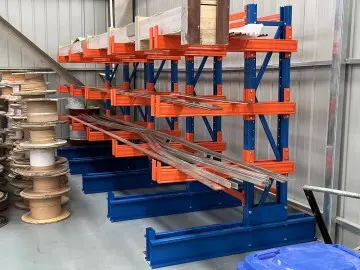
Tailor-made structural racks for irregular shapes, heavy rolls, tires, and non-standard industrial loads.
View Product Specs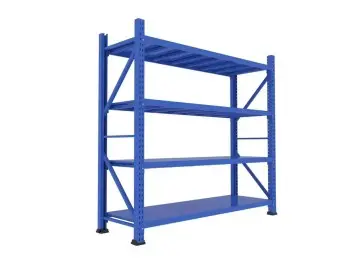
Modular boltless steel shelving units engineered for maintenance workshops and hand-pack storage.
View Product Specs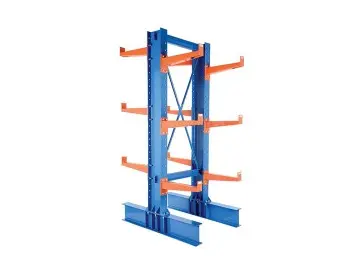
Unobstructed front arm storage for pipes, steel profiles, timber, and long raw materials.
View Product Specs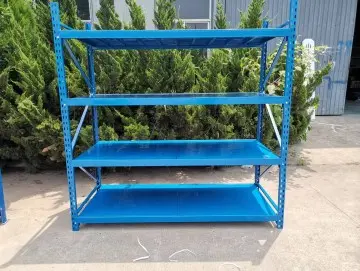
Rapid snap-in assembly shelving ideal for light manual picking and fulfillment inventory.
View Product Specs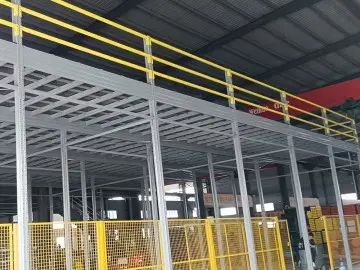
Wide-span steel column-supported decks creating overhead space for office or assembly zones.
View Product Specs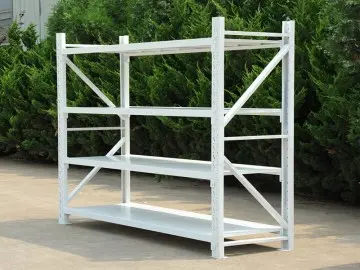
Multi-tier walkways integrated with light shelving for high-density small parts operations.
View Product Specs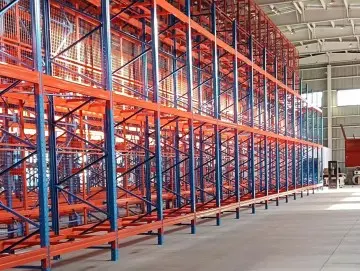
Versatile selective pallet rack configurations with adjustable beam pitch for multi-SKU storage.
View Product Specs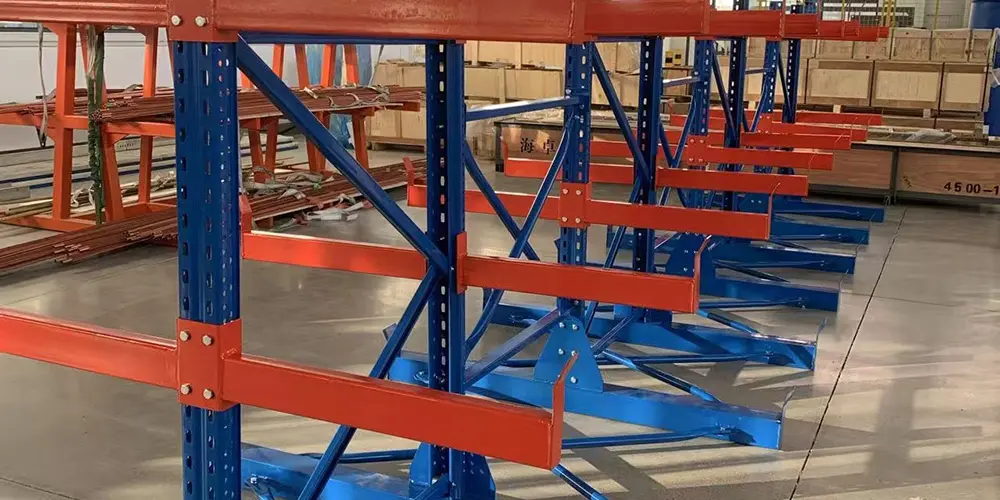
Heavy column and arm structures engineered for outdoor or indoor long goods, bar stock, and tubing.
View Product SpecsReview our engineering team’s detailed answers to critical installation, compliance, and procurement questions commonly raised by international enterprise buyers.
For standard selective pallet racking up to 8 meters in height, the floor slab must have a minimum concrete compressive strength ($f'_c$) of 25 MPa (approx. 3,600 PSI) and a non-reinforced or mesh-reinforced slab thickness of at least 150mm. For high-bay, radio shuttle, or VNA installations exceeding 10 meters, a minimum 200mm to 250mm slab thickness with 30–35 MPa concrete strength is required. Additionally, the floor must comply with ASTM E1155 flatness numbers ($F_F 25 / F_L 20$ minimum for standard racking; $F_F 50 / F_L 45$ for automated/VNA racking).
Site installation teams utilize optical laser transits and total stations to verify upright frame verticality during assembly. According to EN 15512 and RMI MH16.1 specifications, the maximum allowable out-of-plumb ratio under no-load conditions must not exceed 1/500 (0.002) of the total rack height. Certified steel shims (ranging from 1mm to 5mm thickness) matching the footprint of the baseplate are placed beneath upright posts to correct minor floor slope variations before final anchor bolt torque application.
In high seismic acceleration areas (Zones 3 and 4 per IBC), chemical resin capsule anchors or high-performance undercut mechanical expansion anchors (e.g., M12 or M16 anchor rods) are mandatory. Anchor embedment depths typically range between 100mm and 160mm into the concrete slab. Torque wrench settings must strictly follow structural engineering specifications—typically 40–50 Nm for M10 bolts, 70–80 Nm for M12 bolts, and 110–130 Nm for M16 heavy-duty bolts.
Guake Logistics Technology provides full engineering documentation packages for every project. This includes static structural analysis reports, 2D layout drawings, 3D BIM models, and component material test certificates (MTRs per EN 10204 3.1). We collaborate directly with third-party engineering consultancies in North America, Europe, Australia, and the Middle East to provide stamped Professional Engineer (PE) structural calculations compliant with local municipal codes.
Cold storage installations (-20°C to -30°C) require high-toughness steel grades such as Q355E, which undergo Charpy V-notch impact testing at low temperatures to prevent brittle fracture. Additionally, non-compressible thermal isolation pads must be installed beneath upright footplates to prevent cold bridge transmission into sub-floor insulation. Special low-temperature assembly fasteners and frost-resistant powder coatings are strictly mandated.
Standard factory manufacturing lead times range from 14 to 25 days depending on project tonnage. Our dedicated shipping department designs custom steel frame cradles and bundling configurations to maximize load density in 40ft High Cube (40HQ) ocean containers. Uprights and beams are bundled with steel strapping, edge corner guards, and moisture-barrier shrink wrap to ensure components arrive without surface abrasion or structural deformation.