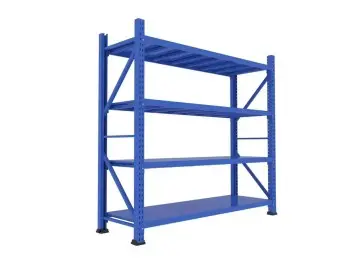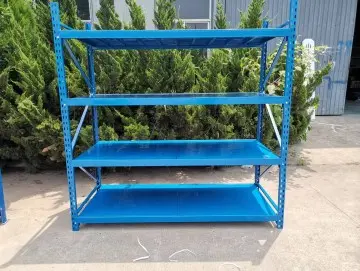
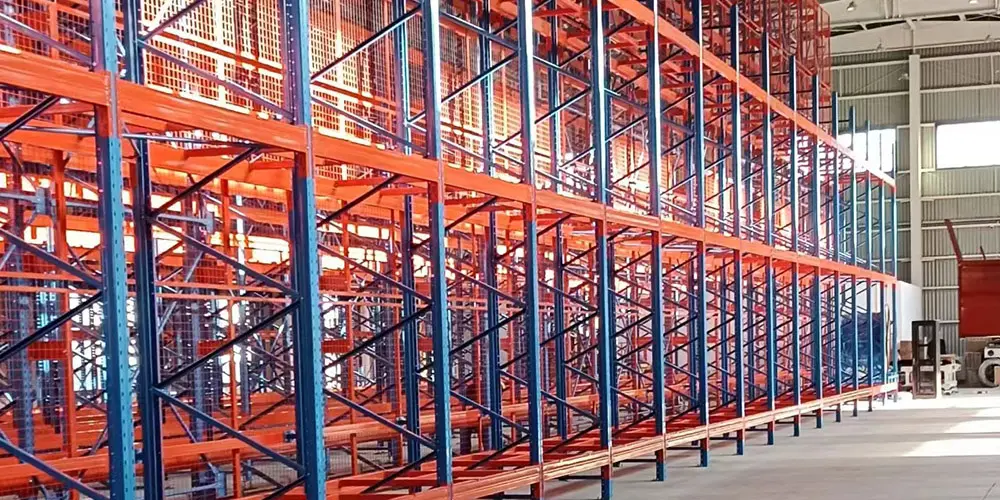
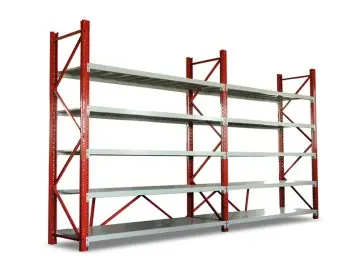
Industrial rack load capacity relies on the structural physics of cold-formed high-tensile steel profiles (Q235B and Q355B grades). By engineering complex multi-ribbed upright cross-sections with continuous roll-forming techniques, beam load profiles achieve maximum moment of inertia ($I_x, I_y$) while minimizing total structural tare weight. Deflection thresholds are rigidly maintained under full payload stress to conform with maximum allowable deflection standards ($L/180$).
Calculating legitimate rack capacity requires separating uniformly distributed static loads (UDL) from dynamic operational impacts. Upright frames must resist combined axial compression, eccentric load moments, and lateral forces introduced by material handling equipment (MHE) dynamic braking and placement impact. Structural safety coefficients ($\gamma = 1.65$) account for thermal variances, floor slab settlement, and seismic accelerations.
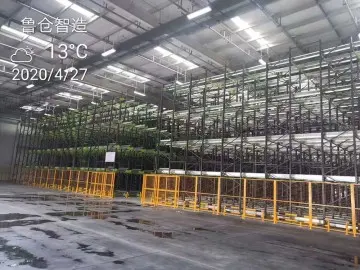
Macroeconomic shifts—specifically real estate cost appreciation and supply chain nearshoring—mandate vertical warehouse expansion over horizontal footprint enlargement. High-capacity racking systems enable facility operators to scale overhead storage height from standard 6-meter baselines to 40-meter Automated Storage & Retrieval System (ASRS) high-bay structures, effectively quadrupling cubic load density.
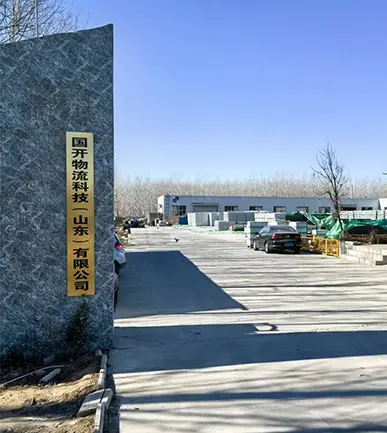
Guake Logistics Technology (Shandong) Co., Ltd. has established factory-direct manufacturing excellence since 2010. Operating out of Linyi, Shandong, our engineering teams combine finite element analysis (FEA), automated robotic welding, and automated surface treatment to produce heavy-duty racking systems designed for intense commercial duty cycles worldwide.
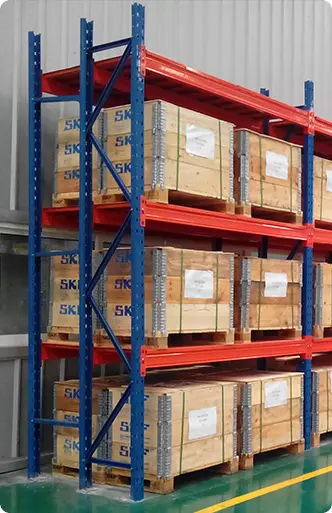
Capacity Range: 1,000 kg – 4,500 kg per level.
Selectivity: 100% Immediate Access.
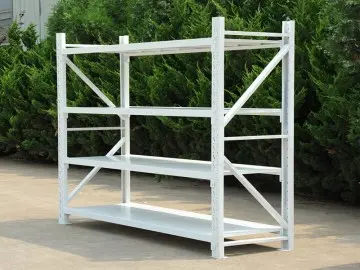
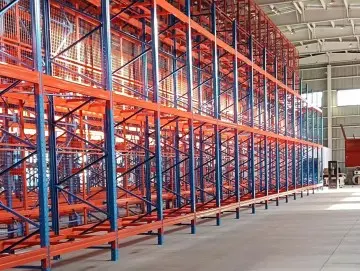
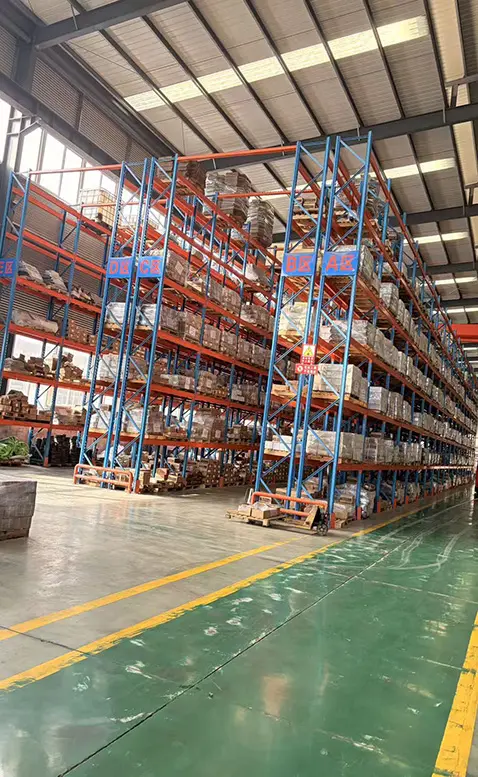
Engineered with box beams and teardrop or diamond upright slots. Offers universal compatibility with reach trucks and counterbalanced forklifts, making it ideal for high-SKU distribution networks.
Capacity Range: Up to 1,500 kg per pallet shuttle vehicle.
Storage Density: Ultra-High (Deep Lane LIFO/FIFO).
Semi-automated battery shuttle vehicles travel inside guided channel rails, removing the need for forklifts to enter storage lanes. Optimized for cold chain operations.
Capacity Range: 500 kg – 1,500 kg per nested cart.
Lane Depth: 2 to 5 Pallets Deep.
Pallets rest on nested wheel carts riding inclined steel structural rails. Loading pushes back preceding pallets; unloading allows gravity to roll remaining pallets forward.
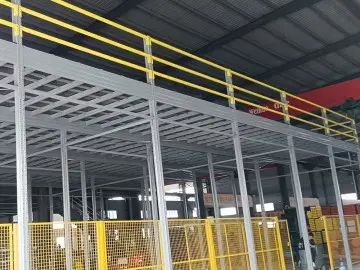
Capacity Range: 300 kg – 1,500 kg/m² structural floor load.
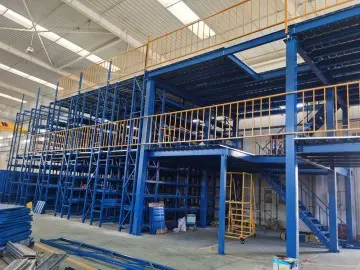
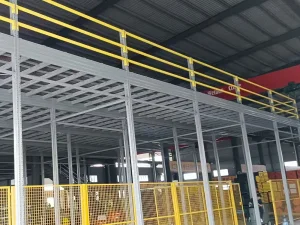
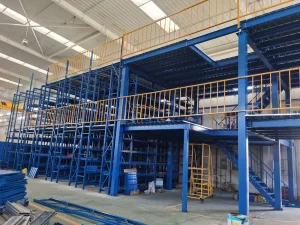
Multi-tier bolted steel platforms utilize building clearance to create second and third deck levels for picking, light assembly, or office space.
Capacity Range: Up to 24 metric tons per movable rack block.
Heavy-duty racks are mounted on electric motor-driven carriages moving over embedded floor rails. Opens a single access aisle on demand, saving up to 85% aisle space.
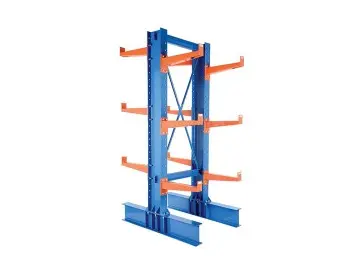
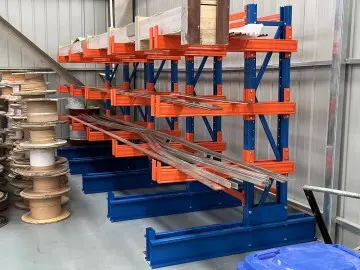
Capacity Range: 500 kg – 3,000 kg per arm.
Designed without front column obstructions, enabling unhindered crane or side-loader placement of long, linear materials such as steel pipes, timber, and profiles.
| Storage System Type | Volumetric Density | Pallet Selectivity | Max Load per Level | Operational Flow | Primary Industrial Application |
|---|---|---|---|---|---|
| Selective Pallet Racking | Standard (40-50%) | 100% Direct | 1,000 – 4,500 kg | FIFO | FMCG, Retail Distribution, Multi-SKU Hubs |
| Radio Shuttle Racking | Ultra-High (80-90%) | By Lane Face | 1,500 kg / shuttle | FIFO / LIFO | Cold Storage, Food & Beverage, Batch Goods |
| Push-Back Racking | High (65-75%) | 2–5 Deep | 1,500 kg / cart | LIFO | Medium-SKU Storage, Manufacturing Buffer Zone |
| Drive-In Racking | Very High (75-85%) | Per Deep Lane | 1,000 – 2,000 kg | LIFO | Homogeneous Bulk Commodities, Cold Rooms |
| Motorized Mobile Racking | Maximum (85-95%) | 100% Access (1 aisle) | 24,000 kg / block | FIFO / LIFO | High-Value Cold Chain, Space-Constrained Facilities |
| Steel Structure Mezzanine | 200% - 300% Floor Area | 100% Manual/Lift | 300 – 1,500 kg/m² | Flexible | E-commerce Picking, Spare Parts, Workstations |
Next-generation racking incorporates wireless piezo-electric strain gauges directly inside critical beam connectors and baseplate assemblies. Real-time stress data alerts facility managers to dynamic overload events, fork-truck structural impact deformities, or uneven load distribution before mechanical yield failure occurs.
Metallurgical advancements are transitioning production lines to ultra-high-yield micro-alloyed steel formulations (Q460 and high-strength cold-rolled coils). This enables a 15% reduction in steel thickness without sacrificing total load capacity, resulting in lower freight costs and reduced operational carbon footprints.
Future-proof manufacturing adopts zero-VOC, heavy-metal-free thermosetting epoxy powder coatings cured by high-efficiency infrared ovens. Surface treatment protocols ensure corrosion resistance against salt spray (500+ hours under ASTM B117 testing), extending service life in humid cold storage environments.
Operating Temperature: -25°C to -30°C.
Structural Strategy: Radio Shuttle and Motorized Mobile Systems.
In cold-chain warehousing, high energy costs mandate dense cube storage. Standard steel can become brittle at sub-zero temperatures; our low-temperature structural steel maintains ductile-to-brittle impact transition strength, preventing catastrophic failure under heavy pallet loads.
Operating Demand: Fast Piece-Picking & Vertical Access.
Structural Strategy: Multi-Tier Steel Platform Mezzanines.
By combining light and medium-duty shelving with multi-tier floor platforms, e-commerce facilities handle fast order fulfillment. Integrates with gravity carton flow tracks and conveyor systems for rapid pick-and-pack operations.
Operating Demand: Concentrated Heavy Structural Loads.
Structural Strategy: Cantilever & Heavy Beam Racks.
Heavy machinery, coil tubing, and steel bar stocks require high structural capacity. Custom-engineered heavy-duty cantilever systems feature solid rolled arms with safety retainers to keep raw materials stored securely.
Total rack frame capacity is calculated through structural analysis considering multiple variables:
Guake manufactures a comprehensive range of industrial warehouse storage solutions including:
Both standards define cold-formed structural steel racking design but originate from different regional regulatory frameworks:
Guake engineers custom racking to satisfy either FEM or RMI standards based on project location and structural authority mandates.
While both systems deliver dense storage, Radio Shuttle offers distinct structural and operational advantages:
Yes. Factory-direct manufacturing allows customization of key system dimensions:
Guake offers complete engineering support for every project stage: