Explore engineered storage equipment configured for maximum structural load capacity, strict compliance with global safety standards, and immediate factory-direct wholesale distribution.
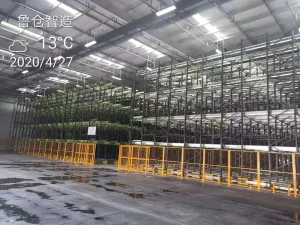
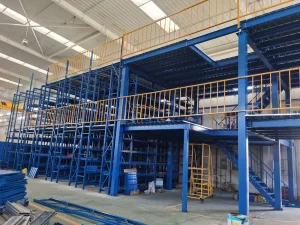
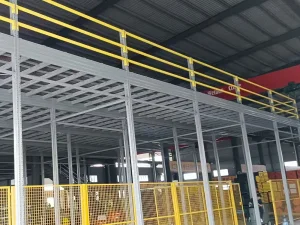
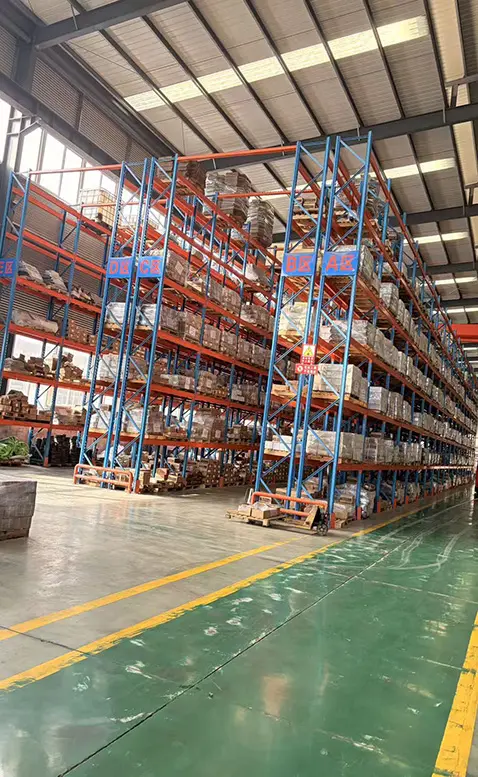
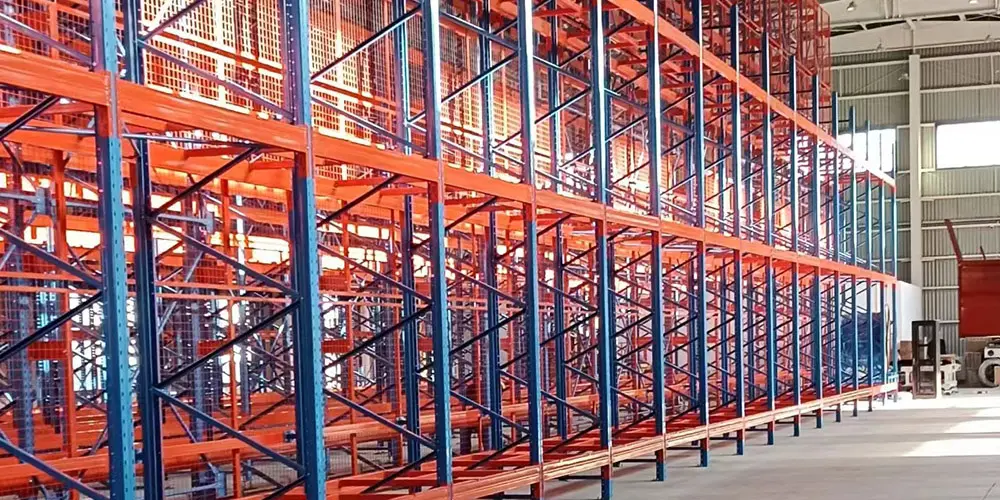
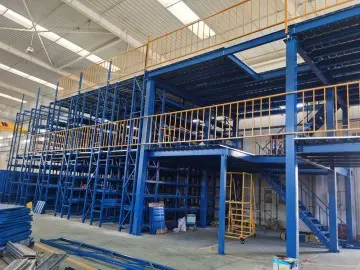
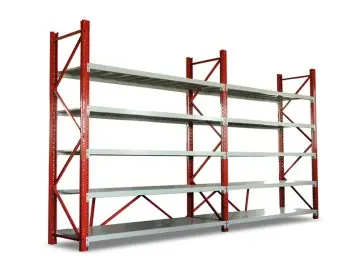
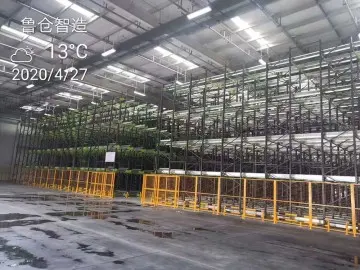
In global supply chain management, logistics facility engineering, and high-bay warehousing, Rack Load Capacity represents the foundational metric defining operational safety, spatial yield, and structural risk mitigation. Procurement officers, site engineers, and wholesale operations managers navigating wholesale sourcing decisions must evaluate rack loading dynamics far beyond static nominal numbers. Rack load capacity is a complex structural equation encompassing material yield strengths (e.g., Q235B vs. Q355B cold-rolled steel), cross-sectional moment of inertia, dynamic shock loads, seismic response coefficients, and beam deflection threshold limits (typically capped at L/200 or L/240 of clear beam span under RMI and FEM 10.2.02 codes).
Core Engineering Insight: A racking system's actual safe working load is governed by its weakest link—whether that is upright frame slenderness ($\lambda = kL/r$), beam connector shear claw engagement, floor anchor embedment depth, or point load concentration. Guake Logistics Technology engineers every custom layout to ensure structural equilibrium under 100% capacity loads plus maximum seismic shear stress.
The global industrial warehouse landscape is experiencing a structural shift towards vertical density. Driven by rising commercial real estate acquisition costs in major logistics hubs across North America, Europe, the Middle East, and Southeast Asia, enterprise buyers are replacing traditional low-bay selective layouts with high-density, multi-tier racking systems and automated storage networks. As vertical heights scale from 6 meters to over 30 meters in ASRS (Automated Storage and Retrieval Systems), frame axial compression loads skyrocket.
Global warehouse rent per square meter has increased by an average of 34% over the past five years. Maximize your vertical cube by selecting heavy-duty racking engineered to carry multiple levels of 1,500kg unit loads without frame deformation.
Modern fulfillment centers handle thousands of active SKUs. High load capacity racking enables dense multi-tiered pick modules that support both concentrated point loads from automated conveyors and uniformly distributed tote storage.
International building codes (such as US IBC 2024 and Eurocode 8) mandate rigorous dynamic load analysis. Rack structures must withstand dynamic earthquake accelerations while maintaining full rated load integrity.
Calculating the true load-bearing threshold of warehouse racking requires advanced structural engineering analysis, Finite Element Modeling (FEM), and rigorous empirical destructive testing. Below are key formulas and structural parameters evaluated by Guake Logistics Technology engineers when designing custom enterprise projects:
When load beams are subjected to Uniformly Distributed Load (UDL), allowable maximum vertical deflection ($\delta_{max}$) is restricted to prevent permanent plastic deformation and pallet dislodging:
Where: w = Load per unit length, L = Clear beam span length, E = Modulus of Elasticity of Steel ($2.05 \times 10^5 \text{ MPa}$), I_x = Moment of Inertia along X-axis.
The total permissible vertical load per upright frame relies heavily on column unbraced height ($L_{un}$), radius of gyration ($r$), and effective length factor ($K$):
Where: P_{cr} = Critical Euler buckling load, A = Cross-sectional steel area, K \cdot L/r = Slenderness ratio of the cold-formed upright profile.
| Steel Grade Standard | Yield Strength ($f_y$) | Tensile Strength ($f_u$) | Typical Rack Component Application | Structural Load Advantage |
|---|---|---|---|---|
| Q235B (GB/T 700) | 235 MPa | 375 - 500 MPa | Standard Pallet Beams, Bracing & Shelving | High ductility, excellent weldability, cost-effective standard loads |
| Q355B (GB/T 1591) | 355 MPa | 470 - 630 MPa | Heavy-Duty Upright Posts, High-Bay Frames | +51% higher yield strength; reduces profile steel gauge while boosting payload |
| SS400 (JIS G3101) | 245 MPa | 400 - 510 MPa | Export Structural Components | Global structural compliance, consistent cold roll-forming profiles |
| S355JR (EN 10025-2) | 355 MPa | 470 - 630 MPa | Heavy Mezzanine Primary Beams | Engineered for high moment capacity under heavy multi-tier floor loads |
When sourcing rack load capacity components at scale, direct collaboration with Shandong manufacturing hubs offers unparalleled structural value and supply chain reliability. Guake Logistics Technology (Shandong) Co., Ltd., situated in Linyi City, Shandong Province, harnesses one of China’s most robust industrial ecosystems to deliver superior racking systems at globally competitive wholesale price points.
Shandong is a premier global hub for raw steel output. Strategic partnerships with top-tier steel producers ensure direct access to certified prime coil stock (Q235B/Q355B), removing intermediary markups and ensuring strict material thickness tolerances ($\pm 0.05\text{mm}$).
Our 20,000+ m² facility houses high-precision continuous cold roll-forming lines capable of pressing 18-stage column profiles with integrated teardrop or diamond hole patterns, delivering flawless dimensional uniformity across long upright runs.
Durability is crucial for load protection. Guake operates a continuous automated powder-coating line applying thermosetting epoxy-polyester coatings ($60-80 \mu\text{m}$ thickness), delivering salt-spray corrosion resistance exceeding 500 hours.
Different industrial sectors impose vastly unique physical demands on warehouse rack structural design. Sourcing the ideal wholesale rack configuration requires aligning load specs with real-world operating environments:
Sub-zero logistics facilities suffer high power consumption costs, demanding extreme volumetric storage density. Radio Shuttle racking and Mobile Racking systems are preferred. However, low temperatures alter steel toughness. Guake uses cold-resistant certified steel and specialized low-temp powder coatings to prevent brittle fracture under heavy 1,500kg unit pallet loads.
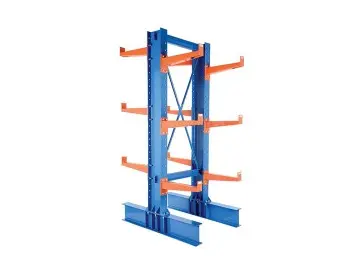
Facilities storing steel coils, aluminum extrusions, pipe bundles, and industrial molds face high point loads rather than uniformly distributed weight. Structural beam deflection profiles must be customized with heavy-gauge steel gusset plates and specialized cantilever arms to avoid localized beam shearing.
The warehouse racking sector is evolving rapidly from purely passive steel structures into intelligent, data-integrated warehouse assets. Buyers looking for competitive advantages should watch these next-generation technology developments:
Real-time structural monitoring systems feature micro strain sensors embedded into load beams and upright baseplates. If accidental forklift impacts occur or weight thresholds exceed 100% rated capacity, wireless alerts trigger instantly on warehouse management dashboards.
Innovations in cold-rolled steel metallurgy allow manufacturers to achieve higher yield strengths (exceeding 460 MPa) while reducing total steel gauge. This decreases shipping weight and total product cost without sacrificing maximum frame load capacity.
Standard racking layouts are increasingly designed with structural tolerances for future automation retrofit. Beam levels feature pre-drilled positioning slots for shuttle guide rails, enabling seamless upgrades from manual storage to automated handling.
Compare performance specifications, load profiles, spatial density factors, and investment costs across core industrial racking systems:
| Racking System Type | Typical Load Capacity | Volumetric Density | Pallet Selectivity | Initial ROI Capital Expenditure |
|---|---|---|---|---|
| Selective Pallet Racking | 1,000 - 4,000 kg / level | Standard (40-50%) | 100% Direct Access | Low / Entry-Level |
| Radio Shuttle Racking | 1,500 kg / pallet position | Very High (80-85%) | By Lane (FIFO/LIFO) | Medium - High (High Yield) |
| Push Back Racking | 1,000 - 1,500 kg / cart | High (65-75%) | Lane Face (LIFO) | Moderate |
| Steel Platform Mezzanine | 300 - 1,000 kg / m² | Multiplies Floor Area | 100% Floor Access | Moderate - Rapid Payback |
| Motorized Mobile Racking | Up to 24 Tons / Base Unit | Extremely High (85%+) | 100% (Single Active Aisle) | Higher / High Space Savings |
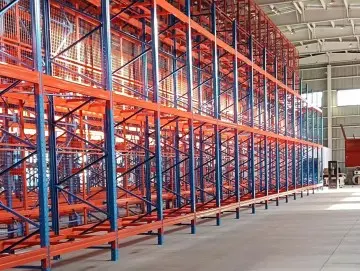
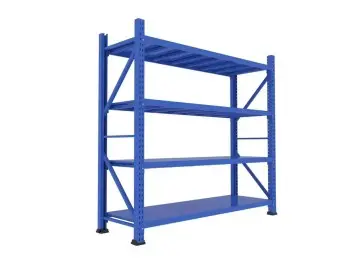
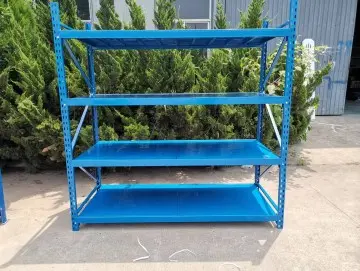
Direct from our Shandong factory, explore certified heavy, medium, and light-duty shelving systems, cantilever structural racks, and custom mezzanine platforms engineered to client specs.
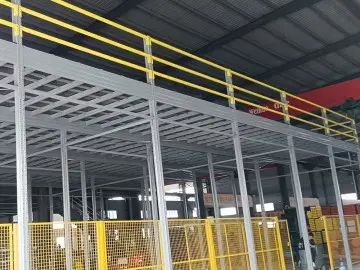
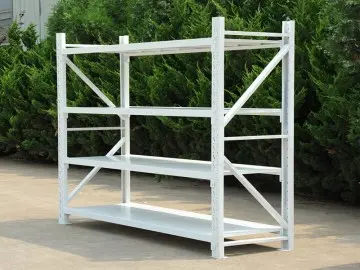
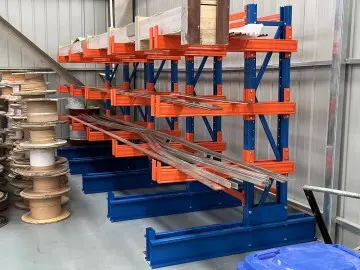
Clear, definitive answers from Guake’s structural engineering team regarding rack load limits, safety testing, and customized factory manufacturing.
Rack load capacity calculation requires verifying both beam flexural deflection ($L/200$ limit) and upright column axial compression buckling limits. Guake engineering team uses Finite Element Analysis (FEA) software aligned with RMI (Rack Manufacturers Institute) and FEM 10.2.02 European specifications. Physical testing includes destructive beam connector shear tests and column compression strain measurements using certified Q235B and Q355B steel specimens.
To produce accurate layout drawings and load tables, clients should provide: (1) Pallet dimensions (W x D x H) including load overhang, (2) Maximum unit load weight per pallet, (3) Clear building height beneath roof trusses or fire sprinklers, (4) Forklift truck operational aisle requirements and reach height, and (5) Local seismic zone ratings or building floor slab load limits.
Uniformly Distributed Load (UDL) assumes weight is evenly distributed across the entire length of pair load beams. Point load refers to concentrated weight resting on small surface areas (e.g., forklift legs, metal container feet, or narrow equipment posts). Concentrated point loads create significantly higher localized bending moments, requiring supplementary cross beams, wire mesh decking, or steel support bars.
Q355B low-alloy structural steel features a minimum yield strength of 355 MPa, representing a 51% increase in load capacity over standard Q235B steel (235 MPa). Utilizing Q355B steel for tall upright columns allows us to maximize total bay frame capacity without excessively increasing steel profile thickness, keeping container shipping weights economical.
Every wholesale project shipment includes comprehensive CAD assembly drawings, step-by-step installation manuals, piece-mark component tags, and anchor torque specifications. For major logistics projects, Guake provides remote engineering guidance via video conference or dispatches on-site installation supervisors to coordinate local assembly crews.
Guake Logistics Technology (Shandong) Co., Ltd. has delivered certified industrial racking systems to over 50 countries worldwide. Connect directly with our engineering team for free CAD layout planning, structural load calculations, and wholesale factory pricing.
Factory Address: 200 meters west of the intersection of Kunming Road and Xiamen Road, Linyi City, Shandong Province, China.