Engineered for Maximum Load Bearing, Modular Scalability, and Global Safety Standard Compliance.
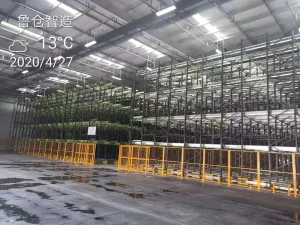
In the contemporary landscape of global supply chain operations, the commercial warehouse footprint has shifted from a mere physical storage depot to a strategic asset of operational velocity. Industrial stockroom racking suppliers and factories sit at the epicenter of this transformation. As prime industrial real estate costs continue to escalate globally—with average warehouse lease rates surging across North America, Europe, and the Asia-Pacific region—enterprises can no longer afford the capital inefficiency of underutilized cubic air space.
Transitioning from traditional floor-stacking and low-density static shelving toward precision-engineered, high-density stockroom racking systems represents a fundamental shift in total cost of ownership (TCO). Modern facility managers, third-party logistics (3PL) integrators, and retail procurement directors evaluate racking suppliers not merely as steel fabricators, but as structural solution providers capable of increasing warehouse storage capacity by 40% to 250% within existing building footprints.
Four primary macro-economic forces dictate current procurement behavior across global B2B buyers seeking wholesale stockroom racking factories:
Understanding what tier-1 enterprise buyers look for when selecting factory-direct racking partners.
Verification of international engineering codes including RMI (Rack Manufacturers Institute), FEM 10.2.02, EN 15512, and AS4084-2012. Structural calculations certified by chartered professional engineers (PE) for seismic zones are mandatory.
High-tensile cold-rolled steel (Q235B, Q355B grades) sourced directly from accredited steel mills. Precision roll-forming tolerances ensure structural stability under dynamic loading and forklift impact risk.
Automated 9-stage pre-treatment, washing, and electrostatic epoxy powder coating (80–100 μm thickness). Excellent corrosion resistance tested via standard salt-spray test environments for long service life.
The global warehousing equipment sector has witnessed a structural realignment toward advanced manufacturing hubs in China. Specifically, Shandong Province—home to Guake Logistics Technology (Shandong) Co., Ltd.—has emerged as a globally dominant cluster for heavy structural steel processing, automated roll-forming, and intelligent storage system engineering.
Leveraging China's robust industrial ecosystem allows factory-direct OEM/ODM suppliers to offer unparalleled economic and technical advantages:
From raw structural coil sourcing at regional steel mills (such as Baosteel and Laiwu Steel) to in-house continuous cold roll-forming, laser cutting, robotic welding, and automated powder coating, Shandong's industrial ecosystem eliminates intermediary markups. This vertical integration guarantees 100% material traceability (Mill Test Certificates included) and rapid prototype-to-mass-production cycles.
Modern stockroom racking components require extremely tight manufacturing tolerances. Upright pitch perforation tolerances are held within ±0.1mm using multi-station CNC punching presses. Robotic welding cells execute continuous fillet welds on beam connectors and base plates, eliminating human error, micro-cracks, and structural fatigue points under prolonged dynamic loading.
| Engineering Metric | Standard Racking Supplier | Guake Industry 4.0 Standard | Operational Benefit |
|---|---|---|---|
| Upright Steel Grade | Q235 Commercial Grade | High-Tensile Q235B / Q355B | +30% Higher Yield Strength & Capacity |
| Perforation Precision | ±0.5 mm Punching Tolerance | ±0.1 mm CNC Multi-Station | Seamless Beam Locking & Zero Sway |
| Welding Consistency | Manual Stick / MIG Welding | Automated Robotic Weld Cells | Zero Fatigue Cracks, Consistent Penetration |
| Powder Coating Thickness | 40 - 60 microns | 80 - 100 microns (Thermoset) | Superior Corrosion & Scratch Resistance |
| Safety Factor (Structural) | 1.35 : 1 Minimum | 1.5 : 1 to 2.0 : 1 Structural FEA | Maximum Workplace Safety & Overload Cushion |
Global logistics demand customized bay lengths, non-standard frame depths, and tailored deck options (wire mesh, galvanized steel panels, or structural timber). Factory-direct suppliers in Shandong possess the engineering flexibility to handle customized short-run architectural requests alongside multi-thousand-ton standard pallet racking orders. Efficient containerization packing protocols maximize ocean freight cube efficiency, significantly lowering landed cost per pallet position for overseas buyers.
Comprehensive engineering evaluation of industrial stockroom storage architectures.
Storage Density: Standard (40-50%)
Selectivity: 100% Direct Access
Flow Principle: FIFO / LIFO
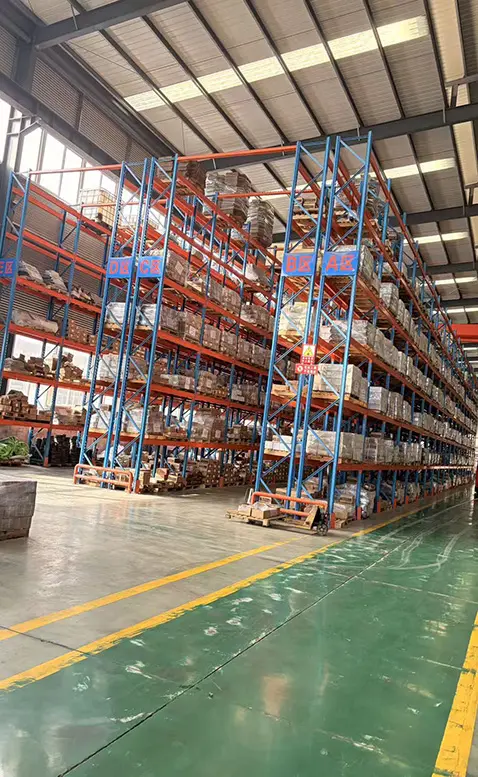
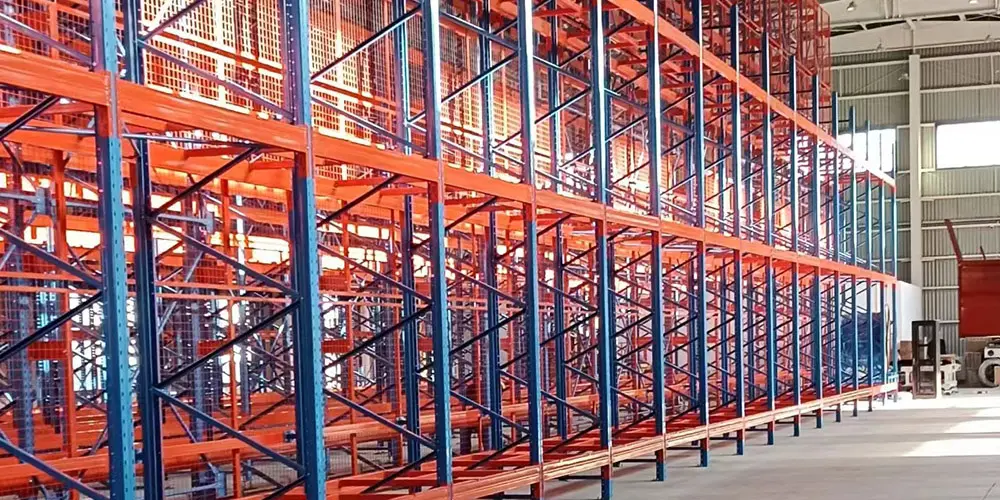
Ideal for high-SKU inventory environments, distribution centers, and rapid-picking stockrooms requiring immediate access to every pallet level without moving adjacent inventory.
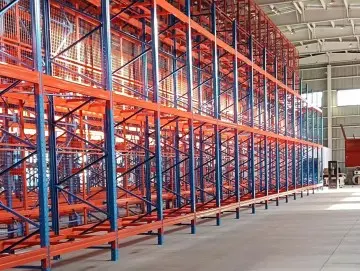
Storage Density: Ultra-High (80-90%)
Selectivity: Lane-Level Selective
Flow Principle: Configurable FIFO / LIFO
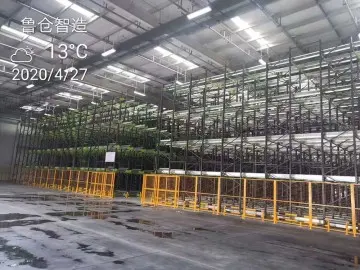
Semi-automated system utilizing battery-powered shuttles inside deep channels. Eliminates forklift aisle travel inside lanes, dramatically boosting handling speed and warehouse safety.
Storage Density: Doubles / Triples Floor Area
Selectivity: 100% Manual / Pick-Face
Flow Principle: Custom Multi-Tier Flow
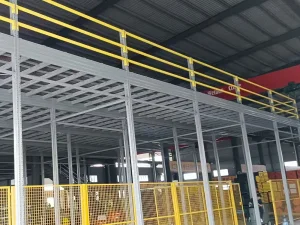
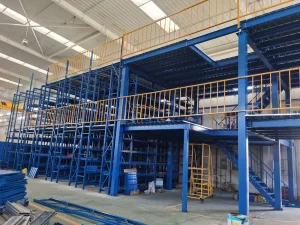
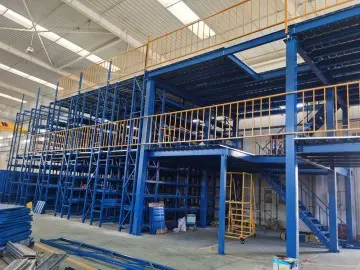
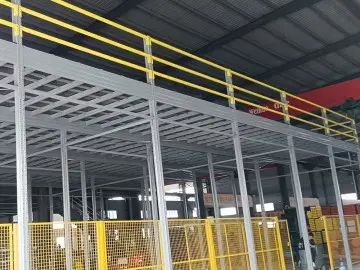
Heavy-duty structural steel platforms converting overhead space into usable operational floors for small-parts picking, e-commerce packing zones, or executive stockroom offices.
No two warehouse facilities share identical operational DNA. Engineering custom stockroom racking requires analyzing aisle turn radius, floor slab point loading, forklift reach limits, and environmental controls. Below are real-world application benchmarks engineered by Guake Logistics Technology across primary sector profiles:
Challenge: Extremely high electricity costs per cubic meter of refrigerated air require ultra-dense storage without electronic component failure.
Solution: Implementation of Radio Shuttle Racking with low-temperature lithium battery shuttles and hot-dip galvanized structural frames. Achieved 82% volumetric floor utilization and 45% reduction in cooling energy expenditure.
Challenge: Rapid expansion of SKU count (small packages) requiring high-density pick faces and rapid manual sorting.
Solution: Multi-tier steel mezzanine racking integrated with carton flow tracks and spiral chutes. Expanded inventory pick faces by 200% without expanding the physical building footprint.
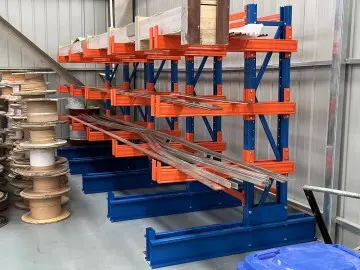
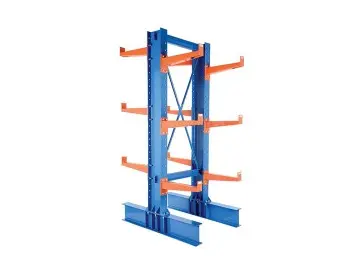
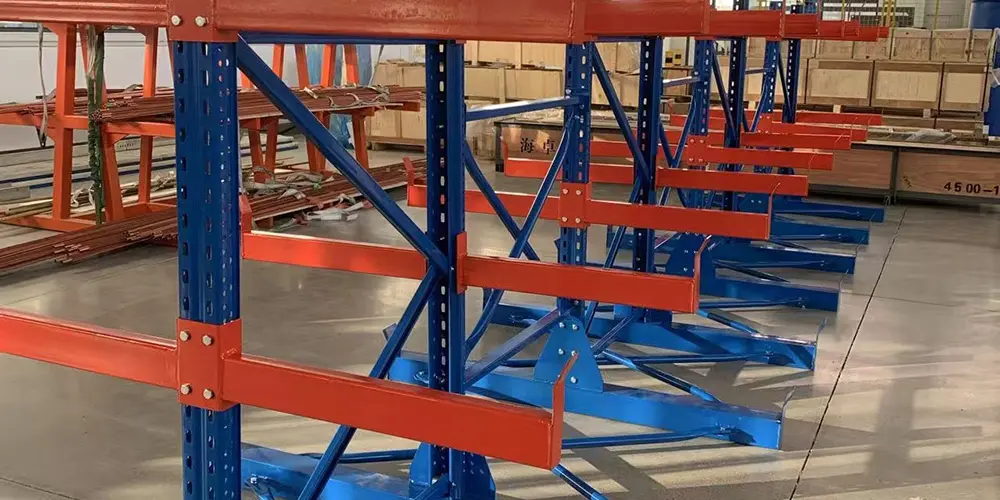
Challenge: Storing structural tubing, steel profiles, and raw timber materials safely without front column obstructions.
Solution: Heavy-duty Cantilever Racking equipped with custom pivot arms and load stops, offering structural loading capacities up to 1,500 kg per arm under uniform distribution.
Technical, structural, and commercial guidance directly from our senior logistics engineers.
Upright frame capacity is calculated based on the maximum total load per bay, the vertical distance between beam levels (unbraced length), and dynamic impact factors. Our engineering team utilizes Finite Element Analysis (FEA) based on RMI and FEM 10.2.02 standards. To start a layout design, buyers should provide: (1) Pallet dimensions and total weight, (2) Clear ceiling height under sprinklers, (3) Forklift reach height and aisle clearance specs, and (4) Floor slab thickness/concrete strength (e.g., C25/C30 grade).
While all three increase storage density by eliminating aisles, their operational mechanics differ significantly:
• Drive-In Racking: Forklifts physically drive inside the rack structure to load/unload pallets on continuous rails (LIFO flow). Lowest equipment cost, but higher risk of frame impact.
• Push-Back Racking: Pallets ride on nested, inclined wheeled carts pushed back by incoming pallets (2 to 5 deep, LIFO). Forklifts remain in the main aisle.
• Radio Shuttle Racking: A semi-automated electric shuttle carries pallets inside deep channels (up to 40+ deep). Supports both FIFO and LIFO, eliminates internal forklift travel, maximizes safety, and provides highest throughput speed.
Safety is engineered at three distinct levels:
1. Structural Member Sizing: We utilize high-tensile Q235B/Q355B structural steel with heavy-duty footplates anchored via chemical expansion bolts.
2. Impact Protection: Heavy-gauge steel frame guards, column protectors, and timber/polyurethane wrap guards absorb forklift accidental impacts.
3. Seismic Bracing: Custom X-bracing and top portal beams engineered specifically for local seismic zone acceleration parameters per client site location.
Yes. As a direct manufacturer in Shandong, China, 100% of our production lines support OEM/ODM customization. We offer custom upright widths (80mm to 120mm+ profiles), specialized beam lengths, customized RAL color matching via automated electrostatic powder coating, and specialized decking options (wire mesh decks, zinc-galvanized steel panels, or heavy-duty structural chipboard).
To minimize ocean freight cost and prevent transit damage, structural upright frames are bundled with protective steel strapping and wooden skids. Beams are stacked in custom cradle frames to prevent powder coat scratching. Accessories and small components are packaged in reinforced corrugated boxes on ISPM-15 compliant heat-treated pallets. Our logistics team optimizes 40ft High Cube (40HC) container packing software to ensure 98%+ volumetric loading efficiency.
Yes. Every delivered racking project includes comprehensive 3D CAD layout drawings, structural structural calculation reports, component bill of materials (BOM), and step-by-step installation manuals. For large-scale projects, we provide remote video installation guidance or dispatch certified installation supervisory engineers directly to the customer's site worldwide.
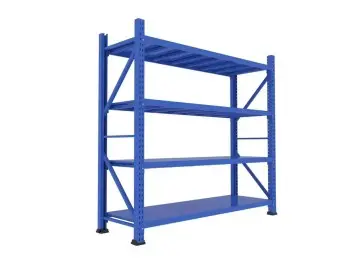
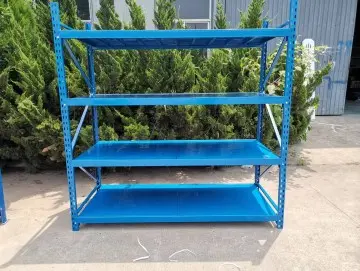
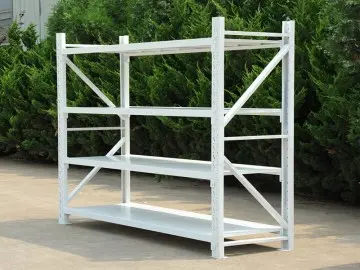
Factory-Direct Heavy-Duty, Light-Duty, and Special Purpose Storage Systems.
Contact our senior structural engineers today for a complimentary CAD warehouse layout proposal and direct factory wholesale pricing quote.