
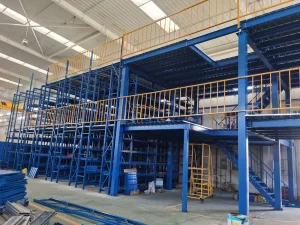


Select from our precision-engineered storage equipment, custom fabricated in Shandong, China to match your specific warehouse dimensions and throughput specs.
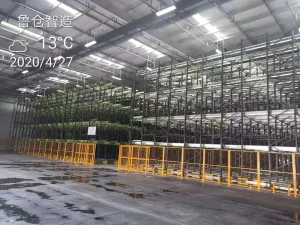
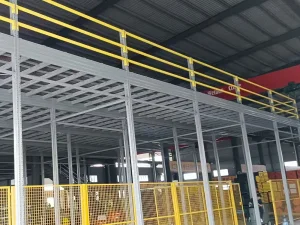
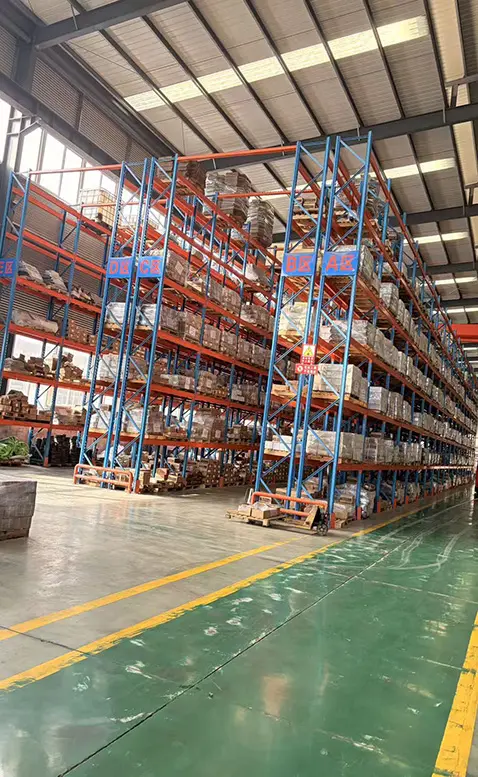
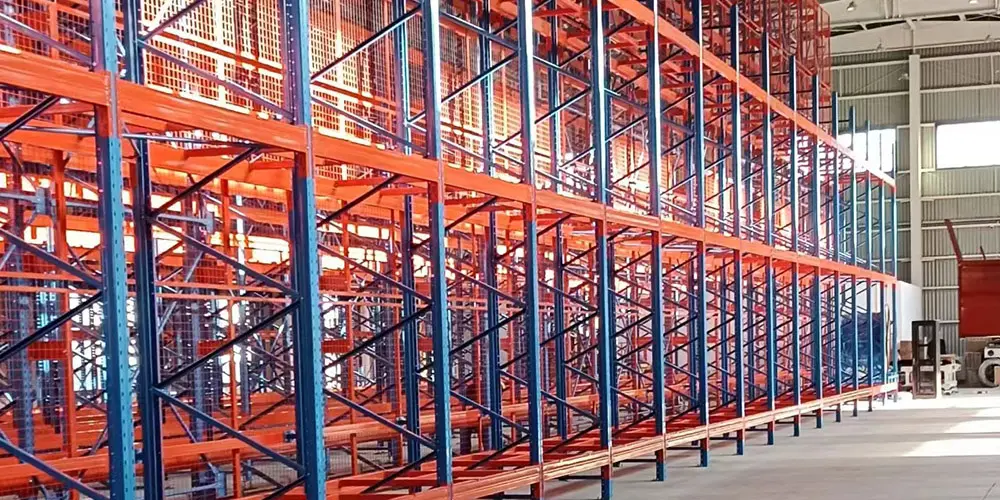
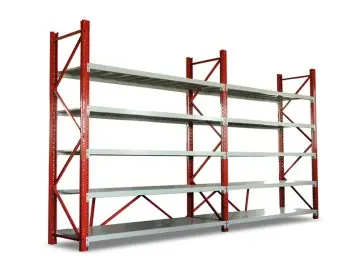
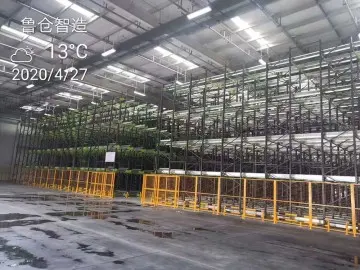
In modern logistics engineering, a Storage Retrieval Machine (SRM) forms the core hardware interface of Automated Storage and Retrieval Systems (AS/RS). Operating across high-bay rack structures upwards of 40 meters, these automated crane units, robotic shuttles, and micro-load insertion devices replace conventional forklift operations with millimeter-precise dynamic handling.
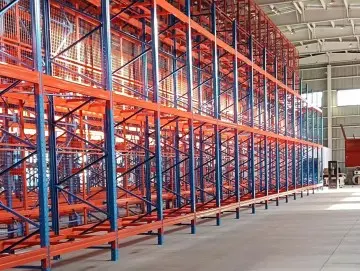
Engineered for heavy palletized loads ranging from 1,000 kg to 3,000 kg per position. Single or double-deep telescopic forks or satellite shuttle attachments interface directly with heavy-duty rack structures to achieve maximum volume utilization.
Self-powered intelligent carriers travel autonomously through deep storage channels along embedded guide rails. Controlled via RF remotes or integrated WCS software, shuttle systems maximize storage density while dramatically reducing forklift transit times inside aisles.
High-speed automated handling designed for cartons, totes, and small parts bins. Accelerations up to 5 m/s² ensure ultra-fast picking rates for e-commerce fulfillment centers and pharmaceutical distribution hubs.
Guake Logistics Technology is strategically based in Linyi, Shandong—the industrial epicenter of structural steel production in China. As a direct wholesale manufacturer with over 20,000 square meters of specialized production facilities, we deliver structural racking components and automated storage machine frames that conform strictly to international metallurgical standards.
Direct purchasing of prime Q235B and Q355B cold-rolled steel from Baosteel and Shougang ensures high tensile yield strength and consistent structural deflection limits under load.
Multi-station CNC cold-roll forming lines produce upright profiles and beam profiles with +/-0.5mm dimensional precision over 12-meter single-piece spans.
Swiss Gema automated powder coating lines and hot-dip galvanizing options provide superior scratch resistance and corrosion protection even in extreme sub-zero cold rooms.
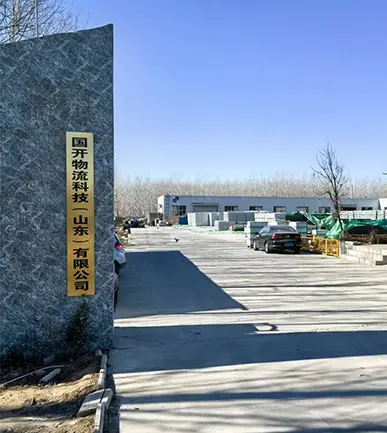
Guake Production Workshop: Automated CNC Cold-Roll Forming & Robotic Welding
For multinational logistics operators and system integrators, investing in automated storage retrieval machines and racking systems requires a rigorous financial justification. Below is a comparative ROI framework evaluating standard pallet racking versus semi-automated radio shuttles and fully automated AS/RS stacker crane systems over a 10-year operational lifecycle.
| Storage System Type | Initial Capital Expenditure (CapEx) | Volumetric Efficiency (% Space Used) | Labor Reliance Level | Average Payback Period (ROI) | Scalability Potential |
|---|---|---|---|---|---|
| Selective Pallet Racks | Low (Baseline) | 35% - 45% | High (1 Forklift Operator per 200 Pallets) | Immediate | Moderate (Requires Floor Expansion) |
| Drive-In Racking | Low - Medium | 60% - 70% | High (Forklifts Enter Racking Lanes) | 12 - 18 Months | Low (Dedicated LIFO Rows) |
| Radio Shuttle Systems | Medium | 75% - 85% | Low-Medium (Remote Controlled Shuttle) | 18 - 26 Months | High (Add Shuttles as Volume Grows) |
| Automated AS/RS Crane System | High | 85% - 95% | Fully Automated (Dark Warehouse Capable) | 28 - 36 Months | Ultra High (Vertical & Modular Expansion) |
When sourcing storage retrieval machines wholesale, evaluate: dual-cycle stacker crane capacity (moves/hour), vertical travel speed (up to 180 m/min), acceleration curves, and rack alignment tolerances. Matching these technical metrics directly prevents operational bottlenecks during peak seasonal demand.
In refrigerated and deep-freeze warehouses (-25°C to -30°C), automated shuttle and AS/RS systems compress total building volume by up to 60%. Reducing cooling space directly translates to lower electrical utility bills and faster operational payback.
Deploying warehouse racking and storage retrieval machines across international boundaries requires total compliance with regional building codes, seismic regulations, and industrial safety directives. Guake Logistics Technology engineers every custom racking structure in strict alignment with recognized global structural standards.
European design standards for static steel racking systems, structural deflections, dynamic beam tolerances, and operational safety inspections.
North American design criteria covering industrial steel storage rack stress analysis, baseplate anchoring, and seismic zone calculations.
Strict compliance with Australian steel storage racking standards governing column protections, safety upright guards, and connection stiffness tests.
Factory-wide certified quality management system ensuring batch-to-batch structural integrity, weld testing, and CE electrical compliance for automated shuttles.
Procuring warehouse equipment overseas requires foolproof installation and post-sales guarantees. Guake provides an end-to-end engineering support package for every project:
Full architectural layout blueprints detailing column spacing, anchor point forces, and floor slab load requirements.
Dispatch of experienced mechanical/electrical engineers or full remote real-time video guidance to lead local installation teams.
Dedicated stock of replacement sensors, motors, drive wheels, and shuttle battery modules ready for global air express delivery.
The global intralogistics landscape is shifting rapidly from manual labor to intelligent, data-driven automation. Enterprise buyers should align their procurement strategy with these active technology trends:
Modern Storage Retrieval Machines are integrated with AI-driven Warehouse Execution Systems (WES). Algorithms analyze order velocity in real time, automatically instructing shuttles and stacker cranes to relocate high-demand SKUs to front-row rack positions, cutting retrieve cycle times by up to 25%.
The convergence of 3D pallet shuttles and floor-based Autonomous Mobile Robots creates seamless vertical and horizontal transportation loops. AMRs transport pallets across floor level directly to the entry point of radio shuttle racks, eliminating fixed conveyor line bottlenecks.
High-bay stacker cranes and retrieval shuttles now incorporate energy recovery drives. During braking and downward vertical lowering motions, power is recaptured and fed back into the facility's electrical grid, cutting operational energy consumption by 15% to 30%.
Driven by urban e-commerce demands, compact tote-retrieval machines are being installed inside local distribution hubs. These micro-AS/RS units allow hyper-fast order picking within limited footprint spaces close to end consumers.
Every industry presents unique operational constraints, inventory turnover speeds, and load dynamics. Guake engineers customize storage retrieval systems and heavy-duty steel structures for diverse commercial environments:
Maximizes cubic density in expensive refrigerated spaces (-30°C). Keeps personnel out of extreme cold zones while automated shuttles handle deep-lane FIFO/LIFO turnover.
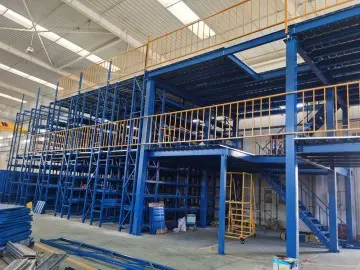
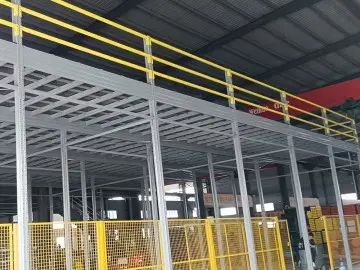
Combines multi-tier steel structure platforms with high-density pick modules. Multiplies usable floor area without building extensions for rapid tote picking.
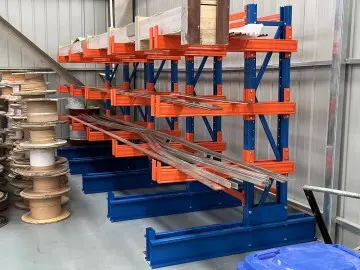
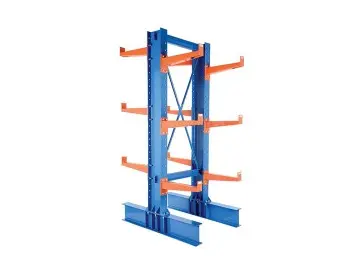
Built to store heavy engine blocks, metal stampings, raw steel coils, and long pipes with custom arm capacities exceeding 2,500 kg per level.
Clear answers to the key questions asked by warehouse directors, logistics consultants, and purchasing managers when sourcing storage retrieval equipment and racking systems.
A Storage Retrieval Machine (SRM) typically refers to a vertical stacker crane that travels along floor and ceiling rails down a fixed aisle, handling vertical hoisting and lateral pallet insertion into high-bay racks up to 40 meters tall. A Radio Shuttle System uses semi-automated, battery-powered carrier vehicles that travel horizontally inside racking channels to load and retrieve pallets. Shuttles are moved between different racking levels by standard forklifts or vertical lifters, offering a lower initial capital investment than full stacker cranes.
Every engineering layout undergoes structural finite element analysis (FEA) based on your site's specific seismic zone ratings (Zone 1 through Zone 4). We adjust column profile dimensions, steel grade thickness, baseplate anchor bolt patterns, and add x-bracing frame networks in compliance with RMI (ANSI MH16.1) and EN 16681 standards to withstand seismic lateral acceleration loads.
Yes. Guake manufactures specialized cold-chain radio shuttles equipped with low-temperature lithium-iron-phosphate (LiFePO4) battery packs, internal anti-condensation heating elements, and IP65 moisture-sealed electronics designed to operate continuously at temperatures as low as -30°C (-22°F).
To prepare an accurate engineering proposal, please provide:
Standard fabrication lead time for standard beam racking and platform structures is typically 20 to 30 days from design approval. For automated shuttle systems or customized high-bay AS/RS rack frames, lead times range from 35 to 50 days depending on overall project scale. Shipments are loaded directly into containers at our Shandong plant and routed via Qingdao Port for rapid maritime transit worldwide.
Yes. Our automated radio shuttles and storage retrieval machine controls utilize standardized communication protocols (Modbus, TCP/IP, Profinet) to integrate directly with third-party Warehouse Management Systems (WMS) and Warehouse Control Systems (WCS).
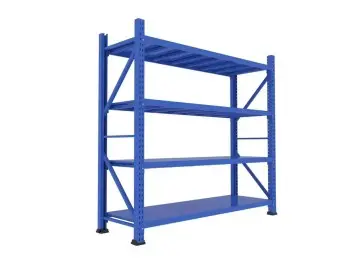
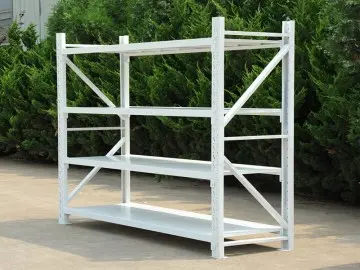
Explore our fully customizable range of storage systems, manufactured direct from Shandong, China to meet your operational budget and storage requirements.
Connect directly with Guake's senior structural engineering team. We will analyze your warehouse drawings and provide a complete layout proposal with structural calculations.