Explore our core wholesale racking portfolio engineered for strict weight tolerances, maximum deflection control, and extreme operational safety.
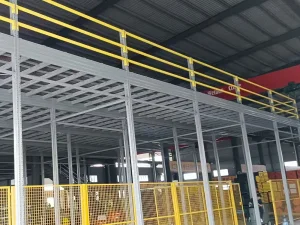
Heavy-duty multi-tier mezzanine engineering for structural storage expansion up to 2,000 kg/m².
View Product Details →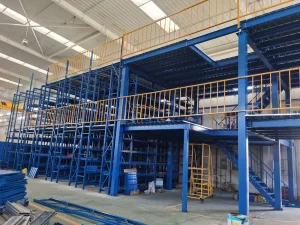
High-density multi-level rack-supported platform systems optimizing vertical cube space utilization.
View Product Details →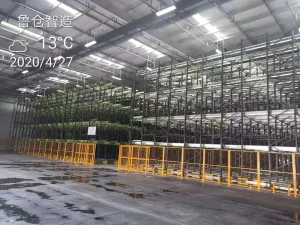
Semi-automated deep-lane pallet shuttle systems engineered for high payload capacity up to 1,500 kg per pallet.
View Product Details →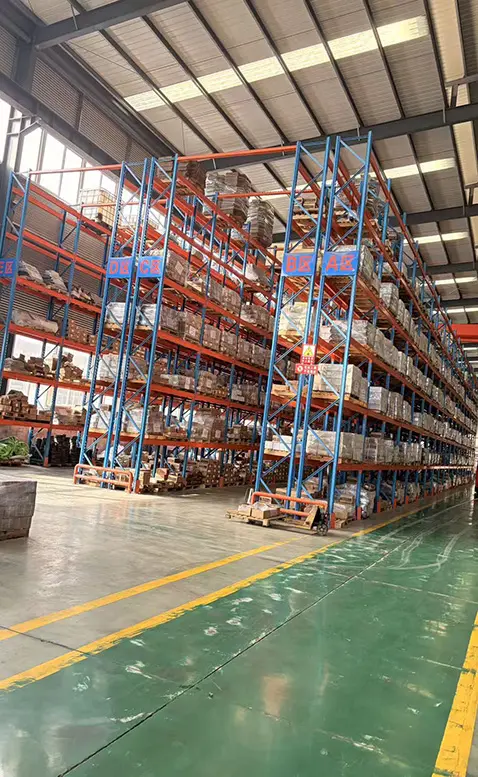
Eliminates working aisles for batch storage, using structural cantilever arms with high shear load limits.
View Product Details →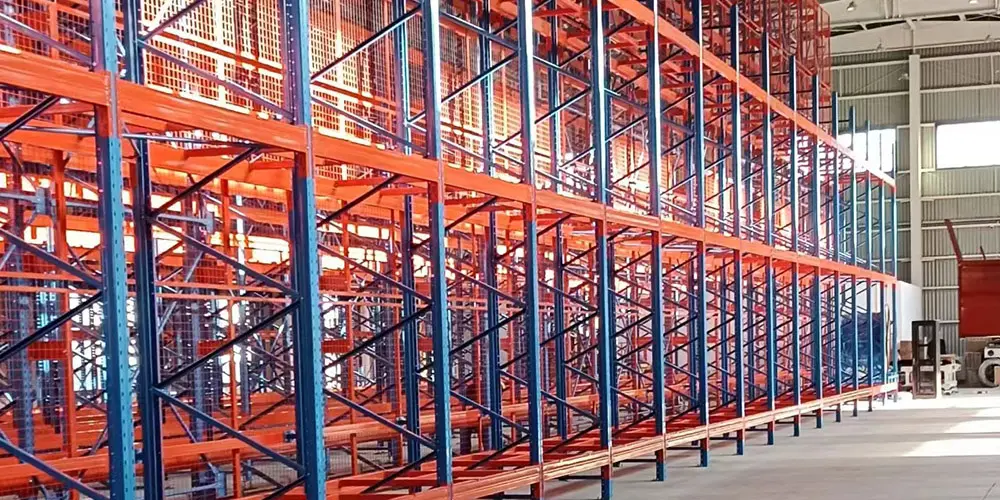
Nested cart technology supporting 2 to 5 deep pallet loading with dynamic gravity push loading.
View Product Details →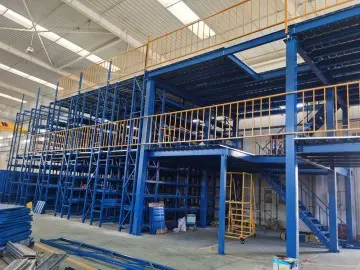
Custom structural steel columns and I-beams engineered for heavy forklift and equipment operations overhead.
View Product Details →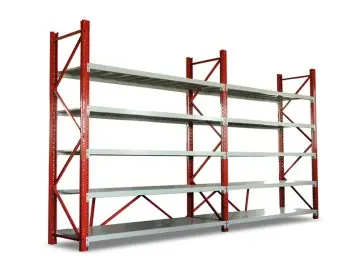
Motorized mobile bases carrying up to 24 tons per carriage with 100% pallet access and aisle reduction.
View Product Details →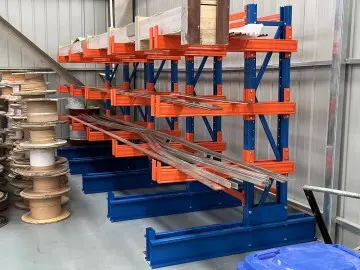
Designed for long, heavy loads like steel pipes and timber with custom arm weight limits up to 3,000 kg/arm.
View Product Details →In modern industrial logistics, weight limits are not arbitrary numbers; they are precise structural limits determined by material yield strength, deflection ratios, dynamic impacts, and safety coefficients.
UDL refers to weight evenly spread across the entire shelf or beam surface. Racking weight ratings are always calculated based on UDL. Concentrating a load in the center reduces effective capacity by up to 50% due to bending moment spikes.
According to ANSI MH16.1 and FEM 10.2.02 standards, maximum allowable beam deflection under full load is length divided by 180 (L/180). For a 2,700mm beam, the maximum center sag under full weight capacity cannot exceed 15mm.
Professional racking design incorporates a structural safety factor of 1.5 to 1.94. If a beam pair is rated for 3,000 kg, the ultimate yield point failure occurs only at loads exceeding 4,500 kg to 5,800 kg, protecting against minor operational shocks.
When a forklift drops a pallet onto rack beams quickly, it creates a Dynamic Impact Load that can instantaneously double the force exerted on the upright frames. Certified B2B rack suppliers engineer columns using high-grade cold-rolled steel (such as Q235B or Q355B structural steel) to absorb dynamic impulse energy without plastic deformation.
Compare standard industrial racking configurations, structural cold-rolled steel profiles, beam spans, and maximum safe weight ratings.
| Racking System Type | Beam / Member Profile | Standard Span / Height | Max Uniform Load (UDL) | Max Upright Frame Capacity |
|---|---|---|---|---|
| Selective Pallet Racking | 100 x 50 x 1.5mm Box Beam | 2,700 mm (2-Pallet) | 2,000 kg / Level | 12,000 kg / Frame |
| Heavy Selective Racking | 120 x 50 x 1.8mm Step Beam | 2,700 mm (2-Pallet) | 3,500 kg / Level | 18,000 kg / Frame |
| Drive-In Racking System | Continuous Top Hat Track Rails | Up to 11,000 mm Height | 1,500 kg / Pallet Position | 15,000 kg / Bay Lane |
| Radio Shuttle Racking | Specialized High-Tensile Guide Rails | Deep-Lane (20+ Pallets) | 1,800 kg / Pallet Position | 22,000 kg / Bay Lane |
| Steel Mezzanine Platform | H-Beam Columns & Primary Beams | Custom Spans (3m - 6m Grid) | 300 - 1,500 kg / m² | Engineered per Column Footing |
| Heavy Cantilever Racking | 140 - 200mm Structural Column | 1,200 mm Arm Length | 1,000 - 3,000 kg / Arm | 24,000 kg / Column Assembly |
Sourcing wholesale warehouse racking from Shandong industrial hubs gives global buyers direct access to advanced steel metallurgy, robotic production lines, and heavy-duty structural engineering at scale.
We source high-tensile cold-rolled steel coils directly from Tier-1 state mills like Baosteel and Shougang. This guarantees consistent yield strengths (235 MPa to 355 MPa) and precise wall thickness without structural thin spots.
Our 18-stage cold roll-forming lines shape upright columns with up to 16 bending ribs. Multiple longitudinal bends dramatically increase section modulus and axial load resistance against buckling.
Automated robotic arm stations weld beam connectors with 5-claw hooks and seamless seams. Eliminating human welding variances prevents joint failure under maximum rated shearing force.
Pre-treated phosphatized steel receives a 60-80 micron epoxy powder finish cured at 200°C. Protects rack structures against corrosion, chemical oxidation, and wear that degrade metal strength over time.
Different warehouse environments present unique structural challenges. Engineering racking for weight limits requires accounting for environmental factors, material behavior, and material handling systems.
At sub-zero temperatures, standard structural steel undergoes carbon embrittlement, reducing impact resistance. For cold-chain distribution centers, our factory utilizes high-toughness steel grades with customized chemical compositions (low carbon, higher manganese content) combined with custom weight limit recalculations to handle thermal contraction forces.
E-commerce operations involve continuous loading cycles and high pallet turnover. Racking weight engineering focuses on dynamic fatigue strength and beam-connector locking pin safety. We integrate safety locking pins capable of resisting up to 1,500 kg of accidental upward forklift dislodgement force per beam end.
Storing engine blocks, stamping dies, and raw coils requires extreme concentrated load engineering. Instead of standard roll-formed step beams, we deploy heavy-duty hot-rolled structural channel beams (UPN profiles) with reinforced footplates anchored directly to deep-slab concrete foundations.
In seismic zones (e.g., California, Japan, Chile, Turkey), weight capacity must account for horizontal acceleration vector forces. Our engineering team utilizes Finite Element Analysis (FEA) to size enlarged seismic baseplates, heavy anchor bolts, and x-bracing frames that absorb lateral shear forces during earthquakes.
Discover how IoT sensor monitoring, advanced metallurgy, and digital twin structural calculations are redefining weight capacity management in modern supply chains.
Smart racking systems now incorporate wireless strain gauges inside critical beam-column joints. Real-time telemetry alerts warehouse operators on mobile dashboards if weight distribution exceeds safety thresholds or if structural deflection approaches maximum limits.
By adding micro-alloying elements like Niobium (Nb) and Vanadium (V), next-generation cold-formed racking achieves yield strengths exceeding 420 MPa. This reduces raw steel material weight by 15% while increasing load capacities.
Before steel is cut in our factory, full-scale 3D Digital Twin simulations analyze stress concentrations, eccentric loading scenarios, and frame stability under dynamic loads, ensuring 100% compliance with international standards.
Engineering racking systems for international markets requires full structural compliance with regional design codes and testing protocols.
In North American logistics hubs, racking systems must comply with Rack Manufacturers Institute (RMI) standards. Capacities are calculated based on cold-formed steel design specifications (AISI), requiring explicit calculation of upright frame slenderness ratios (KLu/r) and torsional buckling resistance.
European Union projects mandate EN 15512 structural design calculations. This standard incorporates limit state design methodologies with specific partial safety factors applied to both dead loads, live pallet loads, and rack beam connection stiffness (beam-to-column rotation rigidity testing).
AS 4084-2023 specifies testing procedures for rack beam connectors, baseplates, and upright compression. Factory batch testing verified by third-party agencies (such as SGS or TÜV) is required to certify that rated loads withstand Australian industrial working conditions.
Direct answers from our structural engineering team on load metrics, capacity sizing, safety practices, and factory customization.
To determine your required weight capacity, calculate the maximum weight of your heaviest loaded pallet (including product packaging and pallet dead weight), multiply by the number of pallets stored per beam level (typically 2 or 3 pallets), and add a 10–15% operational buffer. For instance, if your heaviest pallet weighs 1,200 kg and you store 2 pallets per beam level, you require a beam pair with a minimum Uniformly Distributed Load (UDL) capacity rating of 2,640 kg to 2,800 kg.
Static load capacity refers to the maximum weight a rack structure can safely support when pallets are completely stationary and at rest. Dynamic load capacity accounts for the extra forces generated during loading and unloading, such as forklift acceleration, pallet placement impact, or movement on mobile carriages. B2B rack engineering incorporates dynamic load multipliers to ensure structural stability during active material handling.
When beam deflection exceeds L/180 (length / 180), the steel outer fibers enter plastic strain territory. Excessive deflection increases the risk of beam dislodgement, causes pallets to slide or tilt inward, places eccentric side loads on upright columns, and can ultimately result in progressive structural collapse. If visible sag remains after unloading a rack, the beam has suffered permanent deformation and must be replaced immediately.
Yes, significantly. An upright frame's overall load capacity depends on the vertical distance between beam levels (unbraced length). Increasing the height of the first beam level from 1,500 mm to 2,200 mm increases column slenderness, reducing the frame's axial weight capacity by up to 25–30%. Always consult factory engineering load tables before reconfiguring beam pitch heights.
Q235B structural steel has a minimum yield strength of 235 MPa, making it suitable for light to medium-duty racking systems. Q355B low-alloy high-strength steel offers a minimum yield strength of 355 MPa (approx. 50% stronger). Using Q355B allows factory engineers to manufacture racking components that achieve higher load capacity ratings without excessively increasing steel wall thickness or system shipping weight.
Standard industrial pallet racking requires a reinforced concrete floor slab with a minimum compressive strength of 3,000 to 4,000 PSI (20 to 30 MPa) and a minimum slab thickness of 150 mm to 200 mm. For high-bay AS/RS systems or heavy mezzanine platforms with column baseplate point loads exceeding 10 tons, concrete thickness often must exceed 250 mm with specialized rebar grid reinforcement.
Yes. As a factory supplier, we offer complete OEM/ODM engineering services. We custom-roll specialized column profiles (up to 140mm width and 3.0mm gauge thickness), fabricate custom heavy-duty box beams, weld custom beam connectors, and supply specialized decking (wire mesh, galvanized steel panels, structural timber) tailored precisely to your application requirements.
Safety lock pins prevent accidental vertical dislodgement of beams caused by forklift upward mast strikes. While beam weight ratings are governed by bending moments and connector claw shear capacity, safety pins ensure the connector claws remain fully engaged with column teardrop or diamond perforations, maintaining frame rigidity under lateral dynamic impacts.
Our manufacturing processes and structural components are certified to ISO 9001 quality management standards, ISO 14001 environmental standards, and CE compliance marks. We regularly submit beam load-deflection samples and column buckling assemblies to independent testing labs such as SGS and Intertek for destructive testing certification.
Standard factory production lead time is 15 to 25 days depending on total project tonnage. Columns and beams are bundled on steel-skid cradles wrapped in protective plastic film with plastic corner protectors to prevent transit damage. All small hardware (bolts, safety pins, baseplates, shims) is packed in heavy-duty wooden crates designed for safe sea container loading and unloading.
Select from our complete range of certified storage equipment, built with engineered load limits for heavy industrial storage operations.
Industrial multi-tier structural steel platforms designed for floor loads up to 1,500 kg/m².
View System Catalog →
Rack-supported floor mezzanines doubling usable warehouse floor area with integrated walkways.
View System Catalog →
Automated pallet runner racking for deep lane storage with high throughput capacity.
View System Catalog →
Maximum cubic density system for bulk uniform SKUs with heavy-duty structural arm supports.
View System Catalog →
Sloped cart system delivering high selectivity and fast LIFO inventory loading cycle times.
View System Catalog →
Engineered steel frame platforms customized for upper-level order picking and equipment placement.
View System Catalog →
Rail-guided motorized rack bases expanding storage capacity by up to 85% within existing footprints.
View System Catalog →
Unobstructed front access for storing steel pipes, aluminum extrusions, timber, and sheet metal packs.
View System Catalog →Our structural engineering team will review your warehouse floor plan, pallet unit weights, and forklift parameters to provide a structural rack layout proposal with full load safety calculations.