Explore our top-tier certified heavy-duty storage racking solutions engineered for high load capacities, maximum spatial density, and automated material handling integration.
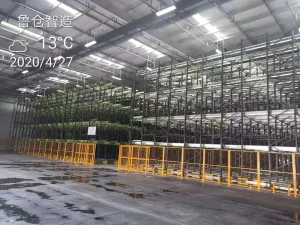
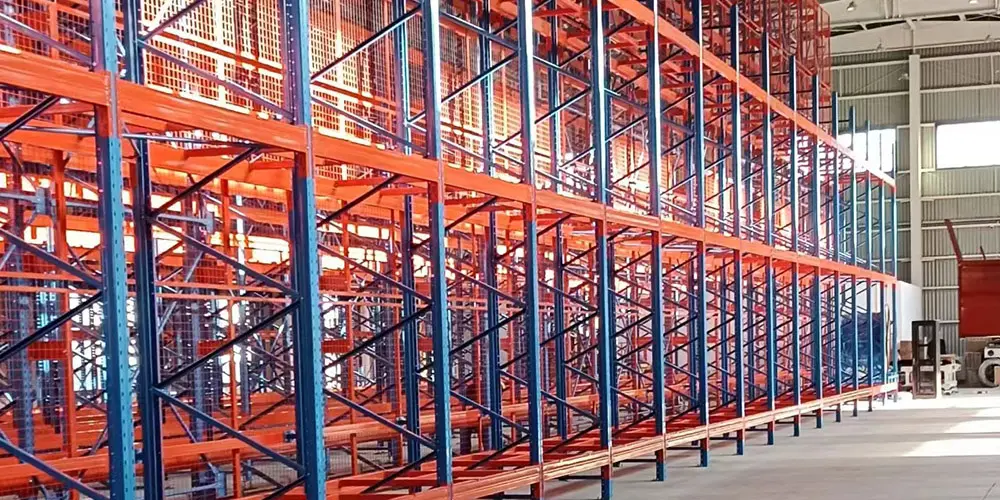
As global industrial real estate prices escalate and supply chain velocity demands rise, warehouse layout engineering has shifted from standard horizontal storage to high-density vertical volumetric optimization.
Industrial occupiers are prioritizing structural cubic storage efficiency over footprint expansion. Modern enterprise racking utilizes clear building heights up to 40 meters, reducing cost per pallet position by 35% through high-bay structures.
Transitioning from manual forklifts to Autonomous Mobile Robots (AMRs), Automated Guided Vehicles (AGVs), and Radio Shuttles requires sub-millimeter structural fabrication tolerances and specialized guide rail geometry.
Global procurement directives mandate rigorous adherence to FEM 10.2.02, RMI, and AS4084-2012 codes. Precision cold-formed high-tensile structural steel ensures resilience against dynamic frame displacement during seismic events.
Detailed mechanical principles, structural cold-rolled steel profiling, load distribution physics, and operational dynamics of modern B2B racking architectures.
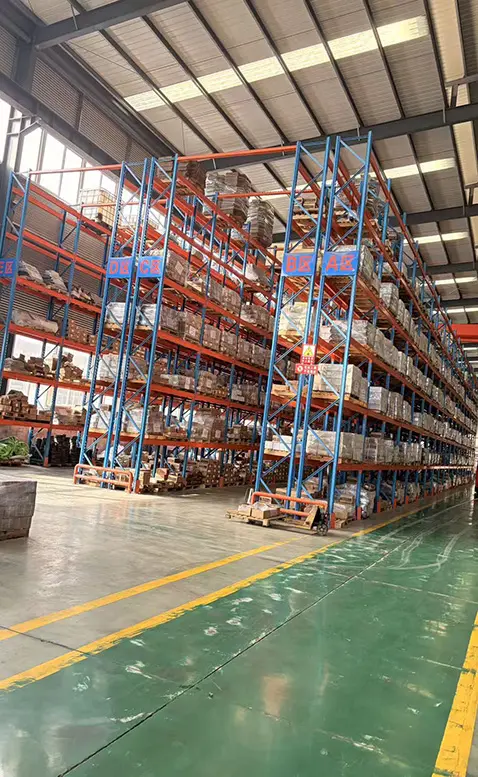
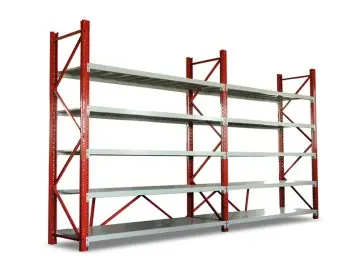
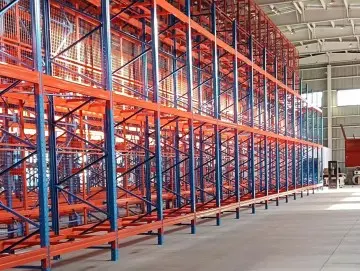
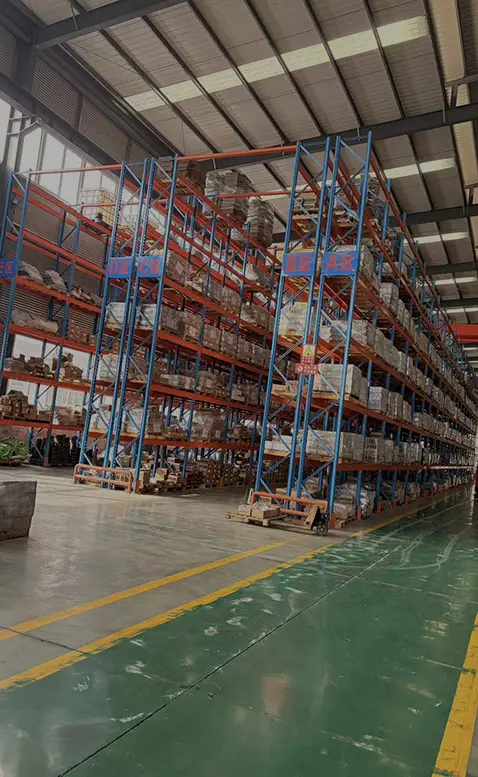
Selective pallet racking represents the foundational architecture for enterprise distribution centers requiring 100% direct pallet selectivity. Utilizing cold-formed steel upright frames (typically Q235B or Q355B structural steel grade) connected via horizontal and diagonal bracing with structural beam connectors, selective racking provides immediate access to every stored Stock Keeping Unit (SKU).
In Very Narrow Aisle (VNA) configurations, aisle widths are compressed from standard 3.5m–3.8m down to 1.5m–1.8m, operated via wire-guided or rail-guided turret trucks. This increases floor space utilization by up to 40% while preserving individual pallet picking speed. Beam levels feature adjustable pitch increments (50mm or 75mm) secured by heavy-duty mechanical safety pins to eliminate accidental dislodgement.
Designed specifically for homogeneous cargo with high volume per SKU, Drive-In Racking operates on the Last-In, First-Out (LIFO) inventory control policy. Forklift trucks physically enter the racking bays to deposit or retrieve pallets supported on continuous cantilever floor rails. Drive-Through variations allow access from both ends, enabling First-In, First-Out (FIFO) operational sequencing.
Because Drive-In systems eliminate interior work aisles, cubic storage density increases by up to 75% compared to standard selective layouts. Engineering consideration is directed toward top-bracing frames, ground guide rails, and heavy-duty upright column protectors to resist impact loads from forklift movement inside dense storage lanes.
Push-Back systems utilize nested dynamic cart assemblies riding on inclined steel channels (typically set at a 1.5°–3° incline). Pallets are loaded onto the top cart; when a second pallet is inserted, it pushes the first pallet backward, exposing the lower cart beneath it. Available in 2, 3, 4, and 5-pallet deep configurations, Push-Back racking offers high-density storage under a LIFO protocol while maintaining individual aisle selectivity across multiple lanes.
Mechanical gravity flow features precision stainless steel ball-bearing cart wheels and integrated velocity retarders, preventing excessive kinetic acceleration during discharge. This makes Push-Back systems ideal for medium-density storage requiring rapid turnover without driving forklifts inside the structure.
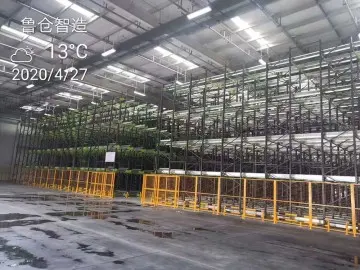
Representing the bridge between conventional steel racking and full warehouse automation, Radio Shuttle Racking employs an independent, battery-powered motorized vehicle (shuttle runner) that travels within deep racking channels along specialized guide rails. Forklifts deposit pallets at the channel entrance, and the radio-controlled shuttle autonomously transports and stacks the unit load deep inside the rack lane.
Radio shuttle systems support both LIFO and FIFO inventory management. They operate seamlessly in extreme environments such as cold-storage warehouses (-30°C), minimizing human operator exposure and forklift fuel consumption while maximizing throughput efficiency.
Heavy-Duty Mobile Racking consists of selective pallet racking structures mounted directly onto electrically driven mobile carriages that travel along recessed floor rails. Controlled via PLC automation, touch panels, or remote wireless signals, mobile racking opens a single operating aisle on demand while remaining compact when closed.
This dynamic design eliminates up to 80% of unnecessary aisle space, delivering up to 90% higher overall storage capacity within the same warehouse footprint. Integrated safety features include photo-electric light curtains, proximity sensors, and emergency stop bumpers to prevent movement when obstacles or personnel are detected in open aisles.
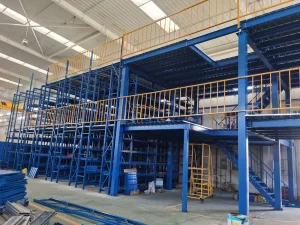
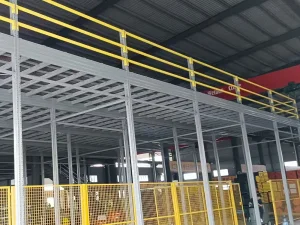
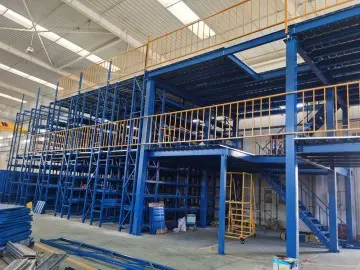
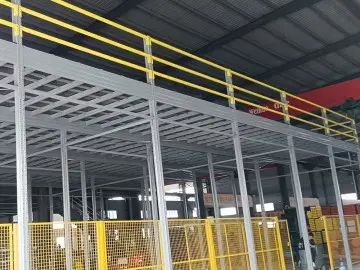
Mezzanines and structural steel platforms expand available building area by constructing intermediate, heavy-duty floor levels above ground-floor operations. Engineered with high-section modulus structural steel columns (H-beams, RHS profiles) and primary/secondary joists, mezzanines support uniform distributed loads ranging from 300 kg/m² to over 1,500 kg/m².
Decking options include cold-rolled zinc-galvanized steel plates, open steel grating for sprinkler water penetration, tear-drop checker plates, or high-density structural wood decking. Integrated with staircase towers, safety handrails, pallet gates, and vertical freight lifts, mezzanines transform high-ceiling facilities into multi-tiered order picking, packing, or light assembly zones.
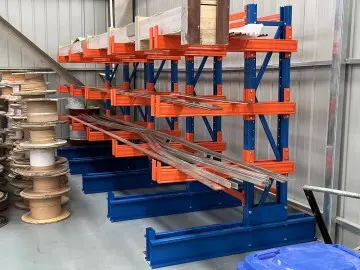
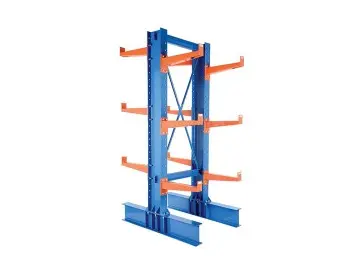
Cantilever racking features solid central structural columns with extending horizontal arms, omitting front vertical uprights entirely. This unobstructed structural geometry provides unlimited lateral length access for non-standard, linear, or bulky products including steel pipes, aluminum extrusions, timber planks, plastic tubing, and sheet metal plates.
Arms are available in straight or inclined angles with removable end-retaining pins. Column section sizing and arm connection clips are engineered via Finite Element Analysis (FEA) to resist dynamic torsion and bending moments under heavy concentrated point loads.
Evaluate operational metrics, financial CAPEX vectors, and spatial parameters across primary industrial warehouse storage systems.
| Storage Type Architecture | Storage Density % | Pallet Selectivity | Flow Protocol | Est. CAPEX per Position | Seismic Resistance | Automation Grade |
|---|---|---|---|---|---|---|
| Selective Pallet Racking | 40% - 50% | 100% Direct | FIFO / LIFO | Low ($) | High (Anchored Base) | Manual / VNA Guided |
| Drive-In Racking | 75% - 85% | Low (Per Lane) | LIFO (Strict) | Low - Moderate ($$) | Moderate (Top Braced) | Manual Forklift |
| Push-Back Cart Racking | 65% - 75% | Moderate (2-5 Deep) | LIFO | Moderate ($$$) | High (Nested Frame) | Gravity Dynamic |
| Radio Shuttle Racking | 85% - 92% | High (Per Channel) | FIFO / LIFO Flexible | Moderate - High ($$$$) | Very High | Semi-Automated PLC |
| Motorized Mobile Racking | 85% - 95% | 100% On Demand | FIFO / LIFO Flexible | High ($$$$$) | High (Guided Base) | Electric Motorized PLC |
| Mezzanine Steel Platform | Volumetric Expansion | 100% Floor Access | Flexible Picking | Moderate per m² ($$$) | Engineered Column FEA | Conveyor / Lift Ready |
| Cantilever Systems | Variable (Long Cargo) | 100% Lateral | Direct Access | Moderate ($$$) | High Rigid Base | Manual / Side Loader |
Tailored structural designs matching the specific environmental, regulatory, and throughput requirements of high-demand operational sectors.
Refrigerated warehouses (-30°C) demand thermal density to minimize operational power consumption per cubic meter. Radio Shuttle and Mobile Racking deliver over 85% volumetric density, utilize low-temperature structural steel resistant to embrittlement, and feature hot-dip galvanized or specialized epoxy powder coatings.
Fast-moving third-party logistics centers require dynamic flexibility for thousands of variable SKUs. Multi-tier mezzanine picking towers combined with selective pallet racks provide high pick-rate efficiency, conveyor connectivity, and seamless adaptability for high-volume order processing.
Manufacturing plants storing heavy engine blocks, metal stamping dies, and raw coils mandate reinforced structural beam framing. Heavy-duty pallet racks with capacity exceeding 4,000 kg per beam level and steel platforms engineered for heavy machinery placement prevent dynamic beam deflection and ensure structural stability.
Underpinned by rigorous engineering calculation methods, ISO certified manufacturing lines, and comprehensive global project delivery protocols.
Guake Logistics Technology (Shandong) Co., Ltd. designs and manufactures industrial warehouse racking systems strictly adhering to global structural standards:
Located in Linyi, Shandong Province, Guake operates a modern 20,000+ square meter manufacturing complex equipped with automated CNC cold-roll forming lines, robotic laser welding stations, continuous automatic punching units, and multi-stage electrostatic powder coating spray lines. By sourcing premium high-tensile coil steel directly from Tier-1 state mills (BaoSteel, Shougang), we maintain full control over chemical composition, tensile yield limits, and dimensional integrity.
Every enterprise order follows a structured engineering lifecycle:
Pioneering structural innovations and IoT integration pathways driving intelligent material handling infrastructure.
Integration of micro strain-gauge sensors embedded directly into upright column bases and beam connectors. Real-time telemetry alerts warehouse operators to structural overload, beam deflection anomalies, or unscheduled forklift impact forces before dynamic failure occurs.
Developing standardized ultra-flat rail tracks, floor-recessed docking stations, and optical positioning targets within standard rack frames, facilitating plug-and-play integration with autonomous mobile picking robots and AGV lifters.
Transitioning production energy to solar micro-grids at our Shandong facility and incorporating electric arc furnace (EAF) recycled high-strength steel. This lowers the embodied carbon footprint per pallet position by up to 28% to support global ESG target compliance.
Comprehensive engineering guidance addressing key procurement, structural calculation, and operational considerations.
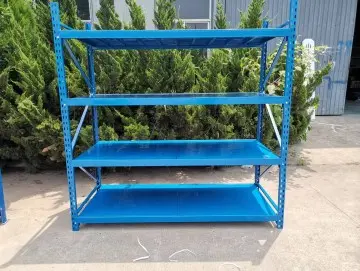
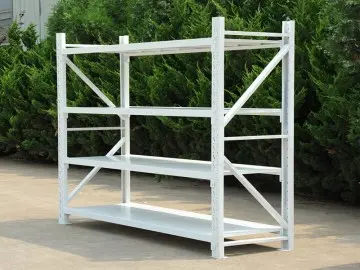
Guake manufactures a complete portfolio of engineered industrial storage systems, including:
Design sizing is conducted through structural calculation models in accordance with FEM 10.2.02 or ANSI/RMI MH16.1 standards. Engineers calculate structural flexural stress, column Euler buckling resistance, and beam section modulus ($Z_x, Z_y$) based on the specified unit load weight, upright frame height, beam span length, and localized seismic zone factors. Steel grades typically utilize high-grade Q235B or Q355B cold-rolled steel.
Yes. By providing architectural CAD drawings or PDF floorplans detailing building dimensions, clear height below trusses, floor slab load capacities, pallet sizes (L x W x H), unit weights, and forklift turning radiuses, Guake’s engineering team provides 2D rack layout CAD proposals, 3D spatial models, and load balance calculations free of charge.
Drive-In Racking offers low CAPEX density for few SKUs where forklifts drive directly into lanes under a LIFO protocol. Push-Back Racking utilizes inclined cart mechanisms for 2–5 deep storage, offering faster access per lane face without entering the rack structure. Radio Shuttle Racking uses battery-powered motorized shuttles within deep channels, achieving maximum density, high throughput speed, and support for both LIFO and FIFO protocols.
Every shipment includes detailed container loading manifests, color-coded component tagging, structural layout assembly blueprints, and step-by-step installation manuals. For large enterprise projects, Guake can dispatch experienced installation engineers or provide live remote video guidance and commissioning oversight.
For standard dry indoor ambient facilities, thermosetting electrostatic epoxy-polyester powder coating (60–80 microns) provides excellent corrosion protection. For high-humidity, outdoor, or sub-zero deep freeze operations (-30°C), hot-dip galvanizing (HDG) per ISO 1461 is recommended, delivering a protective zinc coating thickness of 60–100 microns that prevents structural rust formation.
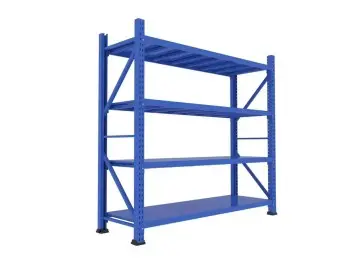
Review our extensive range of specialized cantilever, heavy-duty beam, and modular storage equipment customized for your specific industrial requirements.
Connect directly with senior logistics technology engineers at Guake Logistics Technology (Shandong) Co., Ltd. Submit your layout specifications for structural CAD modeling and factory-direct quotation.