Engineered for extreme space optimization, heavy pallet loads, and low-temperature durability across Central Russia.
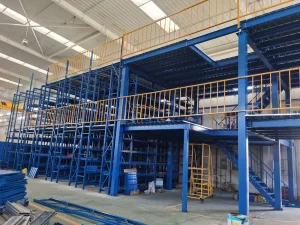
Multi-tier structural platform engineered to double vertical floor capacity in high-clearance Moscow Oblast fulfillment hubs.
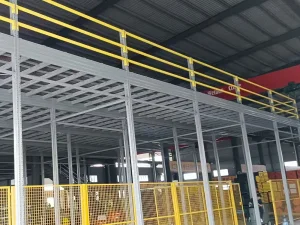
Heavy-duty bolted structural steel platforms customized for heavy machinery placement, picking zones, and bulk storage.
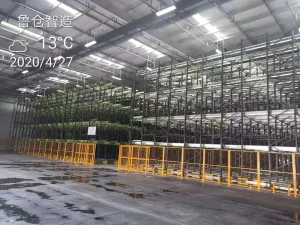
Semi-automated deep-lane pallet shuttle system designed specifically for sub-zero food logistics and pharmaceutical storage.
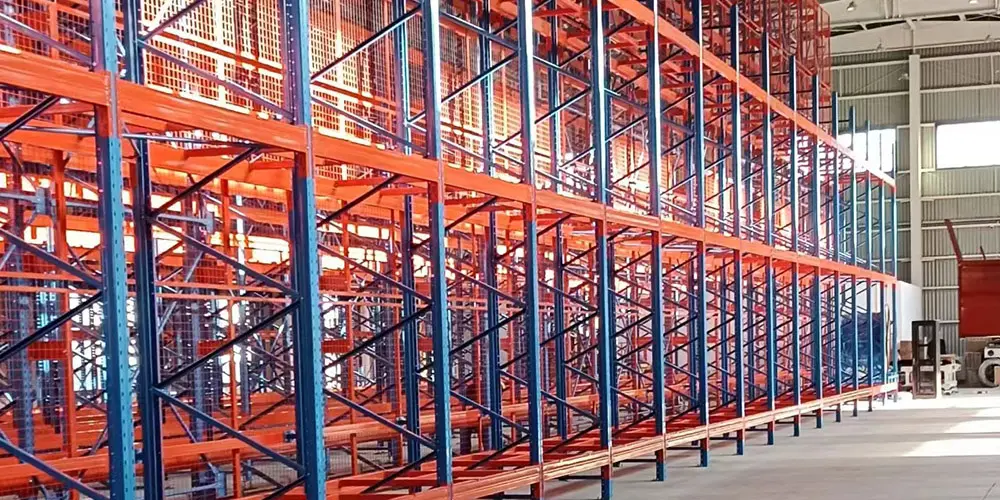
Nested cart dynamic rack storing 2 to 6 pallets deep per lane, delivering 75% volumetric efficiency with instant lane selectivity.
Understanding the commercial dynamics driving demand for advanced Chinese push back racking systems across the Central Federal District.
The Greater Moscow Region (Moscow Oblast) stands as the strategic logistical heart of Eurasian commerce. Key industrial corridors—such as the Southern logistics arc (Podolsk, Klimovsk, Chekhov), the Eastern distribution belts (Noginsk, Elektrostal), and the Northern airport rings (Sheremetyevo, Khimki)—contain over 65% of Russia’s Class-A industrial warehousing inventory.
In recent years, the rapid explosion of e-commerce giants (such as Wildberries, Ozon, and Yandex Market) alongside national FMCG retail consolidators has driven warehouse vacancy rates in the Moscow ring roads (MKAD, A-107, and A-108) down to historical lows. With prime industrial land lease rates escalating sharply, logistics operators can no longer afford the financial overhead of sprawling horizontal storage footprints. The imperative has shifted entirely toward Volumetric Density Optimization—maximizing structural payload per cubic meter of building volume.
Traditional selective pallet racking requires dedicated aisles for every storage row, wasting up to 60% of warehouse floor space on forklift traffic lanes. Conversely, while standard Drive-In racking improves density, it severely compromises operational throughput by forcing forklifts inside structural frames, resulting in frequent upright damage and slow honeycombing retrieval cycles.
Push Back Racking represents the engineering sweet spot for Moscow warehouse operators. Utilizing a series of nested, inclined carts that roll along low-profile structural steel channels, push back systems allow 2, 3, 4, 5, or 6 pallets to be stored deep per lane. Forklifts operate exclusively from the safety of the main aisle, pushing incoming pallets backward against gravity. When a pallet is retrieved, gravity smoothly moves the remaining carts forward to the aisle face. This mechanism achieves up to 75% higher storage density than selective racking while preserving instant access to individual storage lanes.
An anatomical breakdown of heavy-duty push back racking systems manufactured in China for Moscow operating environments.
High-precision cold-rolled steel carts stack neatly on top of one another inside a single inclined steel channel. Designed with ultra-low profile height to conserve vertical ceiling clearance.
Custom-engineered structural rail slope precisely calibrated between 1.5° and 2.0°. Ensures predictable gravity descent without generating hazardous kinetic momentum upon pallet retrieval.
Integrated mechanical safety stops prevent trolley derailment during aggressive forklift loading. Secondary rubber dampeners absorb residual kinetic energy during rapid operations.
Operating high-density dynamic storage in Moscow’s extensive cold-chain and unheated buffer warehouses demands rigorous metallurgical integrity. Standard structural steel becomes brittle at sub-zero temperatures, leading to potential micro-fractures under heavy kinetic loads. Chinese manufacturing facilities utilizing high-grade Q355B low-alloy structural steel execute continuous roll-forming of uprights and beams with strict ductile temperature ratings.
Furthermore, cart wheels in Guake Push Back Racking systems feature custom-machined steel rollers equipped with fully enclosed, self-lubricating synthetic grease bearings tested down to -30°C (-22°F). This prevents bearing freeze-up, ensuring frictionless, reliable cart movement even in severe deep-freeze environments.
Use this engineering matrix to evaluate system trade-offs before finalizing your Moscow facility layout drawings.
| Storage System Type | Volumetric Storage Density | Pallet Selectivity | Stock Inventory Flow | Forklift Damage Risk | Ideal Moscow Application |
|---|---|---|---|---|---|
| Push Back Racking | High (70% - 75%) | Lane-by-Lane Access | LIFO (Last-In, First-Out) | Very Low (Aisle Only) | Medium SKU, High-Density Buffer & Cold Storage |
| Selective Pallet Racking | Standard (40% - 50%) | 100% Direct Access | FIFO / LIFO Flexible | Low | High SKU Count, FMCG Order Picking |
| Drive-In Racking | Very High (75% - 85%) | Poor (Block Access) | LIFO Only | High (Forklift Enters Frame) | Low SKU, Bulk Homogeneous Goods |
| Radio Shuttle Racking | Maximum (80% - 90%) | Lane Access via Shuttle | FIFO or LIFO | Extremely Low | Automated High-Bay Cold Storage Hubs |
Why Moscow logistics developers and procurement managers build direct strategic partnerships with Chinese OEM manufacturers in Shandong.
Located in Linyi, Shandong, Guake Logistics Technology operates a 20,000+ square meter state-of-the-art manufacturing campus equipped with fully automated CNC cold roll-forming production lines, robotic laser cutting units, and automated electrostatic powder coating systems. Producing industrial steel racking since 2010, Guake engineers maintain rigorous quality control protocols under ISO 9001:2015 and international EN 15512 structural design standards.
By controlling every phase of production—from raw Q355B steel strip coil slitting to precision punch hole spacing and automated robotic welding—Chinese manufacturing provides unmatched dimensional consistency. This guarantees that modular push back cart rails align perfectly during on-site installation in Moscow, eliminating mechanical friction or derailment hazards.
Real-world operational deployments of push back racking systems in specialized industrial sectors around the MKAD beltways.
Industry: Frozen Meat & Dairy Logistics
Location: Podolsk Industrial Park (South Moscow)
Deployment: 4-Deep Push Back Racking across -24°C rooms. Increased pallet capacity from 3,200 to 5,400 positions without adding cooling compressor load.
Industry: Retail & Fast Fulfillment
Location: Eastern A-107 Logistics Corridor
Deployment: 3-Deep Push Back system integrated into overflow staging zones. Allowed fast LIFO rotation of fast-moving promo items directly feeding pick modules.
Industry: Heavy Industrial & Spare Parts
Location: Domodedovo Freight Corridor
Deployment: Heavy-duty 2-deep cart system rated for 1,400kg unit loads. Eliminated aisle clutter and protected high-value component crates from forklift impacts.
Critical technical and logistical answers for structural engineers, project managers, and supply chain executives.
Our push back carts are engineered with versatile frame geometries capable of accommodating both standard Euro pallets (800mm x 1200mm) and wider Finnish pallets (1000mm x 1200mm). Dual-format cart designs ensure smooth alignment and weight distribution regardless of pallet overhang, preventing cart binding or unbalanced gravity flow.
Guake manufactures push back racking systems ranging from 2-deep up to 6-deep pallet configurations per lane. However, for optimum forklift operator efficiency and pushing force management, 3-deep to 5-deep lane setups represent the standard sweet spot for most Moscow distribution centers.
Push back racking requires standard counterbalance or reach trucks. No specialized attachments are necessary. The forklift operator simply uses the physical weight of the incoming pallet load to push back the pallets already resting on the nested carts. The mast angle must be kept parallel to the rack face during loading.
For sub-zero installations (down to -30°C), Guake equips all cart assemblies with low-temperature synthetic grease bearings and cold-drawn structural steel channels. This eliminates grease solidification, ensuring carts return smoothly to the front aisle face without human intervention or mechanical sticking.
Orders are packaged in heavy-duty export bundlings and loaded into 40ft High Cube containers. Freight travels via direct Sino-Russian container rail lines through Zabaikalsk/Manzhouli or Erenhot direct to major Moscow freight customs stations (e.g., Vorsino, Bely Rast, Silikatnaya) with typical transit times between 14 and 18 days.
Yes. All structural engineering calculations perform full stress, buckling, and deflection analysis adhering to both European EN 15512 standards and Russian Federation GOST R 55525-2017 structural requirements. Stamped engineering documentation is supplied with every project handover.
Select from our comprehensive line of heavy-duty industrial storage equipment, fully custom-manufactured in Shandong, China.
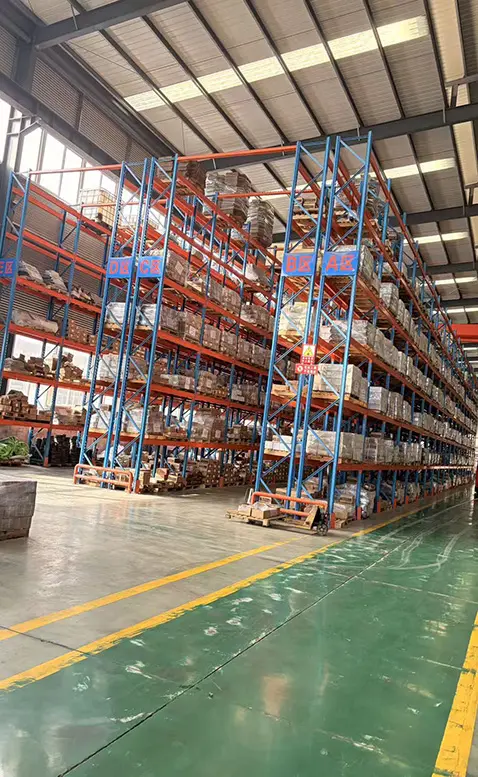
Maximum-density storage for homogeneous bulk stock. Eliminates aisles by allowing forklifts to drive inside rack lanes.
Dynamic cart-on-rail high density pallet system providing high volume storage with instant aisle accessibility.
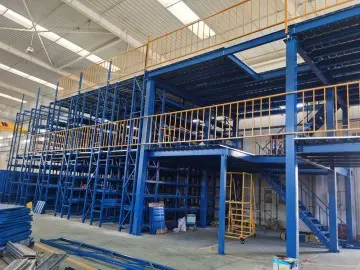
Heavy structural steel elevated platforms creating extra floor space for picking, offices, and manual storage zones.
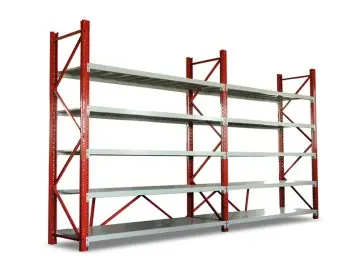
Racks mounted on motorized mobile bases traveling on floor rails to open a single working aisle on demand.
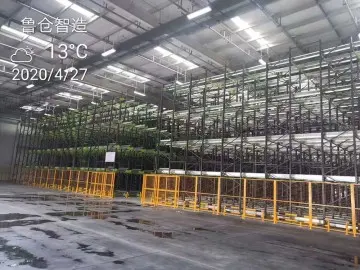
Semi-automated battery shuttle system transporting pallets in deep storage channels via remote control.
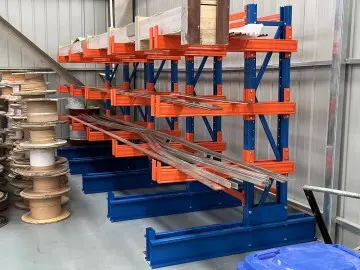
Heavy-duty column and arm rack system designed for storing long pipes, steel profiles, timber, and sheet metal.
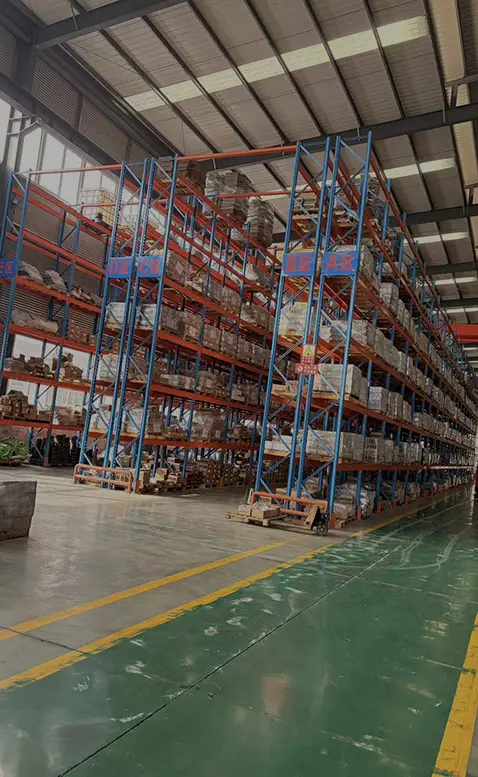
Traditional heavy-duty beam racking providing 100% direct access to every pallet position for high-SKU distribution.
High-bay intelligent stereoscopic warehouse framework engineered for seamless integration with ASRS cranes.
Send your warehouse floor plans (CAD/PDF) to our structural engineering team. Receive detailed CAD rack layouts, structural load calculations, and direct factory pricing within 24 hours.
Send Inquiry Now