Japan Market Push Back Racking
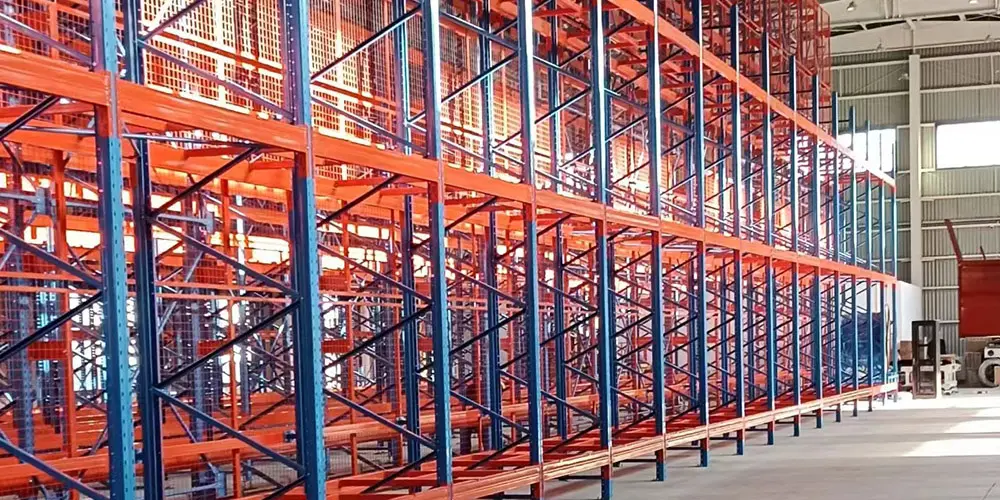
2-deep to 6-deep nested cart dynamic storage with gravity slope tracks. Engineered to withstand Japan’s severe seismic conditions.
View Product Details →


Precision-engineered pallet storage systems engineered for maximum space utilization in high-cost Japanese urban hubs.
2-deep to 6-deep nested cart dynamic storage with gravity slope tracks. Engineered to withstand Japan’s severe seismic conditions.
View Product Details →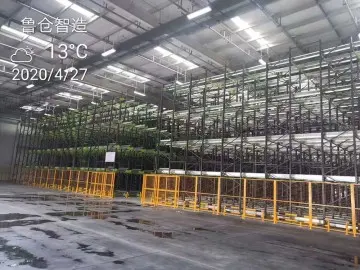
Semi-automated deep-lane pallet shuttle systems optimized for sub-zero cold chain logistics centers in Hokkaido and Greater Tokyo.
View Product Details →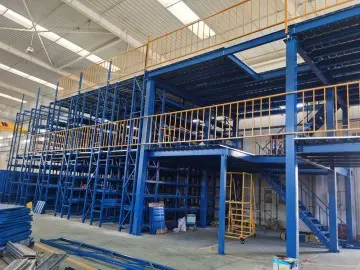
Heavy-duty multi-tier structural steel platforms designed to multiply floor surface area in high-rent Japanese urban distribution facilities.
View Product Details →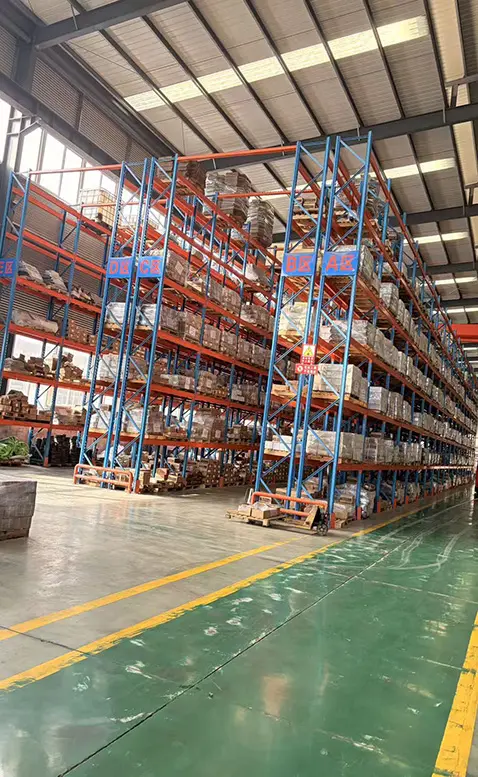
Maximum density LIFO continuous rail racking designed for homogenous bulk goods and raw materials in Japanese industrial plants.
View Product Details →The warehousing and logistics infrastructure in Japan faces an unprecedented convergence of economic, regulatory, and geographical pressures. As one of the world's most sophisticated logistics markets, Japan demands uncompromising storage density, extreme structural safety, and high operational velocity.
Prime logistics real estate across the Tokyo Bay Area (Kanagawa, Chiba, Saitama) and the Greater Kansai region (Osaka, Kobe) carries premium lease rates. Facility operators cannot afford expansive, low-density selective racking layouts. Push Back Racking allows logistics providers to increase pallet storage capacity by up to 75% without expanding their physical building footprint.
With the strict enforcement of annual overtime caps (960 hours) on commercial truck drivers under Japanese labor reform laws, distribution centers must minimize driver wait times. Push Back Racking eliminates forklift travel inside racking lanes (unlike Drive-in systems), dramatically accelerating pallet loading and unloading cycles.
Operating within one of the world's most active seismic zones requires racking systems engineered to Japanese Industrial Standards (JIS Z 0620). Guake’s structural designs incorporate reinforced cold-rolled uprights, heavy-duty floor anchor plates, and seismic safety latches to prevent cart derailment during high-magnitude earthquakes.
A Push Back Racking system utilizes a series of nested, inclined carts that ride on sloped structural steel rails. When the first pallet is loaded by a forklift, it rests on the top cart. When the second pallet is inserted, the forklift operator gently pushes the first pallet back, revealing the second cart. Upon retrieval, gravity smoothly glides the remaining pallets forward to the aisle face.
| Storage Depth | 2, 3, 4, 5, and 6 Pallets Deep |
| Payload Capacity | 500 kg to 1,500 kg per pallet position |
| Structural Material | Q235B / Q355B Cold-Rolled Steel |
| Surface Finish | Epoxy Powder Coating / Hot-Dip Galvanized |
| Operating Temp. | -30°C to +40°C (Cold Storage Certified) |
| Seismic Design Code | JIS Z 0620 / ISO 8611 Compliant |
Selecting the correct warehouse storage architecture requires balancing cubic density, SKU selectivity, forklift cycle time, and capital expense. The table below illustrates why Japanese warehouse engineers increasingly choose Push Back systems for medium-SKU, high-volume environments.
| Storage System Type | Storage Density | SKU Selectivity | Forklift Travel Time | Inventory Flow | Japan Market Suitability |
|---|---|---|---|---|---|
| Push Back Racking | High (70–75%) | 100% per Lane Face | Fast (Aisle-Only) | LIFO (Last-In, First-Out) | Optimal for High-Rent Hubs |
| Selective Pallet Racking | Low (40–45%) | 100% per Pallet | Moderate | FIFO / LIFO | Requires Excessive Floor Area |
| Drive-In Racking | Very High (75–85%) | Low (Per Channel) | Slow (Enters Racking Structure) | LIFO | Risk of Rack Collision / Damage |
| Radio Shuttle Racking | Maximum (85–90%) | Low to Moderate | Fast (Automated Shuttle) | FIFO or LIFO | Higher Initial CAPEX Investment |
| Live Pallet Flow Racking | High (75–80%) | 100% per Lane | Fast (Dedicated Load/Unload) | FIFO (First-In, First-Out) | Requires Dual Access Aisles |
Based in Shandong, China, Guake Logistics Technology Co., Ltd. combines advanced manufacturing automation, direct port access, and rigorous structural engineering to deliver high-performance racking systems to global markets.
By bypassing regional intermediaries and utilizing Shandong’s raw steel supply chain, Guake delivers premium-grade Push Back systems at a fraction of domestic Japanese manufacturing costs—without compromising on steel thickness or load ratings.
Our factory's proximity to Qingdao Port enables rapid vessel booking and short maritime shipping times to major Japanese ports, including Tokyo, Yokohama, Nagoya, Osaka, and Kobe, minimizing project lead times.
Continuous automated cold-roll forming lines and robotic welding cells maintain tight tolerances (±0.3mm). Every batch undergoes structural deflection testing and powder-coat thickness verification.
From cold-chain food handling to high-tech automotive component storage, Push Back Racking provides high utility across key industrial clusters throughout Japan.
Refrigerated and frozen warehouses require immense electrical power to cool cubic space. Utilizing 4-deep or 5-deep Push Back Racking in sub-zero facilities minimizes empty aisle space, lowering refrigeration energy overhead per stored pallet by up to 35%.
Tier-1 automotive component suppliers feeding assembly lines require buffer storage for medium SKU counts. Push Back systems allow immediate access to different SKU lines at every lane face, ensuring rapid staging for Just-In-Time (JIT) delivery.
Fast-Moving Consumer Goods (FMCG) logistics centers managing high batch volumes benefit from 3-deep push-back cart configurations. Operators achieve high density while preserving rapid turn rates for fast-selling items.
Chemical operations governed by strict fire prevention codes benefit from Push Back systems that preserve overhead clearance for in-rack fire sprinkler systems while organizing drum and tote pallets safely.
Guake engineers custom-design Push Back systems to comply with Japanese Industrial Standards (JIS Z 0620). Our systems utilize heavy-duty floor anchor bolts, reinforced back-bracing frames, and anti-derailment lip retainers on every nested cart. This prevents cart jump and structural deformation under seismic ground accelerations up to 0.4g–0.8g.
Yes. While standard Western racking components cater to Euro (1200×800mm) or US (48×40 inch) pallets, our engineering team custom-tools nested cart dimensions specifically for JIS T-11 (1100×1100×144mm) pallets widely used throughout Japan's industrial supply chain.
Push Back Racking systems can be configured from 2-deep up to 6-deep per lane. 2 to 4-deep configurations are most common as they allow standard capacity reach trucks to push the pallet stacks effortlessly without requiring specialized high-capacity forklift hydraulics.
For cold-chain environments down to -30°C, we utilize specialized low-temperature synthetic lubricants inside sealed stainless steel wheel bearings, combined with low-temp powder coatings or hot-dip galvanized finishes to prevent corrosion caused by condensation.
Push Back systems are low-maintenance because they operate purely on gravity without electrical motors or hydraulic lines. Routine maintenance involves periodic visual inspection of the wheel tracks, cleaning debris from rails, and verifying upright anchor torque values annually.
Manufacturing typically requires 20 to 30 days depending on project volume. Ocean freight shipping from Qingdao Port to major Japanese ports (Tokyo, Yokohama, Osaka) takes approximately 3 to 5 transit days, making total project delivery exceptionally fast.
Preserving all original product URLs, configured for high-density industrial applications in Japan and global markets.
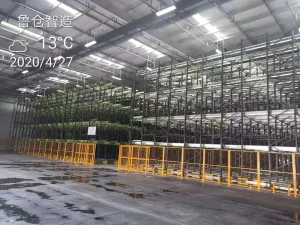
Automated radio shuttle pallet storage for high-throughput warehouse logistics.
View Product →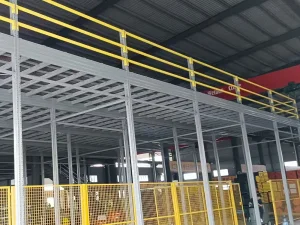
Heavy-duty bolted steel platform structures to double usable industrial floor area.
View Product →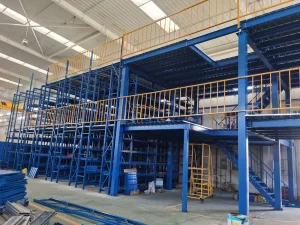
Multi-layer racking mezzanines designed for small-parts picking and e-commerce.
View Product →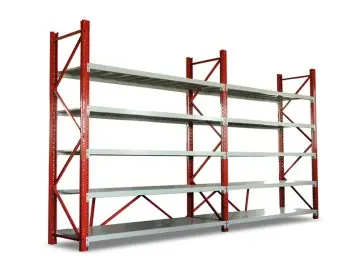
Motorized bases moving along floor rails to eliminate static aisles for 100% access.
View Product →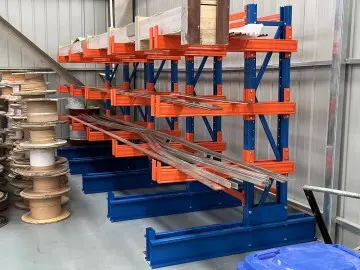
Column-and-arm racking systems for long goods, pipes, aluminum profiles, and timber.
View Product →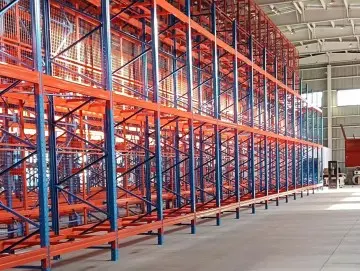
Standard selective beam pallet racking with 100% direct access to every SKU position.
View Product →
Versatile long-span shelving systems for non-palletized manual picking applications.
View Product →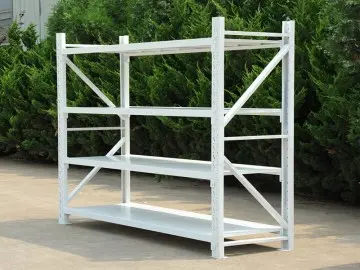
Boltless multi-tier steel shelving units ideal for archives, auto parts, and small goods.
View Product →Connect directly with Guake's structural engineering team. Receive custom 3D CAD layout proposals, JIS seismic calculations, and factory-direct pricing for your Push Back Racking project.