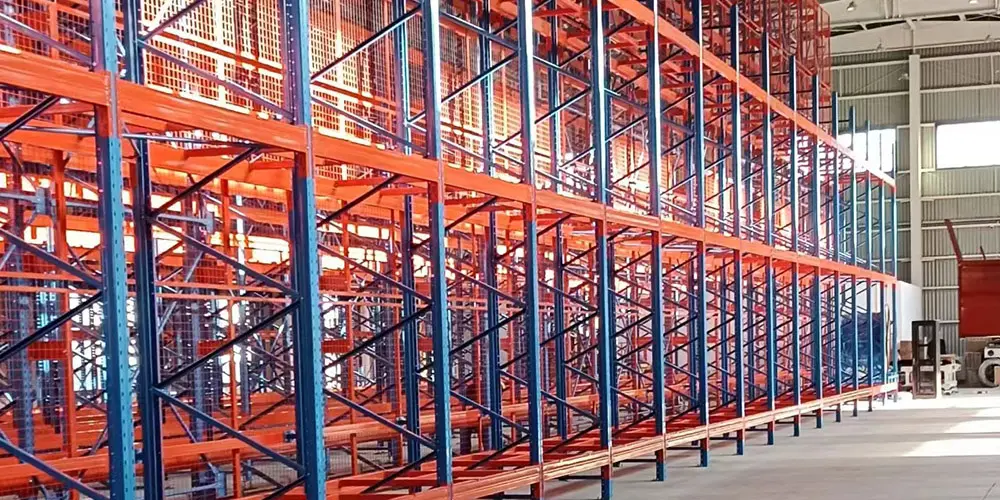
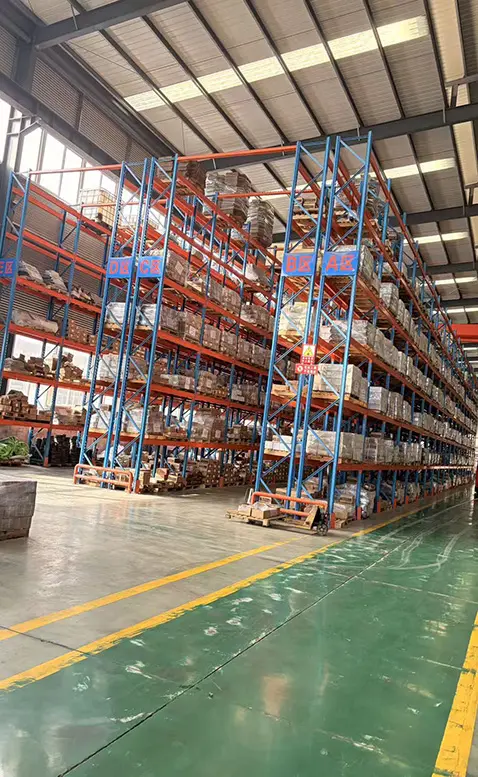
Custom-engineered high-density storage platforms configured to maximize floor utilization and handle heavy unit loads in East African industrial operations.
An in-depth structural and economic analysis of warehousing modernization across Ethiopia’s flagship Special Economic Zones (SEZs) and trade corridors.
Under the framework of Ethiopia's Homegrown Economic Reform Agenda 2.0, industrial zones such as Hawassa Industrial Park (textiles & apparel), Kilinto Industrial Park (pharmaceuticals), Bole Lemi, and Adama SEZ are expanding rapidly. Warehouse developers require structural storage frameworks that maximize cubic meter capacity without inflating real estate footprint costs.
Over 95% of Ethiopia’s international trade travels along the critical Ethio-Djibouti Logistics Corridor terminating at the Modjo Dry Port hub. Managing high-throughput containerized goods requires LIFO (Last-In, First-Out) push-back pallet storage systems that accelerate forklift cycle times and reduce aisle space bottlenecks by up to 40% compared to standard selective racking.
As Ethiopia consolidates its status as the manufacturing and logistics powerhouse of East Africa, warehouse operators in Addis Ababa and regional commercial centers are shifting away from primitive floor stacking and low-density selective racking. Push back racking represents the ideal technological balance: it provides multi-pallet depth (2 to 6 pallets deep on nested wheeled carts mounted on inclined rails) while maintaining immediate accessibility to every individual lane face. This capability is vital for Ethiopia's booming agricultural exports—including Sidamo and Yirgacheffe coffee, oilseeds, and pulses—where batch traceability, density, and rapid container loading are operational prerequisites.
Understanding nested carts, inclination angles, metallurgical specifications, and dynamic load distribution for optimal structural safety.
Guake Push Back Racks utilize high-precision, heavy-duty nested steel carts riding on low-profile inclined steel tracks. When loading, the forklift pushes the first pallet back to expose the nested cart beneath it. This low-friction kinematic system ensures smooth travel even under full 1,500kg unit loads.
The flow rail gradient is calibrated between 1.5% and 2.0% incline depending on pallet depth and load mass. Gravity automatically brings the next pallet forward to the aisle face when a front pallet is retrieved, drastically cutting forklift travel distances inside storage bays.
Safety is paramount in seismic and high-volume distribution hubs. Systems include structural cart stop locks, heavy-duty rubber impact bumpers, and anti-lift tabs that prevent cart derailment during aggressive forklift handling or unexpected floor vibrations.
Compare storage performance parameters to determine the right architectural investment for your warehouse facility.
| Storage Racking System | Storage Density | Pallet Selectivity | Inventory Flow | Forklift Entry Required? | Ideal Ethiopian Industry Application |
|---|---|---|---|---|---|
| Push Back Racking | High (75% Floor Use) | Per Lane Face (Good) | LIFO (Last-In, First-Out) | No (Stays in Aisle) | FMCG, Coffee Exporters, Cold Storage, Beverages |
| Drive-In Racking | Very High (85% Floor Use) | Low (Per Bay) | LIFO | Yes (Drives Into Bay) | Homogeneous Bulk Stock, Seasonal Grains |
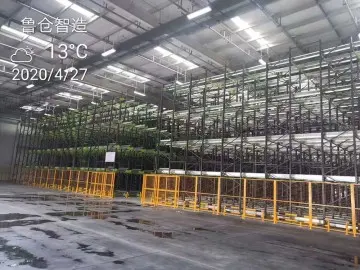
| Radio Shuttle Racking | Maximum (90% Floor Use) | Automated Deep Lane | FIFO / LIFO | No (Shuttle Automation) | Large-Scale Cold Chain, Pharmaceutical Hubs |
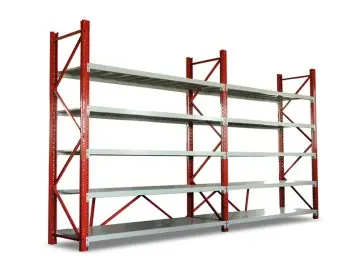
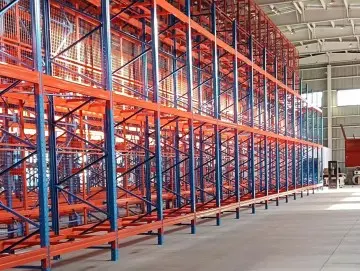
| Selective Pallet Racking | Standard (45% Floor Use) | 100% Direct Access | FIFO / LIFO | No | High-SKU Retail, General Spare Parts Distribution |
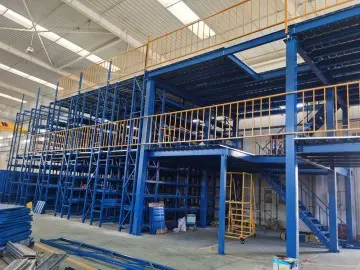
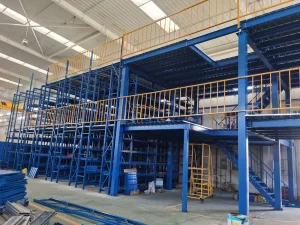
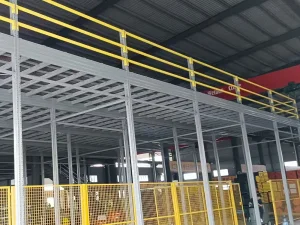
| Mezzanine Steel Platform | Adds Overhead Floor Area | Manual / Multi-Tier | Flexible Flow | No | Garment Manufacturing, E-Commerce Order Picking |
Addressing environmental factors, high altitude structural calculations, and maritime-to-land logistics from China to Ethiopia.
Addis Ababa sits at approximately 2,350 meters above sea level within the proximity of the East African Rift System. Structural rack frames designed for Ethiopia must incorporate dynamic seismic drift factors and localized floor slab loading calculations compliant with EN 15512 and FEM 10.2.02 international standards to ensure long-term structural integrity.
Transporting heavy steel columns from Shandong through tropical marine environments to Djibouti Port requires high-durability surface treatment. Guake utilizes an automated multi-stage pre-treatment wash followed by heavy-duty electrostatic thermosetting powder coating (60-80 microns thickness), shielding structural components against oxidation during maritime transit and humid regional storage conditions.
Why Ethiopian procurement directors and international contractors partner directly with Guake for turnkey warehouse equipment projects.
Established in 2010 in Shandong, China, Guake operates state-of-the-art automated roll-forming lines, robotic welding stations, and precision punch presses. Direct factory manufacturing eliminates trading middleman markups, ensuring Ethiopian clients receive maximum structural steel quality at competitive factory-direct pricing.
We source prime cold-rolled steel exclusively from top-tier state mills (such as Baosteel and Shougang). Upright profiles and beam connections undergo rigorous structural FEA stress testing to guarantee rated safe working loads under intense continuous operating cycles.
From initial 3D CAD layout planning and floor load simulation to custom export packing, container loading optimization, and remote/onsite installation supervision in Ethiopia, Guake manages the complete lifecycle with full engineering accountability.
Custom structural configurations developed for agriculture, bottling, cold storage, and industrial manufacturing.
Ethiopia is Africa's largest Arabica coffee producer. Exporters storing 60kg jute bags on heavy-duty timber or plastic pallets (unit loads of 1,000kg to 1,200kg) utilize 3-to-5 deep push-back lanes to maintain batch density, prevent floor moisture absorption, and quickly retrieve specific harvest lots for processing and shipping via Djibouti Port.
Major beverage bottlers operating near Addis Ababa and Bishoftu rely on push back racking for glass and PET bottle crate storage. The gravity-driven LIFO flow ensures fast pallet staging near shipping docks while reducing forklift movement within main storage aisles by 50%.
For fresh-cut flower exporters and meat processors in Modjo and Hawassa, energy costs in refrigerated warehouses are high. Push back racking dramatically increases storage density within expensive cold rooms (-20°C to +4°C), maximizing cubic thermal efficiency while maintaining fast SKU turnarounds.
With massive investment in Hawassa and Bole Lemi industrial parks, garment manufacturers store packed export cartons on pallets. Push back racking enables high-density carton pallet holding prior to direct sea-container stuffing.
Direct technical and logistical answers for procurement managers, logistics consultants, and warehouse expansion leads.
Selective racking requires multiple aisles for forklift access, resulting in a floor space utilization rate of only 40-50%. Push back racking eliminates intermediate aisles by storing pallets 2 to 6 deep on nested carts, boosting storage density up to 75% while keeping all lane faces accessible along a single operating aisle. This significantly lowers cost per pallet position in high-cost commercial hubs like Addis Ababa.
Because push back systems concentrate heavy loads across deep bays (up to 6,000kg to 9,000kg total vertical load per frame bay), the concrete slab must be engineered to withstand point-load stresses. Typically, a reinforced concrete floor with a minimum thickness of 150mm to 200mm and a compressive strength of C25/C30 (or higher) is recommended. Guake provides baseplate footings and anchor bolt specifications tailored to your site's soil and concrete data.
Guake packages structural racking components into 40ft High Cube (40HC) ocean containers. Shipments depart from Qingdao or Shanghai ports to the Port of Djibouti. From Djibouti, cargo moves via the Ethio-Djibouti Railway or container trucks directly to Modjo Dry Port or your warehouse site in Addis Ababa, Hawassa, or regional industrial parks. We provide full shipping documentation (CIQ, Certificate of Origin, Bill of Lading) to support customs clearance.
Yes. While standard Euro pallets (1200x800mm) and ISO pallets (1200x1000mm) are common, many Ethiopian exporters use custom timber skids or heavy coffee bag pallets. Guake’s engineering team designs custom cart sizes, rail spacing, and beam spans to fit your exact pallet dimensions and weight parameters.
Guake push back carts feature sealed-for-life steel bearings and heavy-gauge structural steel tracks, resulting in minimal maintenance requirements. Routine maintenance involves checking for debris in the cart tracks, verifying rail alignment during annual safety audits, and inspecting front impact stops for collision damage caused by forklift drivers.
Integrate push-back lanes with mezzanine platforms, mobile racking, and radio shuttle technology for multi-zone logistics centers.
Contact Guake Logistics Technology’s direct engineering team for a customized 3D layout plan, structural load calculations, and factory-direct quotation within 24 hours.
Send Inquiry Now