
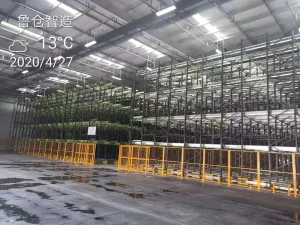


Factory-direct high-density storage configurations engineered specifically for Australian warehouse load standards and operating environments.
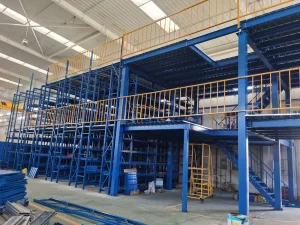
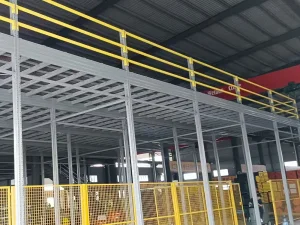
The Australian industrial logistics and supply chain market is undergoing a structural transformation. With prime industrial land values across major metro corridors—such as Western Sydney (Wetherill Park, Eastern Creek, Kemps Creek), Melbourne’s West (Truganina, Laverton North), Brisbane’s Outer South (Yarrabilba, Acacia Ridge), and Perth’s Kewdale/Welshpool corridor—reaching unprecedented highs exceeding A$650 to A$1,200 per square meter, enterprise warehouse operators can no longer afford horizontal sprawl.
Simultaneously, warehouse prime net face rents in Sydney and Melbourne have surged by over 25% year-on-year, while industrial vacancy rates hover below 1.5%. Coupled with Australia’s prevailing labor market pressures—where certified forklift drivers command hourly rates between A$38 and A$52 per hour (inclusive of superannuation, payroll tax, and worker compensation cover)—operational costs for conventional selective pallet racking facilities are escalating rapidly.
To maintain profitability, Australian logistics directors, cold storage facilities, and FMCG distributors are transitioning from traditional selective beam racking to semi-automated Radio Shuttle Racking Systems (Pallet Runner Systems). By utilizing deep-lane shuttle tracks, operations increase cubic space utilization up to 85% while reducing forklift operational travel time inside racks by more than 60%.
High capital costs per square meter in Eastern Seaboard metro hubs demand vertical expansion up to 12m–15m building clear heights.
Automation minimizes reliance on manual forklift labor, reducing operating overheads, accidental collisions, and worker injuries.
Electricity prices across Victoria, NSW, and SA require cold storage facilities (-25°C) to maximize density and cut refrigerated air volume waste.
Exporting structural storage racking into Australia requires strict adherence to the updated AS 4084-2023 (Steel Storage Racking Standards), which governs structural design, testing, and safe operational limits. Standard international off-the-shelf racking frequently fails Australian site audits due to structural calculations that overlook localized seismic shear, column connection stiffness, or specific pallet footprints.
At Guake Logistics Technology, every Radio Shuttle system destined for Australia is calculated by certified structural engineers to ensure full compliance with AS 4084-2023 and AS/NZS 1170 (Structural Design Actions).
The standard Australian timber pallet (CHEP / Loscam) measures 1165mm × 1165mm with distinct bottom notch runner configurations. Using European (1200×800mm) or American (48×40 in) shuttle channel geometry results in pallet instability, runner snagging, and sensor tracking failures.
| Storage System Type | Space Utilization | Forklift Travel Time | Pallet Selectivity | AS 4084 Compliance | Estimated ROI (AU Market) |
|---|---|---|---|---|---|
| Selective Pallet Racking | 40% – 50% | High (Enters every aisle) | 100% Direct Access | Standard Compliance | Baseline |
| Drive-In Racking | 65% – 75% | Very High (Slow drive-in) | Low (Strict LIFO) | Requires Heavy Protection | 24 – 36 Months |
| Guake Radio Shuttle Racking | 80% – 88% | Ultra-Low (Aisle work only) | High (FIFO or LIFO lane control) | Certified AS 4084-2023 | 12 – 18 Months |
| Motorized Mobile Racking | 80% – 85% | Medium (Wait for aisles) | 100% (Sequential) | Complex Mechanical Standards | 30 – 42 Months |
From frozen food distribution in Melbourne to wine storage in the Barossa and 3PL hubs in Sydney, Guake Radio Shuttle systems solve unique operational challenges.
Challenge: Refrigerated energy costs in Truganina (VIC) and Hemmant (QLD) represent up to 40% of facility OPEX. Forklift entry causes thermal loss through open dock doors.
Shuttle Solution: Guake sub-zero radio shuttles operate continuously at -28°C utilizing specialized LiFePO4 battery heating circuits. Deep-lane storage packs 3,000+ pallets into compact insulated rooms, reducing electricity spend by 32%.
Challenge: Rapid distribution of high-turnover beverage pallets (beer, soft drinks, dairy) in Eastern Creek requires high throughput during peak seasonal demand.
Shuttle Solution: Dual-mode FIFO/LIFO shuttle execution allows fast batch unloading directly to outbound B-Double trucks. Forklift cycle times drop from 4.5 minutes per pallet turn to under 1.2 minutes.
Challenge: Bulk storage of seasonal harvests demands high structural rigidity to handle high-density unit loads up to 1,400kg per pallet.
Shuttle Solution: High-yield Q355B cold-rolled steel rails with structural tie-beams ensure minimal structural deflection over 40-meter-deep shuttle runs.
Challenge: Contract logistics providers in Welshpool require adaptable racking layouts that accommodate changing client inventory models.
Shuttle Solution: Modular rack design allows quick adjustment of lane depths and shuttle parameters, offering flexible multi-client contract storage.
Operating out of a modern 20,000+ m² manufacturing facility in Linyi, Shandong Province, Guake Logistics Technology (Shandong) Co., Ltd. has specialized in warehouse storage systems since 2010. By integrating raw material procurement, structural roll-forming, robotic welding, surface finishing, and electrical automation assembly under one roof, Guake delivers unmatched supply chain reliability to Australian enterprise buyers.
Eliminate local Australian distributor markups (typically 35%–50%). Buy direct from the OEM manufacturer with full warranty coverage.
Automated CNC roll-forming lines guarantee upright pitch tolerance within 0.1mm, ensuring flawless shuttle tracking across 50m rails.
Standard order fabrication within 15–20 days. Direct sea freight routes from Qingdao to Sydney, Melbourne, Brisbane, and Fremantle.
Guake utilizes structural steel sourced directly from tier-1 steel mills (BaoSteel, Shougang). Steel coils undergo rigorous tensile testing to verify yield strength (Q235B and Q355B structural grades). All components undergo a 9-stage surface pretreatment followed by thermocured electrostatic powder coating (80–100μm thickness), providing superior protection against humidity and sea-spray corrosion during ocean transit and long-term warehouse operation.
The logistics industry is transitioning from isolated semi-automated racking to fully integrated smart warehouse ecosystems. Guake Logistics Technology is at the forefront of this evolution, engineering next-generation shuttle platforms designed for seamless integration with enterprise WMS/WCS environments.
Evolution towards fully automated 3D shuttle platforms where vertical lifts carry shuttle vehicles across multiple rack levels without human forklift intervention.
Real-time telemetry monitoring battery degradation, sensor health, cycle counts, and motor thermals via Wi-Fi 6 or 5G private warehouse networks.
Automated fast-charging stations integrated directly inside shuttle lanes, allowing 24/7 continuous operation without battery swapping.
Risk mitigation is paramount when importing high-bay heavy racking structures into Australia. Local council approvals, workplace safety inspectors (WorkSafe NSW, WorkSafe Victoria, Workplace Health and Safety QLD), and insurance underwriters require rigorous documentation before approving operational occupancy.
Clear, technical answers to the most common engineering and procurement questions regarding shuttle deployment in Australia.
Yes. All racking structures supplied by Guake Logistics Technology for the Australian market are engineered specifically to comply with AS 4084-2023 (Steel Storage Racking) and AS/NZS 1170 structural load codes. We perform static and dynamic finite element analysis (FEA) based on your specific site conditions, seismic zone ratings, and pallet weights.
Absolutely. Unlike standard European or US shuttle channels, our shuttle rail geometry and vehicle dimensions are customized to fit Australian square 1165mm timber and plastic pallets (CHEP and Loscam standard). Optical sensors are positioned to accommodate notched bottom runners without misfiring.
Guake cold-chain radio shuttles are designed to operate continuously at temperatures as low as -30°C. They feature low-temperature hydraulic fluid, IP65-sealed electronic enclosures, sub-zero heated lithium battery management systems (BMS), and anti-condensation drive electronics.
Our shuttle carts utilize high-capacity Lithium Iron Phosphate (LiFePO4) batteries offering 8 to 10 hours of continuous operation under full payload (1,500kg). Rapid charging systems allow the battery pack to reach 100% capacity in approximately 3 to 4 hours. Batteries have a operational life rating of over 3,000 charge cycles.
Manufacturing typically requires 15 to 20 days upon engineering design approval. Ocean freight transit from Qingdao port to major Australian ports (Sydney/Port Botany, Melbourne/Port Phillip, Brisbane, Fremantle) ranges between 12 and 18 days. Total lead time from order confirmation to site delivery is usually 5 to 6 weeks.
Guake provides full engineering drawing sets, steel mill test certificates, and structural calculation packages. We collaborate with local Australian structural engineering consultancies who review and issue RPEQ (Queensland) or CPEng certification for council and building certifier approval.
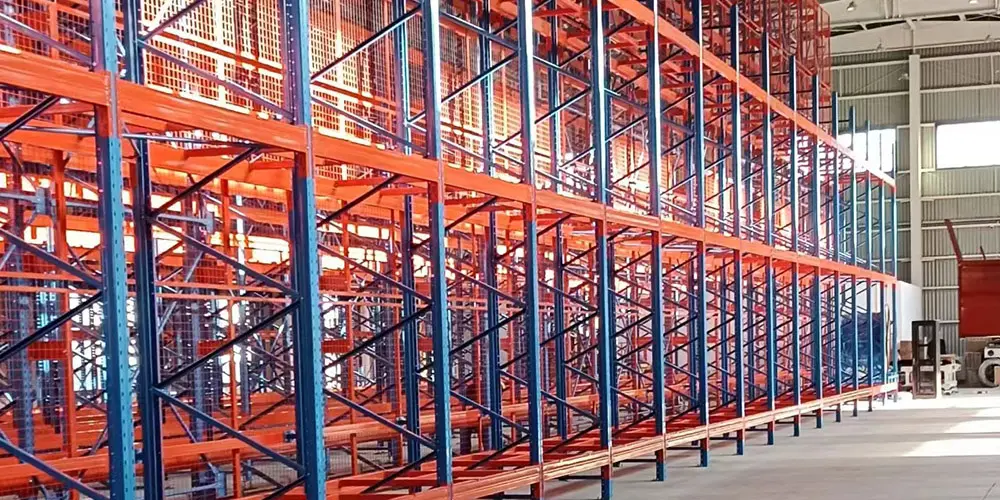
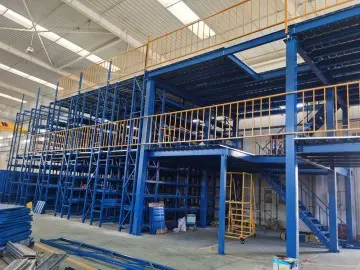
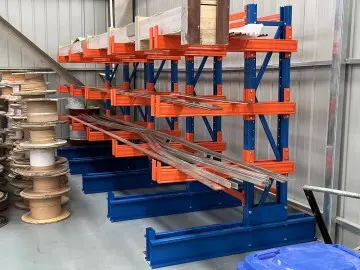
Explore our full line of industrial racking, mezzanine platforms, and automated storage solutions available for immediate export to Australia.
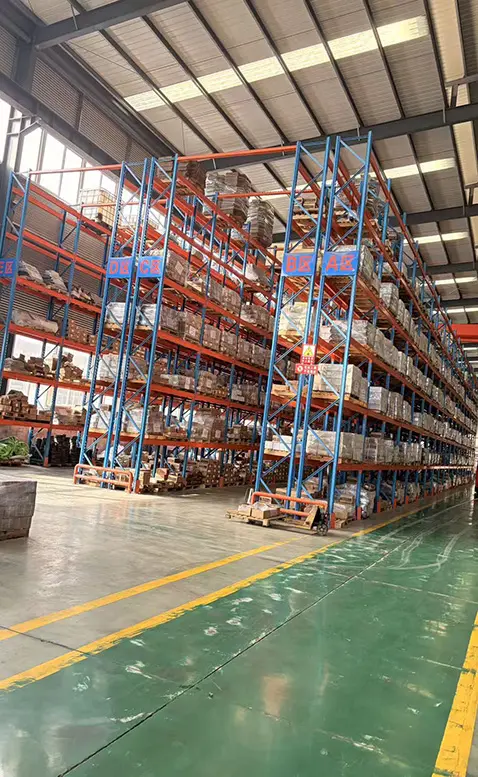
Send us your floor plan (CAD or PDF), clear building height, and pallet load specifications. Our structural engineering team will deliver a customized AS 4084-2023 compliant layout design and factory-direct quotation within 24 hours.
Send Inquiry Now