
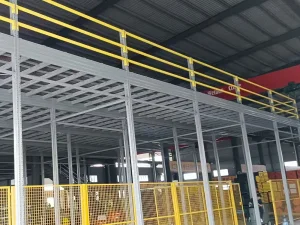
Canada Industrial Steel Structure Platforms & Platform Racks
High-load mezzanine steel structures engineered to double overhead cubic capacity without expanding physical building footprints.
View Product Details →


Custom-engineered factory direct racking infrastructure engineered for the rigorous demands of Canadian industrial, resource, cold-chain, and 3PL supply chains.
High-load mezzanine steel structures engineered to double overhead cubic capacity without expanding physical building footprints.
View Product Details →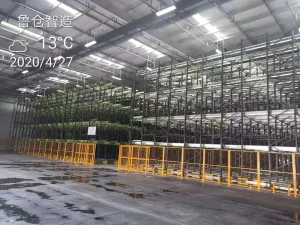
Automated pallet shuttle technology designed for deep-lane high-throughput food distribution centers across Canada.
View Product Details →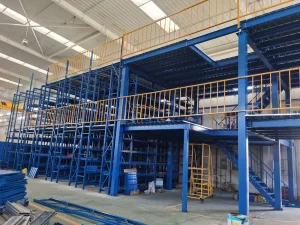
Integrated multi-tier rack-supported platforms providing rapid picking efficiency for Canadian e-commerce logistics hubs.
View Product Details →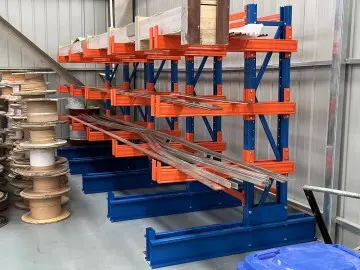
Unobstructed front access rack architectures built for storing Canadian lumber, structural steel tubing, and industrial pipes.
View Product Details →The commercial warehousing landscape across Canada is undergoing a profound structural shift driven by high urban land costs, intensive e-commerce expansion, and the decentralization of critical logistics corridors. In primary markets such as the Greater Toronto Area (GTA), Metro Vancouver, Calgary-Edmonton Corridor, and Greater Montreal, industrial real estate lease rates have escalated dramatically over recent years. As industrial land availability shrinks around major ports and intermodal railway hubs (such as CN and CPKC terminals), logistics operators can no longer afford horizontal footprint expansion. Modern supply chain strategy demands maximum cubic volume utilization.
Furthermore, Canada’s distinct geographical spread requires robust regional distribution networks capable of handling extreme operational variance—from coastal moisture in British Columbia to extreme sub-zero freezing temperatures in Alberta, Manitoba, and Northern Ontario. Traditional, off-the-shelf selective pallet racking frequently falls short when exposed to specialized industrial needs such as heavy timber bundle handling, structural steel tube storage, sub-zero cold room food storage, and high-density automotive assembly parts.
As a direct result of these economic and environmental pressures, Canadian logistics executives, warehouse operations managers, and structural engineers are increasingly turning to offshore factory partners capable of manufacturing direct-to-site Special Purpose Racking Systems. These solutions—ranging from heavy-duty cantilever racks and motorized mobile racking to automated radio shuttle systems and steel platform mezzanines—provide the precise structural integrity, footprint optimization, and operational longevity required by the Canadian enterprise sector.
Engineering warehouse rack systems for the Canadian market requires rigorous adherence to national structural building codes and provincial safety mandates. Unlike standard commercial storage, heavy industrial special purpose racking must meet exacting steel design methodologies and dynamic load resistance requirements enforced across Canadian jurisdictions.
Under the Canadian Standards Association (CSA), structural steel design relies on CSA S16 (Design of Steel Structures) and CSA A344 (User Guide for Steel Storage Racks). These codes mandate specific yield strength safety factors, beam deflection limits (L/240 to L/300), horizontal sway stiffness, and column impact resistance thresholds.
The National Building Code of Canada (NBC) classifies structural zones based on Spectral Acceleration values. Coastal British Columbia (Vancouver, Victoria) lies within high seismic risk zones requiring heavy baseplates, dynamic anchor bolts, and dual-direction vertical sway bracing. Moderate zones (Ottawa, Montreal) demand custom seismic calculations.
Cold-storage environments operating at -25°C to -30°C in provinces like Alberta and Manitoba expose structural steel to micro-embrittlement. High-tensile cold-rolled steel conforming to CSA G40.20/G40.21 high-impact grades ensures resistance to ductile-to-brittle failure under rapid dynamic pallet loading.
| Racking Type | Typical Load Capacity | Applicable CSA / Engineering Standard | Seismic Adaptation Level | Primary Canadian Industry Use |
|---|---|---|---|---|
| Heavy Cantilever Racks | 1,000 kg – 5,000 kg per arm | CSA S16 / ASTM A1011 SS Grade 50 | Heavy-duty base ties & spine bracing | Lumber mills (BC), Steel distributors (ON) |
| Radio Shuttle Racking | 1,500 kg per pallet position | CSA A344 / Automated Machinery Safety | Low-center-of-gravity rigid frame tie-ins | Sub-zero food & beverage (AB, QC) |
| Steel Platform Mezzanines | 300 kg/m² – 1,500 kg/m² uniformly | NBC Part 4 / CSA S16 Structural Steel | Moment-resisting frame columns & gussets | E-commerce fulfillment centers (GTA) |
| Motorized Mobile Racking | Up to 24,000 kg per bay frame | CSA C22.2 (Electrical Safety) + CSA A344 | Floor-guided rail lock anti-tip mechanisms | Pharma cold storage, High-density vaults |
Special purpose racking refers to highly engineered structural storage matrices configured to resolve non-standard handling requirements that standard selective pallet racks cannot accommodate. Below is an engineering overview of the primary architectures supplied to Canadian factories and distribution centers.
Designed specifically for items with linear length profiles—such as engineered wood, steel beams, plastic pipes, and aluminum extrusions—cantilever racks eliminate front vertical upright columns. This continuous horizontal storage channel permits unrestricted loading by overhead cranes or side-loader forklifts.
Radio shuttle racking integrates precision structural steel guide rails with autonomous battery-powered shuttles. Forklifts drop pallets at the entry lane, and the shuttle automatically transports the pallet deep inside the racking matrix. This system maximizes volumetric density while supporting both FIFO and LIFO operational rules.
Steel platform structures transform unused vertical room into usable mezzanine floor space. Engineered with heavy structural steel I-beams or cold-formed purlins, these floors support automated conveyor lines, manual pick modules, and secondary office spaces.
For medium-SKU applications requiring balanced density and selectivity, push-back racking utilizes nested rolling carts along inclined steel channels (2 to 6 pallets deep). Motorized mobile racking places heavy-duty pallet racks on guided mobile bases, opening a single operative working aisle via automated PLC control.
Procurement leaders evaluating special purpose racking for Canadian facilities must weigh local North American distributor sourcing against direct-from-factory international manufacturing partnerships. While domestic suppliers offer quick off-the-shelf delivery for standard racking sizes, custom special purpose designs frequently incur premium local pricing, long domestic fabrication queues, and strict configuration constraints.
Direct factory sourcing from certified international logistics equipment manufacturers (such as Shandong-based industrial racking specialists) offers compelling economic and engineering benefits for large-scale Canadian capital projects.
Direct-from-factory steel procurement bypasses multi-tier local distributor markups, enabling significant capital expenditure savings on steel volume, custom robotic welding, and automated powder coating.
Factory engineering teams directly modify upright profiles, beam connector gussets, and steel gauges to match specific unit load dimensions, floor slab load capacities, and ceiling height restrictions.
Factory production follows certified ISO 9001 standards, providing mill test certificate traceability, ultrasonic weld flaw testing, and powder coat thickness verification prior to sea-freight container packing.
Containerized shipments bound for Canada typically enter via the Port of Vancouver (Prince Rupert / Fraser River docks) for Western destinations or transit via the Panama Canal to the Port of Montreal / Port of Halifax for Ontario and Quebec hubs. Work with factory partners who provide detailed container loading plans—utilizing specialized steel banding, protective corner angle pads, and moisture-vapor barrier wrap—to ensure zero transit damage during sea voyages across the Pacific.
The future of Canadian industrial warehousing lies in the seamless integration of static structural steel infrastructure with automated intelligent handling systems. As labor costs rise and warehouse automation matures, special purpose racking is evolving into the rigid backbone for next-generation logistics technologies.
Automated Storage and Retrieval Systems (AS/RS) utilize ultra-precise, high-bay racking frameworks exceeding 24 meters in height. Structural rack tolerances are held to millimeter precision to enable high-speed crane shuttle travel.
Autonomous Mobile Robots (AMRs) are increasingly deployed on elevated steel platform mezzanines. Specialty smooth resin floor finishes and low-vibration joint profiles ensure continuous AMR navigation accuracy.
Embedded strain gauge sensors and wireless impact monitors on critical rack columns deliver real-time data to WMS software, alerting safety teams to structural overloads or forklift collisions immediately.
Leading international manufacturers work directly with certified Canadian Professional Engineers (P.Eng) across provinces such as Ontario, British Columbia, and Alberta. Prior to fabrication, the factory engineering team submits detailed structural calculations, CAD layout drawings, and steel yield specifications to a local Canadian engineering partner. The P.Eng reviews seismic load factors, slab capacities, and CSA S16/A344 parameters, issuing sealed site-specific drawings required for municipal building permits.
For extreme sub-zero applications, racking steel is selected from structural cold-rolled steel grades featuring enhanced Charpy V-notch impact toughness to prevent cold embrittlement. Surface treatments switch to specialized high-durability epoxy powder coatings or hot-dip galvanizing. In radio shuttle systems, shuttles are equipped with internal thermal insulation, low-temperature gear lubricants, and heated lithium battery enclosures to preserve battery cycle life and operational speed.
Typical production lead time for custom special purpose racking spans 3 to 5 weeks, depending on total steel tonnage and customization degree. Transit time via ocean vessel to West Coast ports (Vancouver) takes approximately 14 to 20 days. Shipments bound for Toronto, Montreal, or Calgary move via integrated rail intermodal (CN/CPKC) from Vancouver, adding 5 to 9 transit days. Overall project lead times from engineering sign-off to site arrival average 7 to 9 weeks.
Yes. Heavy-duty cantilever systems engineered for outdoor Canadian lumber yards and steel yards feature hot-dip galvanizing conforming to ISO 1461 / ASTM A123 standards. This metallurgical coating provides decades of corrosion resistance against rain, snow melt, road salt, and UV exposure. Uprights and arms are sized based on calculated bundle load distribution and local wind/snow dynamic loads specified in the National Building Code of Canada.
Factory suppliers provide comprehensive 3D assembly blueprints, component piece-mark schedules, and step-by-step installation manuals. For large structural platform or radio shuttle projects, dedicated factory installation engineers can provide remote real-time video supervision or deploy field engineers directly to the Canadian job site to collaborate with local millwright and installation crews.
Explore our complete selection of high-density pallet racking, steel platforms, cantilever structures, and automated warehousing components available for direct shipment to Canada.
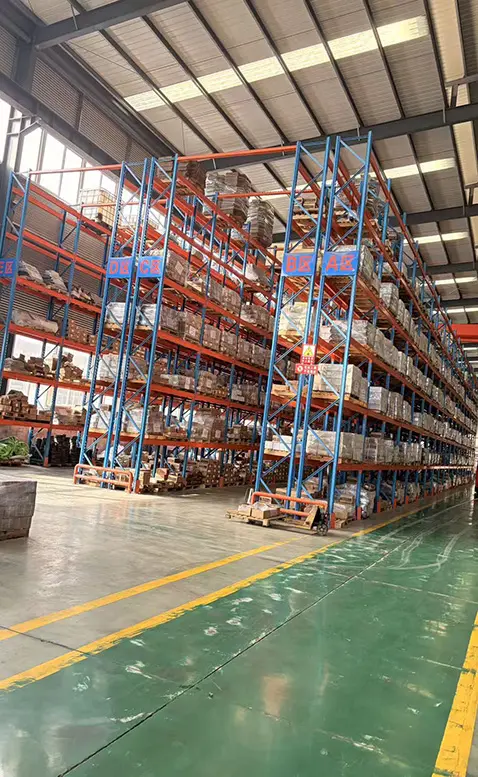
Eliminates aisle spaces for uniform bulk goods storage. Ideal for seasonal inventory and bulk agricultural warehousing.
View Product Specs →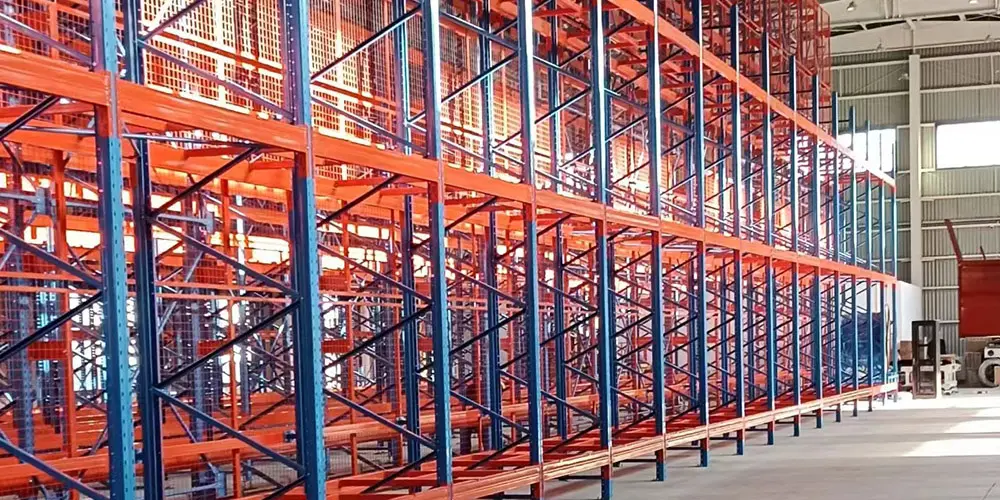
2 to 5 pallet deep LIFO lane storage featuring heavy-duty nested wheel carts for high-density medium-SKU selectivity.
View Product Specs →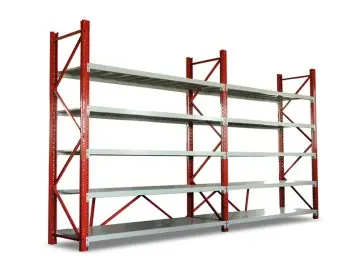
Racks mounted on PLC-controlled motorized bases, maximizing floor utilization in expensive low-temperature freezers.
View Product Specs →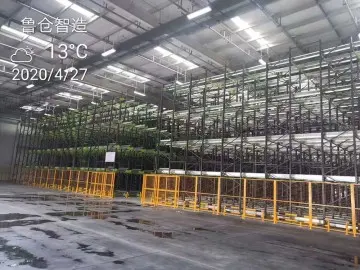
Semi-automated pallet shuttle carriage supporting high-throughput FIFO/LIFO operations with minimal forklift entry.
View Product Specs →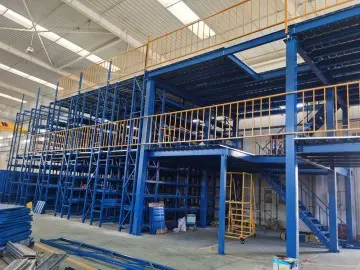
Turn overhead vertical airspace into high-capacity picking, packing, or light industrial assembly floors.
View Product Specs →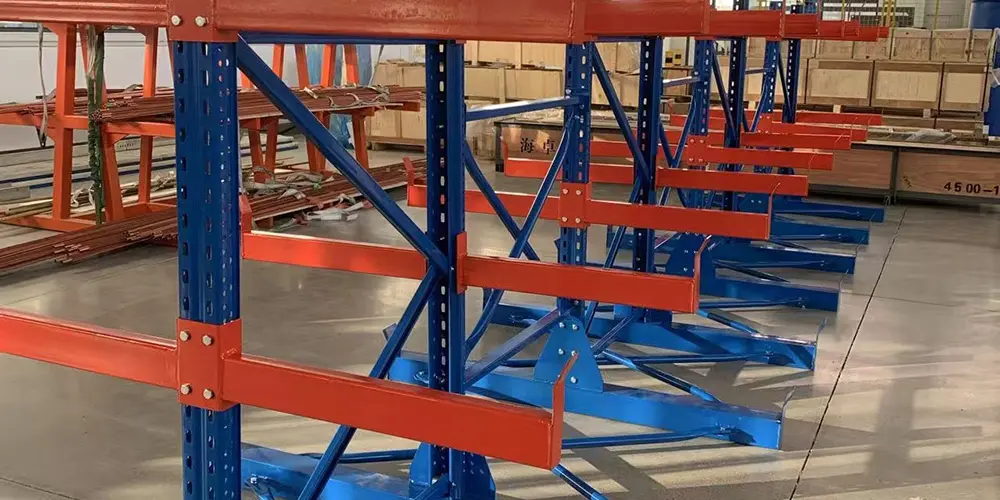
Structural column and arm systems specifically built to store heavy steel pipes, bars, and lumber packs.
View Product Specs →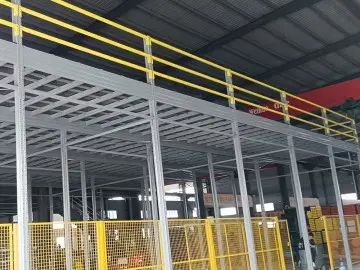
Fully bolted structural platforms engineered for heavy machinery support and industrial component staging.
View Product Specs →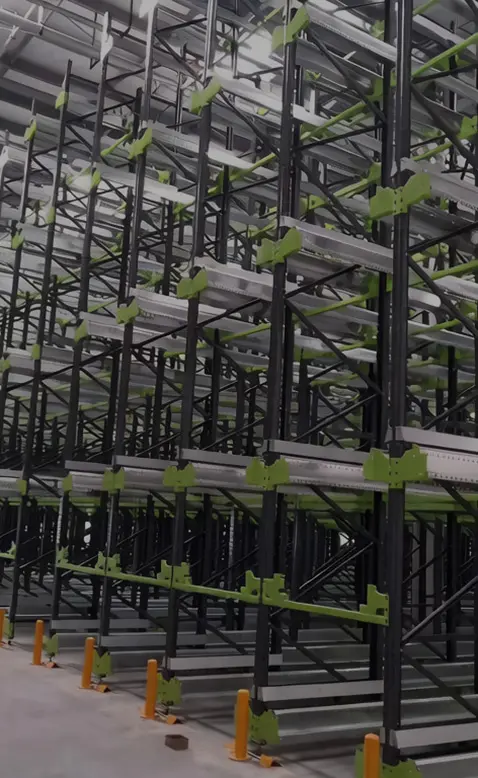
High-density dynamic racking featuring reinforced frame bracing tailored to Canadian building standards.
View Product Specs →Contact our structural engineering team today for a complimentary CAD warehouse layout proposal, structural load calculation analysis, and competitive factory-direct quotation.